
Integrated C&I Systems for Cost Management, Solar Use and Power Resilience.
Compare air-cooled, liquid-cooled, PV-ESS and on-grid cabinet platforms by the operating strategy and site conditions they must support.
- Capacity Range
- 117-418 kWh
- AC Power
- 60-215 kW
- Cooling
- Air / Liquid
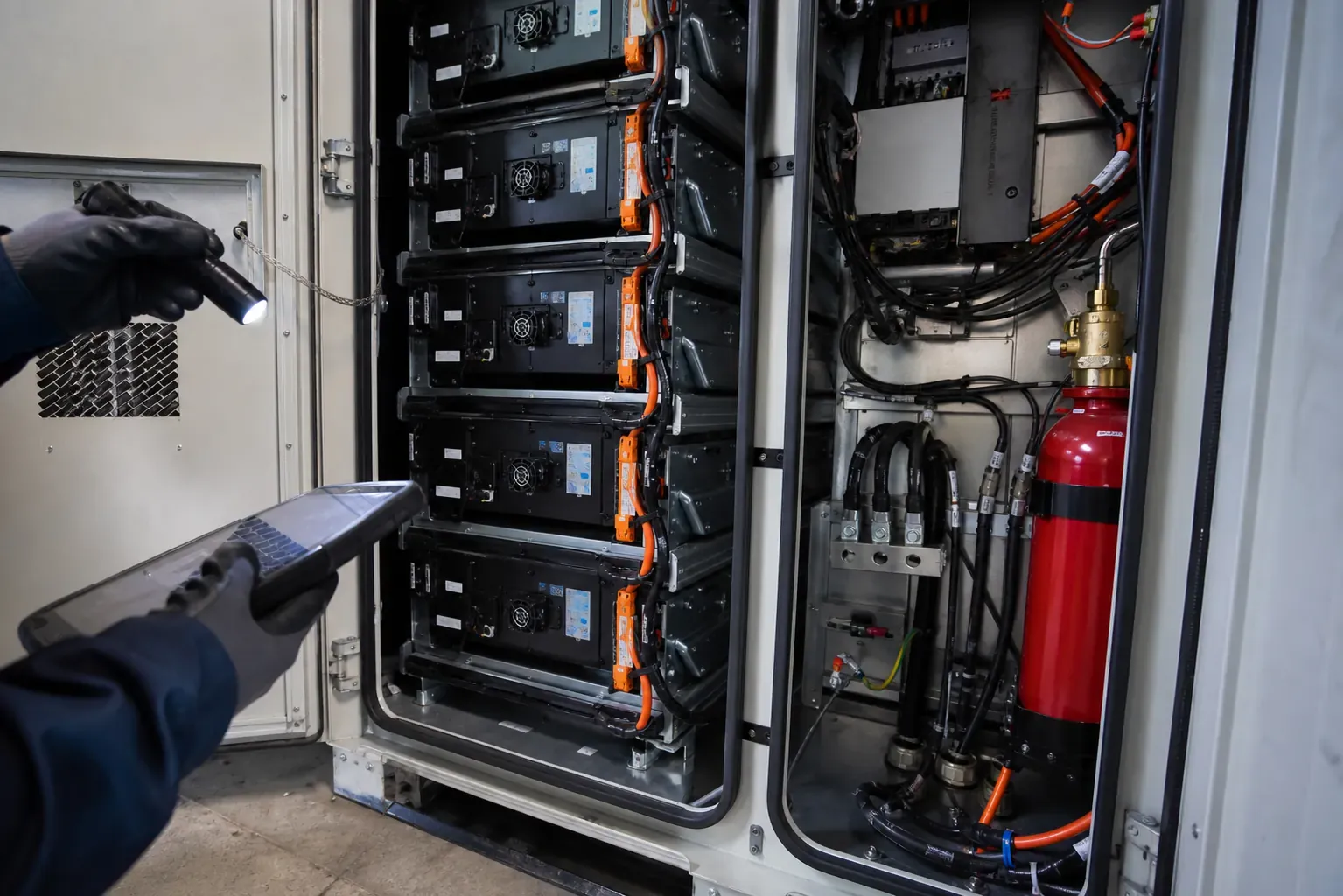
Five platform variants
117 / 241 / 261 / 261 Semi-Solid / 418 kWh
Step 1 -- Select Architecture
Which platform fits your site?
Start with thermal management and grid connection type, then refine by capacity and operating strategy.
Air-Cooled PV-ESS
Integrated PV and storage architecture with optional project components. Entry-level density for sites with moderate thermal conditions.
Air-Cooled On-Grid ESS
Compact behind-the-meter deployment for commercial load management and peak demand reduction without dedicated PV input.
Liquid-Cooled PV-ESS
Higher-density temperature-controlled platform with optional PV DC-DC and STS components. Confirm option availability with current datasheet.
Liquid-Cooled On-Grid ESS
C&I peak management and renewable self-consumption with higher thermal efficiency and tighter temperature control.
Semi-Solid Integrated Configuration
261 kWh with PV, on-grid and off-grid functions. Confirm cell source, model and certification before specification.
418 kWh Liquid-Cooled Cabinet
High-capacity platform with 125 kW or 215 kW AC options. Confirm exact model mapping and grid-voltage configuration.
Decision path: Cooling type → Grid connection → Capacity and power → Safety and installation requirements → Request current datasheet for final specification.
117 kWh Air-Cooled PV-ESS Cabinet
What This Gives You
A compact PV-ESS starting point for sites that need integrated solar and storage control. Lower capital threshold, air-cooled simplicity and a proven LFP cell platform make this the right entry point before committing to liquid-cooled density.
Applicable Scenarios
- Small commercial rooftop PV with behind-the-meter storage
- Sites with moderate ambient temperatures and adequate ventilation
- Operators seeking a single integrated cabinet to simplify installation
System Boundary
The cabinet integrates the PCS, BMS and battery modules. PV array, AC distribution, grid protection relay, civil foundation and cable routes are project scope items not included in the cabinet supply.
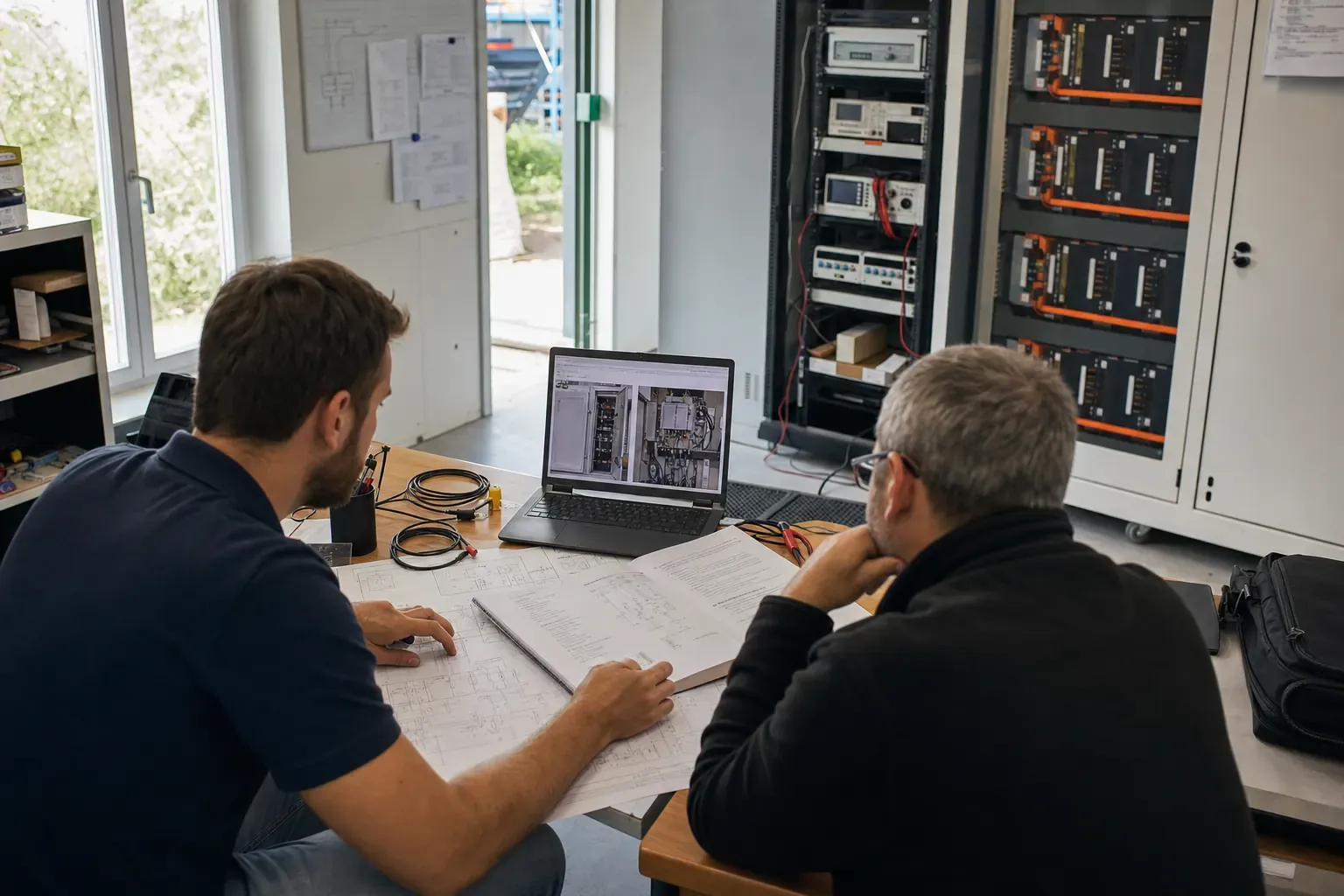
Architecture: PV -- Storage -- Load
Core Parameters
Confirm with current datasheet before specification.
- Energy Capacity
- 117 kWh
- Rated AC Power
- 60 kW
- Cell Type
- 314 Ah LFP
- Power Ratio
- 0.5P
- Cooling
- Air
- Ingress Protection
- IP54
- Corrosion Class
- C3 (C4/C5 option)
- Round-Trip Efficiency
- ≥ 88%
Warranty: 5-year warranty terms apply. Confirm exact conditions in current product documentation.
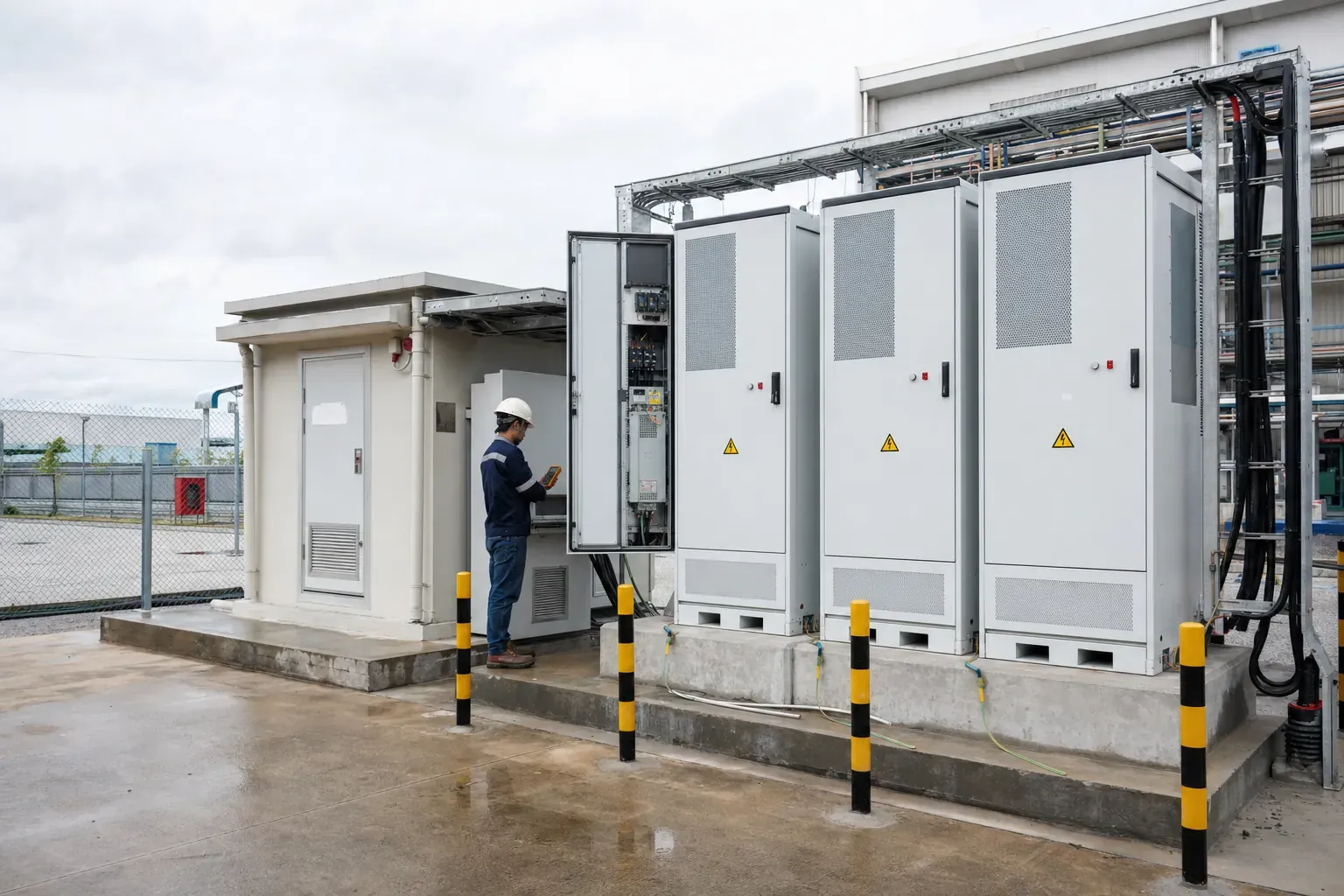
Peak-Valley Operating Curve -- Illustrative
Core Parameters
Confirm with current datasheet before specification.
- Energy Capacity
- 241 kWh
- Rated AC Power
- 105 kW
- Cell Type
- 314 Ah LFP
- Power Ratio
- 0.5P
- Cooling
- Air
- Ingress Protection
- IP54
- Cabinet Weight
- ≈ 2.4 t
- Warranty
- 5-year terms
241 kWh Air-Cooled On-Grid Cabinet
What This Gives You
Larger air-cooled on-grid capacity for commercial and industrial load management. Reduces peak demand charges and enables tariff arbitrage without requiring a dedicated PV input port.
Applicable Scenarios
- Commercial facilities with significant peak demand charges
- Industrial sites requiring behind-the-meter demand management
- Grid-connected applications where PV integration is handled upstream
System Boundary
Cabinet includes PCS, BMS and LFP battery modules. AC grid connection, metering, protection switchgear, civil works and communication infrastructure are outside the cabinet supply scope.
261 kWh Liquid-Cooled PV-ESS Cabinet
What This Gives You
PV-storage integration with higher thermal control and optional fast switching for selected backup and microgrid scenarios. Liquid cooling extends cycle life and maintains consistent performance across a wider ambient range.
Applicable Scenarios
- C&I sites in high-ambient or high-cycle-frequency environments
- Projects requiring integrated PV DC-DC conversion within the cabinet
- Applications where static transfer switch capability is under evaluation
System Boundary
Standard cabinet includes PCS, intelligent liquid cooling, BMS and LFP battery modules. The 125 kW PV DC-DC input and STS are listed as optional components -- confirm availability and specification with current datasheet before project commitment.
PV DC-DC input and STS are optional and require verification. Confirm with current product datasheet before including in project design or tender documents.
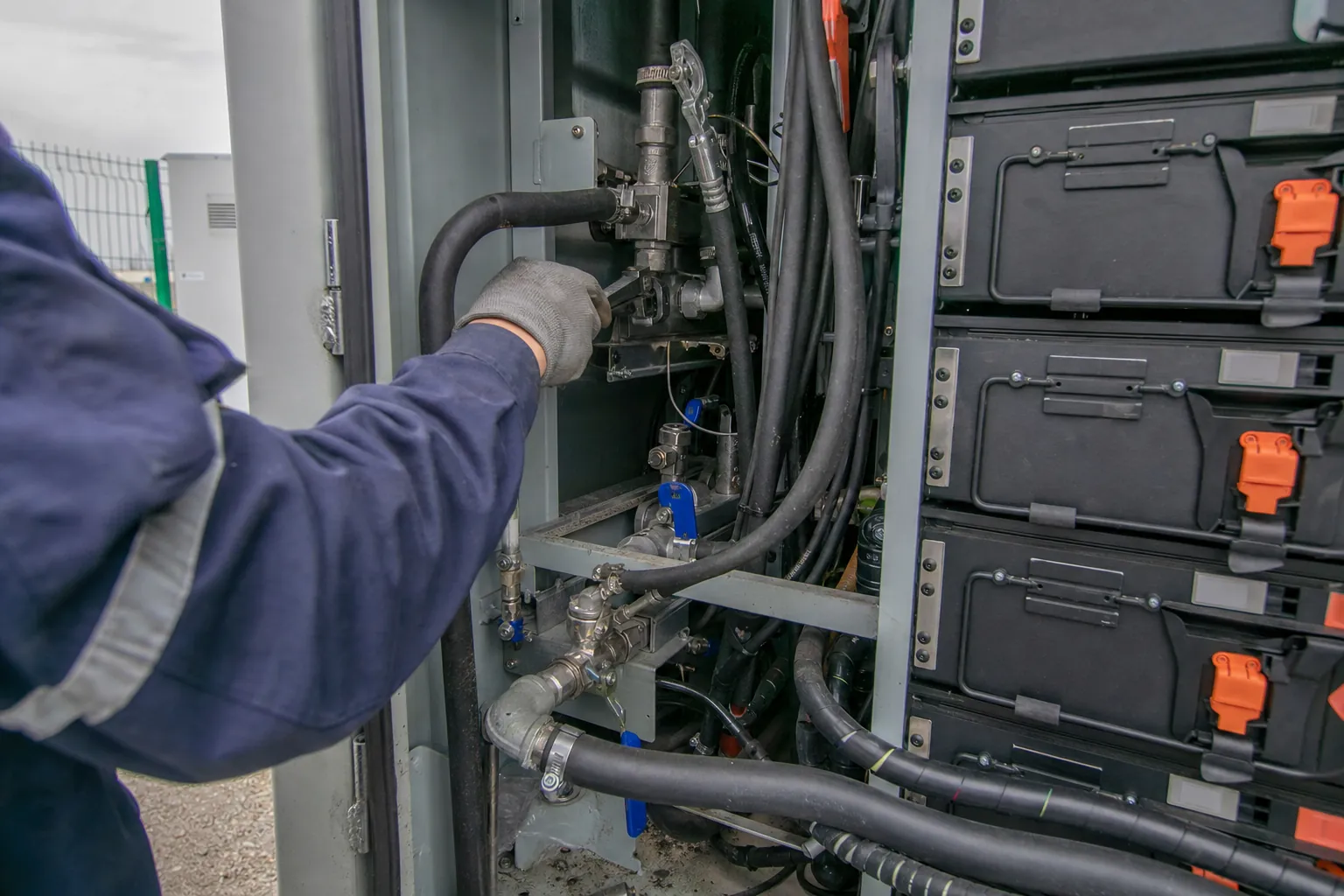
Core Parameters
Confirm with current datasheet before specification.
- Energy Capacity
- 261 kWh
- Rated AC Power
- 125 kW
- Battery Voltage
- 832 V
- Cooling
- Intelligent Liquid
- PV DC-DC Input
- 125 kW (Optional)
- STS Switching
- ≤ 20 ms (Optional)
- Ingress Protection
- IP54
- Cabinet Weight
- ≈ 3.0 t
Core Parameters
Confirm with current datasheet before specification.
- Energy Capacity
- 261 kWh
- Rated AC Power
- 125 kW
- Battery Voltage
- 832 V
- Cooling
- Liquid
- Round-Trip Efficiency
- ≥ 90%
- Ingress Protection
- IP54
- Cabinet Weight
- ≈ 2.5 t
- PV Input
- Not included
261 kWh Liquid-Cooled On-Grid Cabinet
What This Gives You
Compact liquid-cooled C&I storage for peak management and renewable self-consumption. The higher round-trip efficiency of 90 percent or above and tighter temperature control reduce operating cost over the system lifetime compared to air-cooled alternatives of similar capacity.
Applicable Scenarios
- High-ambient industrial sites requiring thermal stability
- C&I operators targeting maximum cycle life and efficiency
- Grid-connected deployments without dedicated PV cabinet input
System Boundary
Cabinet includes PCS, intelligent liquid cooling system, BMS and LFP battery modules. Grid connection, protection switchgear, civil foundation, cable routes and communication infrastructure are outside the cabinet supply scope.
05 & 06 / Advanced Configurations
Semi-Solid and High-Capacity Variants
For either configuration, we will provide the current cell source, model number, certification status and availability for your specification or tender review.
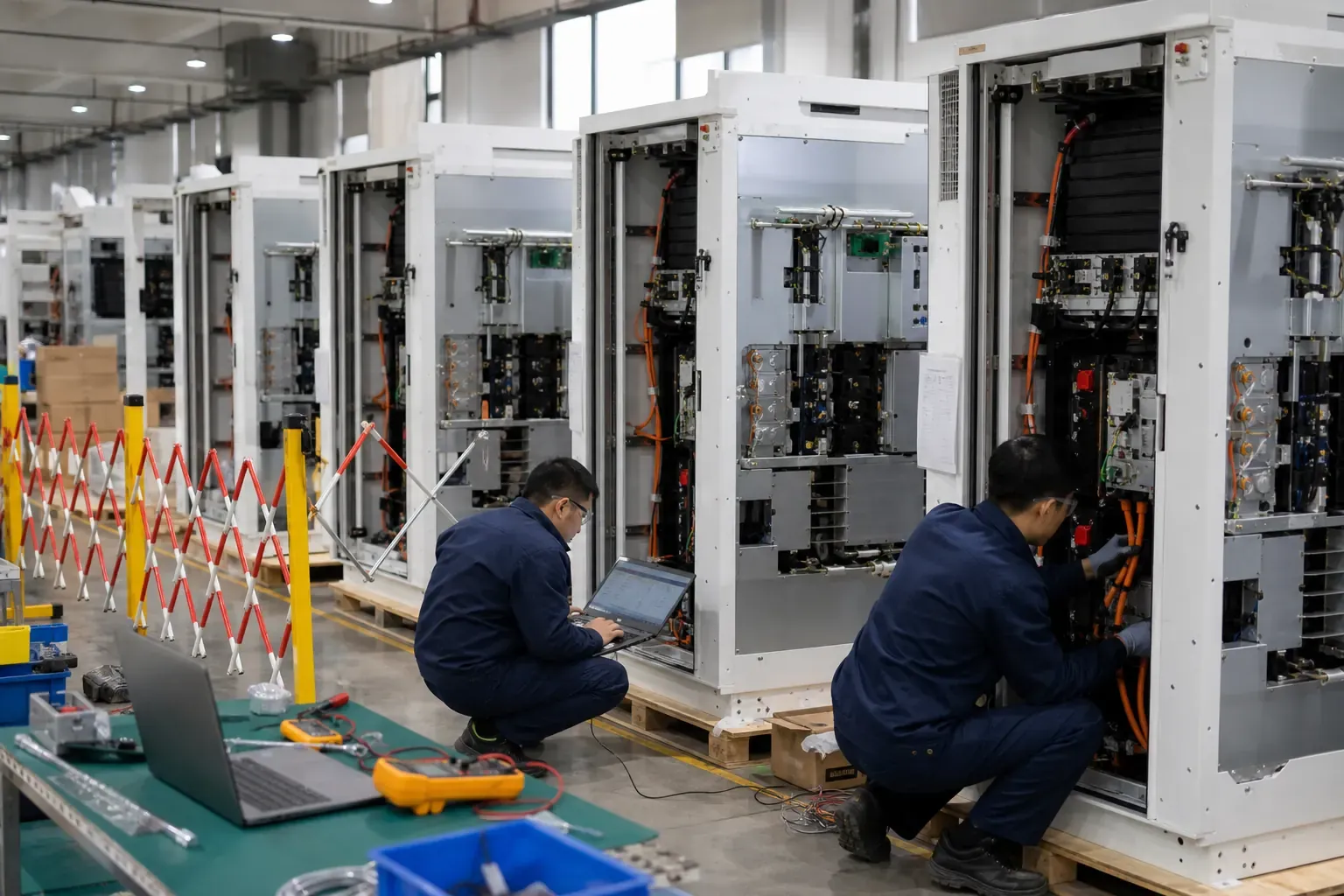
Semi-Solid Integrated Configuration
What This Gives You
Multi-mode capability across PV, on-grid and off-grid functions in a single cabinet. Confirm cell technology, model and applicable certifications with the current product team before committing to this configuration.
- Energy Capacity
- 261 kWh
- Rated AC Power
- 100 kW
- Operating Modes
- PV / On-Grid / Off-Grid
- Switching Time
- ≤ 20 ms
- Cell Source / Certification
- Confirm with current datasheet before specification
418 kWh Liquid-Cooled Cabinet
What This Gives You
Highest capacity platform in the C&I range with a choice of 125 kW or 215 kW AC power output. Confirm the exact model mapping and grid-voltage configuration for your project before specification.
- Energy Capacity
- 418 kWh
- Battery Voltage
- 1331.2 V
- AC Power Option A
- 125 kW
- AC Power Option B
- 215 kW
- Model / Grid Voltage Mapping
- Confirm exact model and grid-voltage configuration with current datasheet
All Platforms
Side-by-Side Comparison
All figures from brochure data. Cells marked with † require confirmation with current datasheet before use in specifications.
| Parameter | 117 kWh Air PV-ESS |
241 kWh Air On-Grid |
261 kWh Liq PV-ESS |
261 kWh Liq On-Grid |
261 kWh Semi-Solid † |
418 kWh Liq High-Cap † |
|---|---|---|---|---|---|---|
| Energy Capacity | 117 kWh | 241 kWh | 261 kWh | 261 kWh | 261 kWh | 418 kWh |
| Rated AC Power | 60 kW | 105 kW | 125 kW | 125 kW | 100 kW | 125 / 215 kW † |
| Cooling | Air | Air | Liquid | Liquid | Confirm † | Liquid |
| PV Input | Integrated | -- | 125 kW (Opt.) | -- | Integrated † | Confirm † |
| STS / Fast Switch | -- | -- | ≤ 20 ms (Opt.) | -- | ≤ 20 ms † | Confirm † |
| Cell Type | 314 Ah LFP | 314 Ah LFP | LFP | LFP | Semi-Solid † | LFP |
| Ingress Protection | IP54 | IP54 | IP54 | IP54 | Confirm † | Confirm † |
| Round-Trip Efficiency | ≥ 88% | Confirm † | Confirm † | ≥ 90% | Confirm † | Confirm † |
| Approx. Weight | Confirm † | ≈ 2.4 t | ≈ 3.0 t | ≈ 2.5 t | Confirm † | Confirm † |
| Best Fit | Small C&I PV+storage entry | Commercial peak management | High-cycle PV+storage | High-efficiency on-grid | Multi-mode -- verify | High-capacity -- confirm model |
| Datasheet | Request | Request | Request | Request | Verify | Verify |
Showing key differences. Request datasheets for full specifications.
261 kWh
Liq PV-ESS
- Energy
- 261 kWh
- AC Power
- 125 kW
- Cooling
- Liquid
- PV Input
- 125 kW Opt.
View 418 kWh and Semi-Solid variants above. Request information for full comparison.
† Cells marked with † require confirmation with current product datasheet before use in project specifications, tender documents or procurement. Do not mix specifications from different model variants or revision dates.
Safety & Installation
What is in the cabinet and what is a project input.
Understanding the system boundary reduces specification errors and accelerates site approval. The cabinet provides the protection layers listed here. Civil, electrical and regulatory items are project scope.
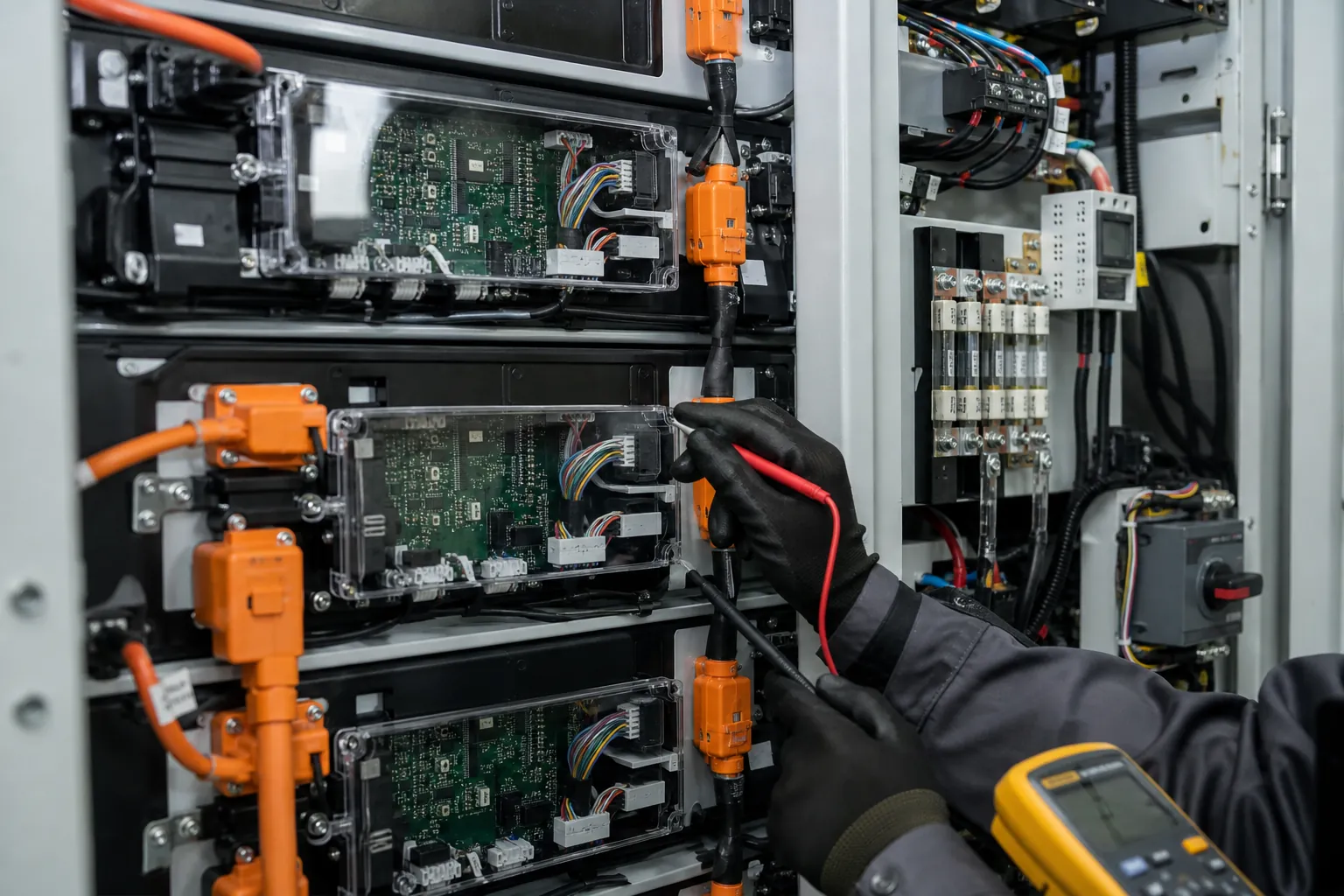
Internal modules and BMS
Liquid cooling circuit
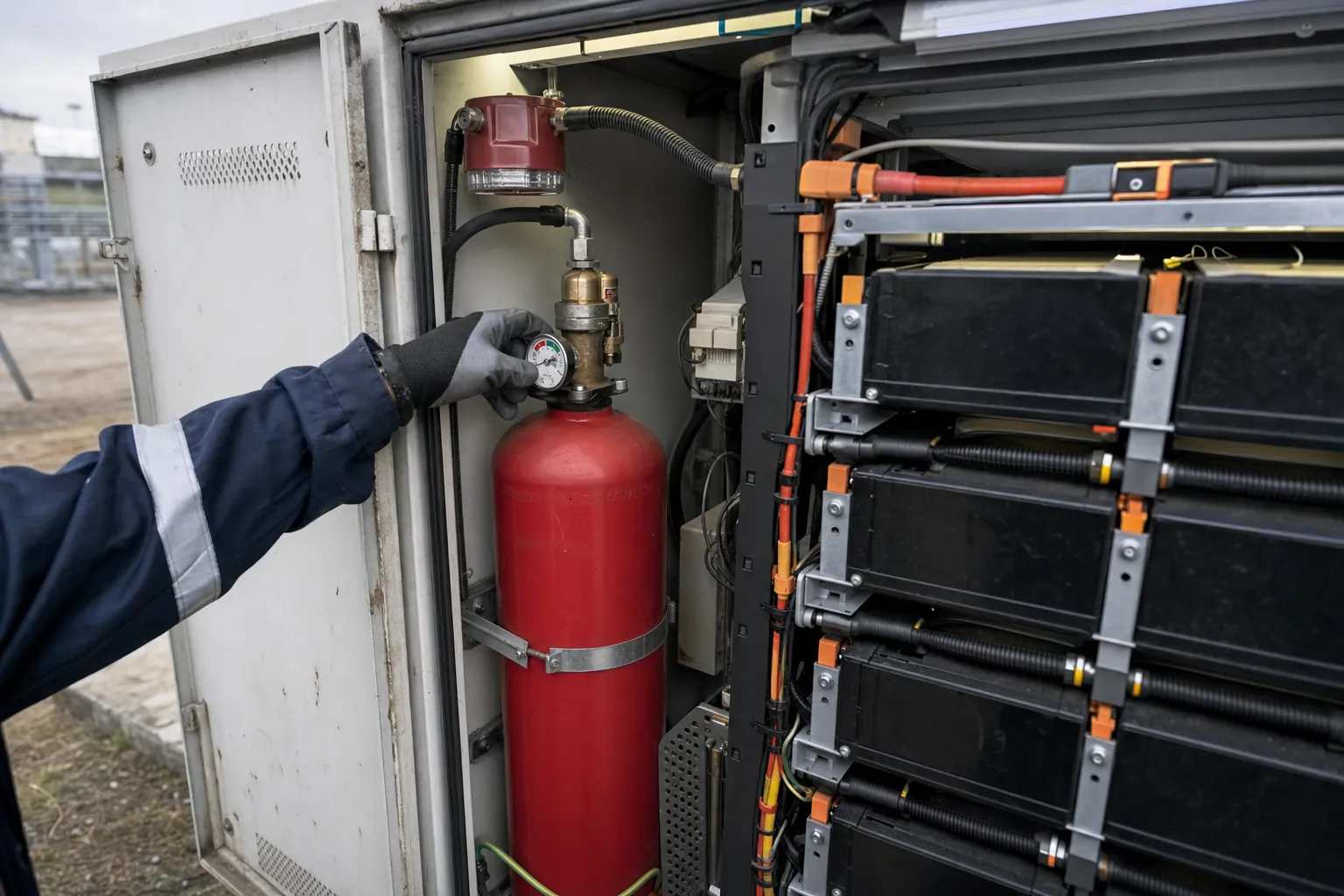
Fire protection system
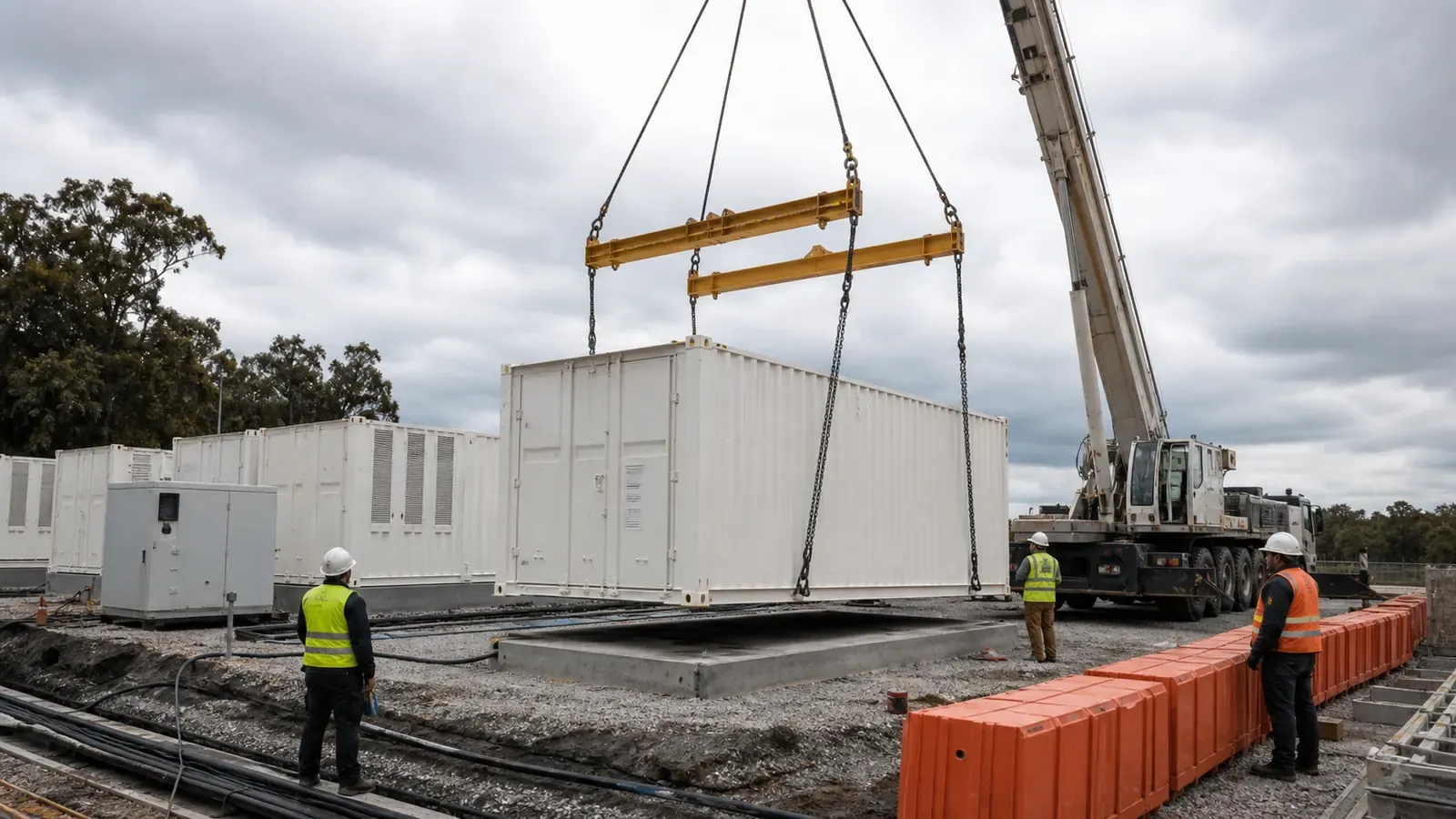
Hoisting and cable entry
Cabinet-Level Protection
-
Cell Chemistry: LFP or semi-solid (confirm variant) -- inherently stable chemistry
-
BMS: Multi-layer battery management: cell, module and pack monitoring
-
Thermal Management: Air or intelligent liquid cooling depending on platform
-
Ingress Protection: IP54 standard -- confirm upgrade options for coastal or corrosive sites
-
Corrosion Class: C3 standard on 117 kWh; C4/C5 optional -- confirm per model
-
Fire Suppression: Internal fire protection system -- confirm type and activation logic with datasheet
-
Communications: BMS communications for EMS or SCADA integration -- confirm protocol
Project Scope Items -- Not Included in Cabinet Supply
- Civil foundation design and load-bearing verification
- Minimum clearance for ventilation, maintenance and emergency access
- AC cable routing, sizing and termination
- Earthing and grounding system
- Fire separation distance and local fire code compliance
- Transformer selection and connection (optional cabinet transformer available -- confirm)
- Altitude and humidity derating if site conditions exceed standard ratings
- Local regulatory permits and grid connection approval
Operating Strategies
How the system earns its value.
Each strategy addresses a specific cost driver or reliability requirement. Most C&I sites benefit from combining two or more strategies within a single system.
Peak-Valley Arbitrage
Charge during low-tariff periods and discharge during peak-tariff hours. Reduces electricity purchase cost on time-of-use tariff structures. Requires tariff schedule data and metering integration.
All platforms
Demand Management
Limit peak demand drawn from the grid to reduce demand charges and protect transformer capacity. Particularly effective for sites with short but high load spikes. Requires real-time load monitoring.
All platforms
PV Self-Use Maximization
Store excess solar generation and consume it when PV output falls below site load. Reduces export to the grid and increases renewable self-consumption ratio. Requires PV-ESS platform or upstream PV integration.
PV-ESS platforms
Export Limitation
Prevent reverse power flow to the grid where grid codes or utility agreements restrict export. Storage absorbs excess PV generation that would otherwise be curtailed. Requires accurate metering at the grid connection point.
PV-ESS platforms
Transformer Protection
Limit current draw to protect an undersized or aging transformer from overload. Extends transformer life and defers capital expenditure on grid infrastructure upgrades. Requires transformer rating data and real-time monitoring.
All platforms
Backup-Enabled Configuration
Maintain power to critical loads during grid outages. Requires STS or equivalent switching capability -- confirm availability on selected platform. Off-grid or islanding operation requires additional engineering review.
261 PV-ESS (STS opt.) · Semi-Solid
Note: Operating strategy selection depends on site tariff structure, load profile, grid connection agreement, local regulations and system configuration. Submit your site data to receive a strategy recommendation matched to your specific conditions.
Case Evidence
A C&I deployment from problem to result.
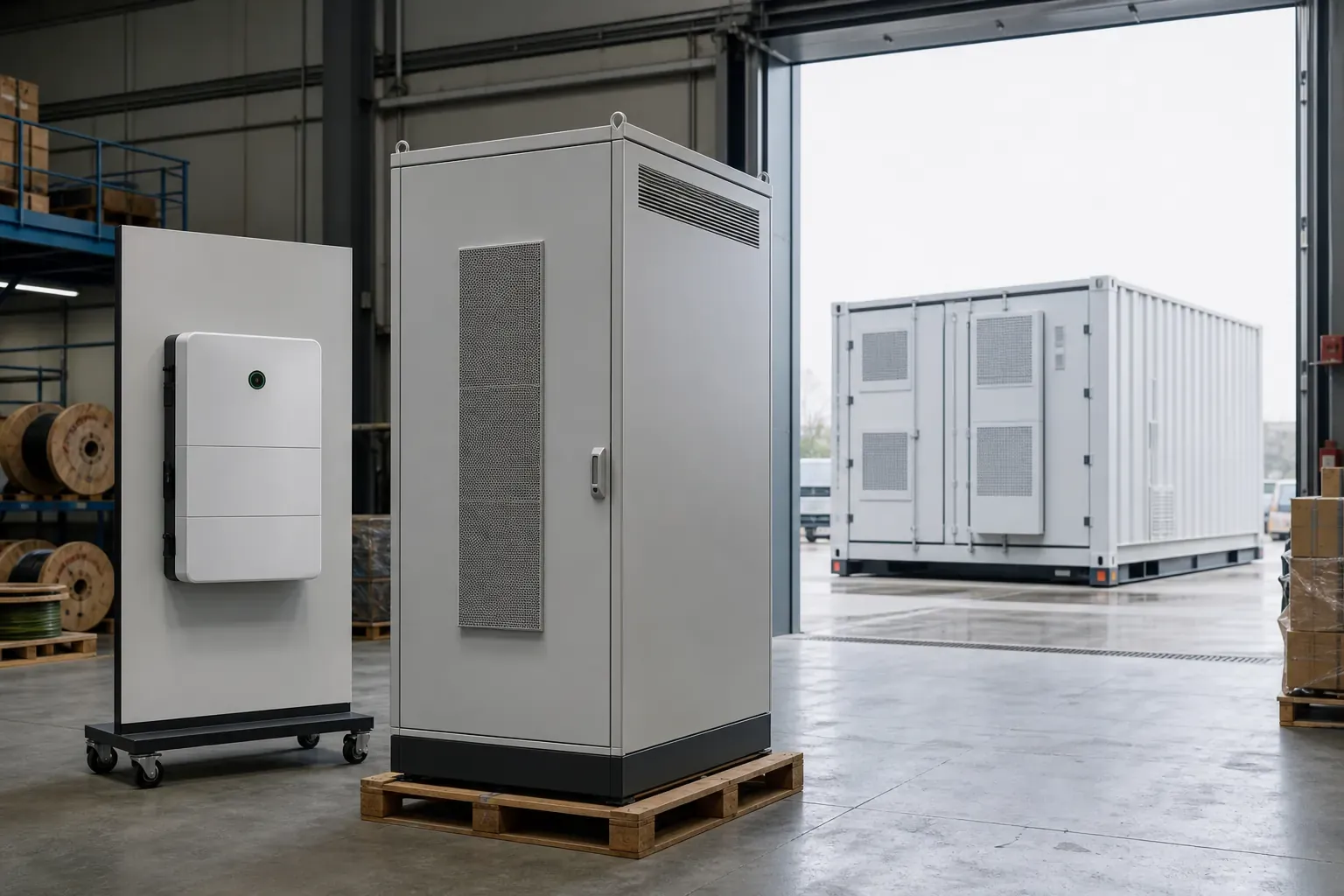
01 -- Load Problem
A mid-size manufacturing facility in Southeast Asia faced escalating demand charges due to compressed shift patterns creating sharp morning and afternoon load peaks. The site transformer was operating near capacity during peak periods, limiting production flexibility and creating grid stability concerns.
02 -- Selection Rationale
The 241 kWh air-cooled on-grid platform was selected for its capacity to address peak demand within the existing site footprint. Air cooling aligned with the covered installation environment. The 105 kW AC power output matched the calculated peak shaving requirement without oversizing.
03 -- System Configuration
One 241 kWh cabinet deployed behind the main transformer. BMS connected to site EMS for real-time load monitoring. Operating strategy: demand management with peak-valley arbitrage on time-of-use tariff. No PV input required at this stage.
04 -- Delivery
Cabinet delivered and commissioned within the agreed project timeline. Civil foundation and AC switchgear were prepared by the site EPC contractor in advance. Commissioning included BMS-EMS integration testing and operating strategy verification.
05 -- Operating Result
Peak demand drawn from the grid reduced within the first billing cycle. Demand charges decreased materially. Transformer loading remained within safe limits during all production shifts. The site operator confirmed the system performance aligned with the pre-project energy model.
Specific figures are project-dependent. Contact MOLETONG for case study documentation relevant to your application.
Start From Site Data
Choose the C&I Platform From the Site Data.
Upload your electricity bill or load profile and describe your site conditions. The MOLETONG engineering team will identify the right platform, operating strategy and configuration for your project.
Submit site data
Electricity bill, load profile or transformer rating -- any starting point is useful.
Engineering review
We assess tariff structure, peak demand, PV potential and applicable operating strategies.
Platform recommendation
Receive a matched platform recommendation with datasheet and indicative configuration.
Site Data Submission
Upload Electricity Bill or Load Profile