

How Byd Got EV Chargers to Work Almost as Fast as Gas Pumps?
Waiting for an electric car to charge can feel like an eternity. This slow process is a huge hurdle for many drivers, making long trips a headache. What if we could change that?
Byd achieves these incredible speeds by using a Battery Energy Storage System (BESS). This system stores energy from the grid over time and then releases a massive burst of power to the car, bypassing the grid's limitations and making charging ultra-fast.
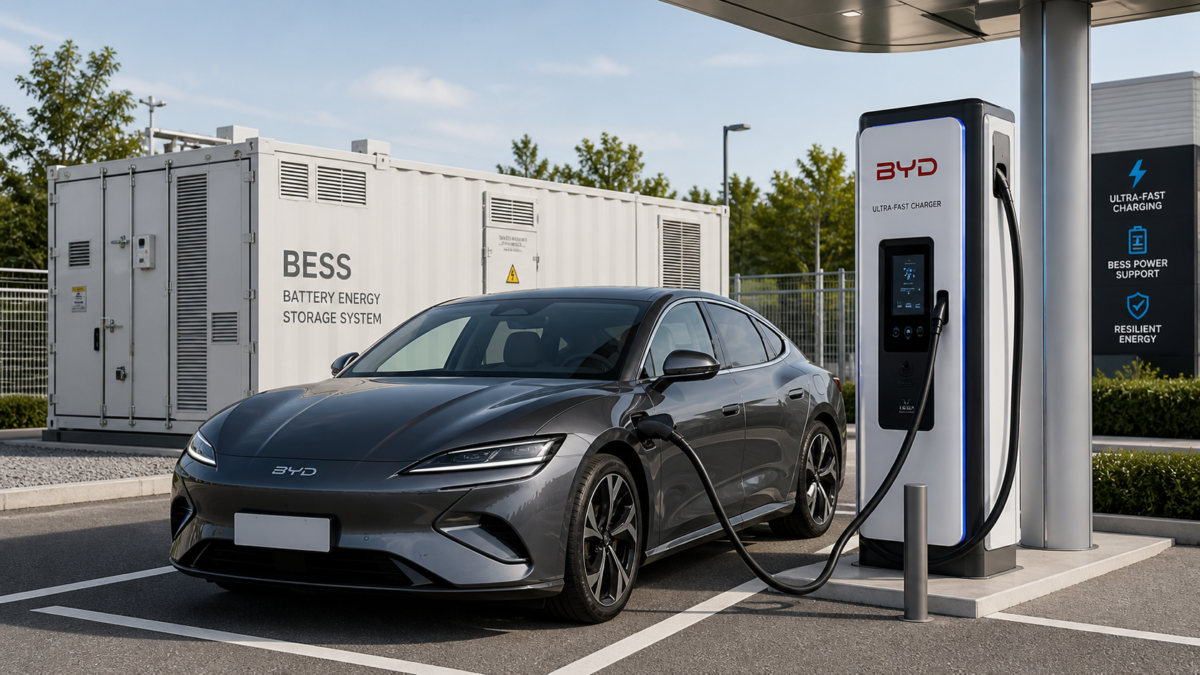
That technology sounds straightforward, but making it work reliably is the real challenge. The secret isn't just in the hardware. It's in the deep engineering that goes into designing the entire system. Many people who buy these systems overlook critical details, leading to disappointment. Let's explore what really makes these fast-charging stations successful, and what buyers often get wrong. It's a journey that goes far beyond just picking a product off a shelf.
What Buyers Often Misunderstand About BESS EV Fast Charging Station?
You might think buying a BESS and a fast charger is a simple fix. But this assumption can lead to unexpected costs, poor performance, and even issues with your utility company.
Buyers often mistakenly believe that a single BESS can simultaneously provide self-consumption, grid relief, and resilience without trade-offs. These are three different value streams that must be engineered and sized separately. You cannot assume you are getting all three just by buying one box.
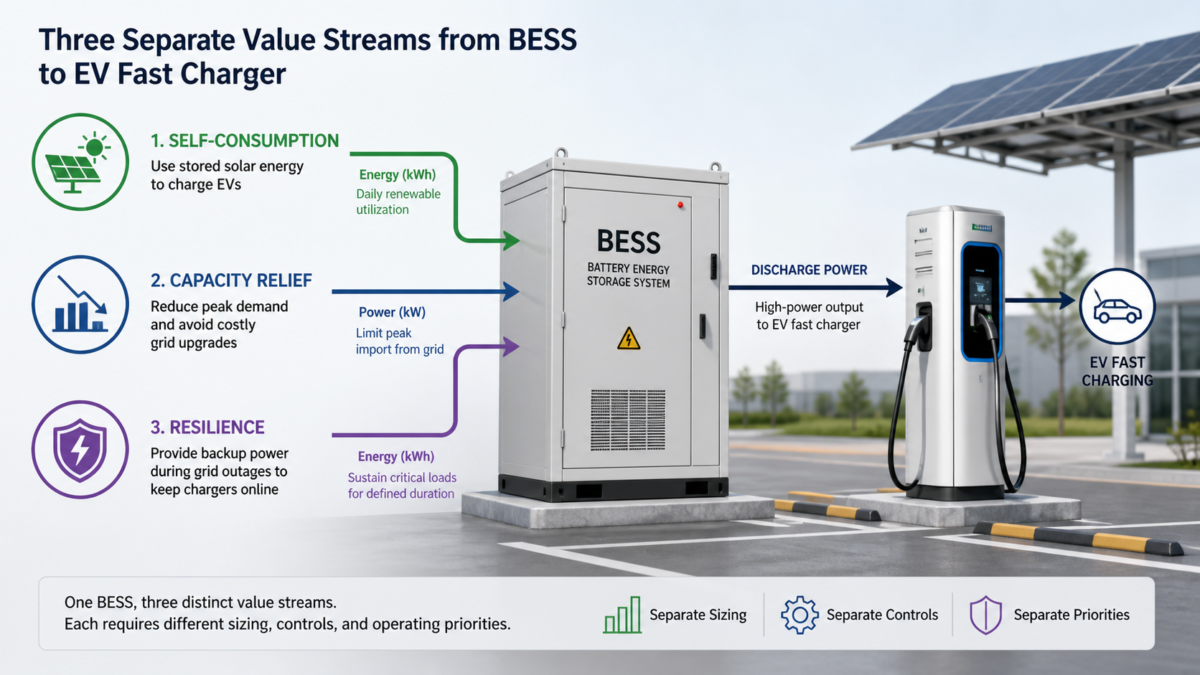
The practical lesson I’ve learned from these situations is that you can't double-count the benefits. Each goal puts different demands on the system.
The Three Separate Value Streams
- Self-Consumption: This is about using your own energy, usually from solar panels. The BESS stores solar power during the day and uses it to charge EVs later. This is great for sustainability, but the battery size is tied to your solar production, not your charging speed.
- Capacity Relief: This means using the BESS to avoid expensive demand charges from the utility or to add fast chargers without a costly grid upgrade. Here, the battery acts as a power buffer. It’s sized to handle the peak load, not necessarily to run for a long time.
- Resilience: This is about backup power. When the grid goes down, the BESS keeps your chargers running. This requires enough energy to support your critical loads for a specific duration, which might be much larger than what’s needed for capacity relief.
Optimizing for one of these often comes at the expense of the others. A system designed perfectly for capacity relief might only provide 30 minutes of backup power, which might not be what you expected.
| Value Stream | Primary Goal | Key Sizing Factor | Common Misconception |
|---|---|---|---|
| Self-Consumption | Use stored solar energy | Daily solar generation and EV energy needs | Assumes solar can always power ultra-fast charging |
| Capacity Relief | Reduce peak demand charges | Maximum power (kW) of the chargers | Thinks the system will also provide long-term backup |
| Resilience | Provide backup power during outages | Energy needed (kWh) for critical loads | Believes any BESS can start and run the entire site |
Sizing Around Export Limit and Outage Consequence?
You want a powerful system, but your utility company says you can't export power back to them. This creates a huge challenge. If you size your system incorrectly, you could face penalties or a system that fails when you need it most.
Proper BESS sizing doesn't start with the charger's power rating. It starts with the site's grid export limit and the available transformer headroom. You must also clearly define the consequences of an outage to determine what truly needs to stay on, which dictates the battery's energy capacity.
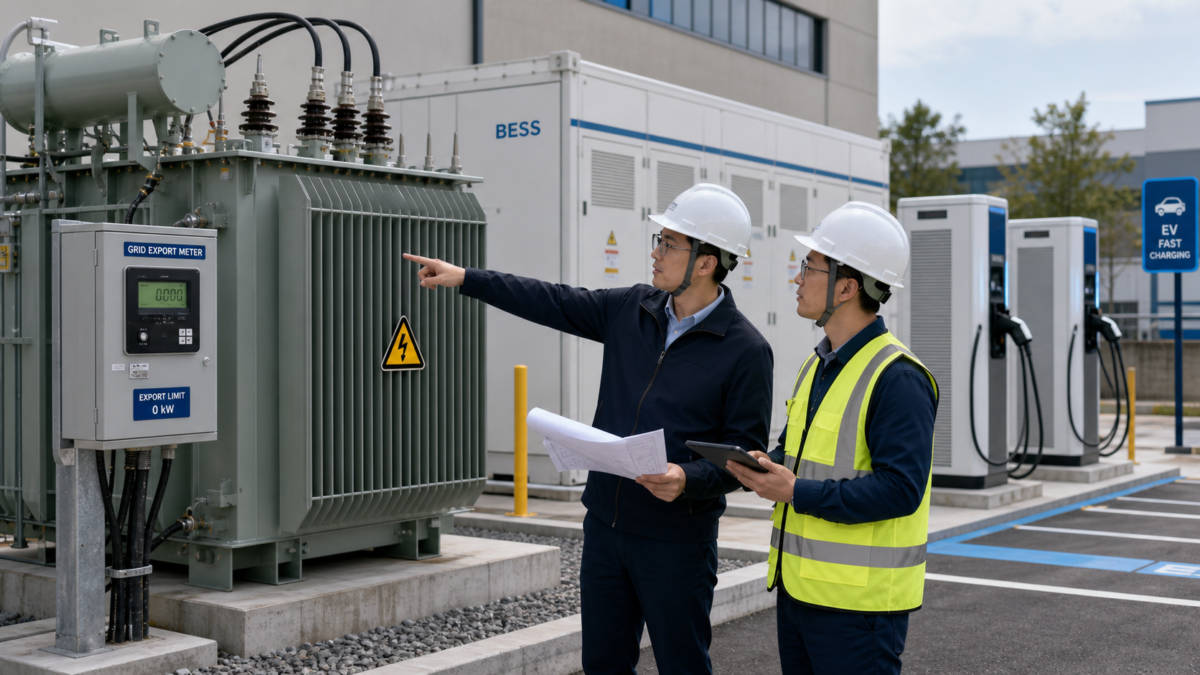
I always begin a project by looking at the constraints, not the product catalog. The first two things I ask for are the utility export limit and the transformer's nameplate. The export limit is the amount of power the utility allows you to send back to the grid. If you have solar, this is critical. A zero-export rule means your control system must be perfect.
Transformer headroom is the spare capacity of your local transformer. I once had a client who wanted four 350 kW chargers, but their facility was already using 90% of the transformer's capacity. A BESS was the only way forward, but its size was dictated by that remaining 10% headroom, not by the chargers.
Then we discuss outage consequences. Does the entire facility need power, or just one charger and the payment system? This "critical process sequence" is key. If only one charger needs to work, the required BESS size for resilience becomes much smaller and more affordable. This approach helps separate a real technical limit from just an unrealistic expectation.
The Failure Mode Hidden in Islanding Boundary?
You've installed a BESS for backup power, so you feel secure about blackouts. But when the power actually goes out, your whole system trips and fails, leaving you in the dark.
The hidden failure mode is the massive inrush current from all your equipment trying to restart at once when the BESS "islands" from the grid. If the BESS inverter can't handle this initial power surge, the entire backup system will fail, even if it has enough capacity for the normal running load.
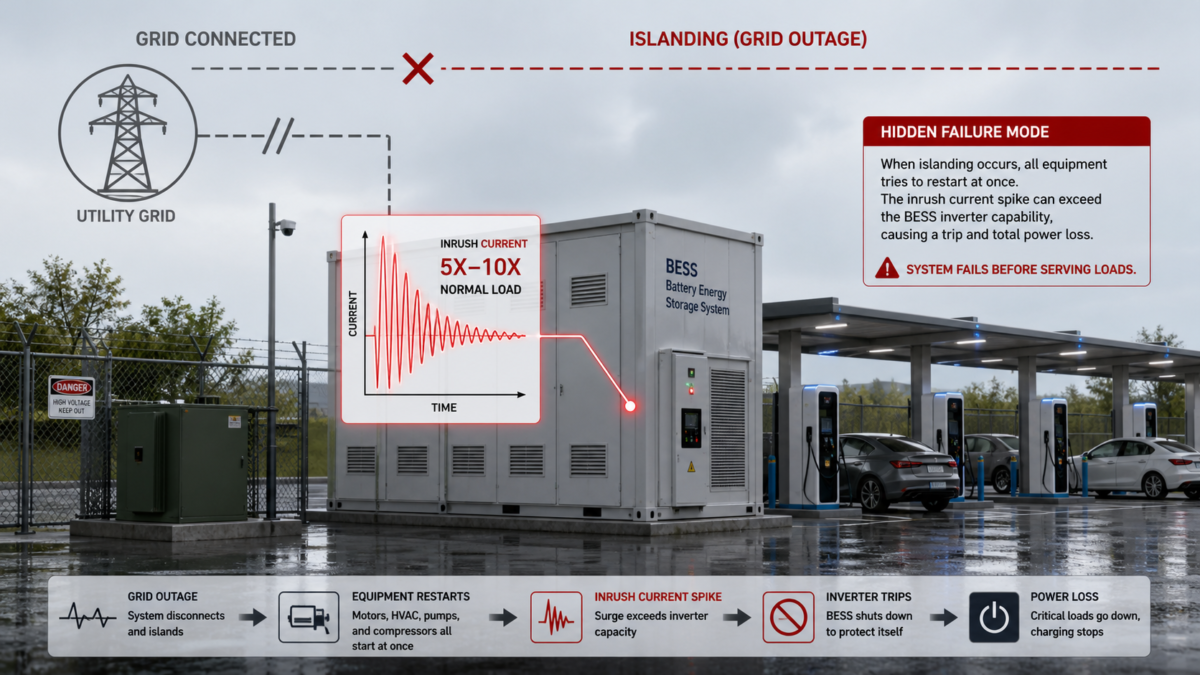
"Islanding" is the technical term for when your system disconnects from the grid and runs on its own power. This transition is the most dangerous moment for a BESS. Imagine all the lights, air conditioners, pumps, and other equipment in your facility turning on at the exact same second. This creates a huge power spike, known as inrush current or restart load.
I saw this happen at a commercial site. Their BESS was sized correctly for their average load, but during a test, the inrush current from their HVAC systems was five times the normal load. The inverter immediately tripped to protect itself, and the entire "resilience" plan failed.
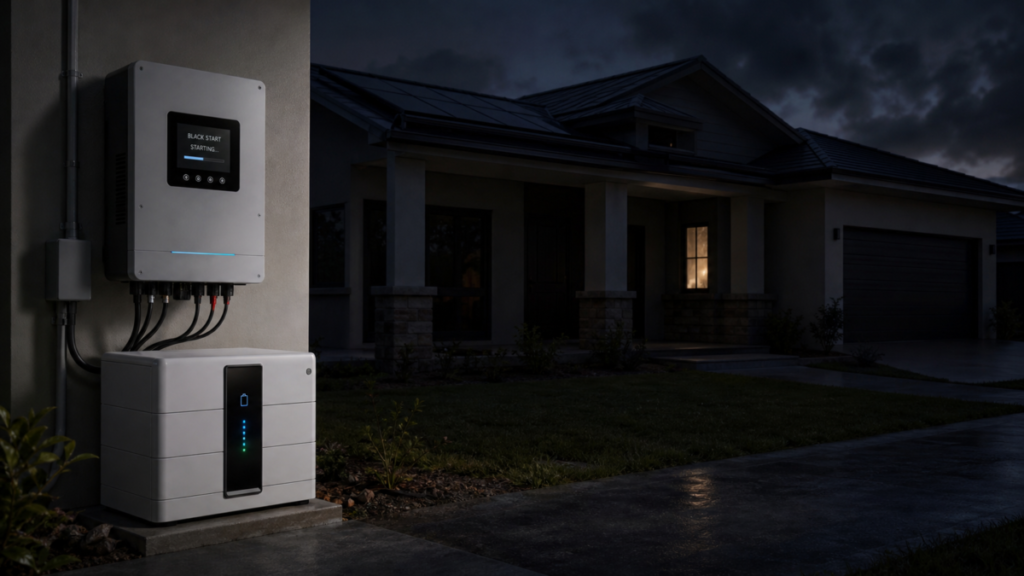
The solution is to have a "restart-load record," which is a measurement of this power spike. Then, you need an Energy Management System (EMS) that can perform a "black start." Instead of turning everything on at once, the EMS intelligently sequences the loads, starting the biggest ones first and waiting for them to stabilize before starting the next. This careful management avoids the surge and allows the BESS to take control smoothly.
Key BESS EV Fast Charging Station Questions Before Signing the Contract?
You're about to invest in a BESS EV charging station, and the sales presentation looks fantastic. But you have a nagging feeling you might be missing something that could come back to haunt you.
Before you sign any contract, demand three things: a site single-line diagram, a constraint register, and an operating-mode simulation. These documents force an honest, engineering-based conversation about what the system can and cannot do, protecting you from marketing claims that don't match reality.
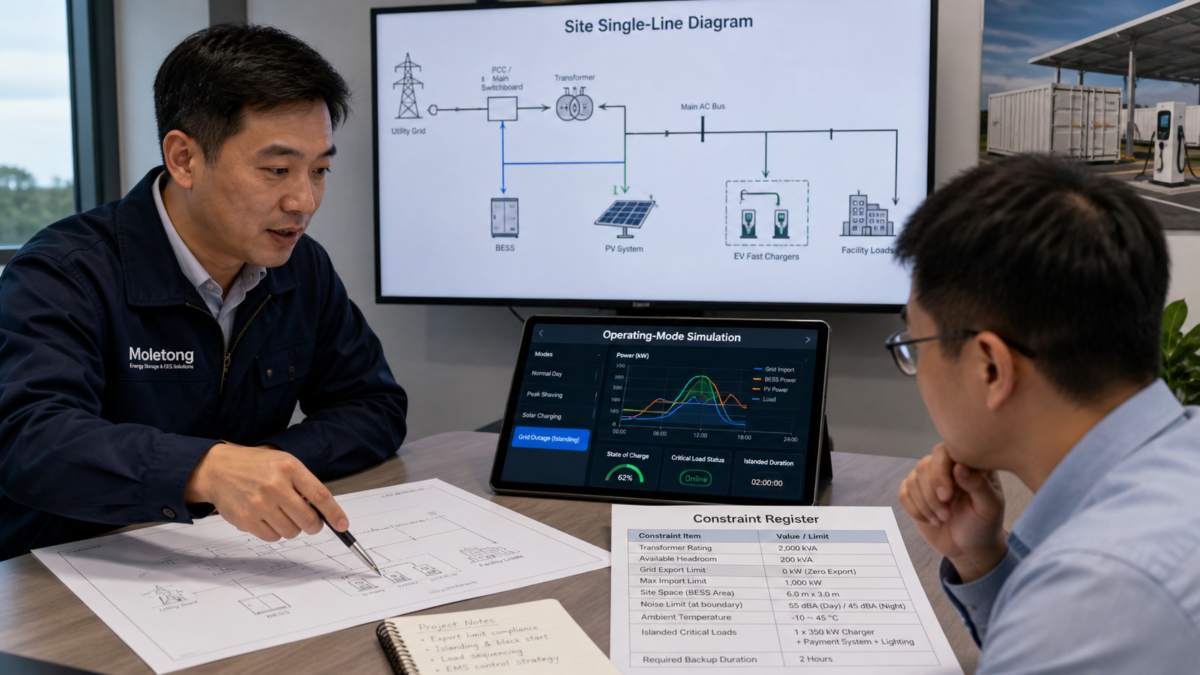
These aren't just pieces of paper; they are the foundation of a successful project. I would never recommend a specific product, including our Moletong storage and EMS solutions, without them. Here’s why they are so important.
- Site Single-Line Diagram: This is the electrical roadmap of your facility. It shows how the grid, your loads, solar, chargers, and the new BESS will all connect. Without it, you’re flying blind. It's the first thing any real engineer will ask for.
- Constraint Register: This is a simple list of all the limits at your site. It should include the transformer size, the grid export limit, the physical space for the equipment, noise restrictions, and anything else that could impact the design. This turns assumptions into facts.
- Operating-Mode Simulation: This is where we bring it all together. Using software, we model how the proposed system will behave throughout a year. We can see how it handles a sunny day, a cloudy day, a peak demand event, and a grid outage. This simulation shows you if the system will actually deliver the financial returns or resilience you expect.
This approach gives you a clear decision path. It makes it easier to separate a genuine technical constraint from a poor assumption.
Conclusion
To succeed with BESS EV fast charging, don't start with a product. Start with your site's limits, define your real needs, and demand an engineering-based simulation before you sign anything.

Leave a Reply