

Worried a custom battery solution is a black box of risks? You see low prices but fear hidden costs, delays, and poor performance, which could jeopardize your project's success.
A successful custom battery project starts with a clear definition of your goals. Focus on landed lifecycle risk over the ex-works price by verifying destination rules, model specs, and supplier claims with contracts and documents.
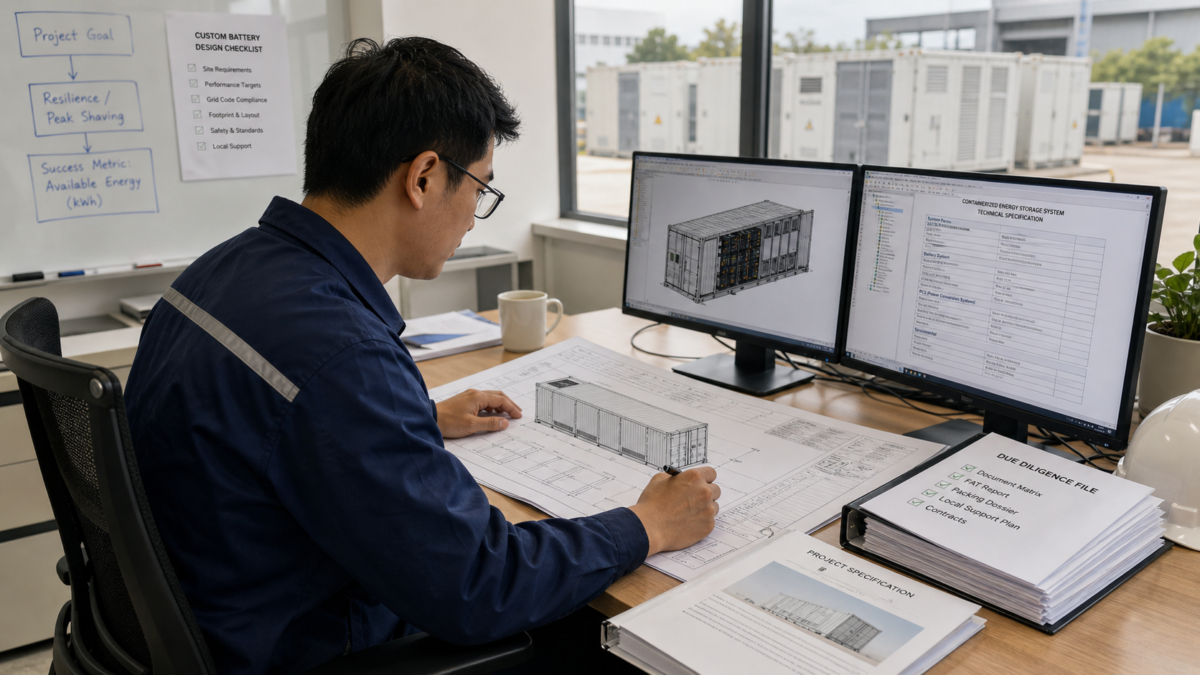
I've seen many project developers get lured in by the promise of a perfectly tailored battery system at a surprisingly low price. The idea of getting exactly what you need without paying for features you don't seems like a clear win. However, my experience has taught me that the journey from a custom design on paper to a functioning asset on-site is full of potential pitfalls. The lowest price on a quote often hides the highest risks. After reviewing many of these scenarios, my conclusion is always the same: landed lifecycle risk matters far more than the lowest ex-works price. You need a practical plan to navigate this process. Before you even look at a single product, you must understand what you are trying to achieve and how you will prove you have achieved it. This guide is built on that very principle.
When Battery Customs Becomes a Business Case?
Standard batteries don't fit your space or power needs. You feel forced into a compromise that wastes money or fails to meet performance targets, threatening your return on investment.
A custom battery becomes a business case when standard products cannot meet specific site constraints, performance targets, or compliance needs. The goal is to solve a unique problem, not just to get a lower price.
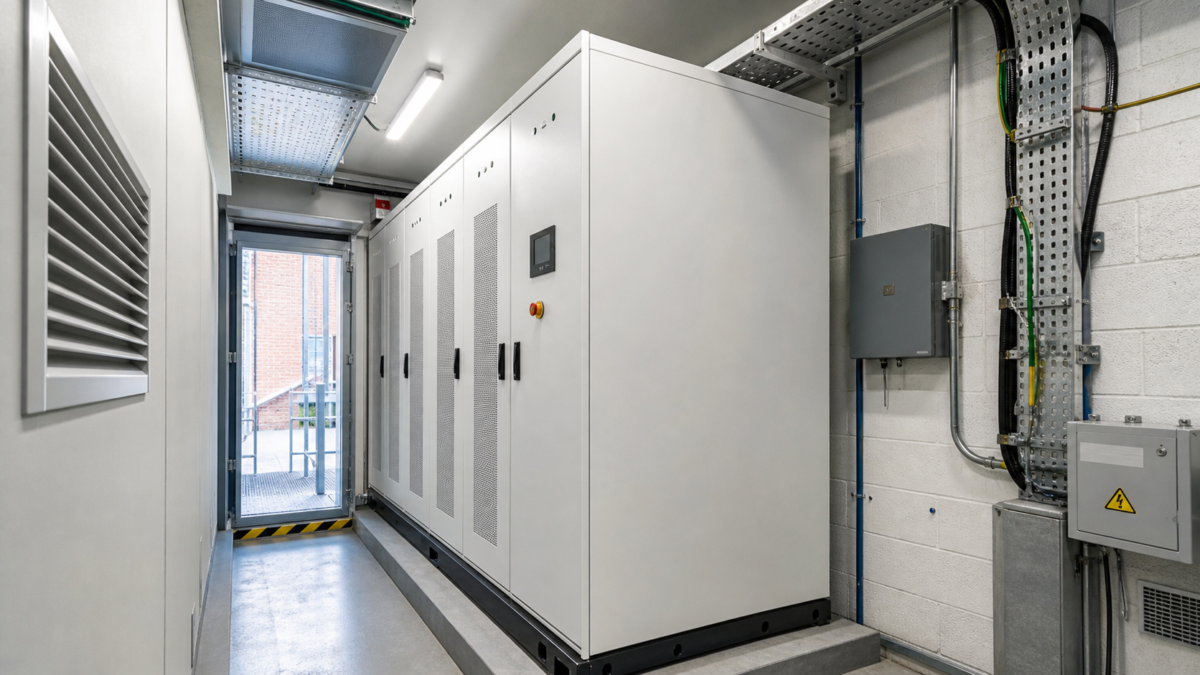
The first thing I do is clarify what the buyer expects the custom battery to achieve. I’ve found that "savings" is often used as a catch-all term, but it's not a clear project goal. Savings, resilience, capacity relief, and compliance are not interchangeable outcomes, and designing for one might compromise another. For example, a system designed for maximum cost savings through peak shaving might not have the duration needed for true resilience during a long outage. A system built to meet a unique footprint constraint might not be the most cost-effective from a kWh perspective. It's critical to define the primary driver for customization because that single decision influences every subsequent choice in design, procurement, and verification. You have to be honest about what problem you're truly solving.
Defining Your Primary Goal
I always push clients to pick one primary objective. This helps focus the design and gives us a clear metric for success. Here’s how I break down the common business cases:
| Business Case Driver | What It Really Means | Key Design Consideration |
|---|---|---|
| Cost Savings | Lowering electricity bills through peak shaving or energy arbitrage. | High cycle life and efficiency are critical. The control software (EMS) must be precise. |
| Resilience | Providing backup power during grid outages. | Energy capacity (duration) and the ability to island from the grid are paramount. |
| Capacity Relief | Avoiding costly utility infrastructure upgrades by supporting a constrained transformer. | Power output (kW) and fast response time are the most important factors. |
| Compliance/Constraint | Meeting a unique physical footprint, weight limit, or local regulation. | The physical design and specific certifications take priority over everything else. |
Once you know your main goal, you can start asking the right questions and evaluating whether a custom solution is a real business case or just a distraction.
Which Battery Customs Inputs Deserve the Most Scrutiny?
The supplier's spec sheet looks perfect, but you have a nagging feeling. You're worried about overlooking a critical detail that could derail the entire project after you've paid.
I scrutinize four things the most: destination-specific rules, the exact battery model and its components, the Incoterms defining risk transfer, and the language of all technical and legal documents. These details reveal the true landed cost and risk.

After defining the goal, my next step is a deep dive into the details that vendors often gloss over. A single positive example from a supplier's marketing brochure should never become a universal promise. I treat every project as unique. For instance, if a supplier like Moletong is proposed, I don't just accept their marketing claims. I demand model-level documents and project contracts to verify their manufacturing, OEM, product, and EPC claims. I’ve learned the hard way that a brochure is not a contract. The most crucial inputs are often buried in fine print or not mentioned at all. These include the destination's import rules and grid codes, which can add unexpected costs and delays. I also insist on knowing the exact model numbers for all key components—the cells, the BMS, the PCS—not just a generic family name. The Incoterms are non-negotiable; understanding who is responsible for the equipment and when that responsibility transfers is fundamental to risk management. Finally, I check the language on all documents. If they aren't in a language my team and local contractors can understand, they are almost useless.
How to Stress-Test Battery Customs Performance?
You've received a performance promise for a custom battery. But how can you be sure it will work under your real-world conditions, not just in a perfect lab environment?
Stress-test a custom battery by comparing the proposal against a realistic downside case, not just the best-case scenario. Demand a signed Factory Acceptance Test (FAT), a detailed packing dossier, and a documented local support plan before shipment.
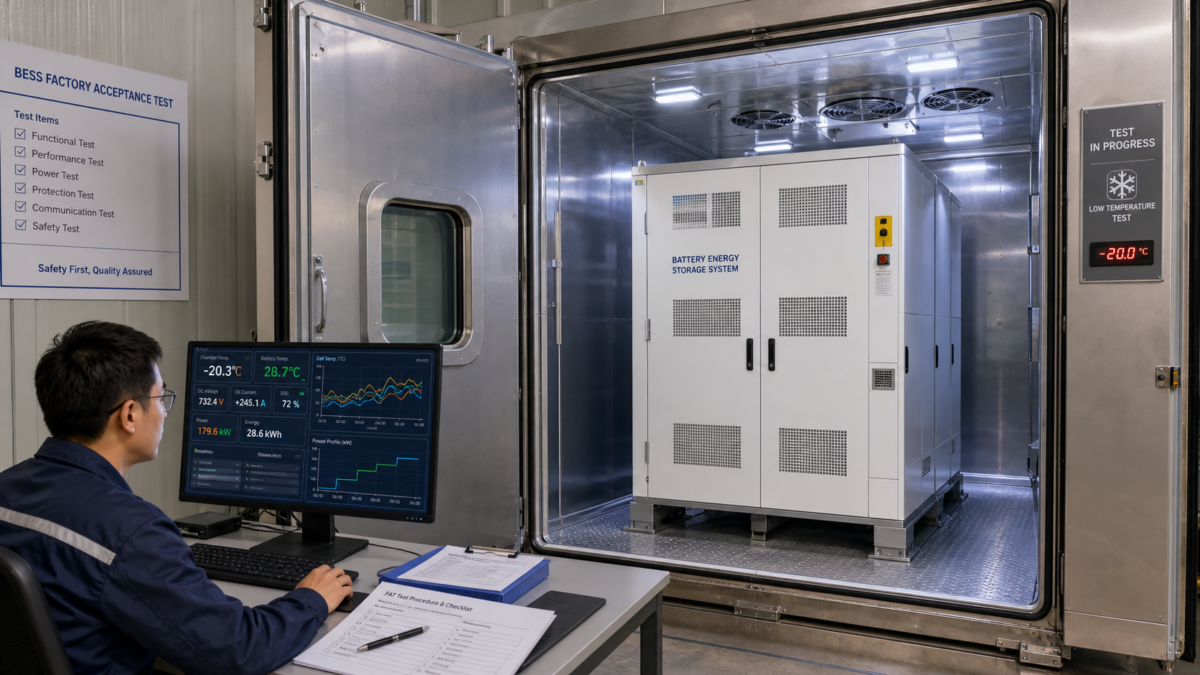
A supplier's performance model will always show the best possible outcome. My job is to find the most likely outcome, and that means building a realistic downside case. What happens if the ambient temperature at the site is 5°C hotter than the spec sheet assumes? What if the grid is less stable than expected? How does round-trip efficiency degrade over 10 years? I compare the supplier's promise with this more pessimistic, but realistic, model. This process often reveals that the promised "savings" are not so certain. To turn these models into reality, I rely on physical proof. A detailed Factory Acceptance Test (FAT) is my first line of defense. I need to see the exact unit we are buying perform its core functions under load before it leaves the factory, and I need the results signed and documented. Next, the packing dossier is not just about a few photos; it’s a comprehensive record of how the unit was protected, sealed, and loaded for transit, which is invaluable for logistics and any potential insurance claims. Finally, a "local support plan" on paper is meaningless. I need to see a contract with a local, qualified entity that specifies response times, spare parts inventory, and technician training records.
A Buyer-Focused Battery Customs Verification Plan?
You're ready to buy but overwhelmed by the paperwork. You need a simple, effective plan to ensure the custom battery you're buying is the one that will be delivered and supported.
A solid verification plan is a due-diligence file. It should include a document matrix tracking all claims, the signed FAT, a complete packing dossier with photos, and a clear local support contract. This file is your proof.
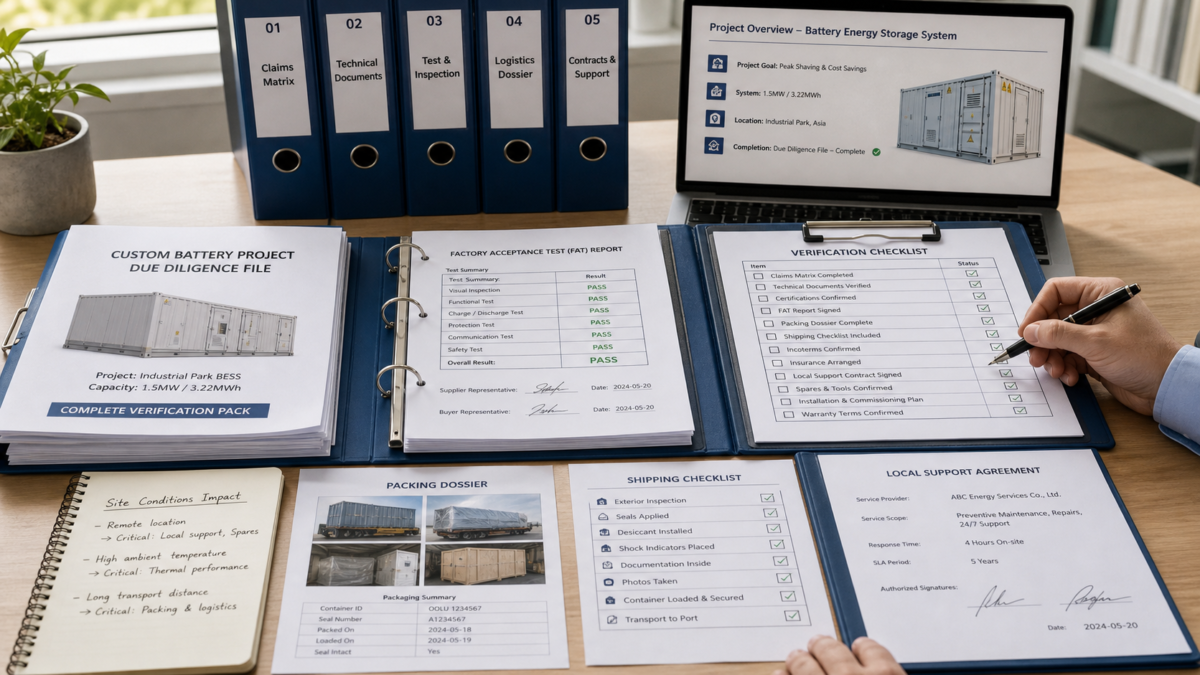
The most convincing version of any proposal is one that comes with a complete due-diligence file. This is my ultimate verification plan. It’s not just a collection of documents; it's a structured system for holding the supplier accountable. I start with a document matrix, which is a simple spreadsheet. In one column, I list every single claim the supplier has made—from kWh capacity and efficiency to warranty terms and certifications. In the next column, I link to the specific document that proves that claim. This simple tool quickly highlights any promises that aren't backed by paperwork. The file must also contain the fully signed FAT report, the complete packing dossier (including photos and a shipping checklist), and the executed local support plan or service-level agreement. I also explain to my clients how their specific site conditions make this plan stronger or weaker. For example, a project in a remote location with a harsh climate makes the local support plan and the packing dossier ten times more critical than for a project in a mild climate next to a major port. This file becomes the single source of truth for the project.
Conclusion
A successful custom battery project prioritizes landed lifecycle risk and thorough verification over the initial ex-works price. Build your proof file before you commit to the purchase.
Leave a Reply