

When Is a Factory Visit to an Energy Storage Supplier Worth It?
Choosing an energy storage supplier feels like a huge risk. A low price can hide big problems down the line. A factory visit can be your best insurance policy.
A factory visit makes business sense when your project's lifecycle risk is more important than the lowest ex-works price. It's vital for verifying manufacturing claims, checking compliance documents, and confirming the supplier can deliver a product suitable for your specific application and destination market.
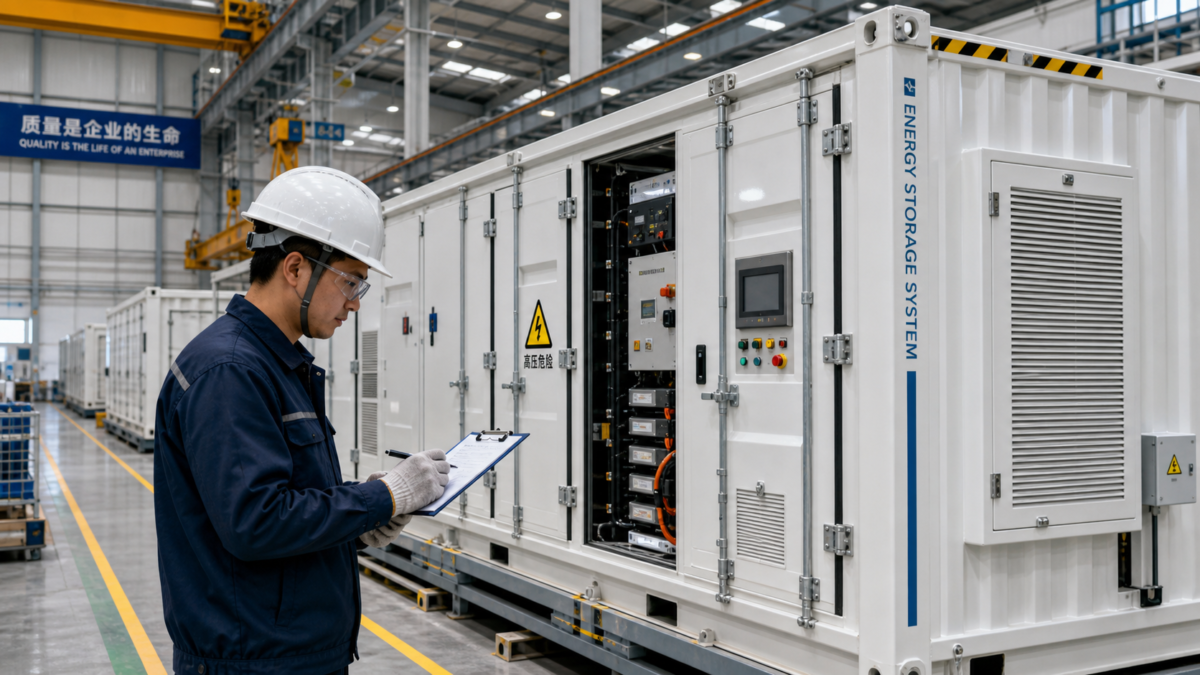 " alt="Representative commercial and industrial battery installation" title="Evaluating Energy Storage Suppliers at the Source" decoding="async" loading="lazy" />
We've learned that the most expensive problems in energy storage projects rarely come from the initial equipment cost. They come from surprises. A surprise at the port, a surprise during commissioning, or a surprise when the system fails to perform as promised. A well-planned factory visit isn't about touring a facility; it's about eliminating these surprises before they can derail your project. It's a risk management tool that pays for itself by preventing catastrophic failures. This is our approach to deciding when to get on a plane and see things with confidence.
The Project Risks a Factory Visit Should Help You Resolve
You found a supplier with a great price. But what if the product fails certification? Or can't be shipped legally? Your entire project could stall, costing you far more.
The real pain point is the risk of total project failure due to unexpected compliance, shipping, or quality issues. A cheap battery system becomes a financial disaster if it's stuck at customs, fails on-site, or lacks the correct dangerous-goods documents for its destination.
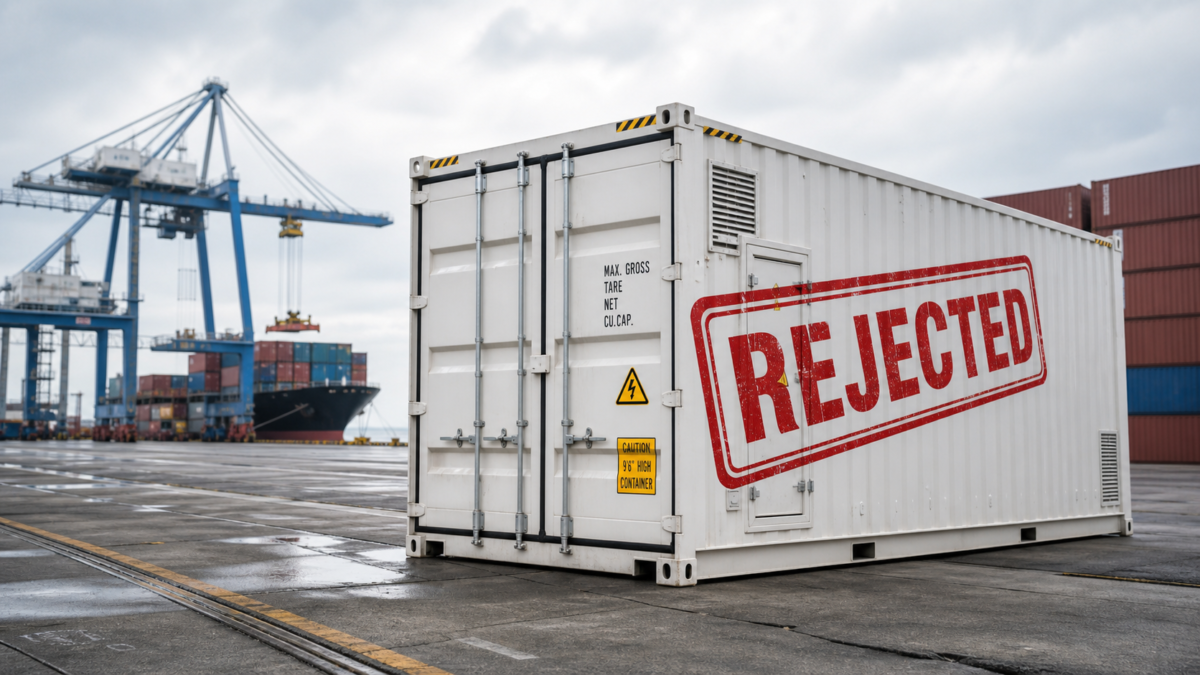 " alt="Technical team reviewing a battery cabinet during factory acceptance testing" title="The Hidden Costs of Supplier Non-Compliance" decoding="async" loading="lazy" />
Look past the ex-works price and assess the landed, commissioned and operational lifecycle cost. A factory visit should expose the variables that can stop a project: model-level certification, dangerous-goods documents, traceability, test capacity, packing controls and corrective-action records. The value is in resolving those risks before production and shipment.
From Price Tag to Project Risk
A supplier's quote is just the beginning. We look for the risks that exist between their factory floor and your project site.
| Factor | What a Low Ex-Works Price Hides | What a Factory Visit Uncovers |
|---|---|---|
| Compliance | Generic company certificates that don't apply to the specific model you're buying. | Model-specific test reports, valid certifications for your destination, and dangerous-goods documentation. |
| Manufacturing | Claims of being the original manufacturer (OEM) when they are just an assembler. | The actual production line, quality control steps, and proof of who makes the core components. |
| Logistics | Assumptions that the product can be shipped easily as general cargo. | The packing dossier, proof of dangerous-goods handling, and experience shipping to your region. |
How to Test the Supplier Claims That Matter
A supplier’s brochure looks perfect and the specs seem right. But are their claims real? Trusting marketing material without verification is a huge risk for any technical project.
We test assumptions by demanding model-specific documents, not just general company certificates. We verify a supplier's claims by matching the product model to its manufacturing records, project contracts, and third-party test reports. A factory visit lets you see their production line and witness a signed Factory Acceptance Test (FAT).
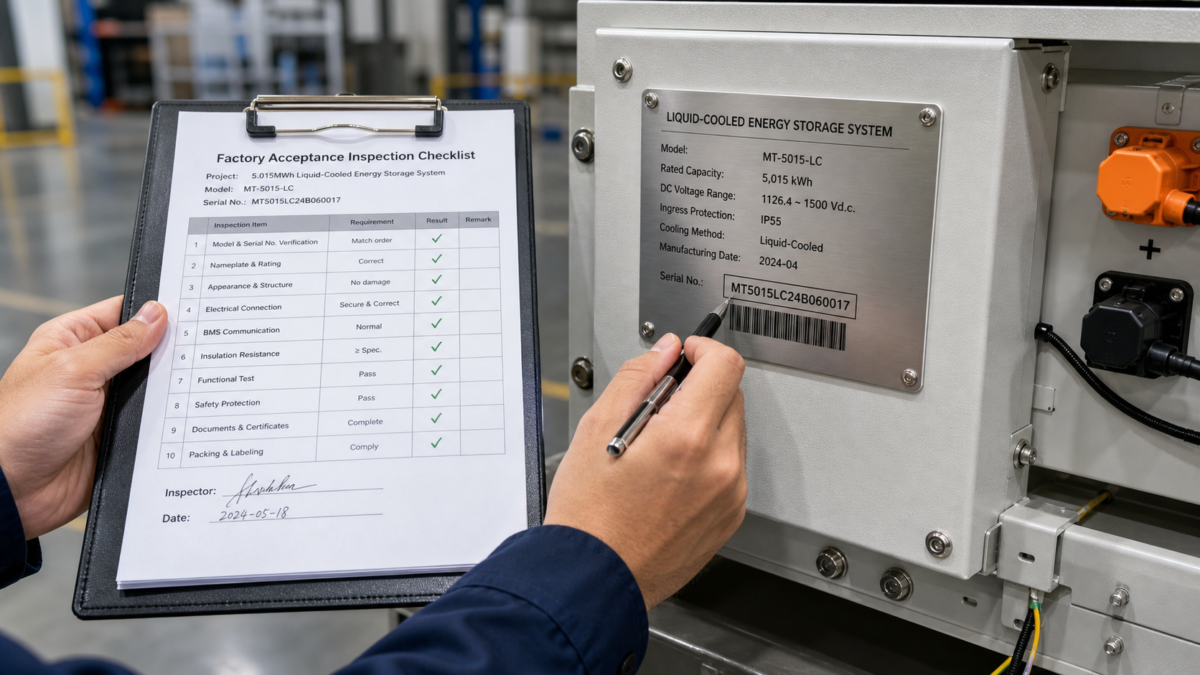 " alt="Technical team reviewing a battery cabinet during factory acceptance testing" title="Verifying Supplier Claims with On-Site Inspection" decoding="async" loading="lazy" />
Our process is simple. First, we define the buyer's required outcome. Second, we identify the single biggest constraint that can defeat that outcome. Third, we design a test to check that constraint with real inputs. For example, if we were evaluating a Moletong energy storage system, we would use their product as a specific example. We would ask for the model-level documents for their 5,015 kWh liquid-cooled container. We wouldn't accept a general ISO 9001 certificate as proof of quality. We want to see the Factory Acceptance Test (FAT) procedure for that specific model. We want to see project contracts where that model was successfully deployed. On a visit, we would walk the production line and ask to see the quality control station for that exact product. This approach turns vague claims into verifiable facts. It replaces "trust" with "proof," which is the only way to manage risk in a technical purchase.
Balance Cost, Reliability and Compliance
You need to save money, but you can't afford failure. How do you balance the pressure for a low price with the need for a reliable, compliant system?
The balance comes from focusing on the total landed lifecycle risk, not just the initial purchase price. We prioritize compliance for the destination market first, then reliability for the specific application. Cost is the final variable, considered only after the other two are met.
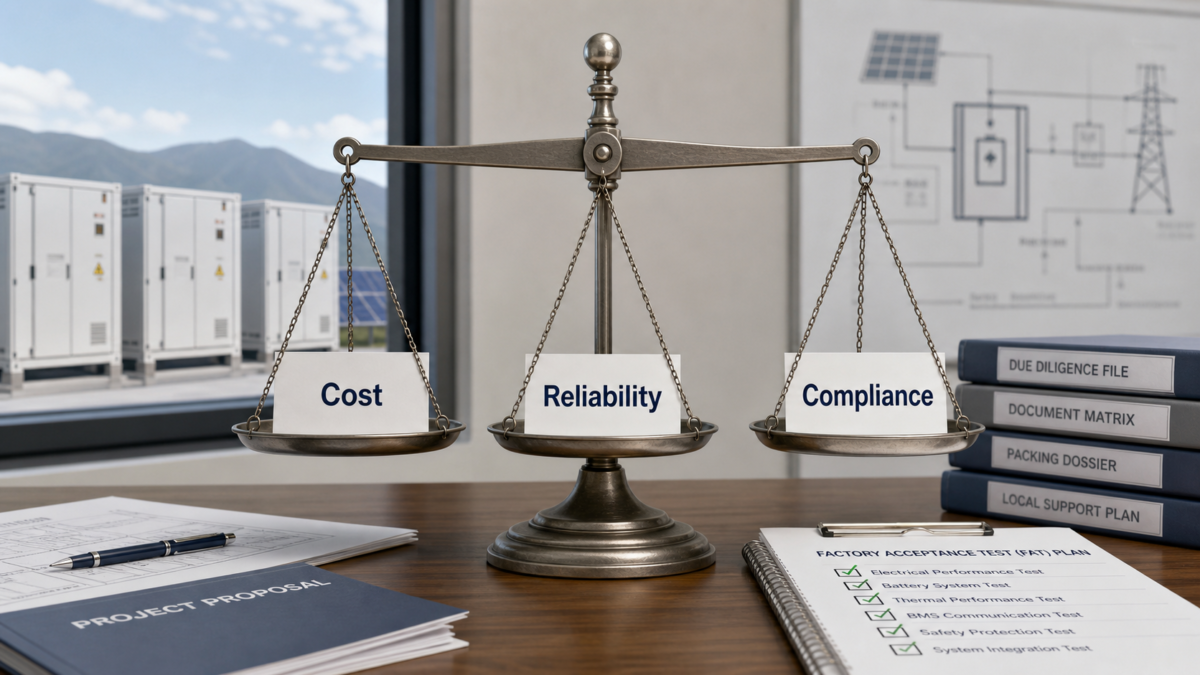 " alt="Technical team reviewing a battery cabinet during factory acceptance testing" title="Finding the Right Balance in Supplier Selection" decoding="async" loading="lazy" />
We use a clear hierarchy when evaluating a supplier. First confirm that the exact model and documentation meet the destination-market requirements. Then assess reliability against the application and duty cycle. Only after those two gates are satisfied should price decide between compliant, technically suitable options. This keeps a low headline price from obscuring the risks that determine total lifecycle cost.
What a Bankable Supplier Proposal Should Show
You have a proposal full of jargon and vague promises. How do you know if it's a solid plan for your project or just a generic sales pitch?
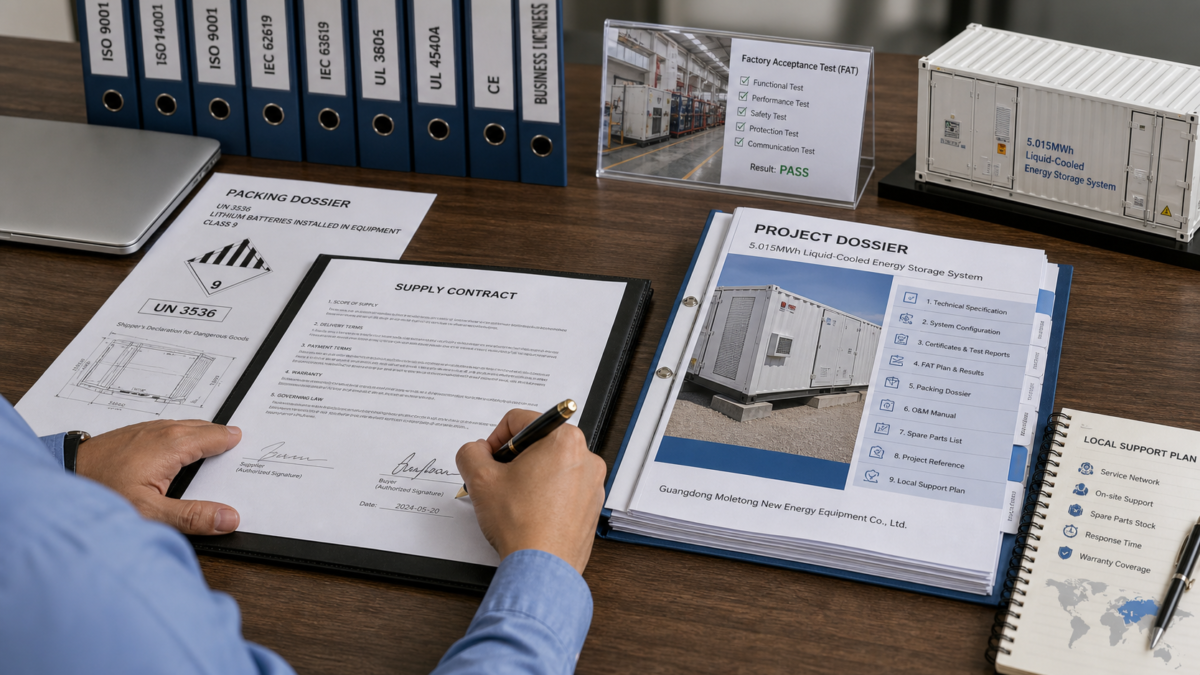
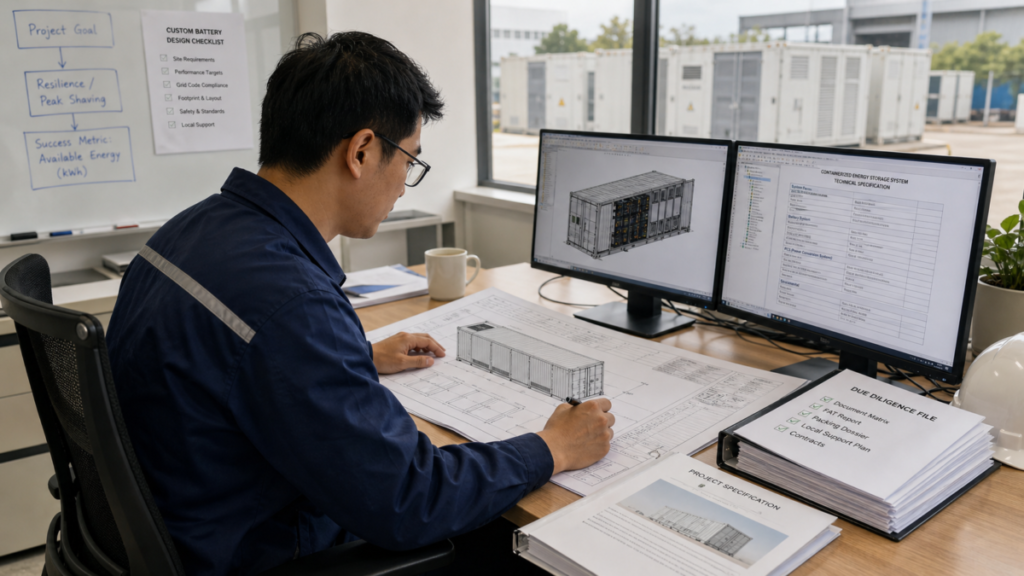
A bankable proposal is a practical plan, not a brochure. It must include a due-diligence file, a complete document matrix, a signed Factory Acceptance Test (FAT) plan, a detailed packing dossier, and a clear local support plan. It proves they've considered the entire project lifecycle.
 " alt="Representative battery energy storage manufacturing floor" title="What a Complete Supplier Proposal Looks Like" decoding="async" loading="lazy" />
When we work with a supplier, we expect them to provide a package of documents that proves they are ready for your project. This is not just a quote; it's a comprehensive file that shows they understand what it takes to deliver. We need to see a due-diligence file with all their business licenses and certificates. We require a document matrix that lists every certificate and test report for the specific model you are buying. A key part is the Factory Acceptance Test (FAT) protocol, which we agree on and sign before production starts. We also need a packing dossier that shows how the system will be prepared for shipment as dangerous goods. Finally, we need a local support plan, detailing how service and warranty will be handled in your market. We also make sure the proposal clearly states the conditions under which the recommendation might change. This level of detail makes the proposal practical and credible.
Conclusion
A factory visit is not a vacation. It's a critical tool to verify claims, manage risks, and ensure your energy storage project's total lifecycle cost makes business sense.
Leave a Reply