

How to Evaluate Wheeled Home Backup Batteries Safely
You see a sleek "battery with wheels" and think it's a simple plug-and-play solution. But what if it doesn't fit your space or can't power your essential appliances?
The greatest risk in a battery with wheels home backup comes from the mismatch between the product's form factor and your site's physical and electrical limits. Installation space, peak power needs, service access, and future expansion plans create more risk than catalogue capacity figures alone suggest.
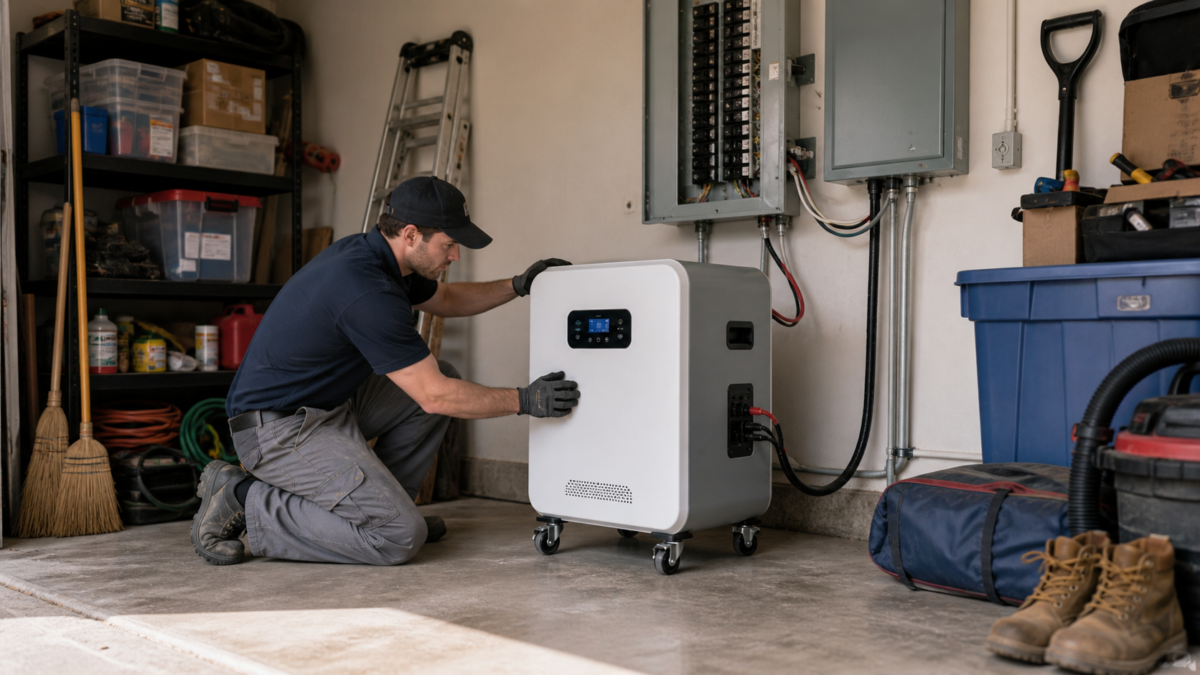 " alt="Representative home solar and battery installation" title="Visualizing the Physical Risks of Home Battery Installation" decoding="async" loading="lazy" />
We don't answer the home backup question by looking at a spec sheet. Our starting point is always the physical reality of your home and how the system will behave under pressure. We've learned that just because a design worked perfectly for one person, it doesn't mean it will work for you. The real test is understanding where a specific design will fail. To do that, we need to define what success actually looks like.
Define Success Before Choosing a Wheeled Home Battery
You think success is just keeping the lights on during a blackout. But what happens when you need more power, or want to add solar panels next year?
Success for a battery with wheels home backup is not just surviving an outage. It means meeting your peak power demands, fitting safely in your space, allowing for future expansion without a complete redesign, and ensuring easy service access for its entire life.
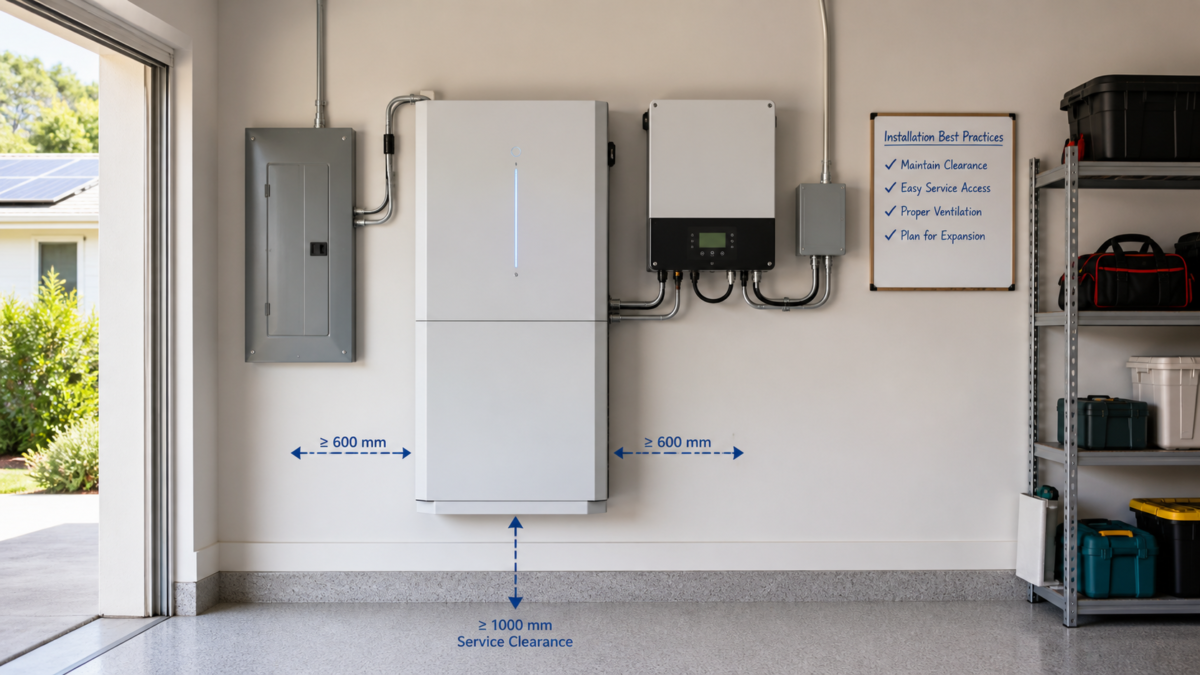 " alt="Representative home battery, inverter and portable energy product family" title="A Well-Planned Home Energy Storage Solution" decoding="async" loading="lazy" />
When we evaluate a system, we look past the simple promise of "backup power." Success is a long-term calculation, and it depends on a few key factors that are often overlooked. A system that works today but blocks future upgrades is not a success. A system that is impossible to service without being completely removed is not a success. We break it down into practical, measurable terms to see if a proposal is truly viable or just a short-term fix with long-term problems.
Key Metrics for a Successful Installation
We compare the promises on the brochure to the physical reality of the installation. The difference is often where the risk is hiding.
| Headline Metric (The Promise) | Real-World Metric (The Reality) |
|---|---|
| 15 kWh Catalogue Capacity | Usable Energy after conversion losses at your site's voltage. |
| 10 kW Peak Power | Can it actually start your specific AC unit or well pump? |
| Compact Design | Does it fit in your designated space with required maintenance clearance? |
| Modular and Expandable | What is the actual cost and process to add another battery module? |
Evidence to Request Before You Buy
A salesperson hands you a glossy brochure full of promises. But that brochure doesn't show the system installed in your garage, connected to your electrical panel.
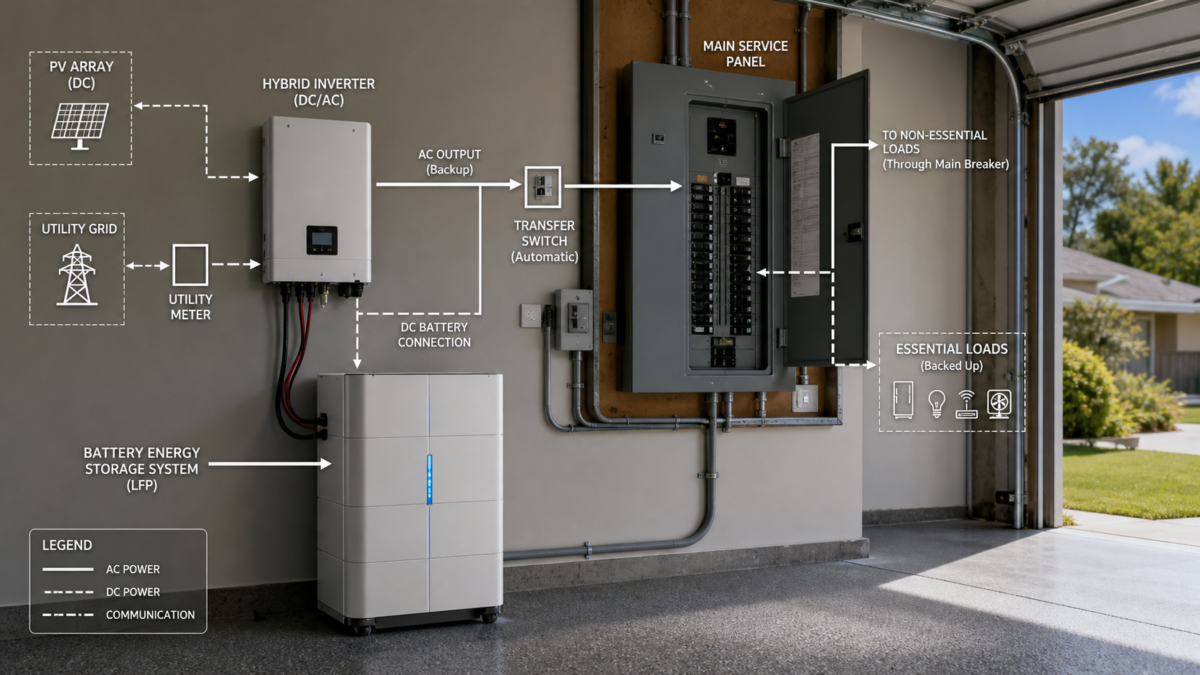
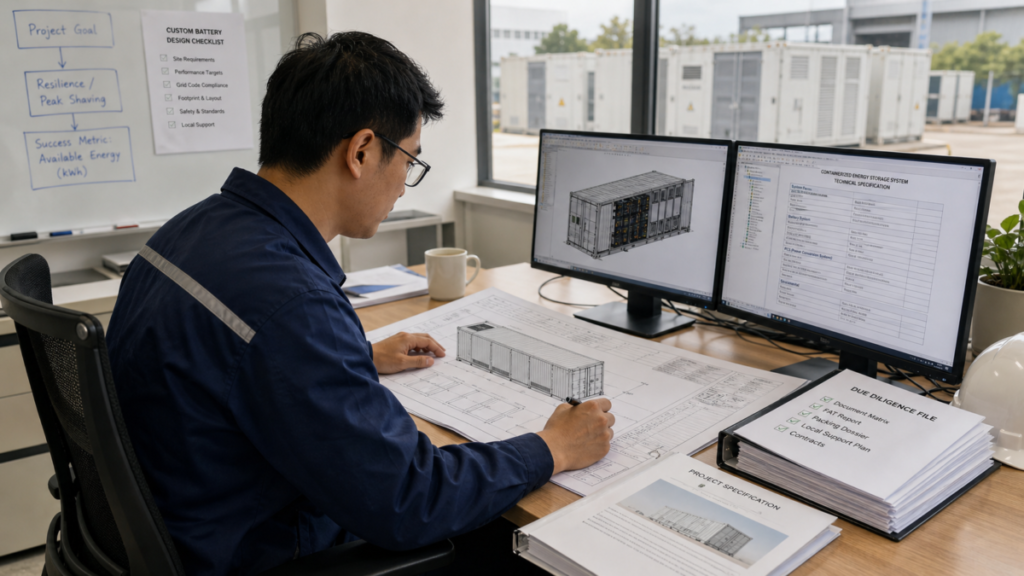
To properly evaluate a proposal, we demand more than a spec sheet. We need a dimensioned layout showing the unit in your space, a single-line electrical diagram, photos illustrating maintenance clearance, and a side-by-side comparison of different models or form factors.
 " alt="Engineers reviewing site data and energy storage project documents" title="The Essential Evidence for Evaluating a Backup System" decoding="async" loading="lazy" />
One successful installation is not proof that the design will work everywhere. We need to see the proof on paper before anyone picks up a tool. This documentation forces everyone to address the real-world constraints of your home. It moves the conversation from abstract numbers to concrete plans. For instance, if we were evaluating a Moletong solution, we would ask for the data to compare their wall-mounted, rack, and stackable products. The best choice depends entirely on the site. A wall unit might be perfect for a garage with limited floor space, while a stackable unit could be better where wall strength is a concern. The evidence tells the story. A dimensioned layout shows you if it will physically fit. A single-line diagram reveals the coupling architecture and potential efficiency losses. A photo with clearance markings proves it can be serviced. This is how you see the assumptions and identify the point at which the answer changes.
Understand the Trade-Off Between System Voltage and Usable Energy
The battery spec sheet says it holds 15 kWh of energy. But your system's voltage and conversion losses could mean you only get to use 12 kWh.
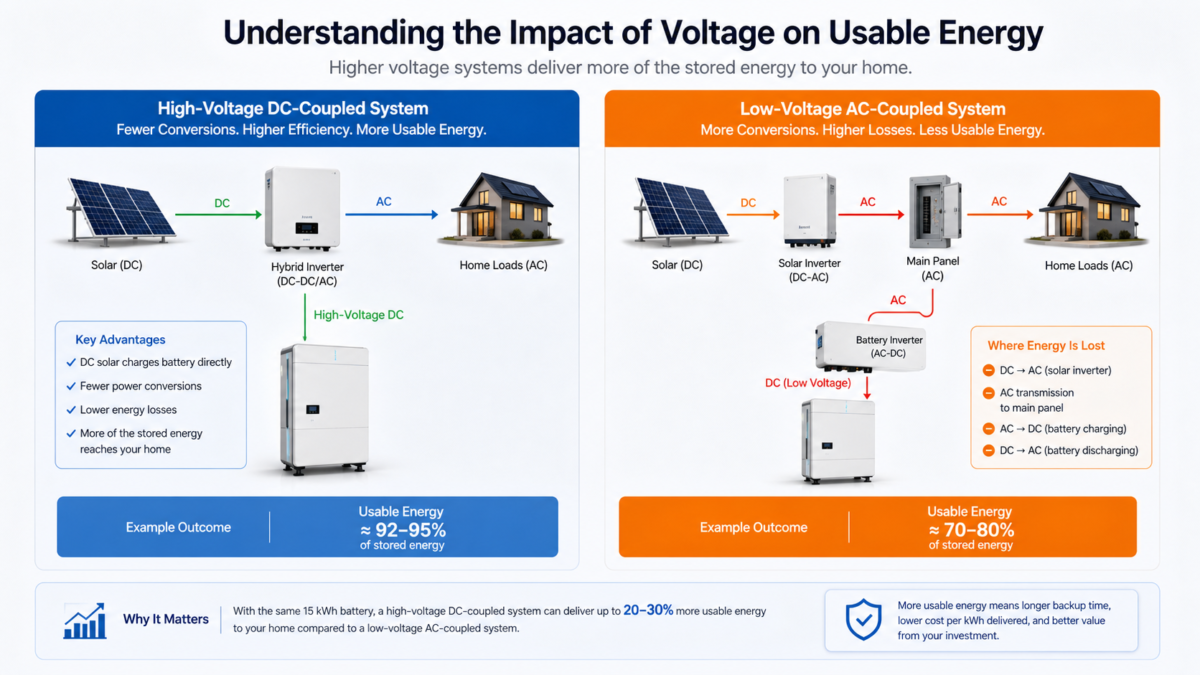
The trade-off is that higher voltage systems are generally more efficient. A high-voltage DC-coupled battery can deliver more of its stored energy to your home compared to a low-voltage system that suffers greater energy losses during AC-DC power conversion.
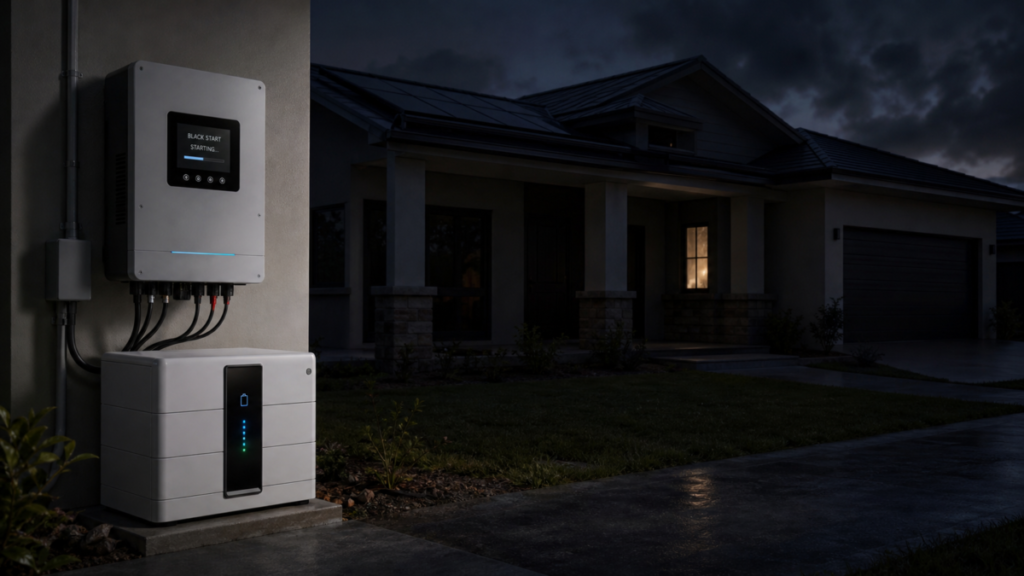
 " alt="Installer checking a wheeled home backup battery installation" title="Understanding the Impact of Voltage on Usable Energy" decoding="async" loading="lazy" />
This is a critical point that many people miss. The number on the box is the stored energy, not necessarily the usable energy. Every time power is converted from DC (what a battery stores) to AC (what your home uses), or vice-versa, a little bit of energy is lost as heat. The system's architecture and voltage determine how many conversions happen and how much energy is lost. For example, a high-voltage battery that is DC-coupled to a hybrid solar inverter is very efficient. The power from the solar panels (DC) can charge the battery (DC) or run your home through the inverter with minimal conversions. An AC-coupled low-voltage battery has to work harder. It converts its DC power to AC, which then flows to your main panel, and if you have solar, that solar power is converted from DC to AC and then potentially back to DC to charge the battery. Each step wastes energy. The risk here is paying for capacity that you can never actually use.
How to Compare Wheeled Home Battery Proposals on Equal Terms
You're looking at three different quotes that seem impossible to compare. One is cheap but small, another is powerful but huge. How do you possibly choose?
To compare proposals on equal terms, ignore the headline price and kWh at first. Instead, evaluate them on four critical points: true usable energy, verified peak power output, the physical footprint with service clearance, and the total cost of your future expansion path.
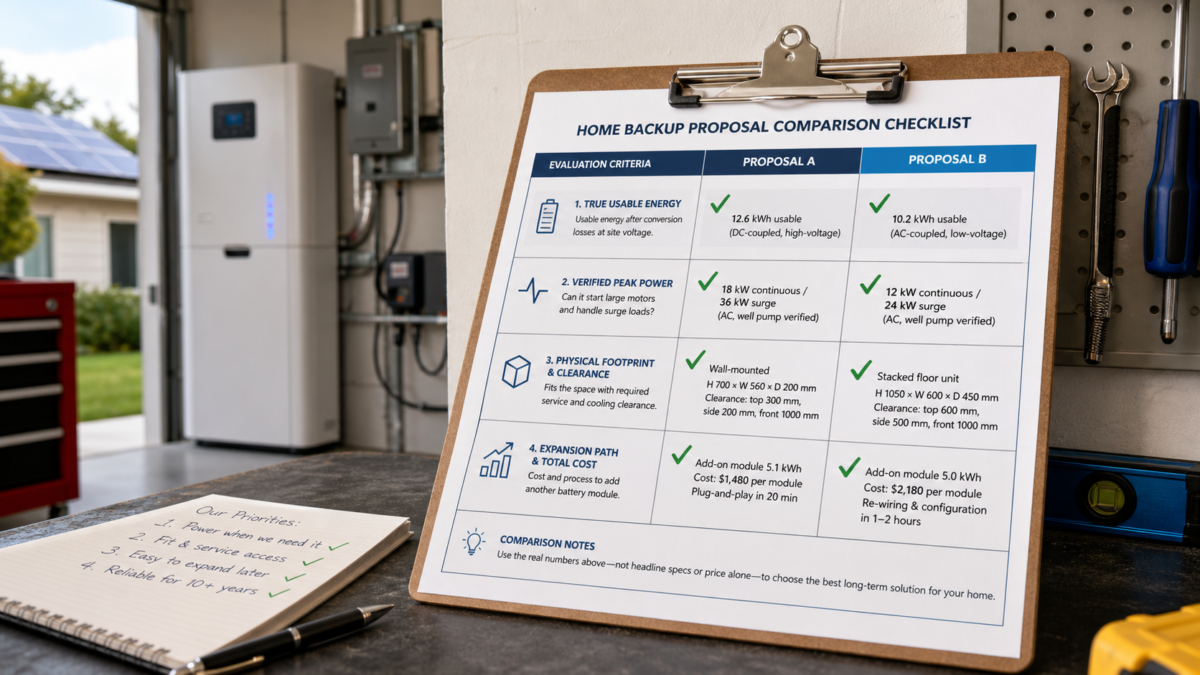 " alt="Engineers reviewing site data and energy storage project documents" title="A Framework for Comparing Home Backup Proposals Fairly" decoding="async" loading="lazy" />
When we get multiple proposals, we put them through a simple four-step process to normalize them. This method cuts through the marketing and focuses on what really matters for your specific situation. It’s the only way to make a true apples-to-apples comparison and avoid a costly mistake.
Step 1: Normalize for Usable Energy
First, we ask the installer to calculate the usable energy based on the proposed system architecture and your home's voltage. This number, not the catalogue capacity, becomes your baseline.
Step 2: Verify Peak Power
Next, we look at peak power. We don't care about the number on the brochure; we care if it can start the largest motors in your home, like the air conditioner or well pump. We ask for proof that the continuous and surge power ratings meet your specific needs.
Step 3: Map the Physical Footprint
Then, we insist on a dimensioned layout for each proposal. We want to see exactly how much space it will take up, including the required clearance for cooling and maintenance. A cheap unit that blocks access to your water heater is not a good deal.
Step 4: Price the Expansion Path
Finally, we look to the future. We ask, "What is the exact cost and process to add a second battery?" This question often reveals the true long-term cost of a system. The cheapest initial proposal can easily become the most expensive one to expand.
Conclusion
The biggest risk is not in the battery, but in how it fits your home. Start with your site's physical limits, demand real evidence, and plan for the future.
Leave a Reply