

How Should Renewable Hydrogen Be Specified for Real Operating Conditions?
I see it all the time. A renewable hydrogen project is announced, and everyone focuses on one big number: the electrolyzer's nameplate capacity. This is a huge mistake.
You should specify renewable hydrogen for real operating conditions by defining the committed offtake, system operability, and bankability requirements first. Announced capacity is a result of this process, not the starting point. This means analyzing the renewable profile, synthesis load, and compression needs with hourly simulations.
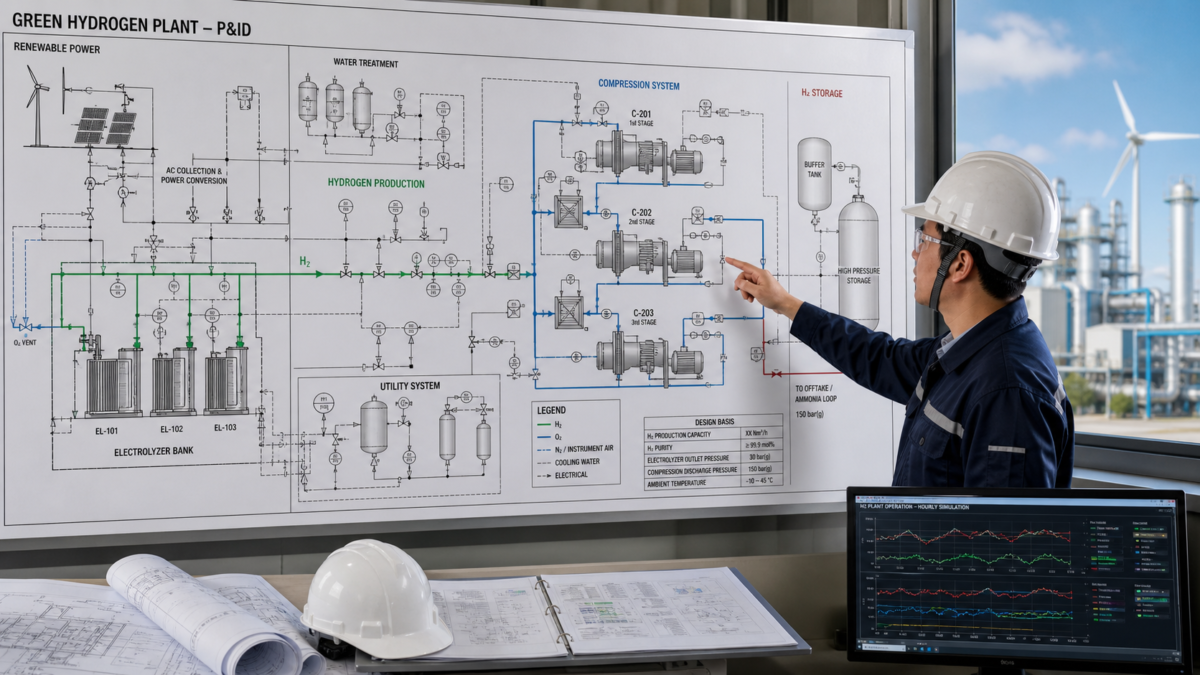
It's easy to get excited about a headline number, like "100 MW of green hydrogen." But I've learned from my work in system integration that this number tells you almost nothing about whether the project will actually work or make money. It doesn't tell you how much hydrogen will be produced each hour, what pressure it will be at, or if the customer can even use it when it's made. The real story is always in the details of the operation. So, I want to walk you through how I approach this to get to a design that works in the real world, not just on a press release.
From Renewable Hydrogen to an Engineering Requirement?
That big, exciting goal of "producing renewable hydrogen" is not an engineering requirement. It is a starting point, but it's a dangerous one if you don't break it down.
To turn a renewable hydrogen goal into an engineering requirement, you must create a mass-and-energy balance, an interface map, and clear offtake assumptions. This defines how much hydrogen is needed, when it is needed, and at what physical conditions (pressure, temperature, purity).
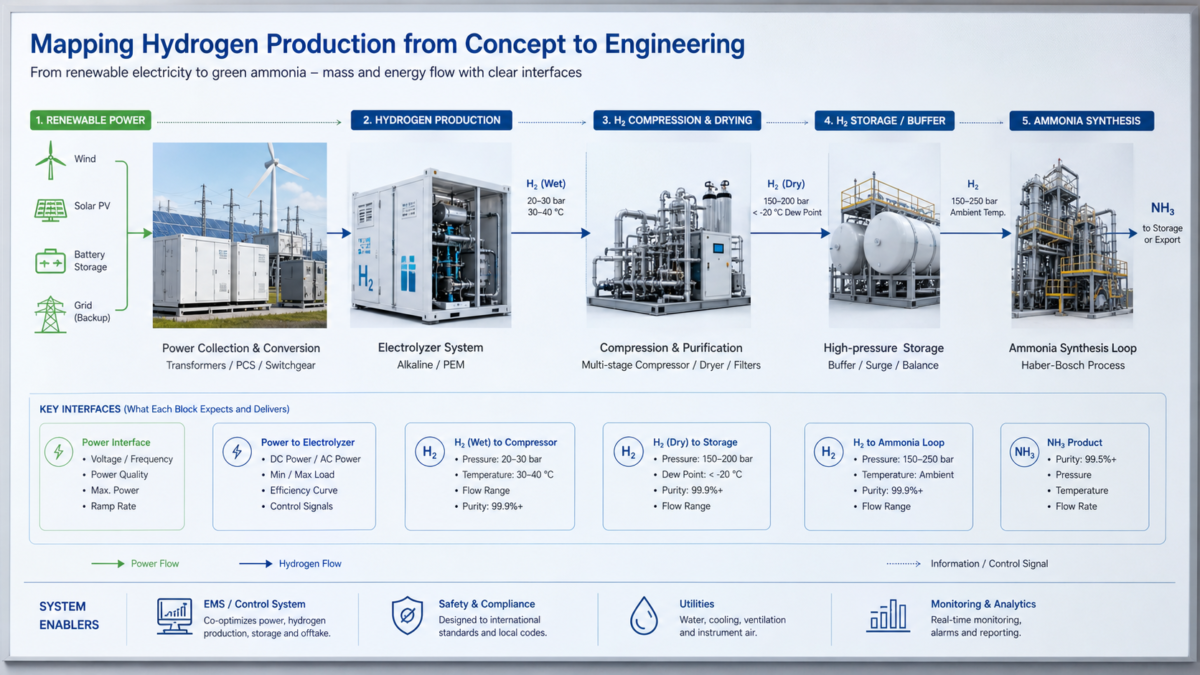
I always start with one rule: announced capacity is not the same as committed offtake, operability, or bankability. Let’s take a practical example from our work at Moletong, where we look at integrated systems. Imagine a client wants to produce green ammonia using wind, solar, an electrolyzer, and battery storage. The "renewable hydrogen" is just one step. To make it a real project, we have to ask specific questions. How much ammonia does the plant need to make per hour? Is that a steady demand, or does it change? This tells us the hydrogen offtake rate. Then, we look at the wind and solar data for that specific location, hour by hour. This tells us our energy input. Now we have a gap to fill. The electrolyzer, battery, and any hydrogen storage must work together to turn a variable power supply into a steady hydrogen supply for the ammonia loop. This process turns a vague goal into a solvable engineering problem.
From Goal to Specification
| Vague Goal | Specific Engineering Requirement | Key Data Needed |
|---|---|---|
| “Make green hydrogen” | Produce 5 metric tons of H2 per hour at 30 bar pressure, with 99.9% purity. | Offtake contract, process P&ID. |
| “Use solar and wind” | Design a power system using 150 MW of local PV and 100 MW of wind. | 8760 hourly solar and wind data. |
| “Be cost-effective” | Achieve a Levelized Cost of Hydrogen (LCOH) below a target price. | Capital costs, operating costs, utilization factor. |
The Role of Compression in the Final Design?
People often think of compression as a simple, separate step after hydrogen is produced. This view is wrong and can lead to major design failures and unexpected costs.
Compression is a critical system-level component that dictates the electrolyzer’s operating back-pressure, consumes significant power, and defines the interface between hydrogen production and its final use. Its design directly impacts overall plant efficiency, layout, and cost, so it must be integrated from the beginning.
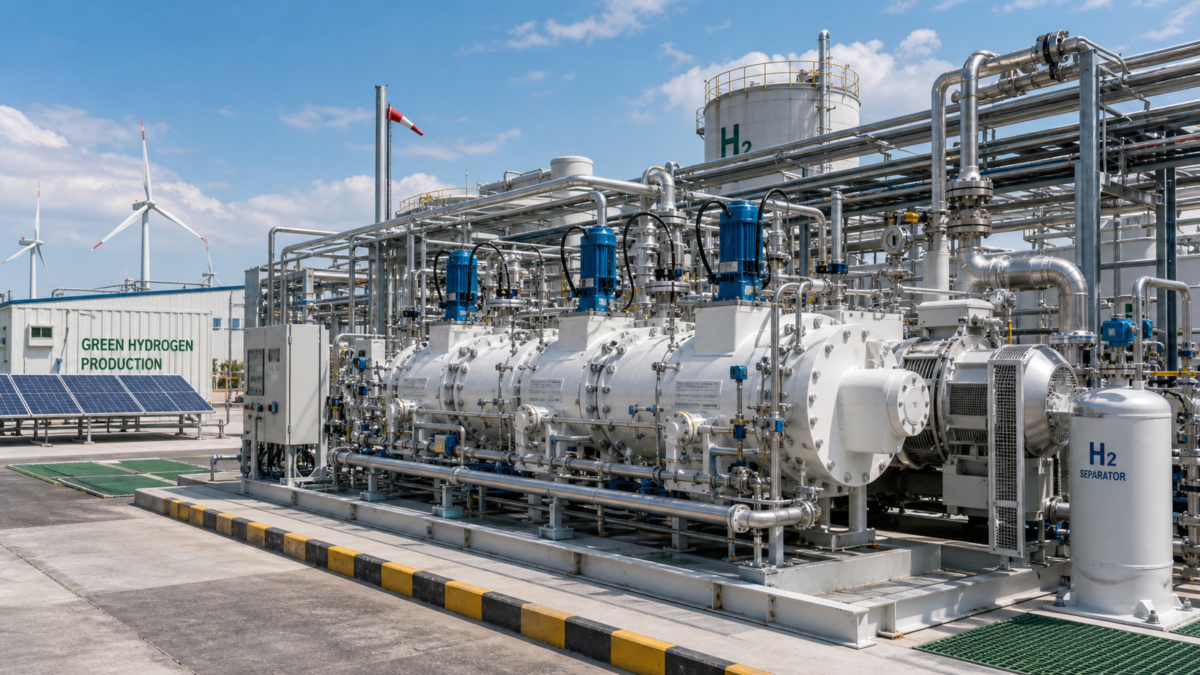
In my experience, compression is where the theory of a project meets the reality of physics and money. An electrolyzer might produce hydrogen at 20 or 30 bar. But if you need to store it in a tank at 200 bar, or feed it into a synthesis loop at 150 bar, you need a compressor. This compressor is a huge piece of equipment that uses a lot of electricity. That electricity has to come from your renewable power, which means less power is available for the electrolyzer. This directly lowers your total hydrogen output. It also changes how the electrolyzer runs. The compressor creates back-pressure, which the electrolyzer must be able to handle. Some electrolyzers are sensitive to this. So, you can't just pick an electrolyzer and a compressor separately. You have to design them as a single system, considering how they will interact every hour of the day.
Why One Renewable Hydrogen Outcome Does Not Prove the Rule?
A common mistake is seeing a successful project in one location and trying to copy-paste it to another. This almost never works because every project's conditions are unique.
One renewable hydrogen outcome does not prove the rule because the final design is highly sensitive to the local renewable profile and the specific offtake demand. A system optimized for steady wind in one region will fail if applied to a location with intermittent solar.
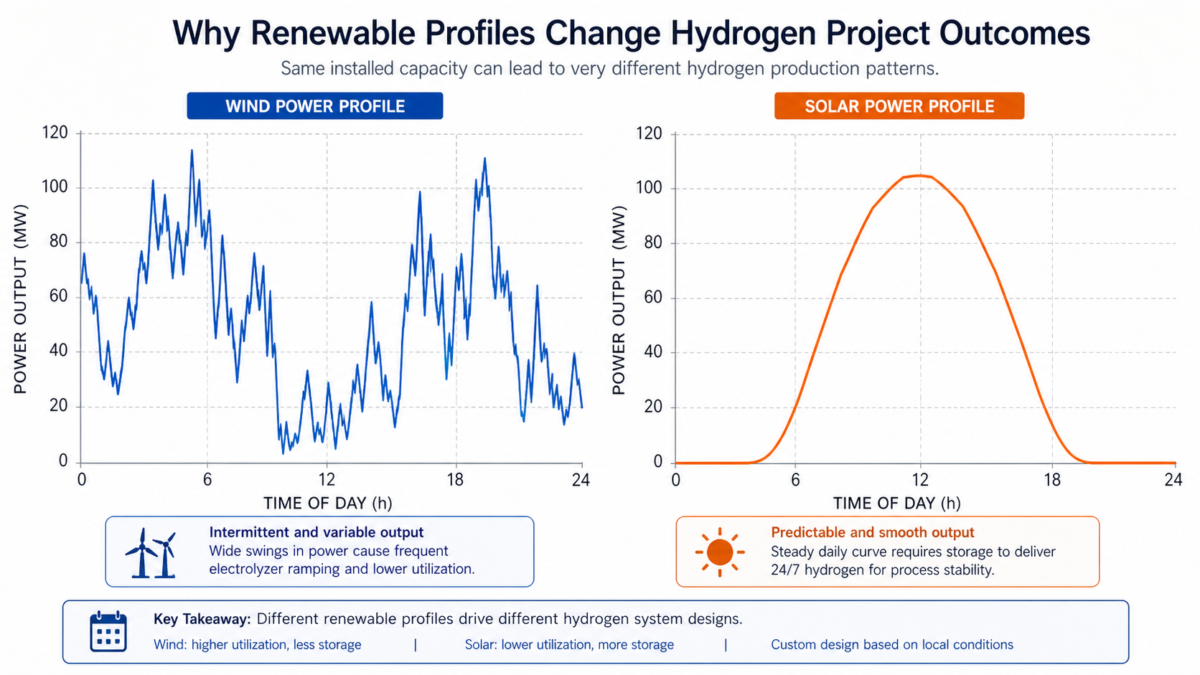
Let’s go back to the Moletong green ammonia example. Imagine we design a successful plant in a coastal area with strong, consistent wind. The wind blows day and night, so the electrolyzer runs at a high utilization rate, maybe 70-80% of the time. This means we might need less hydrogen storage to keep the ammonia plant running smoothly. The project is a success. Now, someone wants to build the same plant in an inland desert location with great sun but very little wind. If they use the same design, it will be a disaster. The solar power is only available for 8-10 hours a day. The electrolyzer utilization will drop to 30-40%. To keep the ammonia plant running 24/7, you would need massive amounts of battery storage or hydrogen storage. This completely changes the cost and the risk of the project. This is why I always insist on starting with a local, hourly simulation. The result is a custom solution, not a copy.
How to Document the Renewable Hydrogen Decision?
A good decision is useless if you can't explain it or defend it. In renewable hydrogen, with so many variables, clear documentation is essential for getting funding and operating successfully.
You must document the renewable hydrogen decision with a transparent mass-and-energy balance, detailed hourly simulation results, a clear interface map, and firm offtake assumptions. These documents form the basis of a bankable and operable project by showing the reasoning behind every choice.
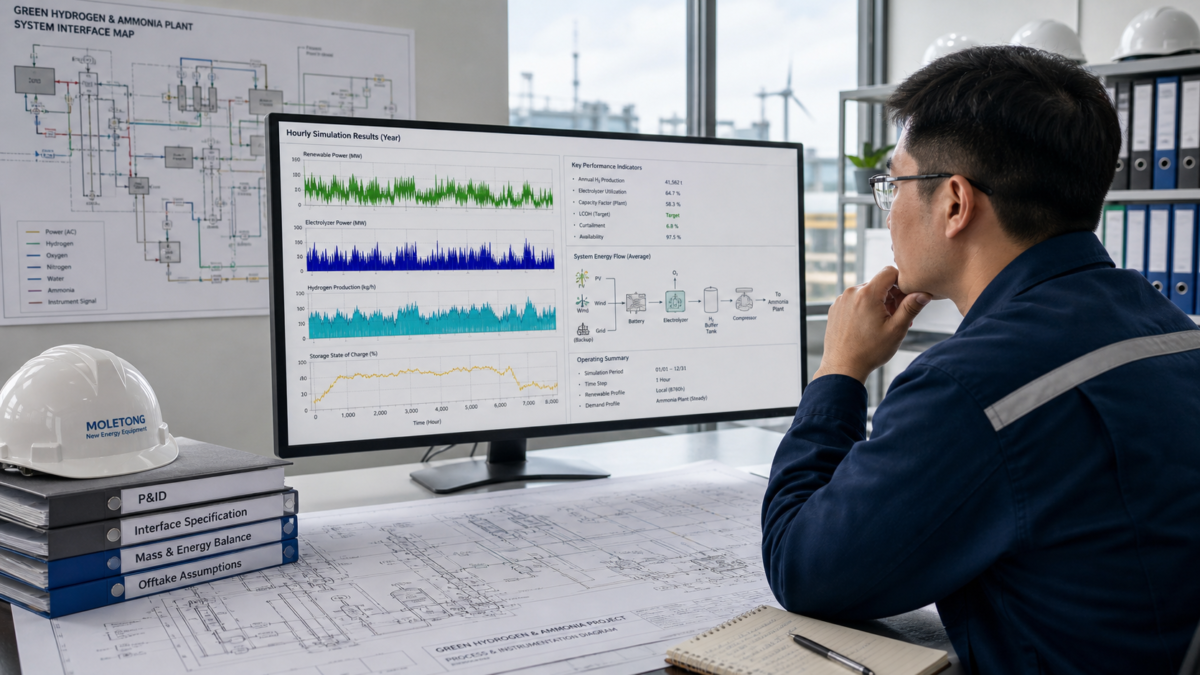
When I work with clients and partners, I make sure the engineering process is an open book. We don't just deliver a final number; we show our work. First, we create the mass-and-energy balance. This simple document shows where every unit of energy and every kilogram of material goes. Second, we provide the hourly simulation data, often for a full year of operation. This shows exactly how the system is expected to perform in different conditions. Third is the interface map. This diagram clearly defines the connection points between the renewable generation, the electrolyzer, the compressor, storage, and the final user. It specifies pressures, temperatures, and flow rates at each point. Finally, we document all the assumptions about the offtake, like how much hydrogen the customer needs and when. Together, these documents tell a complete story. They allow anyone—an investor, an operator, or another engineer—to understand why the system was designed the way it was and to trust the outcome.
Conclusion
To specify a renewable hydrogen project correctly, you must look past the headline capacity. Focus on the real operating conditions, the offtake needs, and the system-level interactions.

Leave a Reply