
What Happens If You Export Small Amounts of Energy in the Uk Without Notifying Anyone?
Are you thinking about installing solar but grid export is limited? You might be tempted to just export a little bit, thinking no one will notice. But what really happens?
In the UK, exporting energy without notifying your Distribution Network Operator (DNO) can lead to fines, system disconnection, and voided equipment warranties. It can also create safety and stability problems for the local electricity grid, potentially affecting your neighbours and breaking regulations.
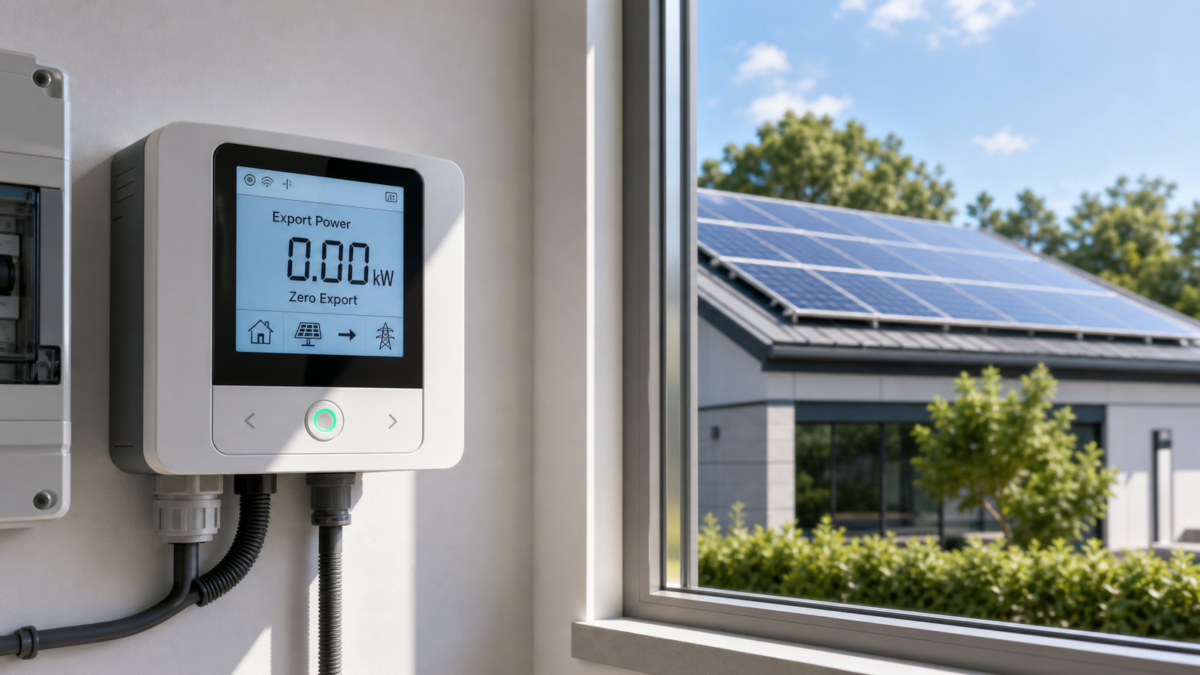
I've seen this question come up a lot. People want to maximize their solar investment, but they run into grid connection limits. They hear about zero export control systems and wonder if they can just get away with a little "spill" now and then. The reality is that the risks are not worth it, especially when a properly designed zero export system offers a much better solution. But an optimized PV design is never complete until you've closed the loop on all the grid and acceptance constraints. So, before you even think about unauthorized export, let's break down how to do it the right way and what that really means for your business case.
When Solar Plant Zero Export Control Becomes a Business Case?
Your DNO says you can't export power, but your roof is perfect for a big solar array. Do you just install a tiny system or give up?
A zero export control system makes sense when your site can consume more solar power than the grid will allow you to export. This lets you build a larger, more cost-effective solar plant, maximizing your self-consumption and energy savings without violating grid rules.
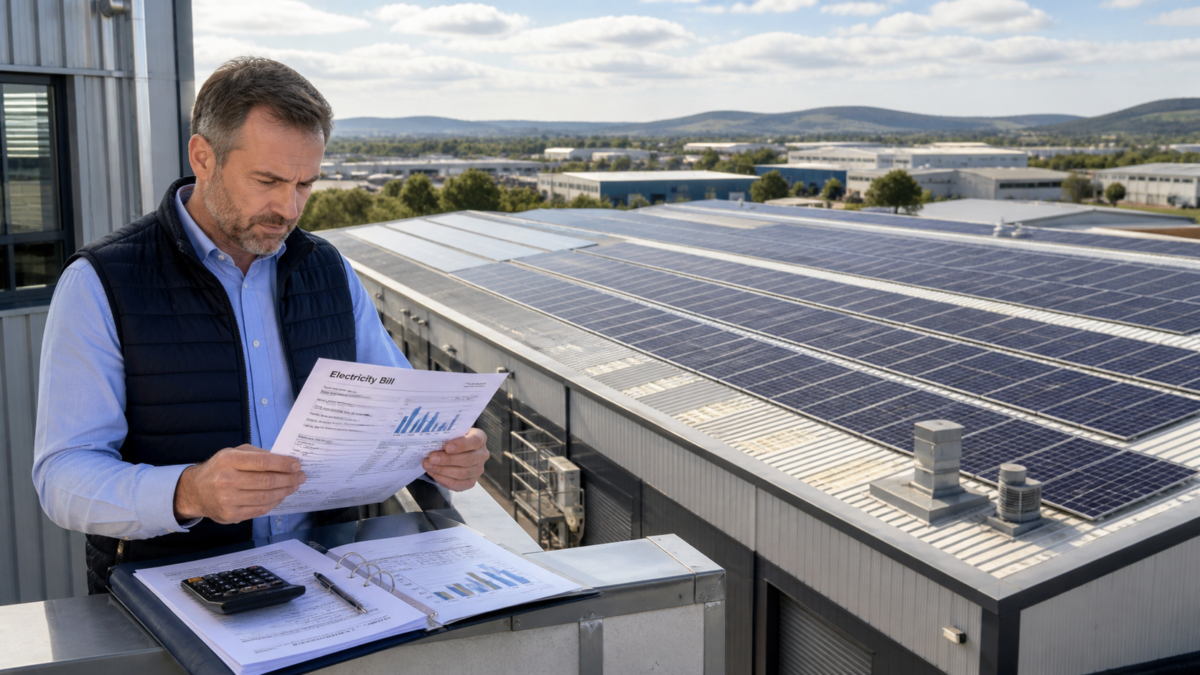
The first thing I always do is clarify what the buyer actually expects the system to achieve. I once worked with a client who just wanted "zero export." But when we dug deeper, what he really wanted was resilience against power cuts. Another client wanted to reduce peak demand charges. These are not the same thing. Savings, resilience, capacity relief, and compliance are not interchangeable outcomes. You have to be clear about your primary goal because it changes the entire design. For example, Moletong's energy management systems (EMS) can be configured for simple anti-reverse-flow control, but they can also manage peak shaving and backup power if you pair them with an energy storage system. The business case depends on the goal.
Comparing Zero Export Goals
You need to know what you're buying. Here is a simple breakdown of what these different goals mean in practice.
| Primary Goal | What It Really Means | Key Equipment Needed | Common Misconception |
|---|---|---|---|
| Compliance | Simply stopping export to the grid to get a connection agreement (G99/G100). | PV System, Inverters, Export Limitation Device (ELD). | That this automatically saves the most money. It only enables the project. |
| Savings | Maximizing self-consumption of solar energy to reduce electricity bills. | Oversized PV array (high DC/AC ratio), fast-acting ELD. | That a bigger system always equals more savings. Wasted (curtailed) energy eats into returns. |
| Resilience | Keeping critical loads running during a grid outage. | PV System, Hybrid Inverter, Energy Storage (Battery), Islanding protection. | That a standard zero export system will work when the grid is down. It won’t. |
| Capacity Relief | Reducing peak demand to avoid overloading your site’s transformer or incurring high network charges. | PV System, Energy Storage, Advanced EMS for load tracking. | That solar alone can solve peak demand issues. It only works when the sun is shining. |
Which Solar Plant Zero Export Control Inputs Deserve the Most Scrutiny?
You have a quote for a zero export system that looks great on paper. But how do you know if it will actually work when you need it to?
The most critical inputs to scrutinize are the system's reaction time, the accuracy of its power meter, and the failure-mode logic. A slow reaction can allow export, while an inaccurate meter can trip the system unnecessarily. The fail-safe behaviour must be guaranteed.
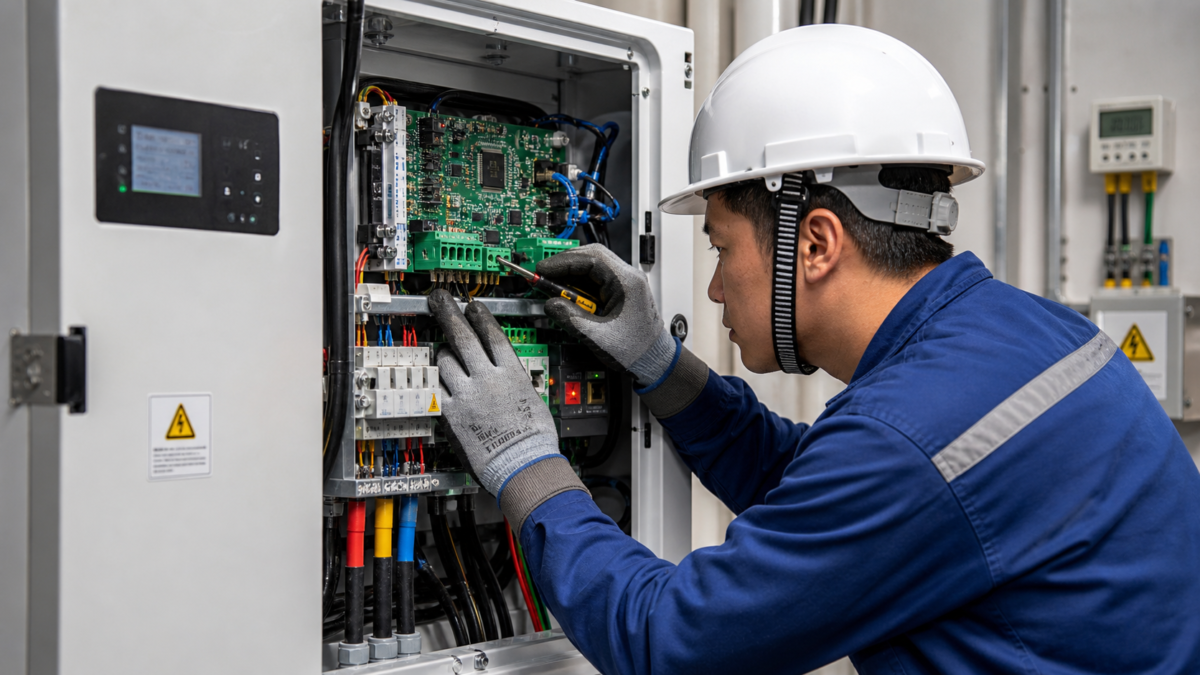
My next step is always to check the core design choices and compare them with a realistic downside case. I focus on four things: the physical layout, the DC/AC ratio, the protection scheme, and the utility application process. For the layout, I want to see where the control meter is. Is it measuring the whole site load or just one part? I saw a project fail because the meter was installed after a large, intermittent motor load, causing chaotic control signals. The DC/AC ratio is also key. Oversizing the solar array relative to the inverters can be a good strategy for boosting production, but with zero export, it means the system has to curtail power more often and more aggressively. You need to simulate this to ensure the system is stable. Finally, I would never trust a single positive example as a universal promise. I need to see the test sheets and the protection settings to understand what happens if the controller fails. Does it shut the system down safely?
How to Stress-Test Solar Plant Zero Export Control Performance?
The system is installed and the DNO has signed off. But how will it perform when your factory's biggest machine suddenly shuts down on a bright, sunny day?
You stress-test a zero export system by simulating worst-case scenarios. This involves creating sudden, large drops in on-site load or tripping inverters to see how quickly and accurately the control system responds to prevent any export to the grid.
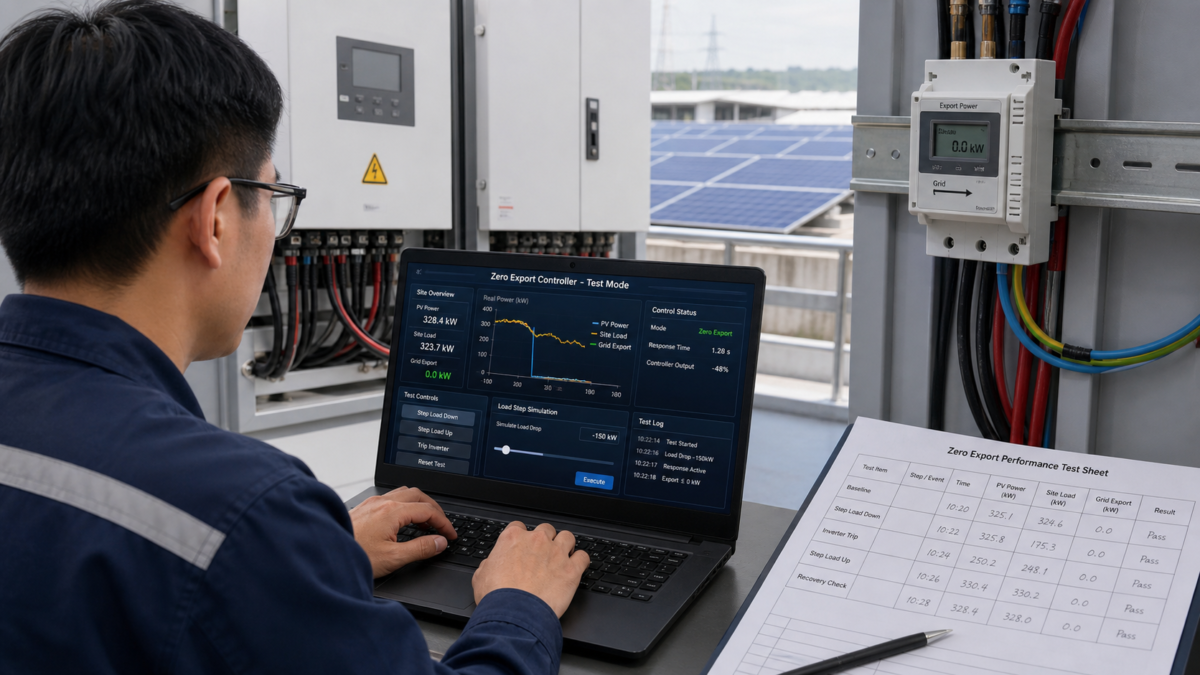
Real-world testing is non-negotiable for me. Simulations are a great starting point, but they can't capture every variable. The most convincing projects I've worked on involve a detailed, witnessed testing plan. We start with a baseline performance check under normal conditions. Then, we start creating problems. We'll turn off the largest electrical loads on site to see how fast the solar production is curtailed. The DNO usually specifies a response time, often under two seconds, and we need to prove the system can meet it. We also test what happens if one of the solar inverters trips offline. Does the controller handle the sudden change in generation gracefully? Using reliable equipment like Moletong's electrical switchgear and control systems helps, but the proof is in the data. We record everything on test sheets, showing the load change, the inverter response, and the grid export reading, which must remain at or below the agreed limit. This documentation is your proof of performance.
A Buyer-Focused Solar Plant Zero Export Control Verification Plan?
You're ready to sign a contract for a solar project with export limitation. How can you be sure you're getting a system that is safe, compliant, and performs as promised?
A buyer-focused plan requires five key documents: a site survey pack, simulation inputs, an interconnection register, witnessed test sheets, and a performance baseline. This evidence proves the design is tailored to your site and meets grid requirements.
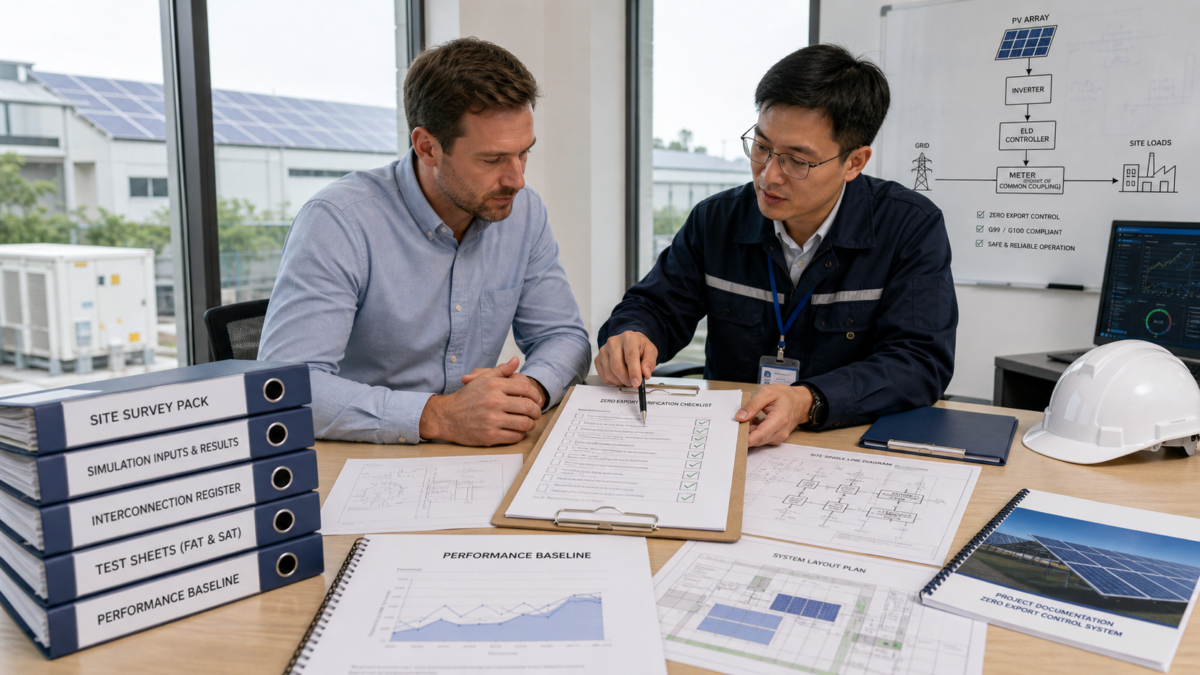
After seeing a few projects go sideways, I developed a verification checklist for my clients. It’s about getting the right documents so you can hold your installer accountable. First, the survey pack. This should include detailed load profiles for your site. Without this, any design is just a guess. Second, the simulation inputs and results. Ask for the file itself, not just a glossy PDF report. This shows how they calculated savings and curtailment losses. Third, the interconnection register. This is a list of all protection settings agreed upon with the utility. It's proof that the design is compliant. Fourth, the factory and on-site test sheets. These demonstrate that the equipment works as specified. Finally, ask for a clear performance baseline. This should state how the system is expected to perform and how that performance will be measured after installation. In my experience, explaining which site conditions make the recommendation stronger or weaker builds trust and leads to a better outcome for everyone.
Conclusion
An optimized PV design is incomplete until the grid constraints are closed. Clarify your goals, check the core design against a downside case, and demand a solid verification plan.
Leave a Reply