

What Does Lenovo Refusing International Warranty Repair on Known Hinge Issue… Mean for Project Design?
Your expensive equipment has a known defect, but the warranty is useless. This frustrating experience with a simple laptop reveals a massive hidden risk in large-scale international BESS projects.
It means that the "best" ex-works price is meaningless if the warranty process fails. The real cost of a project is its total landed lifecycle risk, which depends on logistics, documentation, and local support—not just the initial price tag.
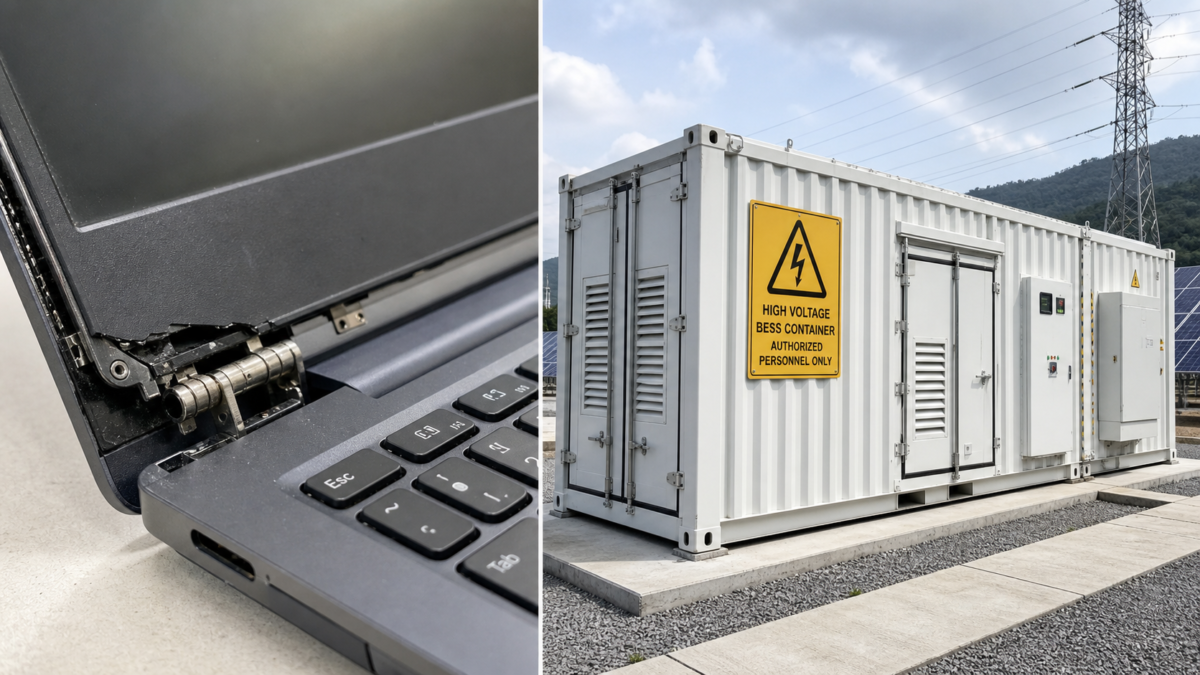
I recently had a Lenovo laptop with a well-documented hinge failure. Despite it being a known issue, the warranty claim was denied because the laptop was purchased in a different country. This was incredibly frustrating for a simple consumer product. Now, imagine this same scenario, but instead of a $1,500 laptop, it’s a $1.5 million Battery Energy Storage System (BESS). The core problem is identical: the gap between a written warranty and the practical ability to get service. This personal headache with a laptop is a perfect, small-scale example of a catastrophic risk in the BESS industry. It forces us to ask a hard question: what good is a warranty if you can't actually use it? The answer to that question changes how you should approach project design from day one.
What Buyers Often Misunderstand About International BESS Warranty Claim?
You signed a contract with a 10-year warranty, so you feel secure. But when a component fails, you discover the warranty only covers the part, not the shipping, labor, or customs.
Buyers often misunderstand that a product warranty is not a service guarantee. An international BESS warranty might cover a replacement part, but it rarely covers the complex logistics, customs clearance, and local specialized labor required to actually install it, leaving you with massive hidden costs.
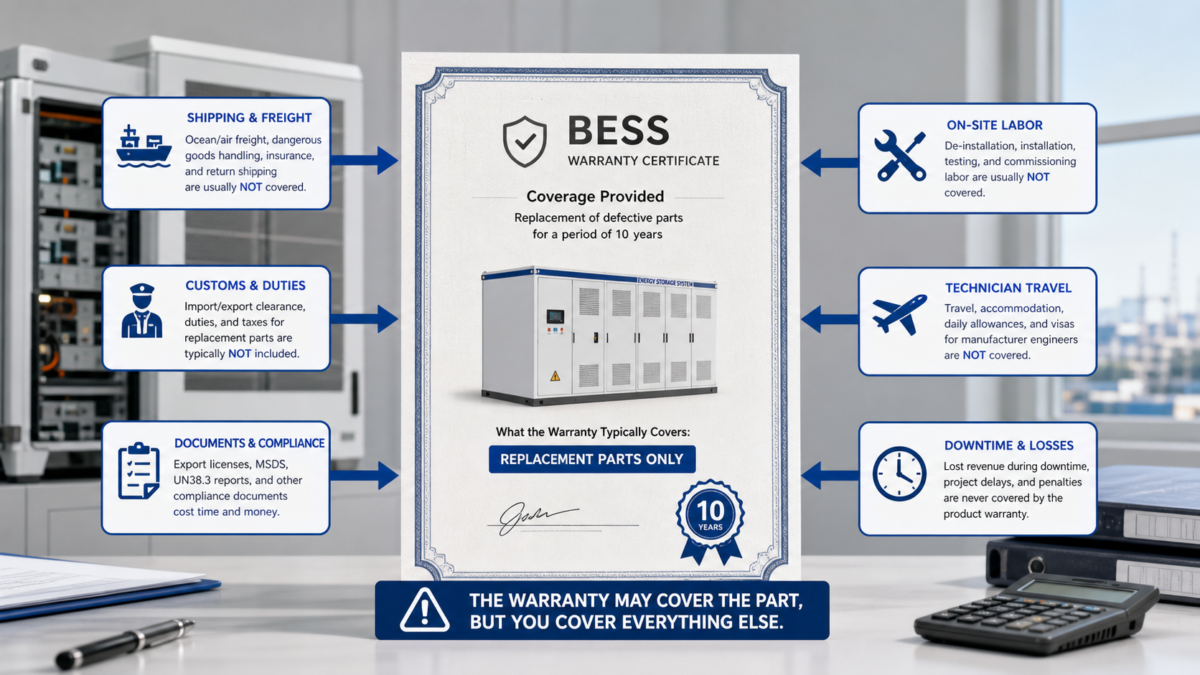
The biggest trap I see is the focus on the ex-works (EXW) price. It looks great on a spreadsheet, but it ignores the entire chain of events that must happen for a warranty to be useful. When a system is shipped from another country, the warranty becomes a promise tangled in international logistics. The manufacturer might agree to send a new inverter, but who handles the dangerous-goods shipping for the old one? Who pays the import duties on the new one? Who has the certified technicians on the ground to perform the swap and recommission the system? These are not minor details; they are core project risks. I’ve seen projects delayed for months because a replacement part was stuck in customs. The practical lesson is to shift focus from the product price to the total cost of service over the project’s life.
Product Promise vs. Service Reality
| Area of Misunderstanding | Common Assumption (Price-Focused) | Practical Reality (Risk-Focused) |
|---|---|---|
| Component Replacement | The manufacturer will send a new part for free. | Who pays for shipping, insurance, and import taxes for the new and old parts? |
| On-Site Labor | Warranty service includes a technician. | Is there a local, certified service partner? Who pays their travel and labor costs? |
| Downtime | The system will be fixed quickly. | How long will it take to ship parts internationally? What are the revenue losses per day? |
Sizing Around Dangerous-goods Documents and Commissioning?
You've sized your BESS for optimal kWh output. But what happens when you need a replacement battery module? The hazardous material regulations make shipping one module as complex as shipping the whole container.
Project sizing must account for the practical logistics of moving dangerous goods. A strategy that relies on quickly shipping individual replacement battery modules is often unfeasible. Sizing should include on-site spares or a plan that reflects real-world shipping timelines and costs for hazardous materials.
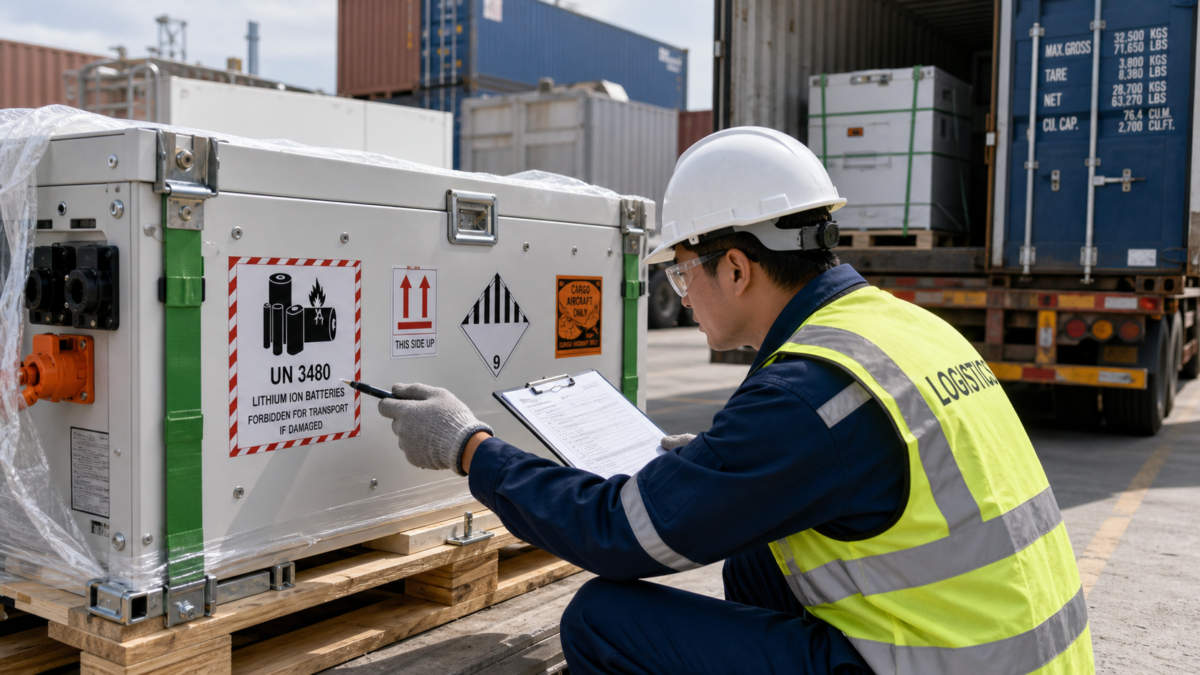
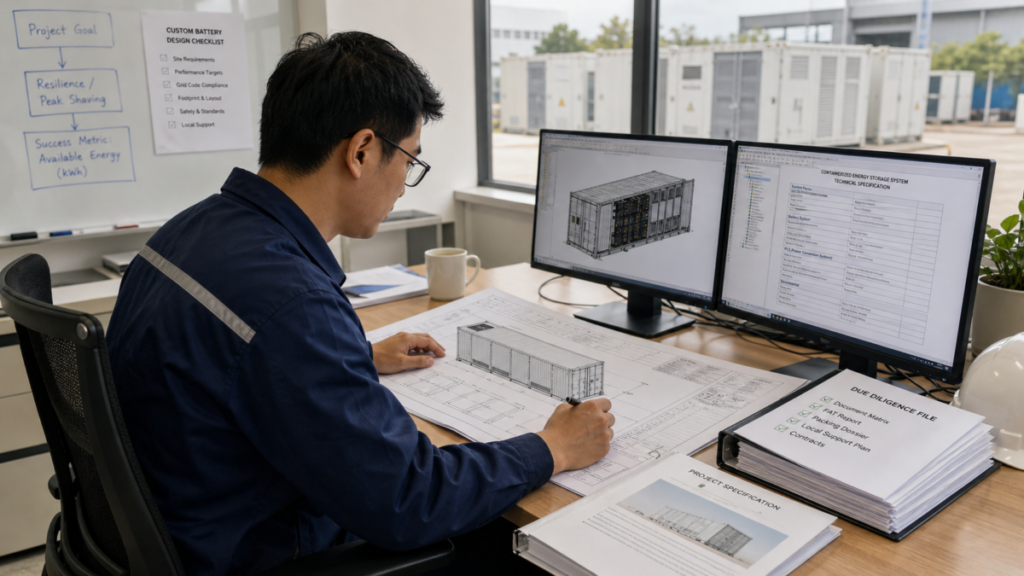
When I design a project, I don't start with the product. I start with the paperwork. Specifically, I ask for the dangerous-goods documents, the Material Safety Data Sheet (MSDS), and UN 38.3 test reports for the exact battery modules being used. Why? Because these documents dictate what is possible. If a supplier can't provide clear, accurate documentation, it’s a huge red flag. It tells me that any future warranty claim requiring a part to be shipped will be a nightmare. You can't just call a courier to ship a 100 kg lithium-ion battery module across a border. It requires specialized freight forwarders, specific packing, and a mountain of paperwork. Failing to plan for this is like building a car without considering how you’ll get spare tires. I would build a due-diligence file from the start, including a signed Factory Acceptance Test (FAT), a full packing dossier, and a documented local support plan to make sure the project is viable in the real world, not just on paper.
The Failure Mode Hidden in Warranty?
You think the biggest failure is a battery cell dying. The real failure is when your warranty claim gets stuck in an email chain with someone who doesn’t speak your language or understand your problem.
The most dangerous failure mode is not technical; it's procedural. The hidden failure is the collapse of the support process itself, where language barriers, time zone differences, and a lack of a clear escalation path make a solvable technical issue a project-ending disaster.
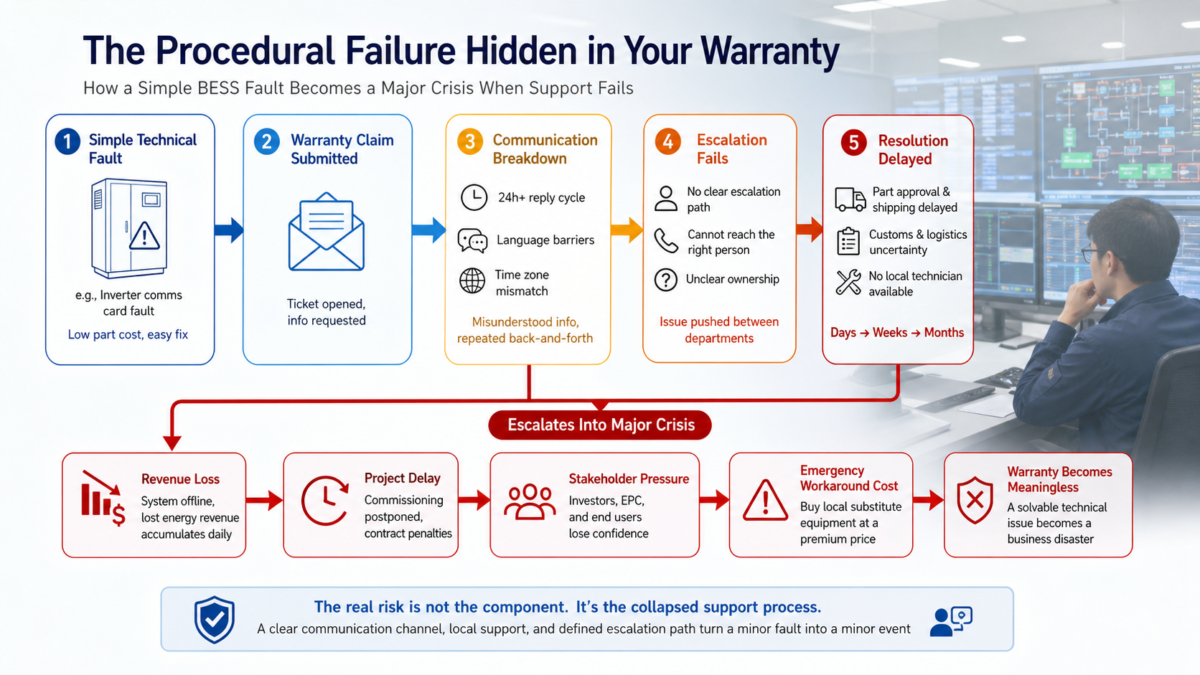
I worked on a project where a simple communications card in a BESS inverter failed. The part cost less than $200. The warranty was clear: the part was covered. However, the manufacturer's entire technical support team was based overseas. Every email took 24 hours for a reply. The instructions they sent were poorly translated and didn't match the equipment on site. We couldn't get anyone on the phone. After two weeks of this, the project owner was losing thousands of dollars a day in lost revenue. We ended up buying a new inverter from a local supplier just to get the system running again. The original manufacturer failed, not because their product was bad, but because their support infrastructure was non-existent for that region. This is the failure mode that isn't on any technical datasheet but can be the most costly of all. A good supplier, like Moletong, understands this and builds their service and support plans around the customer's actual location and language.
Key International BESS Warranty Claim Questions Before Signing the Contract?
You're about to sign a multi-million dollar BESS contract. You've reviewed the price and performance specs, but what about the fine print that can make or break your investment?
Before signing, you must ask who is responsible for the total cost of a warranty claim. This includes parts, shipping, customs, and on-site labor. Also, demand a clear, documented escalation path with contact information and defined response times for different levels of technical support.

Signing a contract without a clear warranty execution plan is a huge gamble. I treat the warranty section as a mini-project plan. I need to see, in writing, who I call, what their response time is, and what happens if they don't respond. I verify everything through model-level documents and project contracts, not just marketing brochures. I need to know the process for shipping a 2-ton battery rack, not just a small circuit board. This practical approach separates a genuine technical supplier from a company that is just moving boxes. A professional partner will have these answers ready because they’ve planned for these events. Asking these tough questions upfront doesn’t show a lack of trust; it shows professional due diligence. This process makes it easier to separate a genuine technical constraint from a poor assumption or an unrealistic expectation, giving you a clear decision path.
Here are the absolute must-ask questions:
- Who is my first point of contact for a technical issue, and what is their language and time zone?
- What is the guaranteed response time for initial contact and for escalating a critical issue?
- Does the warranty cover shipping costs (both ways), customs duties, and taxes for replacement parts?
- Does the warranty cover the cost of on-site de-installation and re-installation labor?
- If on-site labor is included, is it from a local, certified technician or someone flown in?
- What is the on-site spares strategy, and are any spares included in the initial purchase?
Conclusion
The lowest ex-works price is irrelevant if the warranty is unusable. Focus on landed lifecycle risk, clear documentation, and a verifiable support plan to ensure your BESS project succeeds.
Leave a Reply