

Which Assumptions Matter Most When Evaluating Malaysia Battery Energy as a Service?
Your energy costs are rising, and a Battery Energy as a Service (BaaS) proposal looks like the perfect answer. But how do you know if it will actually work?
The most critical assumptions are not on the product label. They are climate, logistics, local skills, and currency. A solution that works elsewhere can easily fail in Malaysia if it is not adapted to these local realities. The key is to demand a localized plan, not just a copied bill of materials.
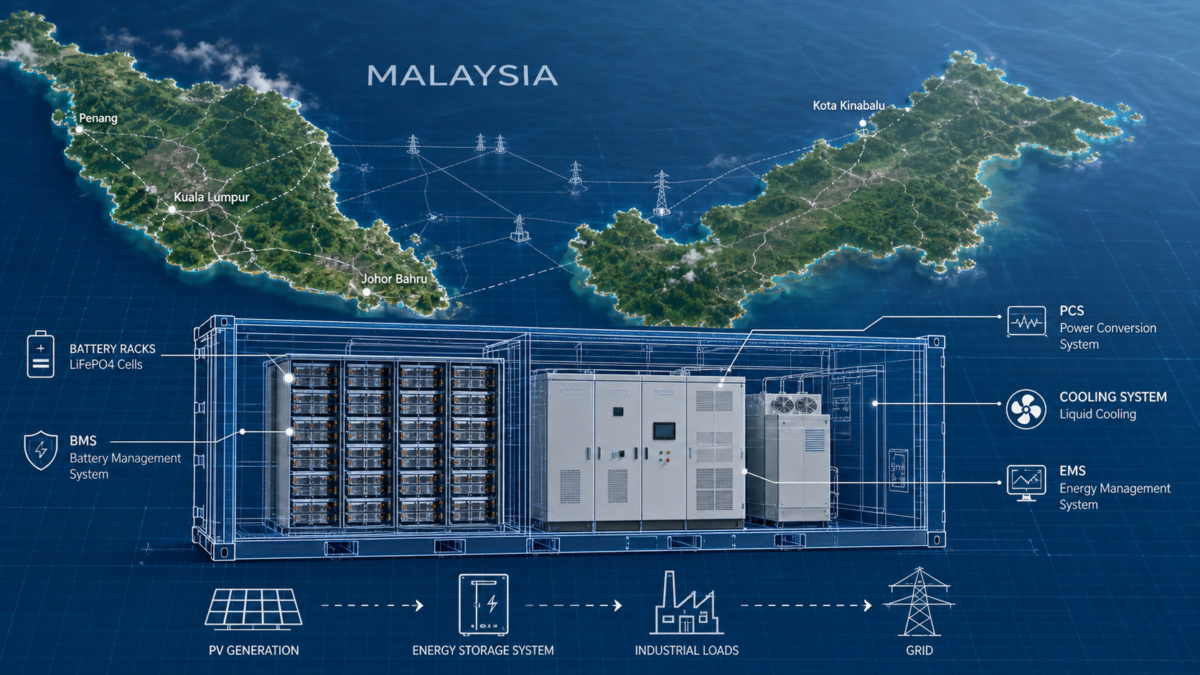
I've seen many promising energy projects stumble after deployment. The problem often starts long before the hardware is installed. It begins with the wrong assumptions. A great outcome in one country does not guarantee success in another. This is especially true for a demanding environment like Malaysia. The real challenge is to look past the attractive sales pitch and ask harder questions about how the system will perform here, on the ground. A good supplier should welcome this scrutiny because it leads to a project that actually works.
The Buyer Pain Point Behind Malaysia Battery Energy as a Service?
You see a case study from a cooler, drier climate and get excited. The numbers look great, and the savings are clear. So you ask for the same thing here.
The biggest pain point is receiving a solution that is technically correct but operationally wrong for Malaysia. A simple copy-paste of a bill of materials ignores local heat, humidity, and logistical challenges, creating a huge gap between the promised performance and the delivered reality.
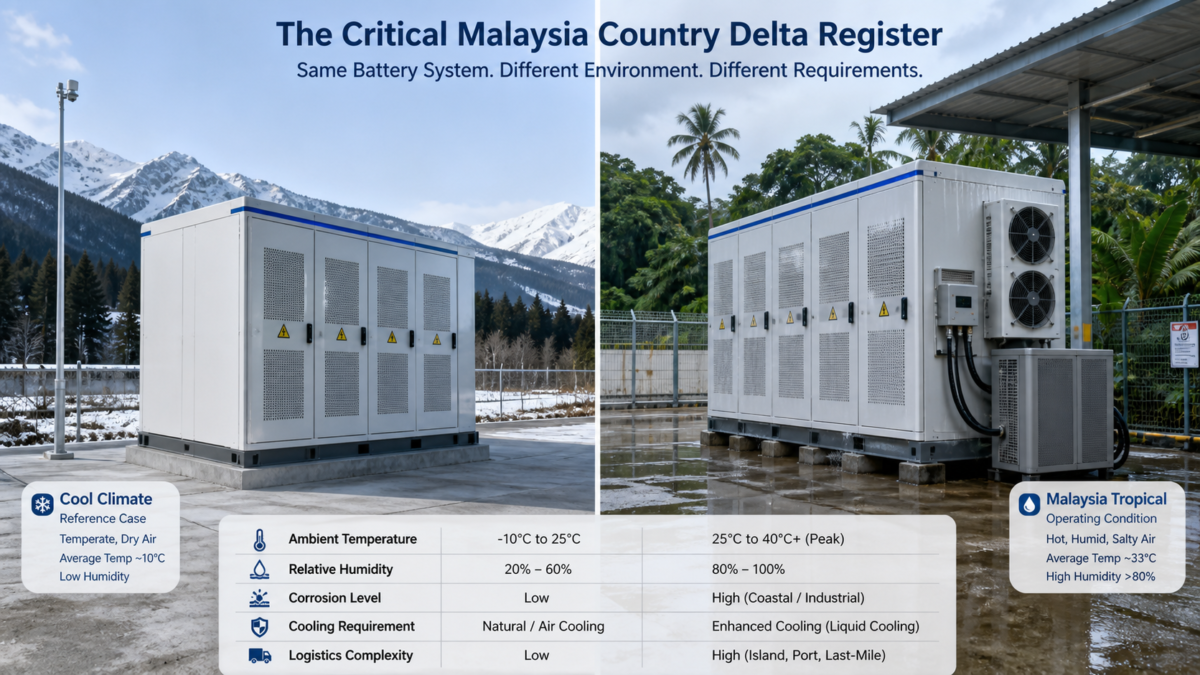
The practical issue is that regional replication requires a "country delta register," not a copied parts list. This means systematically identifying the differences between the reference market and your location in Malaysia. I once worked on a project where the battery cooling system, which worked perfectly in Europe, was consistently overwhelmed by the afternoon heat and humidity in Southeast Asia. The system kept derating its performance to protect itself, so the customer never got the peak savings they were promised. This could have been avoided by analyzing the "deltas" or differences upfront.
The Country Delta Register
A simple way to structure this is to create a table that forces a direct comparison. It makes it clear where the risks are and what needs to be redesigned or re-planned.
| Factor | Reference Case (e.g., China) | Malaysia Delta | Impact on BaaS Proposal |
|---|---|---|---|
| Climate | Temperate, four seasons. | Tropical, high heat (~33°C), high humidity (>80%). | Requires enhanced cooling (like liquid cooling), higher IP-rated enclosures, and corrosion-resistant components. |
| Logistics | Mature inland transport network. | Island geography, port congestion, last-mile challenges. | Longer lead times, higher shipping costs, and requires a detailed local delivery and installation plan. |
| Skills | Large pool of experienced technicians. | Developing skills base for advanced energy storage. | Requires a clear plan for local partner training, certification, and on-site support. |
| Approvals | Standardized national grid codes. | Specific local utility (e.g., TNB) and regulatory (e.g., Suruhanjaya Tenaga) approvals needed. | The proposal must include a timeline and responsibility for securing all necessary local permits. |
How to Test the Key Malaysia Battery Energy as a Service Assumptions?
Your supplier's proposal is full of impressive performance charts and savings projections. But these are often based on ideal computer models. How do you test them in the real world?
You must test the most inconvenient operating condition. Don't look at the average day; look at the worst day. A stress test, like simulating a grid failure during a heatwave, is where an attractive proposal either proves its worth or reveals its weaknesses.
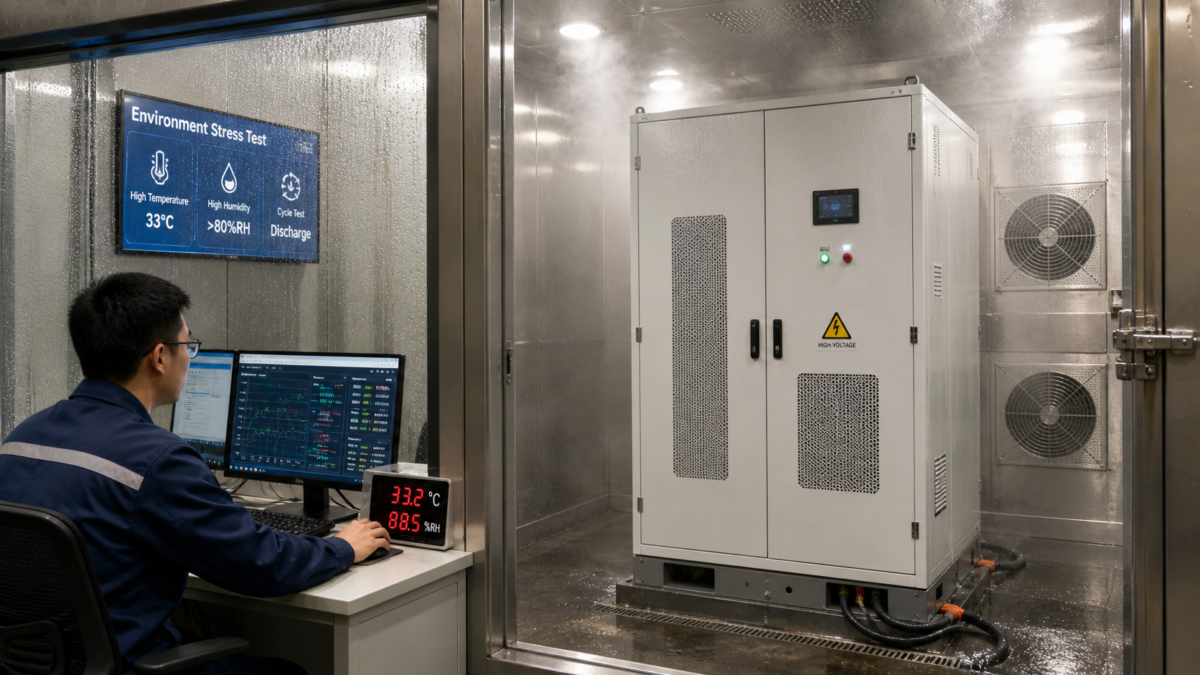
I always tell buyers to focus on the moments of maximum stress. For a BaaS system in Malaysia, that might be providing backup power to a factory's critical loads during a grid outage on the hottest, most humid afternoon of the year. This is where you see everything at its limit: the battery's ability to discharge, the cooling system's capacity to remove heat, and the inverter's stability under load. If the system can perform reliably under these conditions, it will handle the easy days just fine. Relying on a product label alone is a mistake. You need to see a plan for a pilot project or a factory acceptance test that simulates these tough conditions. At Moletong, we use our range of liquid-cooled systems as options specifically because they are designed to handle these high-temperature environments, but we would still insist on a pilot to validate performance locally.
Balancing Cost, Reliability, and Compliance in Malaysia Battery Energy as a Service?
Everyone wants a low price. But chasing the lowest cost often leads to compromises on reliability, especially when dealing with a complex system in a challenging climate.
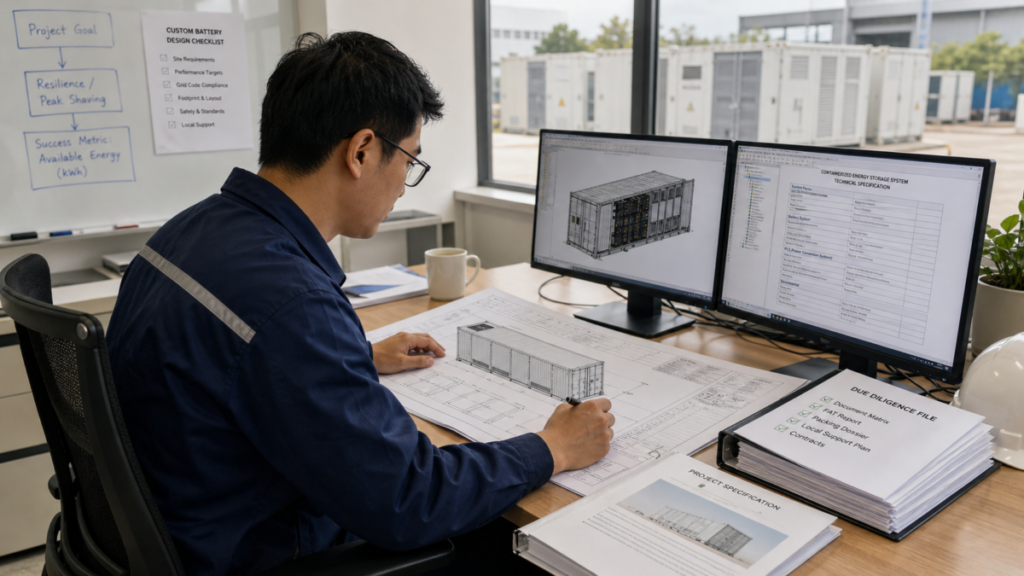
The best way to balance these factors is with a clear Climatic Design Basis. This document forces an upfront decision on the environmental conditions the system must handle, linking the technical specification directly to Malaysia's reality and preventing dangerous cost-cutting on critical components like cooling.
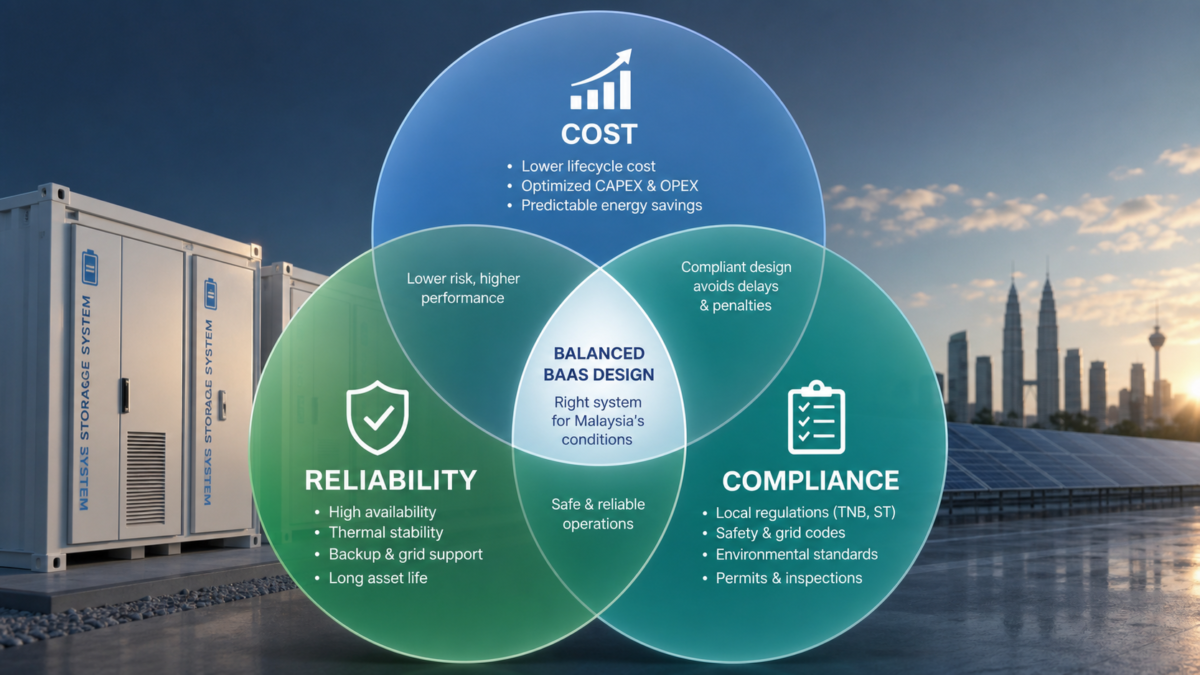
A Climatic Design Basis is not just a technical detail; it is a commercial tool. It defines the non-negotiable operating parameters before you even discuss products. For Malaysia, this document should specify the maximum ambient temperature, solar radiation load, humidity levels, and even salinity if the site is coastal. This basis then dictates the requirements for the battery, the type of cooling system (e.g., natural cooling is often not enough), and the enclosure's corrosion resistance. Once this is agreed upon, it becomes much harder for a supplier to propose a cheaper, under-specified system that is bound to fail. It also ensures the final system will meet local compliance and safety standards, which are there to guarantee reliability. It turns the conversation from "what is cheapest?" to "what is the right tool for the job?".
What a Bankable Malaysia Battery Energy as a Service Proposal Should Show?
A glossy brochure and a low price are not enough to make a proposal "bankable." You need proof that the supplier has thought through the entire project lifecycle in Malaysia.
A bankable proposal must show four things: a country delta register, a climatic design basis, a detailed local partner plan for service, and a pilot project scorecard. These documents prove the supplier understands the local risks and has a credible plan to manage them.
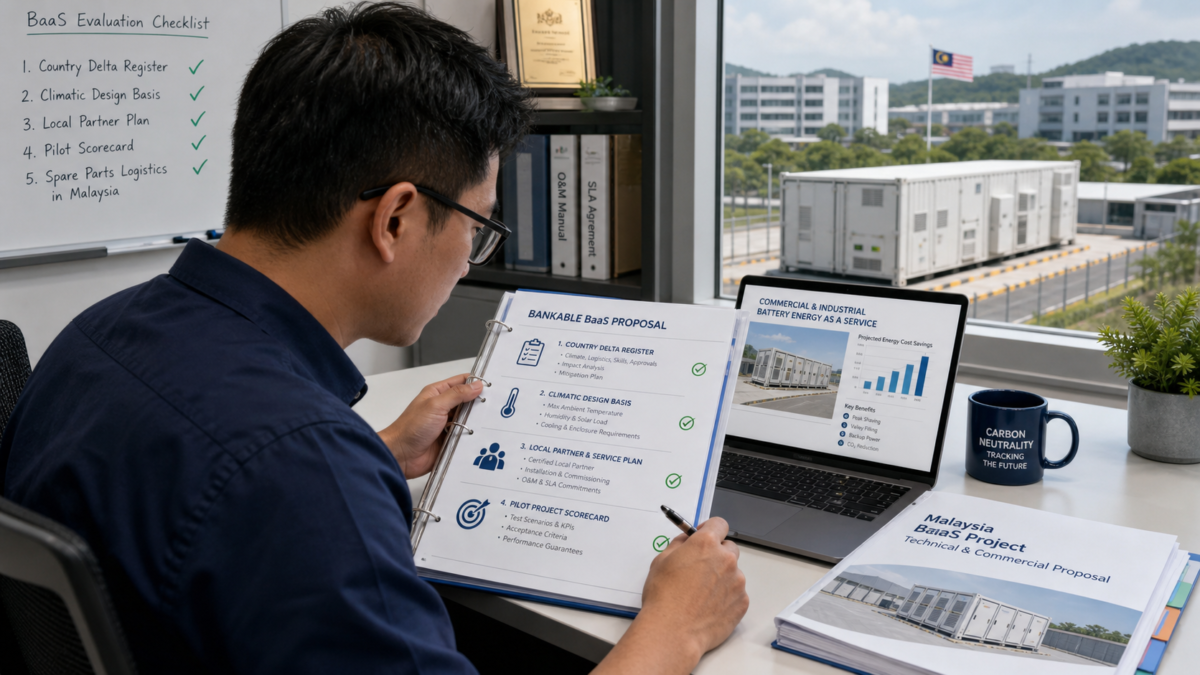
When I review a proposal, I look for evidence of localization. A product catalog is not enough. I want to see a plan. This means naming the local engineering partner who will handle installation and first-response maintenance. It means showing me the service level agreement (SLA) that guarantees a technician on-site within a specific timeframe. The proposal should include the pilot scorecard, which clearly defines what success looks like—not in a lab, but at your facility. Ultimately, a bankable proposal provides confidence not just in the hardware, but in the supplier's ability to deliver a functioning service for the next 10 years in Malaysia. Before approving any design, I would ask the supplier these exact questions:
- Can you show me your country delta register for Malaysia?
- What is the climatic design basis for our specific site?
- Who is your certified local partner for installation and service?
- What are the key performance indicators (KPIs) on your proposed pilot scorecard?
- How will you manage spare parts logistics within Malaysia?
Conclusion
To evaluate BaaS in Malaysia, you must look beyond the product. Focus on the assumptions about climate, logistics, and skills, because that is where projects succeed or fail.
My Role
About me
Brand Name: Moletong
Slogan: Carbon Neutrality, Tracking the Future
Website: www.moletong.com
Company Overview
Established in 2011 and headquartered in Dongguan, Guangdong, we are an integrated new-energy equipment enterprise specializing in energy storage systems, complete electrical equipment, photovoltaic solutions, charging infrastructure, and hydrogen-energy solution integration.
We integrate R&D, manufacturing, sales, system configuration, and technical service to support utility-scale, commercial and industrial, and residential energy applications. Our solutions are designed around practical customer needs such as peak shaving and valley filling, electricity-cost optimization, transformer-capacity support, emergency backup, renewable-energy integration, intelligent energy management, and photovoltaic-storage-charging coordination.
Our Core Business
1. Energy Storage Systems & Equipment
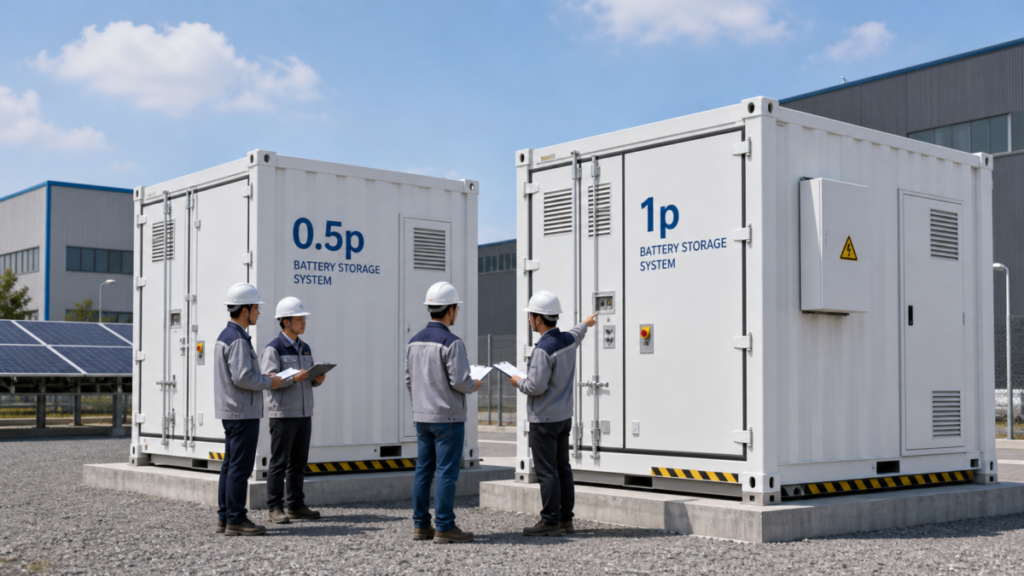
We develop lithium iron phosphate energy-storage products for utility-scale, commercial and industrial, residential, and integrated charging applications. Our documented portfolio includes liquid-cooled containerized energy-storage systems, commercial and industrial storage cabinets, residential battery systems, storage-and-charging systems, BMS, PCS, and EMS functions.
2. Complete Electrical Equipment
We provide complete high- and low-voltage electrical products, including gas-insulated ring-main units, high-voltage switchgear, low-voltage withdrawable and fixed switchgear, power-distribution cabinets, meter boxes, box-type substations, charging-station substations, and busbar-trunking systems.
3. Photovoltaic & Integrated Energy Solutions
We provide photovoltaic supporting equipment and system solutions, including 35 kV step-up substation equipment, photovoltaic combiner cabinets, adjustable mounting structures, photovoltaic-storage integration, and equipment support for grid connection, power transmission, and microgrid applications.
4. Charging & Hydrogen-Energy Solution Integration
We provide AC and DC charging solutions, storage-and-charging systems, and photovoltaic-storage-charging integration for industrial parks, commercial parking facilities, transport hubs, and locations with limited grid or transformer capacity. We also develop hydrogen-energy integration concepts involving renewable hydrogen production, hydrogen storage, refueling, and hydrogen-electric coupling. Specific hydrogen products, certifications, production capacity, and completed projects must be confirmed separately.
Product Applications & Technology Focus
Primary Service Industries:
Our principal customer sectors include Industrial and Commercial Energy Users, Renewable-Energy Developers, Power and Electrical Engineering, EV Charging Infrastructure, Commercial and Public Facilities, and Residential Energy Storage.
Product Categories We Serve:
- Utility-Scale Containerized Energy-Storage Systems
- Commercial and Industrial Energy-Storage Cabinets
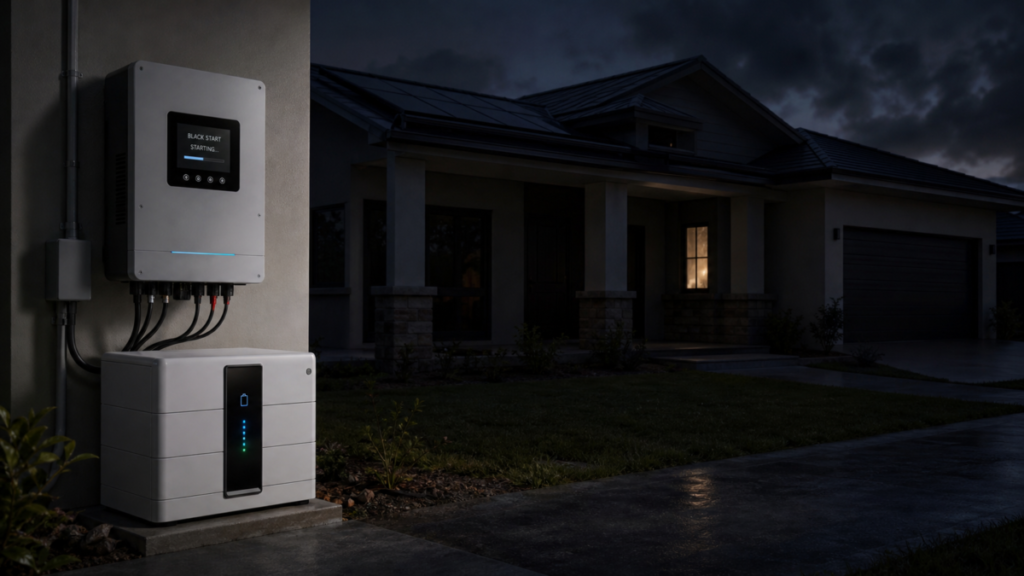
- Residential Energy-Storage Batteries and Inverters
- Integrated Storage-and-Charging Systems
- High- and Low-Voltage Switchgear
- Box-Type Substations and Charging-Station Substations
- Busbar-Trunking and Power-Distribution Products
- Photovoltaic Step-Up and Combiner Equipment
Technology Expertise:
Our documented technical focus includes:
Lithium Iron Phosphate Cells, BMS, PCS, EMS, Liquid Cooling, Natural Cooling, Modular System Integration, Remote Monitoring, Load Tracking, Anti-Reverse-Flow Control, Transformer-Capacity Protection, and Intelligent Operation and Maintenance.
Production Capacity & Equipment
Energy Storage Production & R&D Platform
Our supplied corporate materials identify one production base in Dongguan and a Dongguan engineering R&D center. We support product development, equipment manufacturing, system configuration, and technical service for residential, commercial and industrial, and large-scale energy-storage applications.
- Product Platform Highlights: 5,015 kWh liquid-cooled containerized storage systems, 627 kWh and 261 kWh commercial and industrial storage cabinets, 16 kWh residential battery systems, and 261 kWh and 627 kWh integrated storage-and-charging systems.
Electrical Equipment Platform
We provide product design and manufacturing support for complete electrical assemblies used in industrial facilities, commercial buildings, substations, photovoltaic projects, charging stations, and public infrastructure.
- Equipment Highlights: High-Voltage Ring-Main Units, High-Voltage Metal-Clad Switchgear, Low-Voltage Withdrawable Switchgear, AC Low-Voltage Switchgear, Distribution Cabinets, Box-Type Substations, Prefabricated Charging-Station Substations, and Busbar-Trunking Systems.
Energy Storage & Electrical System Capabilities
General Capabilities:
- Application and electricity-use requirement analysis
- Energy-storage system selection and capacity configuration
- Equipment design and manufacturing
- BMS, PCS, and EMS system integration
- Peak shaving, valley filling, and time-of-use energy scheduling
- Load tracking and anti-reverse-flow control
- Transformer-capacity protection and demand management
- Photovoltaic-storage and storage-charging integration
- Remote installation, commissioning, and trial-operation support
- Operator training, warranty service, and technical after-sales support as contracted
Our Core Specialties:
- ✔️ Liquid-Cooled Large-Capacity energy-storage systems
- ✔️ Commercial & Industrial peak-valley and backup-power solutions
- ✔️ Integrated Photovoltaic-Storage-Charging applications
- ✔️ Complete Electrical Distribution equipment and system coordination
Quality Control & Certifications
We apply quality, environmental, and occupational health and safety management requirements to the design, manufacture, and sales of our documented product scope.
Quality Management Scope:
The supplied qualification materials show ISO management-system certificates and patent certificates held by Moletong. The product manuals separately define model-specific electrical parameters, monitoring functions, protection requirements, cooling methods, fire-protection configurations, operating environments, and technical-service conditions.
Testing & Protection Focus:
- Cell voltage, current, temperature, and operating-status monitoring
- Overcharge, over-discharge, overtemperature, and abnormal-condition protection
- Liquid-cooling or natural-cooling verification according to product model
- Fire-protection configuration according to product type
- Enclosure protection, corrosion resistance, and operating-environment requirements
- BMS, PCS, EMS, and communication-function verification where applicable
Certifications & Compliance:
- ISO 9001 Quality Management System
- ISO 14001 Environmental Management System
- ISO 45001 Occupational Health and Safety Management System
- Invention Patent and Utility Model Patent Certificates
- Selected product models list IEC 62619, UN 38.3, RoHS, EN 61000 series requirements, GB/T 36276, CCC, and relevant IEC/GB electrical standards
Certification scope varies by product model, configuration, destination market, and certificate validity period. Model-specific certificates must be confirmed before any formal compliance claim.
Target Markets & Partnership Models
Who We Serve:
- Industrial Facility Owners: Plant managers, energy managers, facility managers, and procurement teams at factories or industrial parks seeking peak-valley electricity-cost optimization, demand management, transformer-capacity support, or emergency backup power
- Renewable-Energy Developers: Project developers, engineering managers, and procurement teams for photovoltaic or wind projects requiring energy storage, step-up equipment, electrical distribution, or renewable-energy integration
- EPC & Electrical Contractors: Project managers, technical managers, and equipment-purchasing teams at qualified engineering companies requiring packaged energy-storage or electrical equipment with technical coordination
- Charging-Station Developers & Operators: Investment, construction, and operations teams working on sites with limited grid access, insufficient transformer capacity, high peak demand, or photovoltaic-storage-charging requirements
- Energy Service Companies & System Integrators: Solution designers and project-development teams building commercial and industrial energy-management, microgrid, or distributed-energy projects
- Residential Storage Distributors & Installers: Importers, distributors, wholesalers, and qualified installers requiring lithium iron phosphate batteries, off-grid or hybrid inverters, and residential storage configurations
- Commercial & Public-Facility Owners: Property, engineering, and facility-management teams for commercial buildings, schools, hospitals, hotels, parking facilities, and transport locations requiring reliable power distribution, charging, or backup-energy solutions
Target Geographies:
Our home market is China, supported by regional sales coverage for South, East, Central, and Southwest China. The supplied 2026 catalogue also identifies an overseas office in Indonesia, supporting practical market development in Southeast Asia. Other overseas markets are served only after confirming model-specific certification, grid requirements, shipping conditions, and local installation standards.
Types of Cooperation:
- Equipment Supply: Standard or configured energy-storage and electrical products
- System Configuration: Product selection and capacity configuration based on the customer's application
- System Integration: BMS, PCS, EMS, photovoltaic, charging, and electrical-system coordination
- Project Technical Cooperation: Technical coordination with renewable-energy developers, EPC contractors, and qualified local engineering companies
- Integrated Energy Solutions: Photovoltaic-storage, storage-charging, and photovoltaic-storage-charging applications
- Technical Service: Training, remote installation and commissioning support, warranty, and after-sales service as agreed in the commercial contract
Our Core Competitive Advantages
⭐ Integrated New-Energy Product Portfolio
By combining energy-storage systems, complete electrical equipment, photovoltaic supporting products, charging applications, and intelligent energy-management functions, we can configure solutions around the customer's complete power-use scenario.
⭐ Coverage from Residential to Utility Scale
Our documented energy-storage range extends from 16 kWh residential systems to 261 kWh and 627 kWh commercial and industrial systems and a 5,015 kWh containerized system.
⭐ Application-Oriented System Design
Our solutions address identifiable operating needs, including peak-valley arbitrage, demand management, transformer-capacity constraints, backup power, renewable-energy consumption, and charging-station power support.
⭐ Integrated Control & Safety Architecture
Our storage products combine lithium iron phosphate cells with BMS, PCS, EMS, model-specific thermal management, multi-level protection, intelligent monitoring, and remote operation and maintenance functions.
⭐ Regional Sales & Technical Service Support
With a Dongguan headquarters and engineering center, regional sales coverage in China, and an overseas office identified in Indonesia, we support equipment selection, technical coordination, training, remote commissioning assistance, and contracted after-sales service.
Leave a Reply