

How Should Buyers Evaluate BESS Fire Safety Thermal Runaway Cooling?
Evaluating BESS fire safety feels overwhelming. It seems like a complex technical problem where one wrong number can lead to a bad decision. But what if there was a clearer way?
To evaluate BESS fire safety, you must follow one rule: suppression is only one layer. It does not replace the need for propagation evidence from testing or a solid site emergency plan. Your evaluation should balance all three factors to get a true picture of the risk.
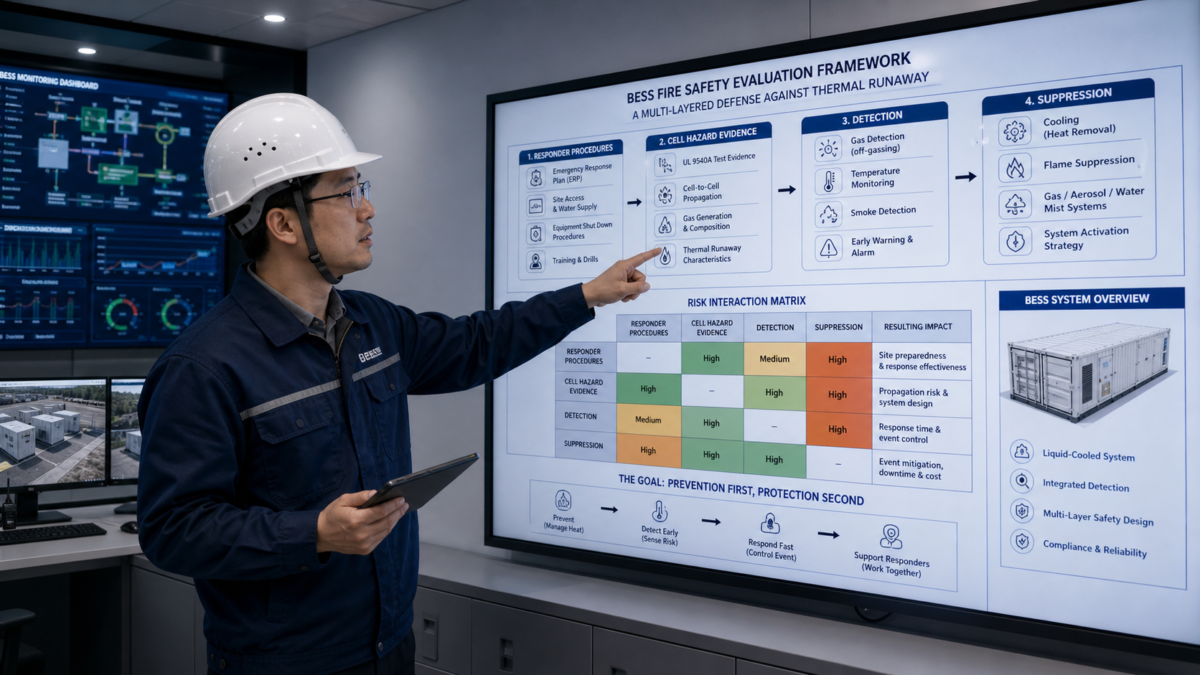
What really stands out to me after years in this industry is how easily BESS fire safety can be judged from the wrong number. I've seen people focus entirely on the type of suppression agent or the size of the fire extinguisher, missing the bigger picture. This is a mistake. The real question is not just "Can we put out a fire?" but "How does the entire system work together to prevent a catastrophe?" The answer to that question involves much more than a single piece of hardware. I want to show you a process that makes this evaluation transparent and repeatable. This approach helps you see when a specific safety solution, like the one in our Moletong systems, applies to your project—and, just as importantly, when it does not. Let’s work through it step-by-step.
Reframing Buyers Evaluate BESS Fire Safety Thermal Runaway Cooling as a Measurable Decision?
Making a choice about BESS fire safety can feel like guesswork. You are trying to balance cost, performance, and risk, but the variables seem endless. This uncertainty can lead to costly errors.
You can make this a measurable decision by breaking it down. Focus on four key variables: responder procedures, cell hazard evidence, detection, and suppression. Analyzing how these interact gives you a clear framework for your decision, removing the guesswork and letting you compare systems fairly.
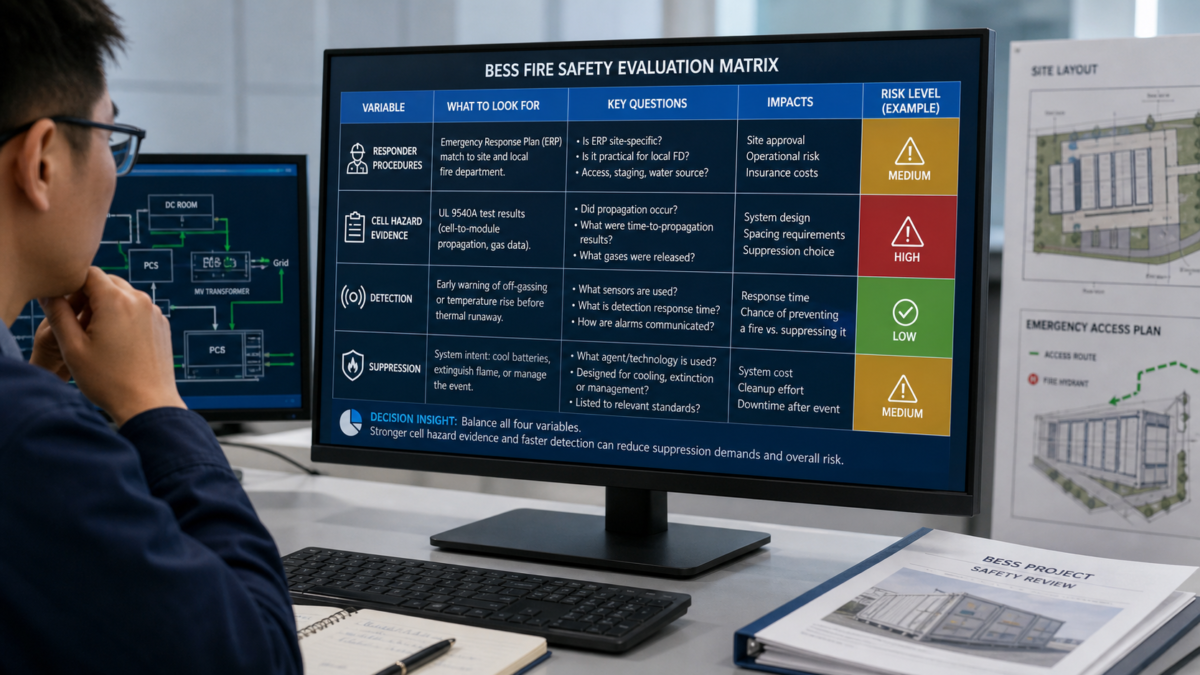
To turn an abstract concept like "safety" into something you can measure, you need a structured approach. I use a simple cause-and-effect matrix. This helps me see how changing one variable impacts the others. It’s not about finding one perfect number; it’s about understanding the relationships between the parts. For example, a system with very strong evidence of no cell-to-cell propagation might require a less aggressive suppression strategy. This directly impacts cost and complexity. In contrast, a system with a higher propagation risk needs faster detection and a more powerful suppression system, which changes the cost and the emergency response plan.
BESS Safety Evaluation Matrix
Here is how I break it down into a simple table. This is the starting point for every evaluation I do.
| Variable | What to Look For | Impacts |
|---|---|---|
| Responder Procedures | Does the Emergency Response Plan (ERP) match the site? Is it practical for the local fire department? | Site approval, operational risk, insurance costs. |
| Cell Hazard Evidence | What do the UL 9540A test reports show about cell-to-module propagation? | System design, spacing requirements, suppression choice. |
| Detection | How early can the system detect off-gassing or a temperature spike before a fire starts? | Response time, chance of preventing a fire vs. suppressing it. |
| Suppression | Is the system designed to cool batteries, extinguish a flame, or just manage the event? | System cost, cleanup, downtime after an event. |
By filling out this table for each system you consider, you are no longer guessing. You are making a data-driven, measurable decision.
The Data Needed to Evaluate BESS Fire Safety Thermal Runaway Cooling Without Guesswork?
You need the right information to make a good decision. But with so much paperwork, it is hard to know which data points actually matter for fire safety.
To evaluate a BESS without guesswork, you need four key documents. Ask for the full UL 9540A test report, the manufacturer’s Emergency Response Plan (ERP), detailed system drawings, and the fire suppression system's own specifications and listings. These documents provide the objective evidence you need.
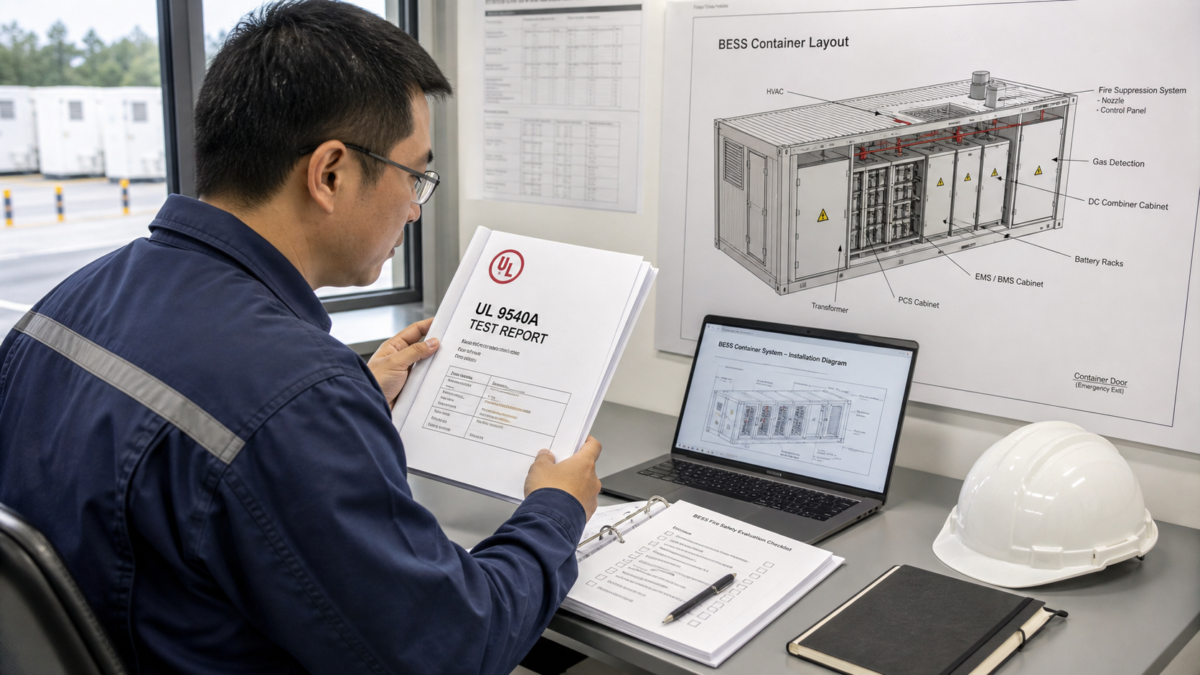
Having the documents is the first step. The second, more important step is making them talk to each other. I call this a "test-report crosswalk." You need to cross-reference the information to see if it tells a consistent story. For example, the UL 9540A report might show that when a cell fails, it releases specific flammable gases. Your crosswalk question is: Does the BESS enclosure’s ventilation system, as shown in the drawings, safely manage these specific gases? Another example: The test report shows that thermal runaway propagates from one module to the next in 15 minutes. Your crosswalk question is: Can the detection and suppression systems react and control the situation in less than 15 minutes? At Moletong, we provide model-specific reports for our systems. But I always tell customers that this data is only half the story. You must perform the crosswalk against your own site plan and your local responder’s capabilities to confirm that the safety case holds true in your specific location.
How Thermal Design Changes the Risk Profile?
It is easy to assume all BESS units are built the same inside. But a small difference in how a system manages heat can completely change its fire risk profile.
A system's thermal design directly changes its fire risk by controlling cell temperature. An active design, like liquid cooling, works to prevent heat from building up in the first place. This is fundamentally different from a passive design that relies only on fire suppression after a problem starts.
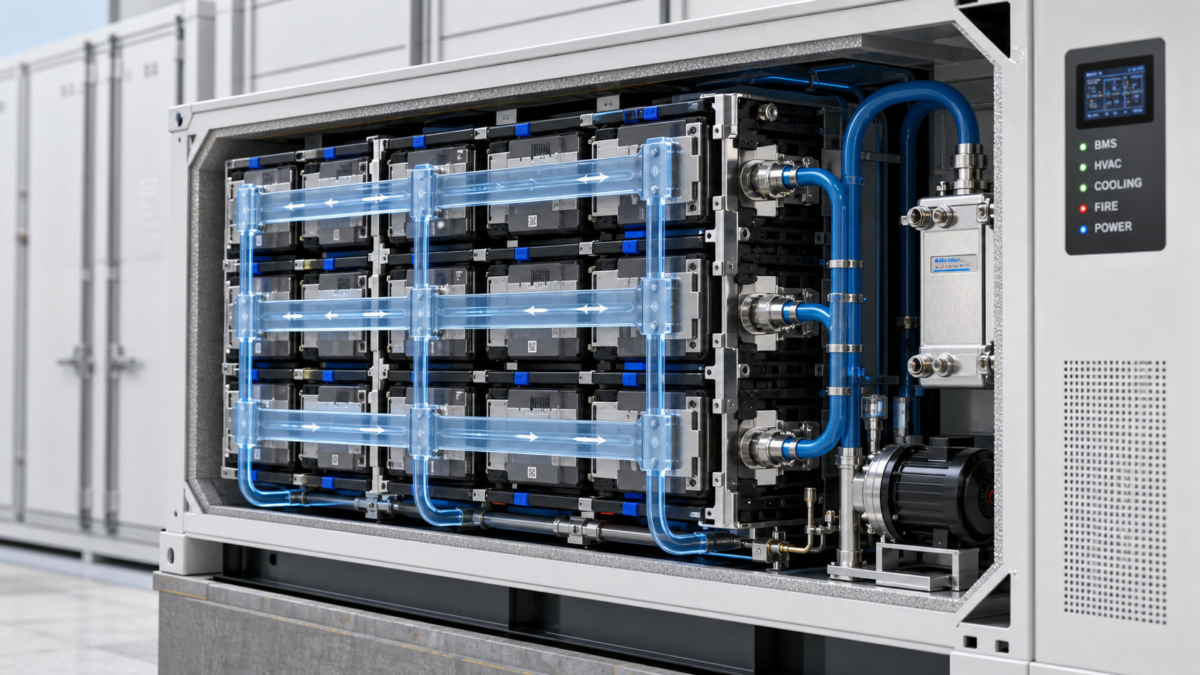
Let's think about this in simple terms: proactive versus reactive. Most air-cooled systems are primarily reactive. They use fans to move air around, but if a cell starts to enter thermal runaway, their main defense is the fire suppression system. The fire has to start before the primary safety system kicks in. A liquid-cooled system is proactive. By circulating a coolant directly across or near the battery modules, it actively pulls heat out of the system during normal operation. This keeps the cells at a stable, optimal temperature, which reduces the chance of failure. More importantly, if one cell does begin to overheat, the liquid cooling can often draw that excess heat away fast enough to prevent it from spreading to its neighbors. This can stop a thermal runaway event before it even becomes a fire. Our Moletong liquid-cooled containerized systems are designed around this principle. The goal is to make the thermal management system the first and most effective layer of safety. This changes the results we see in UL 9540A testing and fundamentally lowers the overall risk profile of the installation.
Final Checks Before Approving BESS Fire Safety Thermal Runaway Cooling?
You have done the analysis and cross-referenced the data. But what is the final step before you sign off? Missing this step can lead to project delays or even rejection by local authorities.
Your final check should be a responder walkthrough. This practical review with the local fire department confirms that your paper-based emergency plan is actually workable on your specific site. It bridges the gap between theory and reality, ensuring first responders can do their job safely and effectively.
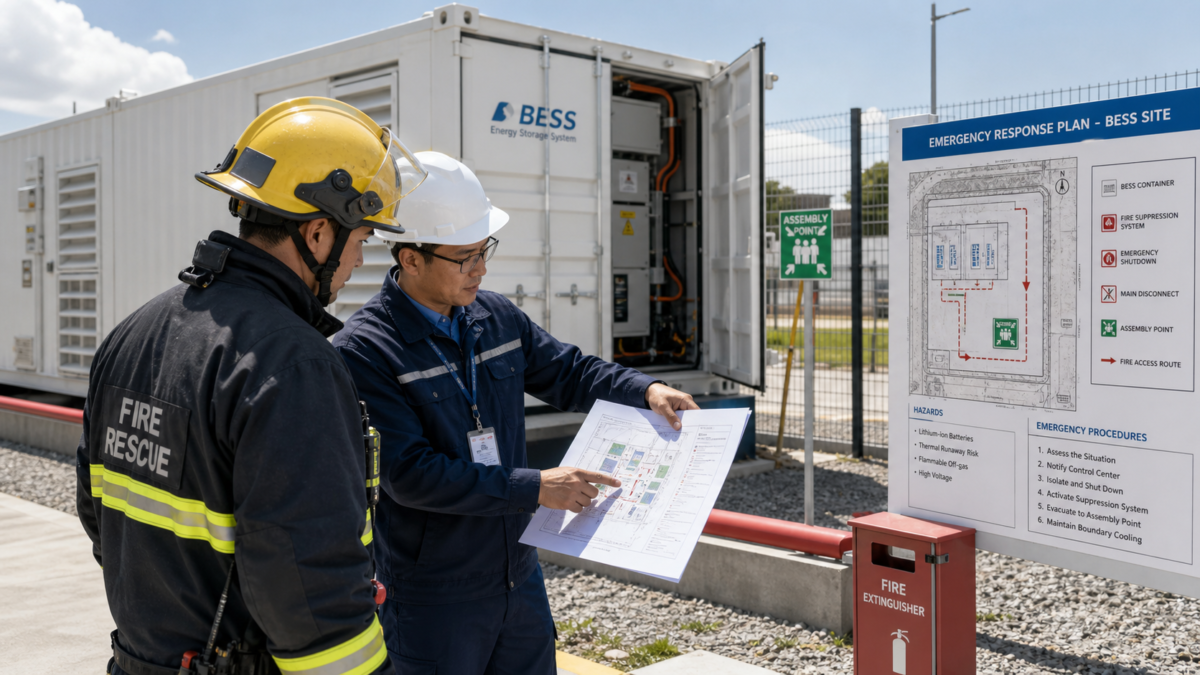
I can't stress this enough: you have to get the Authority Having Jurisdiction (AHJ), usually the local fire department, involved. A responder walkthrough is a meeting at the project site (or a detailed review of the site plans). You walk them through the entire emergency scenario. Show them the BESS location, the fire suppression system controls, and the emergency shutdown procedures from the ERP. Ask them direct questions. "Can your largest fire truck access this road?" "Where is the nearest fire hydrant, and is the water pressure sufficient for boundary cooling?" "Are your teams trained on the risks of lithium-ion battery off-gassing?" This conversation is critical. It might reveal a flaw in your plan, like a locked gate or an inaccessible disconnect switch. I’ve seen projects get delayed for months over issues that a simple 30-minute walkthrough would have caught. The safety features built into a Moletong BESS are great, but they mean nothing if the local responders can't support the emergency plan during a real event. This final check ensures everyone is prepared.
Conclusion
To evaluate BESS fire safety, look beyond just the suppression system. Analyze propagation evidence, thermal design, and emergency plans together. This makes your decision measurable, transparent, and, most importantly, safer.

Leave a Reply