

How Should Battery Installer Demo System Be Specified for Real Operating Conditions?
Your demo system looks perfect on the spec sheet, but will it perform in the real world? This is where many installers get it wrong and risk their reputation.
To specify a battery installer demo system for real conditions, you must first clarify the buyer’s primary goal. Then, match the hardware to the specific site conditions and verify the entire lifecycle support structure, including commissioning authority, local spares, and service level agreements.
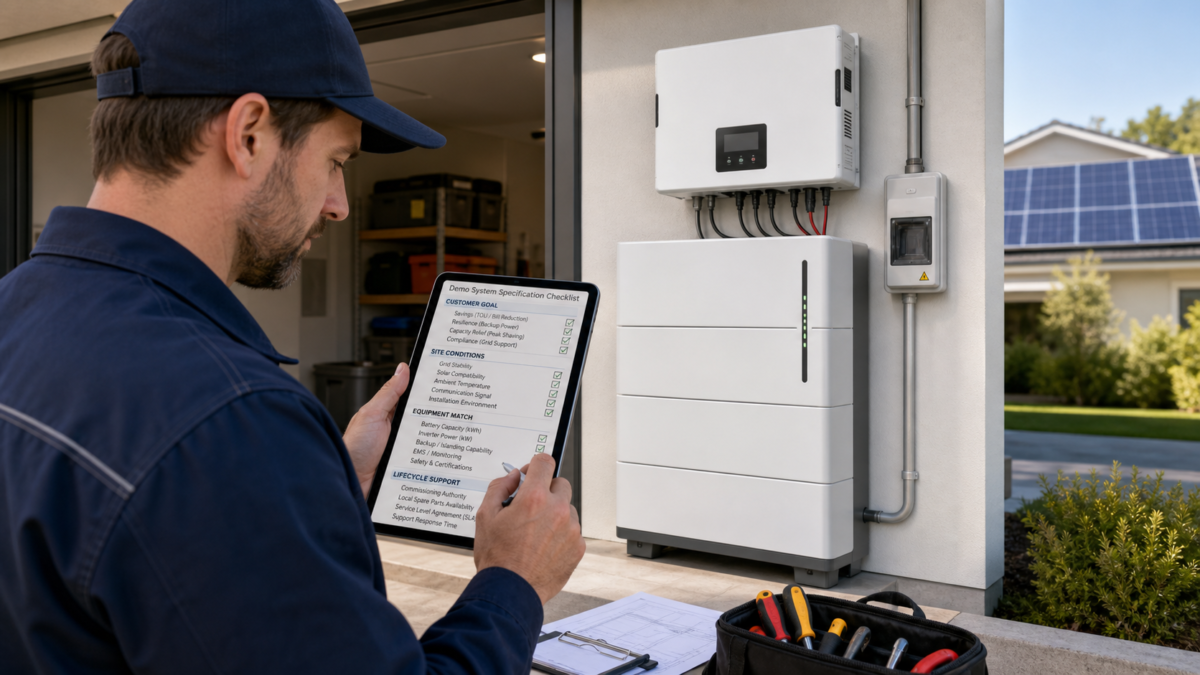
I’ve seen this scenario play out dozens of times. A talented installer gets excited about new technology, builds a demo around the manufacturer's best-case numbers, and starts selling. The first few installs might go well, but soon, the support calls start piling up. The problem isn't usually the hardware itself. The problem is that the demo system was specified in a vacuum, without considering the messy reality of different customer needs, site conditions, and post-installation support. The promise made by the demo system and the reality experienced by the customer begin to drift apart. This is a gap that can swallow a business whole. Let's break down how to avoid that trap and build a demo system that creates happy customers, not headaches.
Why the Obvious Battery Installer Demo System Answer May Be Wrong?
Picking the most powerful system for your demo seems like a smart move. But this often leads to an expensive, over-engineered solution that doesn't actually solve your customer's core problem.
The obvious answer of choosing the most powerful hardware is wrong because it ignores the buyer’s specific goal. A system specified for maximum cost savings is functionally different from one designed for emergency backup, and this mismatch leads directly to customer disappointment.

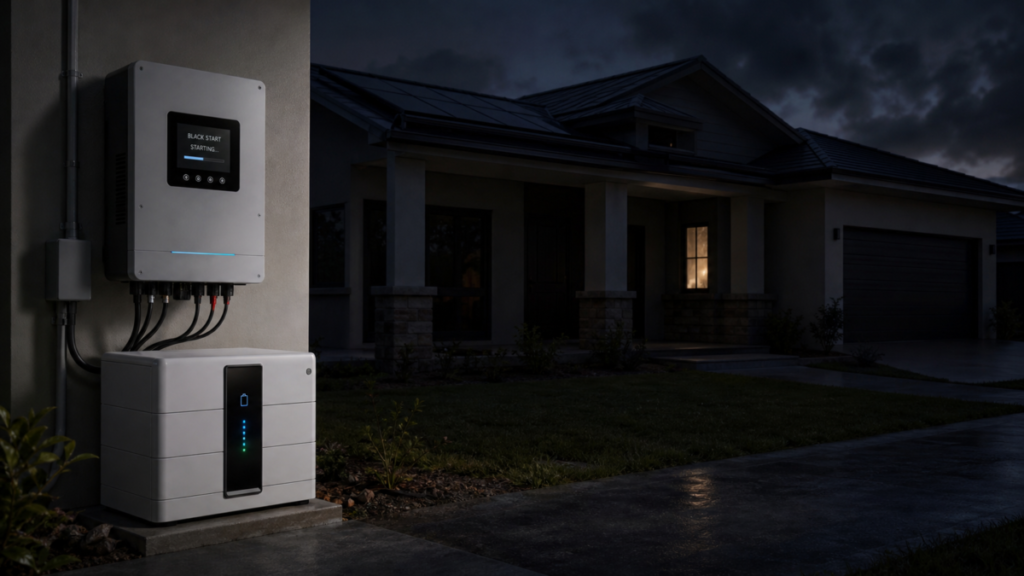
After reviewing a struggling installer's demo strategy, my first question is always the same: what exactly do you expect this system to achieve for the customer? I'm not talking about technical specs. I mean the outcome. Are you selling savings, resilience, capacity relief, or compliance? These are not interchangeable goals. A single positive demo example can quickly become a universal promise that you can't keep. For example, a customer focused on saving money with time-of-use rates needs a system with smart energy management software (EMS) that can schedule charging and discharging. The battery size is important, but the software is critical. Another customer who wants resilience during a power outage needs an inverter capable of islanding and a battery large enough to cover critical loads for a specific duration. The EMS is less important than the power output and backup capacity. I wouldn't let a single successful case dictate my entire sales pitch.
Here is how I would break down the system focus based on the primary goal.
| Customer Goal | System Focus | Key Specification | Wrong System Example |
|---|---|---|---|
| Savings | Intelligent energy scheduling | Advanced EMS with accurate load tracking | A large battery with a simple inverter that can’t schedule effectively |
| Resilience | Backup power and islanding capability | Inverter surge capacity and battery kWh | A grid-tied system that can’t operate during an outage |
| Capacity Relief | Peak shaving and demand management | High power output (kW) and fast response | A low-power battery that can’t meet peak demand spikes |
| Compliance | Grid-support functions and anti-reverse-flow | Certified grid-interactive inverter and controls | An off-grid system uncertified for grid connection |
Separating Battery Installer Demo System Site Conditions from Equipment Limits?
Your demo system worked flawlessly at your shop. But at the customer's site, it underperforms, and you immediately start to doubt the equipment. What if the problem isn't the hardware?
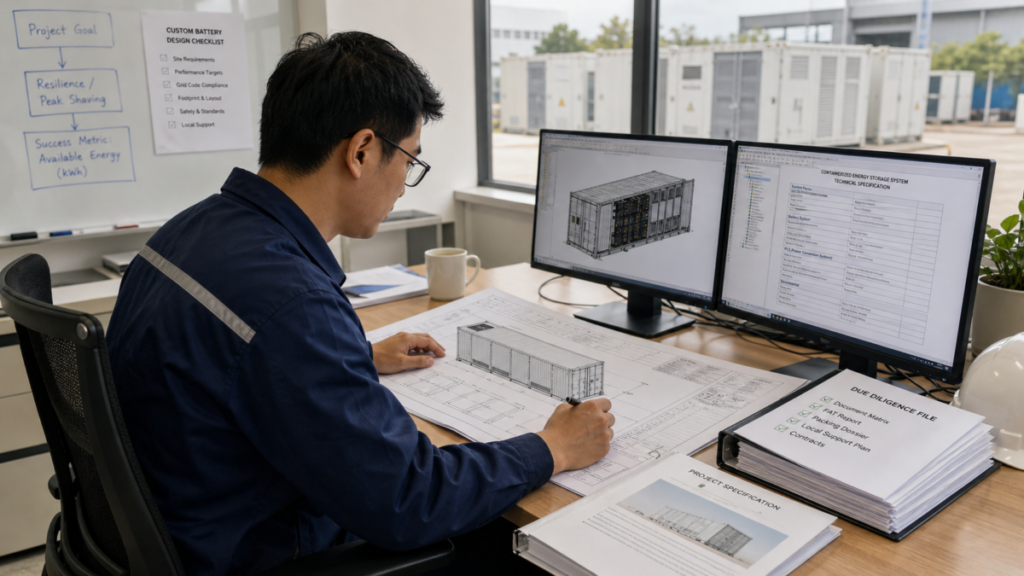
You separate site conditions from equipment limits by using a pre-installation site survey checklist. This audit should document grid stability, solar compatibility, ambient temperature, and communication signal strength. This data helps you select the right model and set realistic expectations.
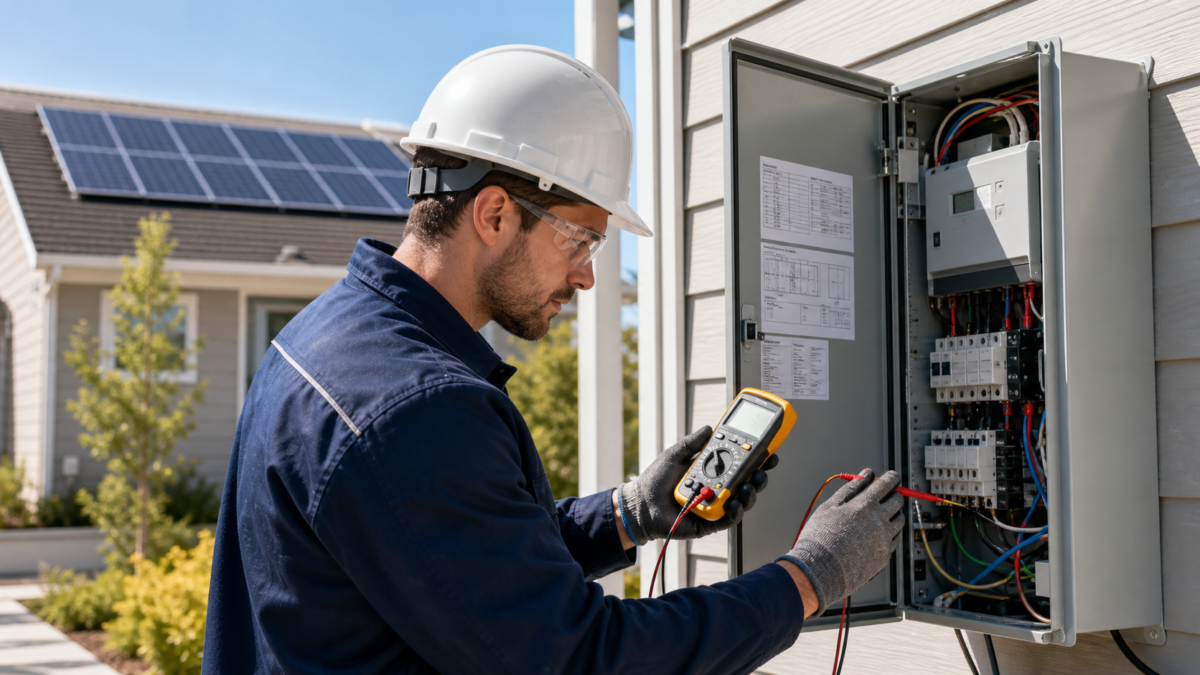
One of the biggest mistakes I see is blaming the battery when the site is the real culprit. A battery system has defined operating limits, and pushing it outside those limits will cause problems. It’s that simple. For example, a battery installed in a hot garage without proper ventilation will see its performance degrade, or it might shut down completely to protect itself. That isn't a faulty battery; that's a thermal management problem caused by the site. Similarly, an unstable grid with frequent voltage fluctuations can cause a grid-tied inverter to constantly disconnect. The inverter is doing its job to protect itself and the home, but the customer only sees an unreliable system. My next step would be to check these site-specific variables against the equipment's datasheet. If I were building partner materials for a manufacturer like Moletong, I would create a detailed compatibility matrix. This would clearly state which of their inverters works best with which solar panel configurations, or which residential battery systems are suitable for specific environmental conditions. This separates opinion from fact and helps the installer make an informed recommendation that is stronger because it’s backed by data.
What Happens When Territory Is Overlooked?
You found a great battery system and start selling it. But when the first service call comes in from a town 100 miles away, you realize there is no local support network.
When territory is overlooked, you create an orphaned system. Without local access to spare parts, trained technicians, or a clear Service Level Agreement (SLA), a minor issue becomes a major crisis, destroying customer trust and your business reputation.
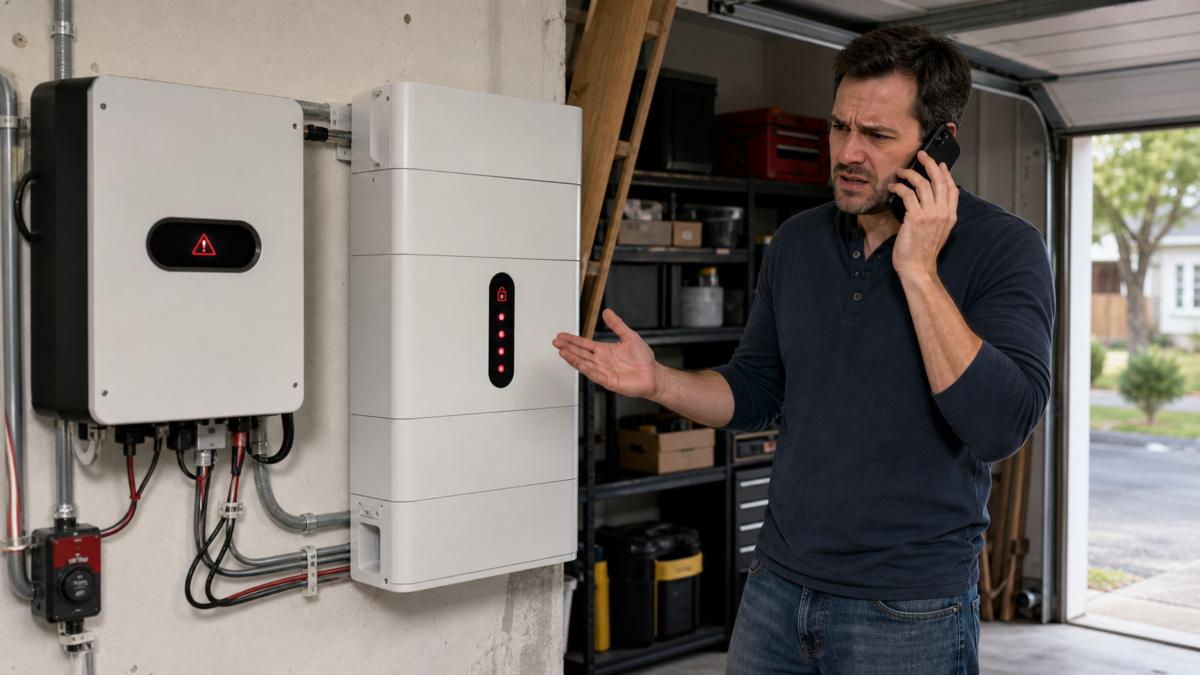
I believe that true channel success depends on lifecycle support, not just hardware availability. Selling a box is easy. Supporting that box for ten or more years is the hard part. Before I would ever recommend a system for a demo, I would check the post-sale infrastructure. Who has the authority to commission the system? If a part fails, where do the spares come from and what is the lead time? Is there a written SLA that guarantees a response time? How does the manufacturer qualify leads to ensure they are being handled by a competent local partner? I would compare these answers with a realistic downside case. For example, what happens if an inverter fails in the middle of a heatwave? If the answer involves waiting two weeks for a part to be shipped from overseas, then that product is not ready for my market, no matter how great the spec sheet looks. When I build partner materials for a company like Moletong, I focus on defining these processes clearly. We would create templates for support tickets and define escalation ownership, so everyone knows who is responsible when something goes wrong.
A Better Decision Process for Battery Installer Demo System?
Your current method for choosing a demo system feels random. Sometimes it works out, but other times it creates service nightmares, making it impossible to grow your business predictably.
A better decision process begins with the customer's goal, not the hardware. It uses a competency checklist for your team, a compatibility matrix for equipment, a standardized demo script for sales, and a clear parts list for installation. This makes success repeatable.

The most convincing way to sell is to show, not just tell. A well-specified demo system is your best tool for this, but it needs to be part of a larger, structured process. I would not let a single positive example become a universal promise. Instead, I would build a complete support package around the demo unit. This includes a competency checklist to ensure my technicians have the right skills for the job. It includes a compatibility matrix to prevent bad pairings of equipment. I would develop a clear demo script so the sales team consistently communicates the right value proposition. A standard ticket template would ensure that if a problem does arise, we collect the right evidence to get it solved quickly. Finally, a detailed parts list for a standard installation would streamline operations. This package transforms the demo from a piece of hardware into a scalable business process. It also helps explain, in plain language, which site conditions make the recommendation stronger or weaker. This honesty builds trust and turns a one-time sale into a long-term customer relationship. It's about proving you can deliver a reliable solution, not just a powerful product.
Conclusion
Success depends on matching the right system to the right goal and backing it with robust, local lifecycle support. Don't just sell a box; deliver a complete, reliable solution.
Leave a Reply