

How Should Buyers Evaluate Electrolyzer?
Choosing an electrolyzer is a huge decision. A mistake can cost millions and set your green hydrogen project back years. You need a simple way to cut through the noise.
My approach is simple: define your required outcome, identify the constraints that can defeat it, and test the proposed design with your real site inputs. This ensures the system you buy is operable, bankable, and actually produces what you need.
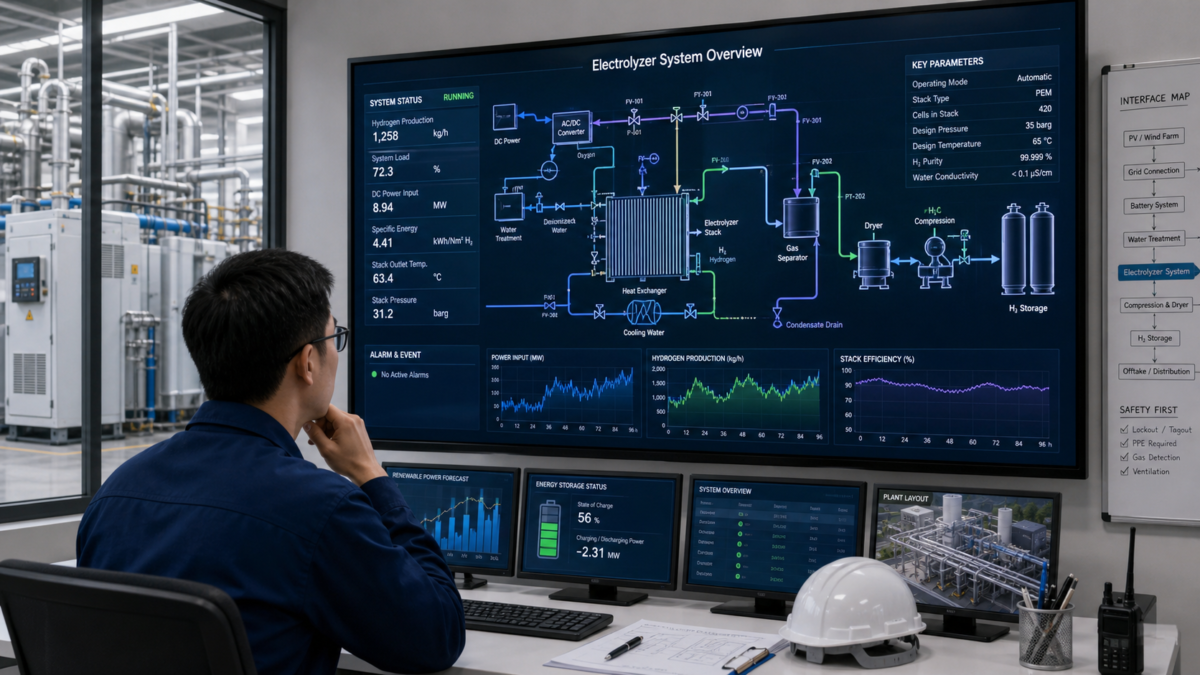
I have seen too many projects get bogged down by focusing only on the electrolyzer's nameplate capacity. That number on the spec sheet is a starting point, not the finish line. The real question is whether the entire system, from the power source to the final offtake, will work together reliably and economically at your specific location. Answering this requires a shift in perspective. Instead of asking "Which electrolyzer is best?", we should be asking "Which integrated system design will achieve our goals, and what are the biggest risks to that design?". This thinking forces you to look at the bigger picture and helps you avoid the common traps that can derail an otherwise promising project. Let’s break down how to do this.
The Buyer Pain Point Behind Buyers Evaluate Electrolyzer?
You see an impressive spec sheet promising high capacity. But announced capacity means nothing if the system can't run consistently or you have no one to buy the hydrogen.
The core pain point is the huge gap between a supplier's promised capacity and a project's actual, bankable output. This gap is caused by real-world constraints like unreliable renewable power, grid problems, and shaky offtake agreements. You must validate these to avoid failure.
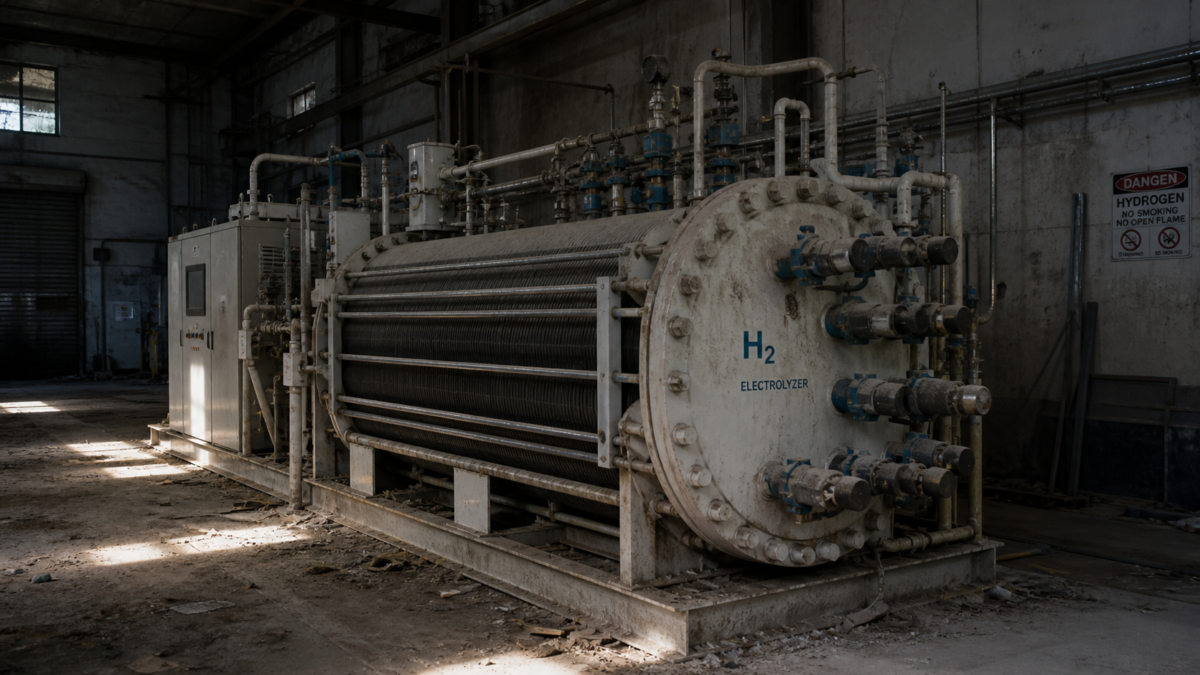
I always tell clients that announced capacity is not the same as committed offtake, operability, or bankability. A manufacturer can sell you a 10 MW electrolyzer, but that doesn't mean you'll produce 10 MW worth of hydrogen consistently. The real output depends entirely on the variables surrounding the machine. I’ve seen teams get excited about a low capital cost per kilowatt, only to find out that the unit has a narrow operating range that doesn't match their choppy wind profile. The result is a system that spends most of its time idle or running at low efficiency, destroying the project's economics. The pain is real because you've spent the capital, but you're not getting the revenue.
Supplier Promise vs. Project Reality
The disconnect often lies in what is being measured. A supplier’s job is to sell a reliable piece of equipment. Your job is to deliver a profitable project. These are not the same thing.
| Supplier’s Focus (The Promise) | Buyer’s Reality (The Pain Point) |
|---|---|
| Nameplate Capacity (MW) | Actual Hourly Production (kg/hr) |
| Efficiency at Full Load (%) | Average Efficiency Across a Real-World Operating Profile |
| Equipment Warranty | Project Bankability and Investor Confidence |
| Standard Operating Parameters | Performance with Your Specific Water Quality and Power Supply |
How to Test the Key Electrolyzer Assumptions?
Your financial model looks perfect on paper. But what happens when a week of cloudy weather or grid curtailment hits your project? Your assumptions must survive contact with reality.
Test your key assumptions by running an hourly simulation using your site’s actual renewable energy profile and grid supply data. Model the entire system, including any battery buffer and downstream compression, to see how these variables change the outcome and reveal hidden risks.
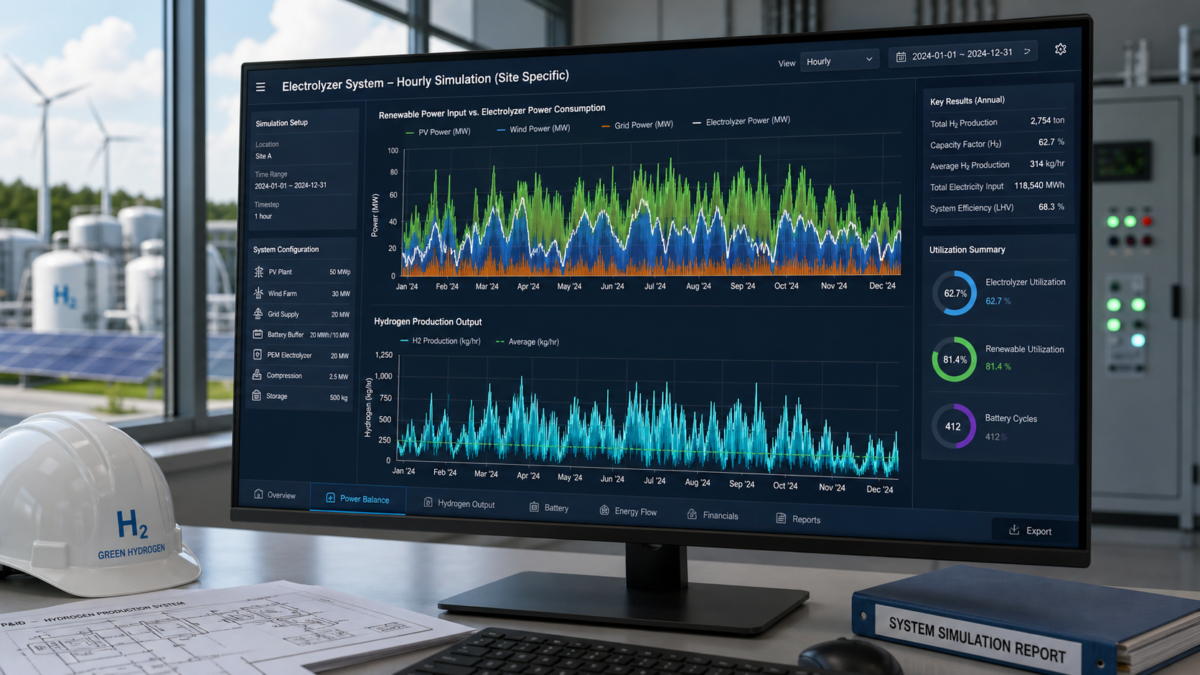
I insist on this step for any serious project. An annual average for solar or wind power is useless. You need to see what happens hour by hour over at least a year. I remember one project where the team based their numbers on a great annual solar resource. But when we ran the hourly simulation, we found that the daily ramp-up and ramp-down of the sun was too fast for their chosen electrolyzer. The system was constantly starting and stopping, which increased maintenance costs and reduced total output. A battery buffer solved the problem, but it was an expense they hadn't planned for. An hourly simulation would have caught this from day one. Your model needs to include the real power profile from your wind or solar farm, any grid power you plan to use, the round-trip efficiency of your battery, and the power consumption of your hydrogen compression and storage system. These variables can completely reverse an apparently obvious answer.
Balancing Cost, Reliability, and Compliance in Electrolyzer?
You want the cheapest electrolyzer to minimize your initial spending. But if that unit causes constant downtime or fails to meet offtake specs, it becomes the most expensive choice.
You must balance these by evaluating the total cost of ownership, not just the upfront price. Prioritize suppliers with proven pilot data and a clear reliability track record. Make sure their proposal meets all local grid codes and offtake compliance requirements from the start.
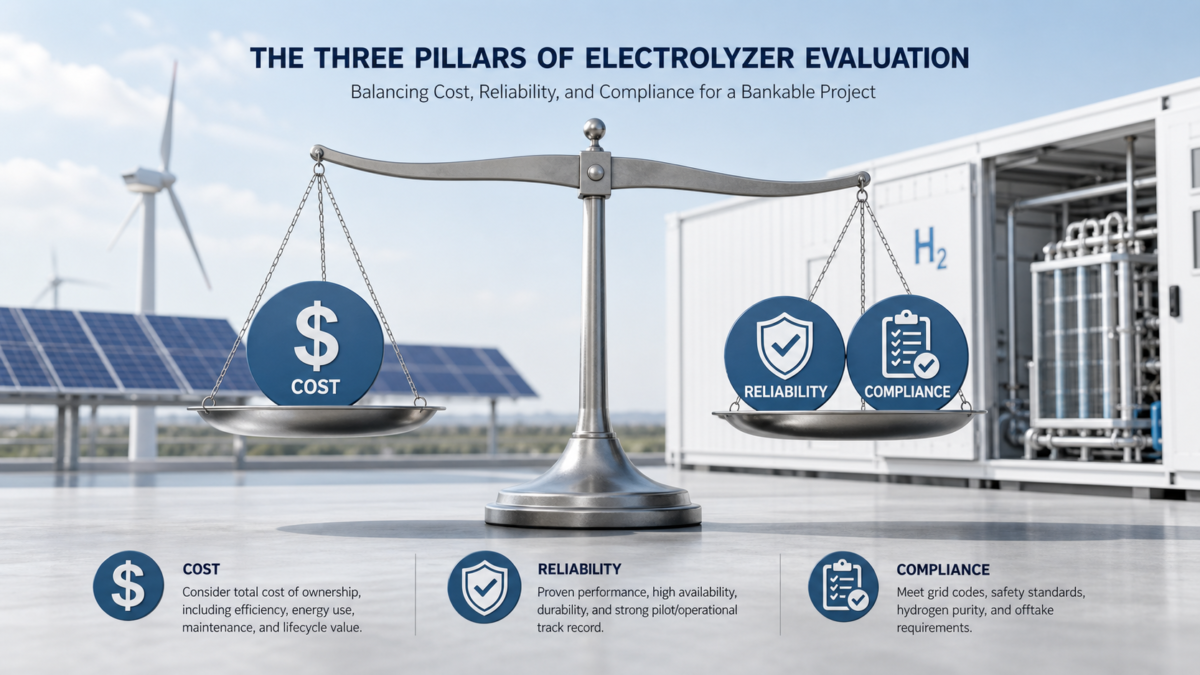
The classic mistake is to focus only on CAPEX. I always push my clients to think about the total cost of producing a kilogram of hydrogen over the project's lifetime. A cheaper unit might be less efficient, meaning higher electricity costs forever. It might require more frequent stack replacements, driving up maintenance costs. Or it might not have the control flexibility to work well with your renewable energy source, leading to lost production. Reliability is everything. Ask for pilot data. Ask to speak with other operators of their equipment. What is their real-world availability? On the compliance side, you have to consider grid connection standards, local safety regulations, and the purity requirements of your offtaker. If your hydrogen isn't pure enough for their fuel cells, it's worthless. For example, a company like Moletong, which works on integrated photovoltaic-storage-charging systems, understands these interfaces. They know that just dropping in one piece of equipment is not a full solution. That integrated system thinking is what you should look for.
What a Bankable Electrolyzer Proposal Should Show?
You have a proposal, but your investors and lenders are asking hard questions. If the proposal lacks credible data and a clear plan for risk, it isn't bankable.
A bankable proposal must go beyond spec sheets. It should provide a detailed mass-and-energy balance, an hourly simulation with your site data, a clear interface map, confirmed offtake assumptions, and real pilot data. It must also define when recommendations would change.
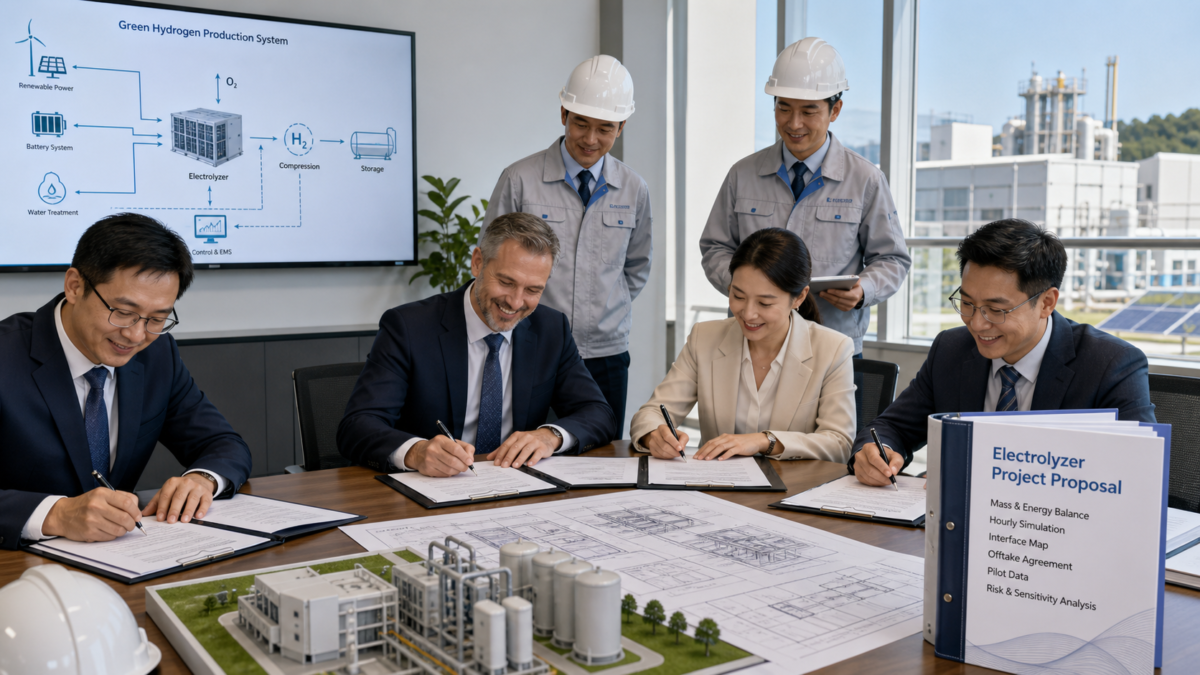
When I prepare a project for financing, this is the level of detail I demand. A spec sheet is marketing; a mass-and-energy balance is engineering. It shows exactly how much power and water go in, and how much hydrogen and oxygen come out, accounting for all system losses. The hourly simulation proves the project works with your specific resources. The interface map is critical. It's a diagram showing every piece of equipment—the solar panels, the battery, the water treatment, the electrolyzer, the compressor, the storage tanks—and defines who is responsible for making them work together. This avoids finger-pointing later. Finally, a truly professional proposal will state the conditions under which the recommendation would change. For example: "We recommend this PEM electrolyzer, but if the cost of grid power drops below $30/MWh, an alkaline system would become more economical." This shows your investors that you have done your homework and understand the project's sensitivities.
Conclusion
Evaluate electrolyzers by defining your outcome, identifying constraints, and testing with real data. This simple, practical approach ensures your project is bankable, operable, and successful from the start.
My Role
About me
Brand Name: Moletong
Slogan: Carbon Neutrality, Tracking the Future
Website: www.moletong.com
Company Overview
Established in 2011 and headquartered in Dongguan, Guangdong, we are an integrated new-energy equipment enterprise specializing in energy storage systems, complete electrical equipment, photovoltaic solutions, charging infrastructure, and hydrogen-energy solution integration.
We integrate R&D, manufacturing, sales, system configuration, and technical service to support utility-scale, commercial and industrial, and residential energy applications. Our solutions are designed around practical customer needs such as peak shaving and valley filling, electricity-cost optimization, transformer-capacity support, emergency backup, renewable-energy integration, intelligent energy management, and photovoltaic-storage-charging coordination.
Our Core Business
1. Energy Storage Systems & Equipment
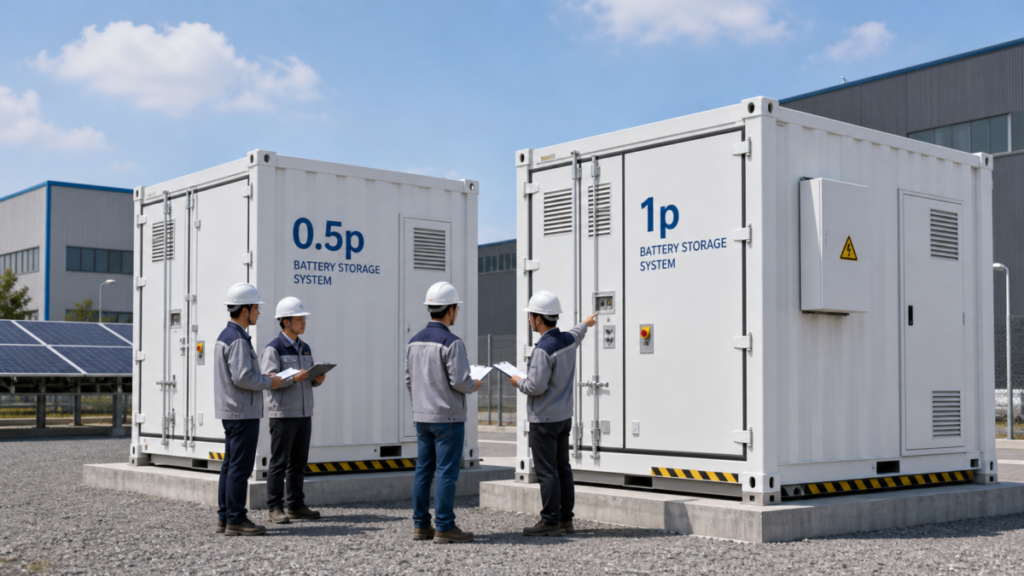
We develop lithium iron phosphate energy-storage products for utility-scale, commercial and industrial, residential, and integrated charging applications. Our documented portfolio includes liquid-cooled containerized energy-storage systems, commercial and industrial storage cabinets, residential battery systems, storage-and-charging systems, BMS, PCS, and EMS functions.
2. Complete Electrical Equipment
We provide complete high- and low-voltage electrical products, including gas-insulated ring-main units, high-voltage switchgear, low-voltage withdrawable and fixed switchgear, power-distribution cabinets, meter boxes, box-type substations, charging-station substations, and busbar-trunking systems.
3. Photovoltaic & Integrated Energy Solutions
We provide photovoltaic supporting equipment and system solutions, including 35 kV step-up substation equipment, photovoltaic combiner cabinets, adjustable mounting structures, photovoltaic-storage integration, and equipment support for grid connection, power transmission, and microgrid applications.
4. Charging & Hydrogen-Energy Solution Integration
We provide AC and DC charging solutions, storage-and-charging systems, and photovoltaic-storage-charging integration for industrial parks, commercial parking facilities, transport hubs, and locations with limited grid or transformer capacity. We also develop hydrogen-energy integration concepts involving renewable hydrogen production, hydrogen storage, refueling, and hydrogen-electric coupling. Specific hydrogen products, certifications, production capacity, and completed projects must be confirmed separately.
Product Applications & Technology Focus
Primary Service Industries:
Our principal customer sectors include Industrial and Commercial Energy Users, Renewable-Energy Developers, Power and Electrical Engineering, EV Charging Infrastructure, Commercial and Public Facilities, and Residential Energy Storage.
Product Categories We Serve:
- Utility-Scale Containerized Energy-Storage Systems
- Commercial and Industrial Energy-Storage Cabinets
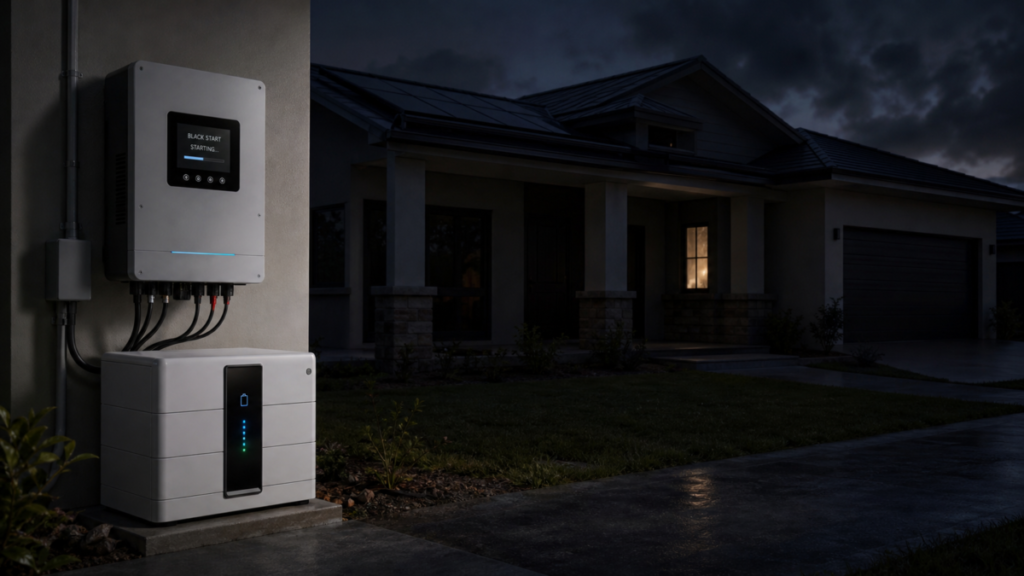
- Residential Energy-Storage Batteries and Inverters
- Integrated Storage-and-Charging Systems
- High- and Low-Voltage Switchgear
- Box-Type Substations and Charging-Station Substations
- Busbar-Trunking and Power-Distribution Products
- Photovoltaic Step-Up and Combiner Equipment
Technology Expertise:
Our documented technical focus includes:
Lithium Iron Phosphate Cells, BMS, PCS, EMS, Liquid Cooling, Natural Cooling, Modular System Integration, Remote Monitoring, Load Tracking, Anti-Reverse-Flow Control, Transformer-Capacity Protection, and Intelligent Operation and Maintenance.
Production Capacity & Equipment
Energy Storage Production & R&D Platform
Our supplied corporate materials identify one production base in Dongguan and a Dongguan engineering R&D center. We support product development, equipment manufacturing, system configuration, and technical service for residential, commercial and industrial, and large-scale energy-storage applications.
- Product Platform Highlights: 5,015 kWh liquid-cooled containerized storage systems, 627 kWh and 261 kWh commercial and industrial storage cabinets, 16 kWh residential battery systems, and 261 kWh and 627 kWh integrated storage-and-charging systems.
Electrical Equipment Platform
We provide product design and manufacturing support for complete electrical assemblies used in industrial facilities, commercial buildings, substations, photovoltaic projects, charging stations, and public infrastructure.
- Equipment Highlights: High-Voltage Ring-Main Units, High-Voltage Metal-Clad Switchgear, Low-Voltage Withdrawable Switchgear, AC Low-Voltage Switchgear, Distribution Cabinets, Box-Type Substations, Prefabricated Charging-Station Substations, and Busbar-Trunking Systems.
Energy Storage & Electrical System Capabilities
General Capabilities:
- Application and electricity-use requirement analysis
- Energy-storage system selection and capacity configuration
- Equipment design and manufacturing
- BMS, PCS, and EMS system integration
- Peak shaving, valley filling, and time-of-use energy scheduling
- Load tracking and anti-reverse-flow control
- Transformer-capacity protection and demand management
- Photovoltaic-storage and storage-charging integration
- Remote installation, commissioning, and trial-operation support
- Operator training, warranty service, and technical after-sales support as contracted
Our Core Specialties:
- ✔️ Liquid-Cooled Large-Capacity energy-storage systems
- ✔️ Commercial & Industrial peak-valley and backup-power solutions
- ✔️ Integrated Photovoltaic-Storage-Charging applications
- ✔️ Complete Electrical Distribution equipment and system coordination
Quality Control & Certifications
We apply quality, environmental, and occupational health and safety management requirements to the design, manufacture, and sales of our documented product scope.
Quality Management Scope:
The supplied qualification materials show ISO management-system certificates and patent certificates held by Moletong. The product manuals separately define model-specific electrical parameters, monitoring functions, protection requirements, cooling methods, fire-protection configurations, operating environments, and technical-service conditions.
Testing & Protection Focus:
- Cell voltage, current, temperature, and operating-status monitoring
- Overcharge, over-discharge, overtemperature, and abnormal-condition protection
- Liquid-cooling or natural-cooling verification according to product model
- Fire-protection configuration according to product type
- Enclosure protection, corrosion resistance, and operating-environment requirements
- BMS, PCS, EMS, and communication-function verification where applicable
Certifications & Compliance:
- ISO 9001 Quality Management System
- ISO 14001 Environmental Management System
- ISO 45001 Occupational Health and Safety Management System
- Invention Patent and Utility Model Patent Certificates
- Selected product models list IEC 62619, UN 38.3, RoHS, EN 61000 series requirements, GB/T 36276, CCC, and relevant IEC/GB electrical standards
Certification scope varies by product model, configuration, destination market, and certificate validity period. Model-specific certificates must be confirmed before any formal compliance claim.
Target Markets & Partnership Models
Who We Serve:
- Industrial Facility Owners: Plant managers, energy managers, facility managers, and procurement teams at factories or industrial parks seeking peak-valley electricity-cost optimization, demand management, transformer-capacity support, or emergency backup power
- Renewable-Energy Developers: Project developers, engineering managers, and procurement teams for photovoltaic or wind projects requiring energy storage, step-up equipment, electrical distribution, or renewable-energy integration
- EPC & Electrical Contractors: Project managers, technical managers, and equipment-purchasing teams at qualified engineering companies requiring packaged energy-storage or electrical equipment with technical coordination
- Charging-Station Developers & Operators: Investment, construction, and operations teams working on sites with limited grid access, insufficient transformer capacity, high peak demand, or photovoltaic-storage-charging requirements
- Energy Service Companies & System Integrators: Solution designers and project-development teams building commercial and industrial energy-management, microgrid, or distributed-energy projects
- Residential Storage Distributors & Installers: Importers, distributors, wholesalers, and qualified installers requiring lithium iron phosphate batteries, off-grid or hybrid inverters, and residential storage configurations
- Commercial & Public-Facility Owners: Property, engineering, and facility-management teams for commercial buildings, schools, hospitals, hotels, parking facilities, and transport locations requiring reliable power distribution, charging, or backup-energy solutions
Target Geographies:
Our home market is China, supported by regional sales coverage for South, East, Central, and Southwest China. The supplied 2026 catalogue also identifies an overseas office in Indonesia, supporting practical market development in Southeast Asia. Other overseas markets are served only after confirming model-specific certification, grid requirements, shipping conditions, and local installation standards.
Types of Cooperation:
- Equipment Supply: Standard or configured energy-storage and electrical products
- System Configuration: Product selection and capacity configuration based on the customer's application
- System Integration: BMS, PCS, EMS, photovoltaic, charging, and electrical-system coordination
- Project Technical Cooperation: Technical coordination with renewable-energy developers, EPC contractors, and qualified local engineering companies
- Integrated Energy Solutions: Photovoltaic-storage, storage-charging, and photovoltaic-storage-charging applications
- Technical Service: Training, remote installation and commissioning support, warranty, and after-sales service as agreed in the commercial contract
Our Core Competitive Advantages
⭐ Integrated New-Energy Product Portfolio
By combining energy-storage systems, complete electrical equipment, photovoltaic supporting products, charging applications, and intelligent energy-management functions, we can configure solutions around the customer's complete power-use scenario.
⭐ Coverage from Residential to Utility Scale
Our documented energy-storage range extends from 16 kWh residential systems to 261 kWh and 627 kWh commercial and industrial systems and a 5,015 kWh containerized system.
⭐ Application-Oriented System Design
Our solutions address identifiable operating needs, including peak-valley arbitrage, demand management, transformer-capacity constraints, backup power, renewable-energy consumption, and charging-station power support.
⭐ Integrated Control & Safety Architecture
Our storage products combine lithium iron phosphate cells with BMS, PCS, EMS, model-specific thermal management, multi-level protection, intelligent monitoring, and remote operation and maintenance functions.
⭐ Regional Sales & Technical Service Support
With a Dongguan headquarters and engineering center, regional sales coverage in China, and an overseas office identified in Indonesia, we support equipment selection, technical coordination, training, remote commissioning assistance, and contracted after-sales service.
Leave a Reply