

Where Does Hybrid Inverter Zero Export Create the Greatest Risk?
Worried your zero-export system will fail when you need it? The real risk is not just about compliance. It is about unexpected shutdowns when you are off-grid.
The greatest risk in hybrid inverter zero export lies in untested operating sequences. Sudden load surges, PV fluctuations, or generator misbehavior can cause a system collapse, especially during an off-grid transition. The inverter's reaction speed and logic are the real failure points.
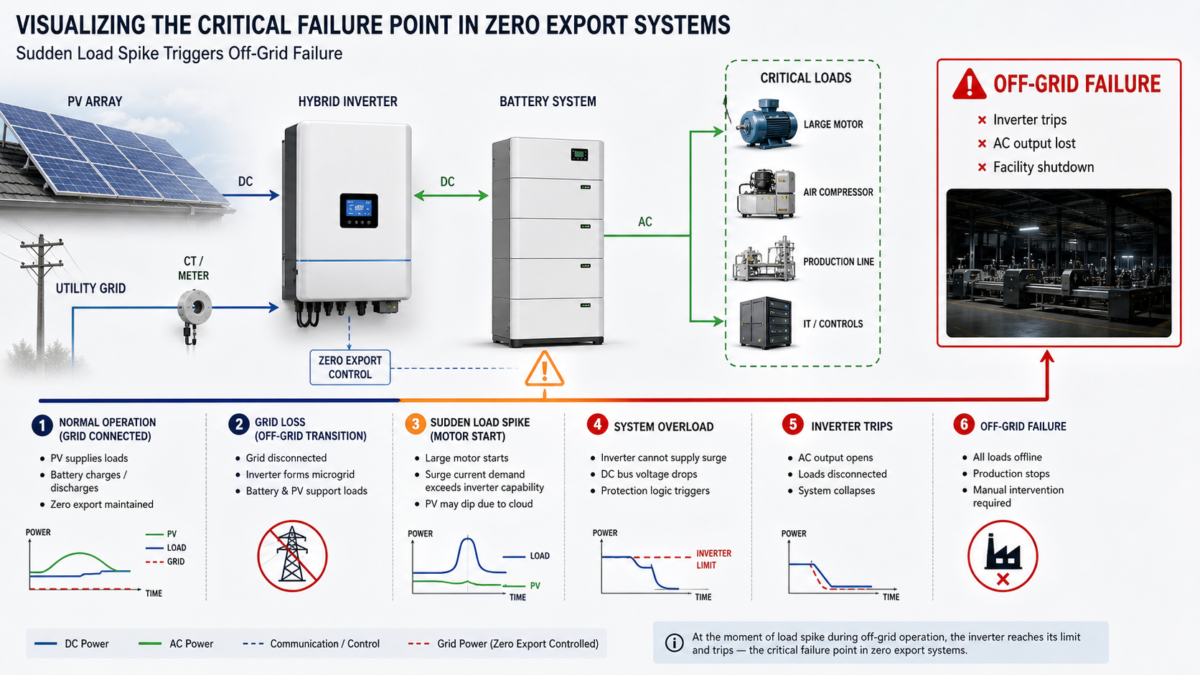
I have seen this happen more than once. A system looks perfect on paper. It has all the right components from reputable brands. But when the grid goes down and a large machine kicks on, the whole site goes dark. The problem was not the hardware. It was a failure to test the sequence of operations with real-world inputs. The inverter simply could not make the right decision fast enough. This is the gap I focus on closing. The details of how a system behaves under stress are what separate a reliable design from a risky one. Understanding this is key to building a system that actually works.
The Buyer Pain Point Behind Hybrid Inverter Zero Export?
You bought a hybrid system for reliability, but now you fear grid outages. The promise was seamless power, but the reality could be complex and frustratingly fragile.
The core pain point is the fear of a system blackout during an islanded or off-grid event. The buyer invests in energy independence, but untested assumptions about load surges or source switching can completely defeat that purpose, turning an asset into a liability.
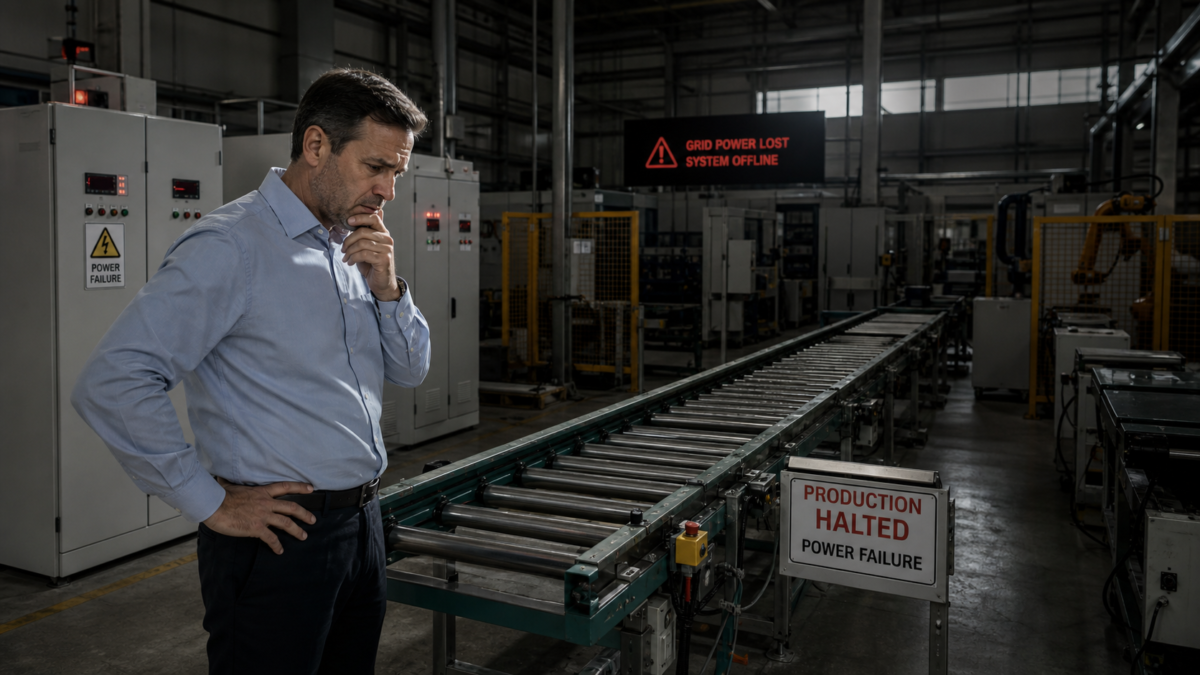
In my experience, the technical buyer’s real worry is not about the equipment’s nameplate rating. It is about whether the system will do its job during the five minutes of chaos when the grid fails. This is an operating-sequence problem far more than an equipment-selection problem. An apparently obvious answer on a datasheet can be completely wrong in practice. The variables that can reverse the outcome are surge currents, unpredictable PV array behavior, generator response time, and the nature of the load you are transferring. I saw a project where a backup generator’s voltage sag on startup was enough to trip the hybrid inverter, defeating the entire backup plan. The spec sheets for both the inverter and generator were fine. The problem was their interaction.
Assumption vs. Reality
A solid design must challenge the common assumptions. I always build a simple table to map out these risks for a client. It makes the abstract problem very concrete.
| System Variable | Common Assumption | Potential Failure Point |
|---|---|---|
| Load Surge | The inverter’s surge rating can handle motor startup. | The surge lasts longer than the inverter’s tolerance, or multiple loads start at once. |
| PV Array Output | PV will help support the load when off-grid. | A passing cloud causes a sudden drop in PV power, and the battery/inverter cannot ramp up fast enough. |
| Generator Behavior | The generator will start and provide stable power. | Voltage or frequency instability during startup confuses the inverter, preventing a smooth transfer. |
| Transfer Target | The system will seamlessly switch the entire facility. | Sensitive electronics drop out during the millisecond-long transfer, or non-essential loads overload the islanded system. |
How to Test the Key Hybrid Inverter Zero Export Assumptions?
Your spec sheet looks perfect, but how do you know it will work? Relying on manufacturer data alone can lead to expensive failures and lots of finger-pointing.
You must test assumptions with real site inputs. My approach is to define the required outcome, identify the constraints that can defeat it, and then stress-test the design using a four-part verification: an operating-mode table, a disturbance log, a source-state diagram, and a black-start test.

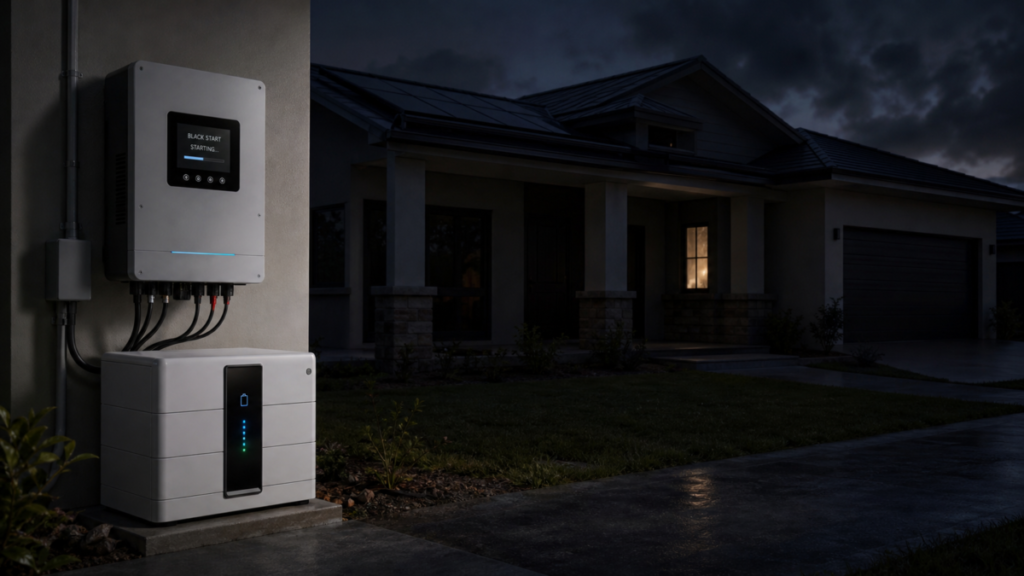
My process is simple and practical. I do not rely on simulations alone. I define the real-world conditions the system must survive. First, I create an operating-mode table. This lists every possible state: grid-tied, islanded with solar, islanded at night, running on a generator, and so on. We have to know the rules for each state. Second, I simulate and log disturbances. What happens if we manually trip the main breaker? What happens when the largest motor on site starts up while the system is already islanded? We record the system's exact response. Third, I draw a source-state diagram. This is a simple map that shows how the system moves from one power source to another, like from grid to battery. It helps us find any dead ends where the system could get stuck. Finally, we perform a full black-start test. We shut everything down and see if the inverter can restart the facility using only battery and solar power. This is the ultimate test of off-grid reliability.
Balancing Cost, Reliability, and Compliance in Hybrid Inverter Zero Export?
You want a reliable system without overspending. But cutting corners on testing or equipment can violate grid codes and leave you with an unreliable, even dangerous, setup.
Balance is achieved by focusing on the operating sequence, not just oversized hardware. A well-tested, right-sized inverter is more reliable and cost-effective than an oversized one with unverified behavior. Compliance is a natural result of a system that reliably controls power flow under all conditions.

Many engineers try to solve reliability problems by just buying bigger, more expensive hardware. This is often a waste of money. The real secret to balancing cost and reliability is in the testing and commissioning phase. For example, my testing approach might reveal that a specific Moletong three-phase hybrid inverter can handle a site’s surge loads perfectly, as long as a non-critical load is shed for three seconds during the transition to off-grid mode. This software-based solution is much cheaper than buying the next size up inverter. It delivers the required reliability without overspending. When I work with Moletong equipment, I map their single- and three-phase hybrid inverters to their verified model limits, not just the numbers on the datasheet. True reliability comes from understanding and proving how the equipment behaves, not from its rated capacity. Compliance with zero-export rules is easy when the grid is stable. The hard part, and the part regulators care about, is maintaining control during a disturbance. A reliable system is a compliant system.
What a Bankable Hybrid Inverter Zero Export Proposal Should Show?
You have multiple proposals, and they all look the same. They list equipment and prices. How do you choose the one that will actually work and protect your investment?
A bankable proposal moves beyond equipment lists and datasheets. It must include an operating-mode table, a disturbance log, a source-state diagram, and a black-start test plan. It should also clearly state the conditions under which the recommendation would change.

When I put together a proposal for a technical buyer, I make sure it is practical and credible. It needs to show that I have thought through the real-world problems. A simple list of parts is not enough. A serious proposal must include the key documents from my testing philosophy. The operating-mode table proves I have considered all possible scenarios. The disturbance log shows how the system is designed to handle specific, predictable shocks like a motor starting. The source-state diagram provides a clear, visual map of the system's logic, proving there are no dead ends. The black-start test plan is the ultimate proof of capability, showing exactly how the site will recover from a total outage. Finally, a credible proposal is honest about its limits. I always include a section that says, "I would change this recommendation if…" and then list the conditions, such as a higher-than-expected surge current from a future piece of equipment. This transparency builds trust and leads to a system that works.
Conclusion
My approach is simple: define the outcome, find the constraints that can defeat it, and test with real inputs. This makes any zero-export system practical, credible, and truly reliable.

Leave a Reply