

Why Do Car Manuals Not Include Battery Information?
Your car manual has everything, except the one part you will definitely replace. Why is that? It seems like a simple oversight, but it points to a much bigger truth.
Car manuals omit detailed battery information because successful replacement depends on a complete support channel—not just the hardware's nameplate data. The real product you need is guaranteed lifecycle support, which includes correct parts, installation competency, and regional availability.
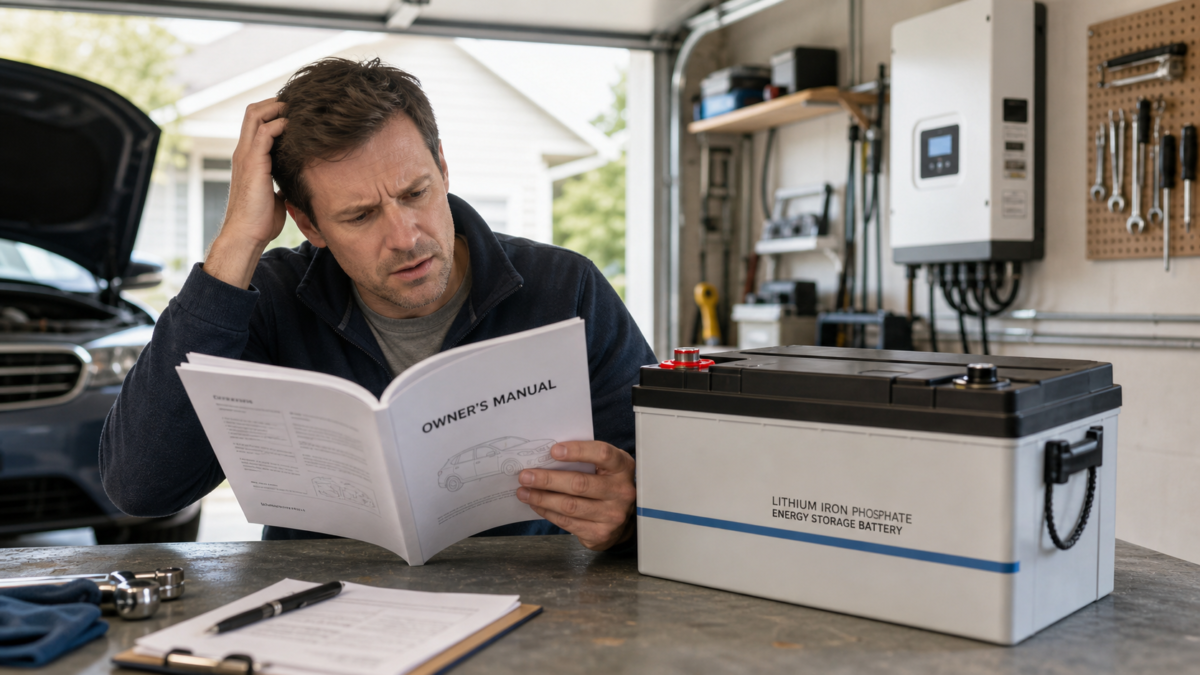
I’ve spent years working with energy storage, from huge utility-scale systems to the battery in my own garage. The pattern is always the same. People get fixated on the numbers printed on the side of the box. They think that’s the whole story. But the reason your car company doesn’t just print the battery model number is because they know that hardware alone is a recipe for failure. They are selling you access to a qualified service channel. That channel is what guarantees the result, not the battery itself. The same exact logic applies when you are trying to source and install a large-scale energy storage system. Let’s break down what really matters.
What Car Manuals Not Include Battery Information Reveals About the Real Constraint?
You think the challenge is finding a battery with the right specs. But that focus blinds you to the real problem: the lack of a support system to back it up.
The absence of battery data in manuals reveals the true constraint is not hardware availability, but the capability of the service channel. Success depends on having a qualified local partner who can deliver, install, commission, and support that specific battery model throughout its entire lifecycle.

The real product isn't the battery; it's the assurance that the battery will work as promised for years. This assurance comes from a robust support channel, and that channel has several variables that directly impact your project's cost, performance, and risk. I've seen projects go sideways because someone bought a "great deal" on hardware from a supplier with no local presence. The unit arrived, but nobody knew how to commission it correctly, and when a minor fault occurred, there was no one to call. The real constraint was never the hardware; it was the service territory.
To make this clear, I’ve broken down the key variables of a support channel. These are the factors that determine if your project will succeed or fail, long before the hardware ever shows up.
| Support Channel Variable | Impact on Cost | Impact on Performance | Impact on Risk |
|---|---|---|---|
| Territory | High shipping and travel costs for non-local support. Local partners offer more predictable service pricing. | Faster response times from local teams. Delays from remote support can cause extended system downtime. | High risk of project delays and unsupported failures if the partner has no established presence in your region. |
| Lead Qualification | Wasted time and money pursuing solutions that are technically or commercially unworkable. | A qualified partner ensures the proposed system actually meets the application’s needs, avoiding underperformance. | High risk of selecting the wrong product or partner, leading to a failed project that doesn’t deliver the expected ROI. |
| Demo Assets | Higher initial cost for the partner, but reduces the buyer’s cost of making a bad decision. | Allows you to verify compatibility and performance claims before committing, ensuring the system works as expected. | Significantly lowers the risk of purchasing an incompatible or underperforming system. Seeing is believing. |
| Commissioning Authority | Reduces rework and troubleshooting costs by getting the installation right the first time. | Ensures the system is configured for optimal safety and efficiency according to manufacturer specifications. | Drastically reduces the risk of equipment damage, safety incidents, and voided warranties from improper setup. |
Which Measurements Matter More Than Nameplate Data for Battery Manual Localization?
You’re comparing spec sheets, looking for the highest numbers. But those numbers are meaningless without proof that a local team can deliver on them in your specific environment.
For battery localization, measurements of a partner's demonstrated competency matter far more than nameplate data. Focus on their process for evidence collection, their model-specific training records, and their clear ownership of technical escalation. These metrics predict real-world success.
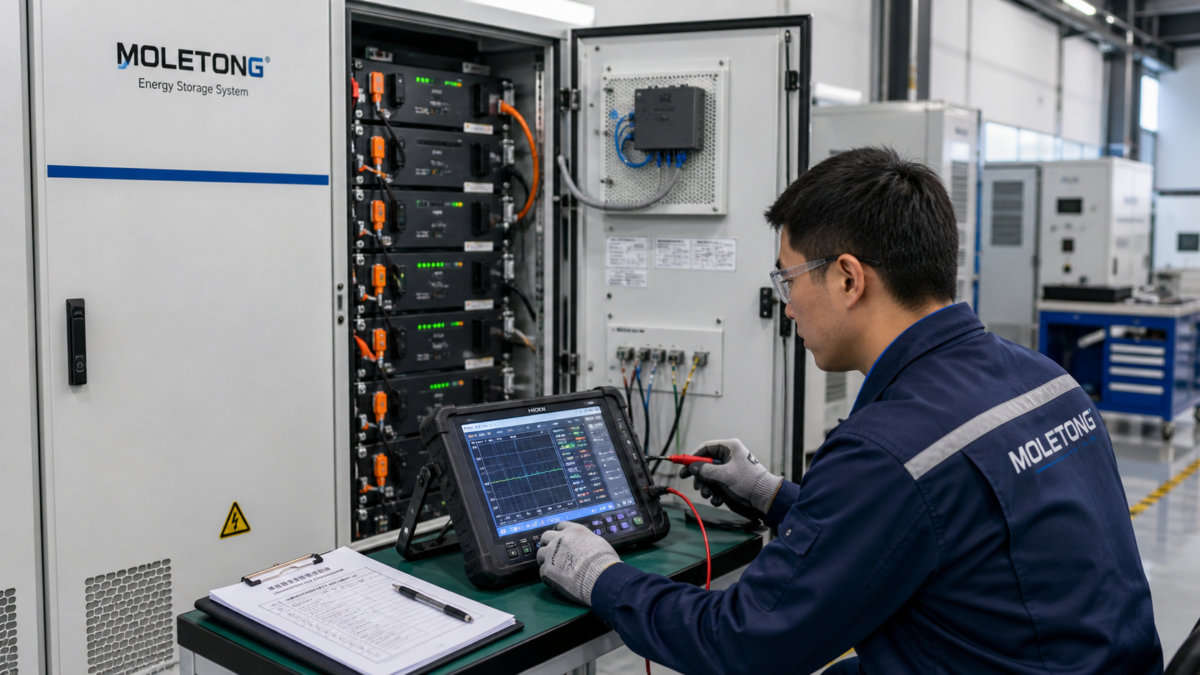
I work with Moletong partner materials all the time, and we build them around this very principle. We don't just send out a brochure. We build our support channels around exact models. Our partners need to show us their competencies, and we have a formal process for evidence collection. When you are vetting a partner, don't ask them for the battery's spec sheet; ask them for their competency checklist for that model. Ask to see their technician’s training certificate for that specific liquid-cooled system. Ask them who owns the support ticket when an issue gets escalated. Their answers to these questions are far more valuable than any number on a sticker. I once saw a team with perfect "paper" qualifications completely fail to commission a system because their training was on a previous generation of the hardware. The nameplate data was nearly identical, but the control system was different. The project was delayed by a month while we flew in an expert.
How Compatibility Can Undermine the Expected Result?
You found a battery that is "compatible" with your system. But in energy storage, "compatible" can be a trap, leading to hidden failures that emerge weeks or months later.
Compatibility undermines the expected result when it is assumed, not proven with a detailed matrix. A battery might seem to work, but hidden mismatches in firmware, communication protocols, or thermal management logic can cause performance degradation, safety risks, and complete system failure.
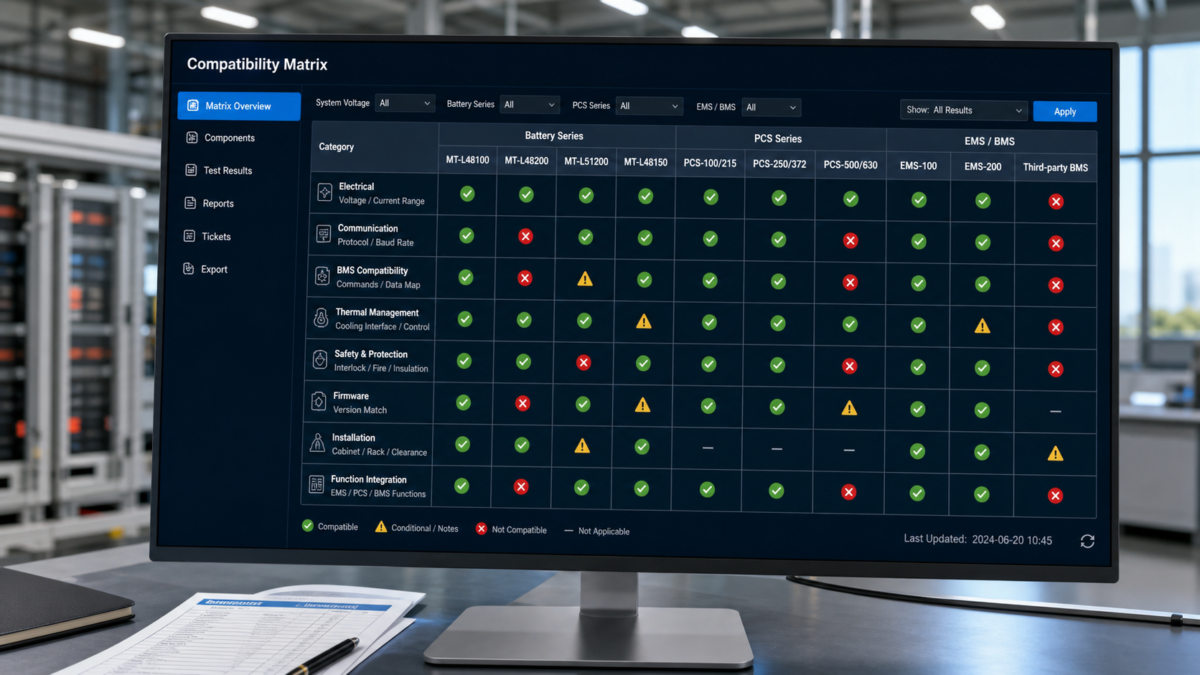
True compatibility is about the entire ecosystem working in perfect harmony. It’s not just about voltage and physical connectors. It’s about the battery management system (BMS) talking flawlessly to the power conversion system (PCS) and the energy management system (EMS). I remember a project where the customer sourced their own "compatible" battery for our PCS. Everything seemed fine for the first week. Then, we started getting intermittent communication loss alarms. It turned out the battery's BMS used a slightly different CAN bus protocol version than the PCS expected. It worked 99% of the time, but that 1% of dropped packets prevented proper cell balancing. After two months, the battery's capacity was already degrading. We spent weeks troubleshooting an issue that a proper compatibility matrix would have prevented. This is why we develop detailed demo scripts and ticket templates for our partners. We force them to prove compatibility before the customer signs off.
Which Acceptance Tests Should Buyers Request for Battery Manual Localization?
The system powers on, so the job is done, right? Signing off on an installation without rigorous testing is like buying a car without a test drive.
Buyers must request acceptance tests that prove real-world performance. This includes a documented full charge-discharge cycle test, a communications handshake test with all integrated systems (PCS, EMS), and a live validation of all safety and alarm functions against a predefined script.
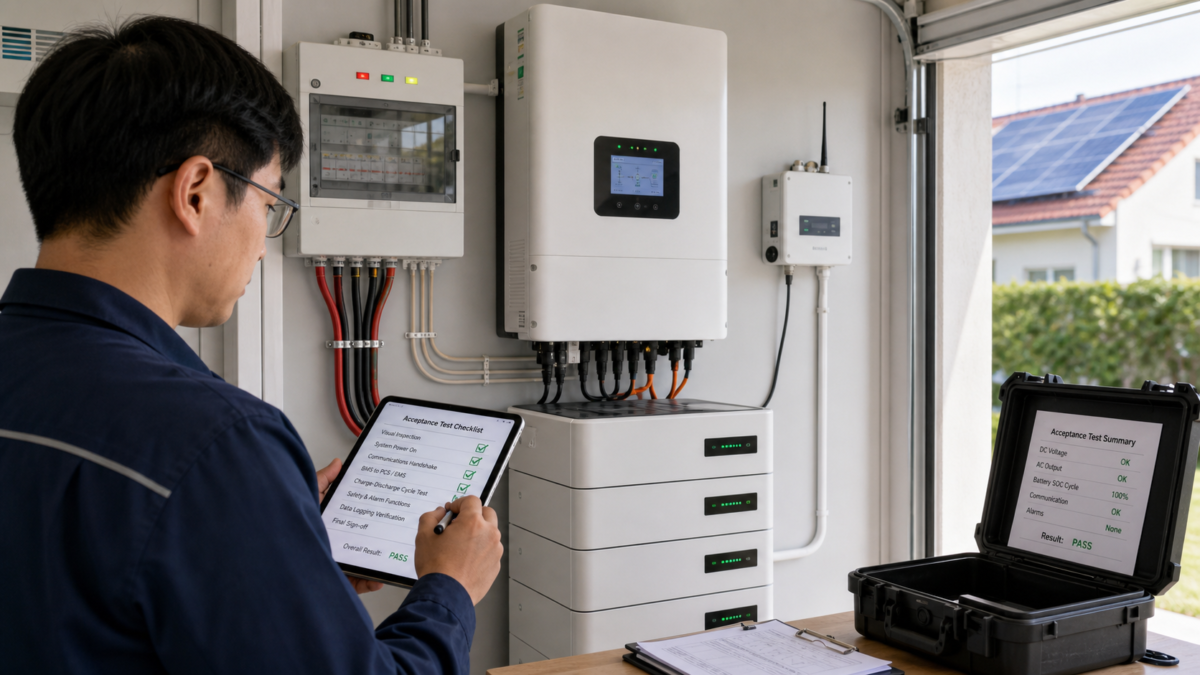
When one of our partners completes an installation, the job isn't over. It's just beginning. The final step is the Acceptance Test, and it's non-negotiable. This is the moment where the partner proves that the system doesn't just turn on, but that it performs exactly as designed. I always advise buyers to be deeply involved in this process. Don't just take the installer's word for it. Request the test script in advance. Ask them to demonstrate a full cycle and show you the performance data. Ask them to trigger a high-temperature alarm to prove the safety shutdown works. This isn't about distrust; it's about de-risking your investment. The results from this initial test become the baseline for the system's entire life. When you call for support a year later, this documented test result is the "gold standard" we compare against. It turns a subjective problem ("it doesn't seem to be working right") into an objective one ("performance has dropped 10% from the commissioned baseline").
Conclusion
Success in energy storage isn't about the hardware you buy. It's about the localized, competent, and documented support channel you buy into, which guarantees performance for its entire lifecycle.


Leave a Reply