

BESS Sizing with Interval Data: What Buyers Need to Know?
You have a year of interval data and a payback calculation that looks great. But your BESS project still feels like a gamble. What hidden variables could ruin your investment?
Proper BESS sizing with interval data means defining your required outcome, identifying constraints like auxiliaries and degradation, and testing the design with real site inputs. A transparent downside case is more useful than an overly optimistic payback calculation, ensuring the system performs as expected when it matters.
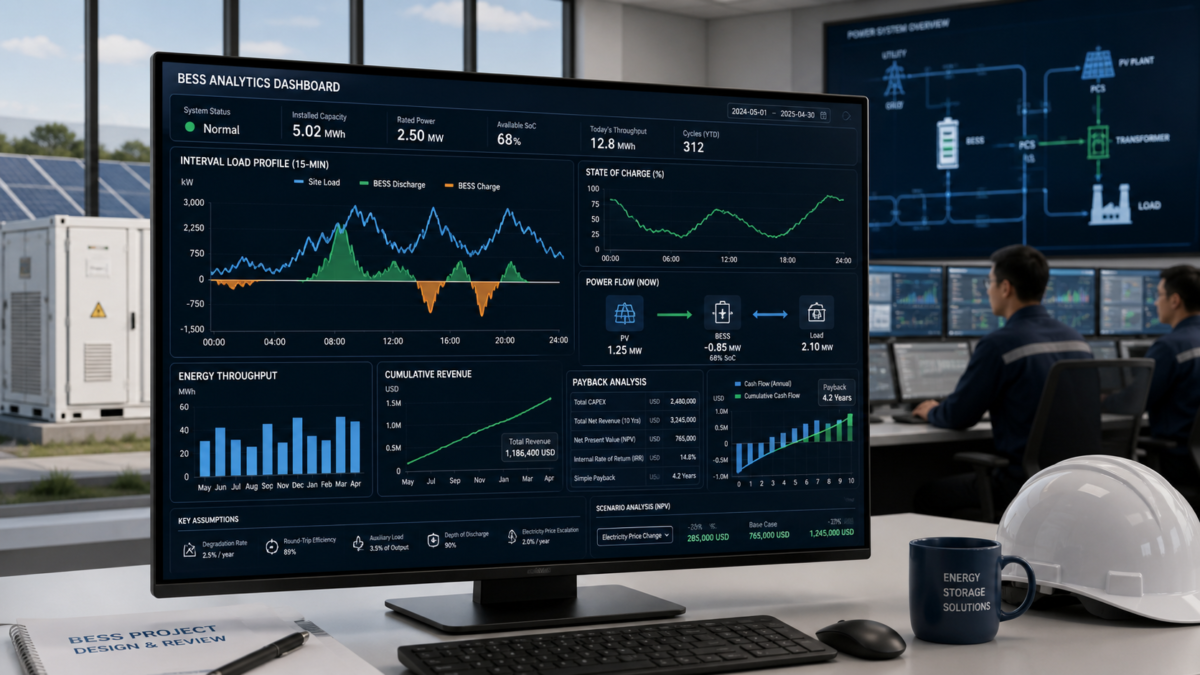
This approach sounds simple, but the details are what make or break a project. The numbers in a spreadsheet often don't match what happens on-site. I've learned that you have to look beyond the base case to see the full picture. The real value comes from understanding what could go wrong and designing a system that is robust enough to handle it. Let's look at why this matters so much.
The Operational Reality Behind BESS Sizing with Interval Data?
Your interval data looks perfect for peak shaving. But what if the data resolution is too coarse, or it misses the short-duration peaks that actually trip your main breaker?
The operational reality is that interval data resolution, data gaps, and unrecorded loads can mislead sizing models. A data audit is crucial to confirm the data's quality and identify constraints that could defeat your project's goals, like unexpected demand charges or grid instability.

My approach to BESS sizing is straightforward. First, I define the buyer's required outcome. Is it about saving money on demand charges, or ensuring backup power? Second, I identify the single biggest constraint that could defeat that outcome. Third, I test the proposed design against that constraint using real site inputs. This is where the interval data comes in, but not all data is created equal. A "perfect" payback based on 15-minute interval data can fall apart if your facility has 1-minute peaks that set your demand charges. That's why I always start with a thorough interval-data audit. I need to know if the data is clean, complete, and at a high enough resolution to be trusted. A transparent downside case, like "what happens if energy prices change by 20%?", is always more useful than a precise-looking base-case payback.
Key Data Audit Checks
| Check | Why It Matters | Example Risk |
|---|---|---|
| Data Resolution | Low-resolution data (e.g., 15-min) can hide short, expensive peaks that drive demand charges. | The BESS is sized too small and fails to shave the true peak, resulting in minimal savings. |
| Data Gaps | Missing data points can skew the average load profile, leading to an inaccurate system size. | The system is undersized for seasonal peaks that occurred during a data gap. |
| Data Source | Utility bills may not reflect the same data as your site’s own power meter. | Sizing is based on billed data, but the on-site controller sees different loads and can’t execute the strategy. |
Why Auxiliaries Changes the Design?
You calculated the BESS capacity based on your load profile. But did you account for the system's own power consumption for cooling and controls, which eats into your usable energy?
Auxiliaries like HVAC, pumps, and control systems consume energy, reducing the net capacity available to your facility. This parasitic load can significantly impact round-trip efficiency and financial returns, especially in extreme climates, requiring a larger system than initially calculated to meet the same outcome.
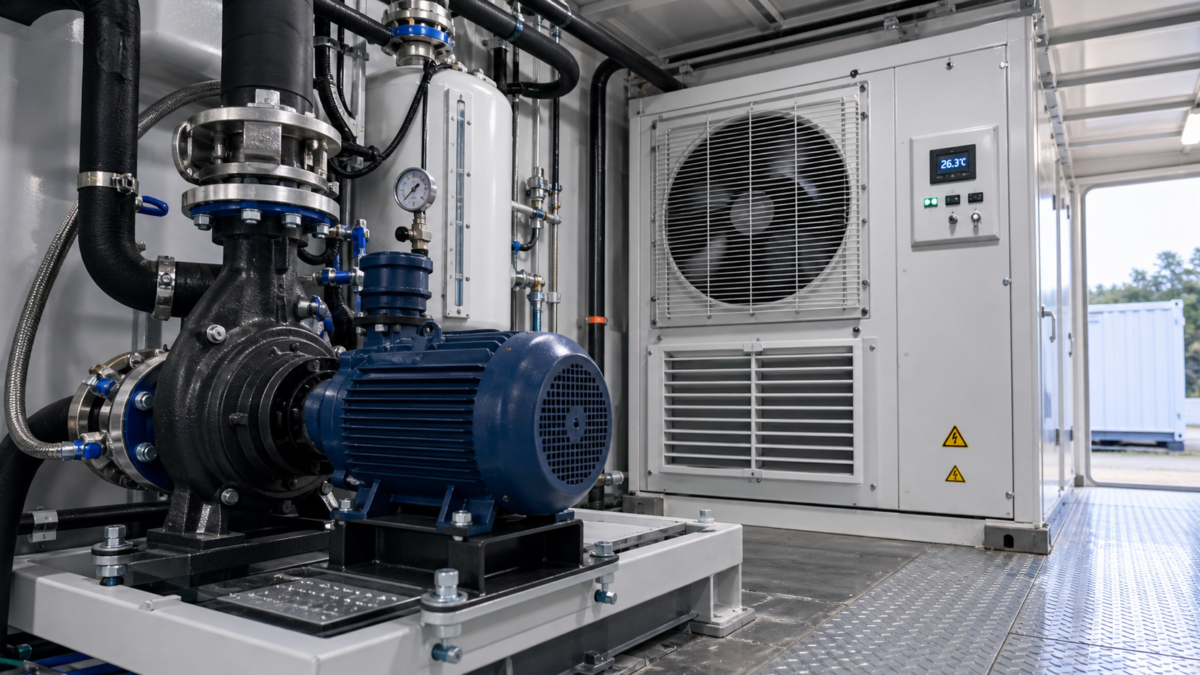
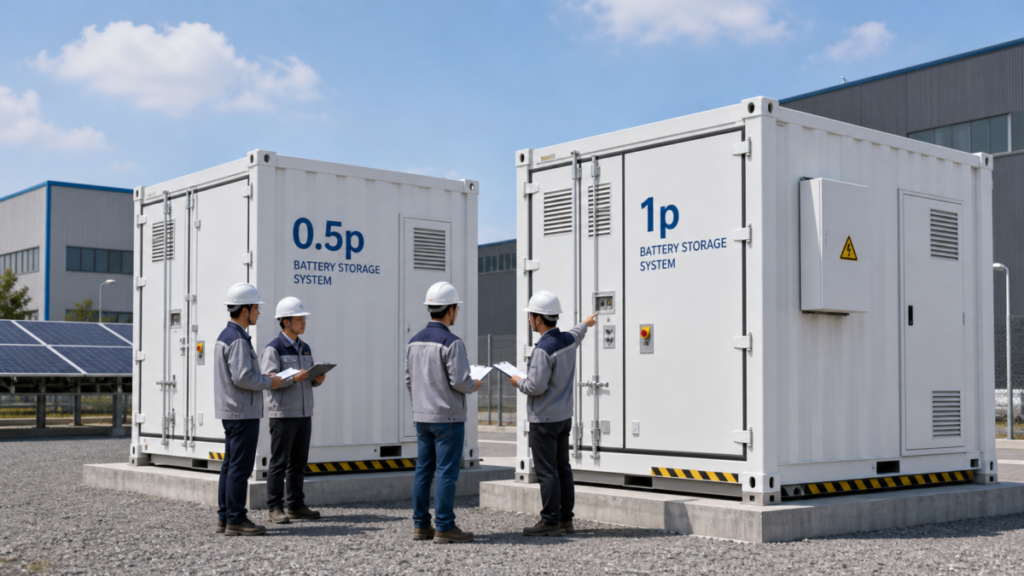
Auxiliaries are one of the most overlooked variables in BESS sizing. These are the internal systems that keep the battery operating safely and efficiently—things like the Battery Management System (BMS), thermal management systems (like fans or liquid cooling), and control hardware. They all draw power from the battery itself. This "parasitic load" reduces the net energy you can deliver to your facility. On a hot day, the cooling system might work much harder, consuming a significant amount of energy that you thought was available for peak shaving. If your financial model is based on the battery's gross capacity, your real-world returns will be lower. For a system like our Moletong liquid-cooled 5,015 kWh container, the cooling system is critical for performance and longevity, but its power consumption must be factored into the model. That is why I insist on using traceable parameters for auxiliary loads, not just a generic efficiency number. Ignoring this can lead to under-sizing the BESS and failing to meet your financial targets.
Balancing Performance, Safety, and Serviceability in BESS Sizing with Interval Data?
Sizing for maximum performance might push the BESS to its limits. But what about long-term degradation, safety, and the ability for technicians to actually service the unit?
Balancing these factors means not just sizing for day-one performance but also considering long-term degradation, thermal management for safety, and physical access for service. An overly aggressive design might look good on paper but can lead to premature aging, higher OPEX, and safety risks.
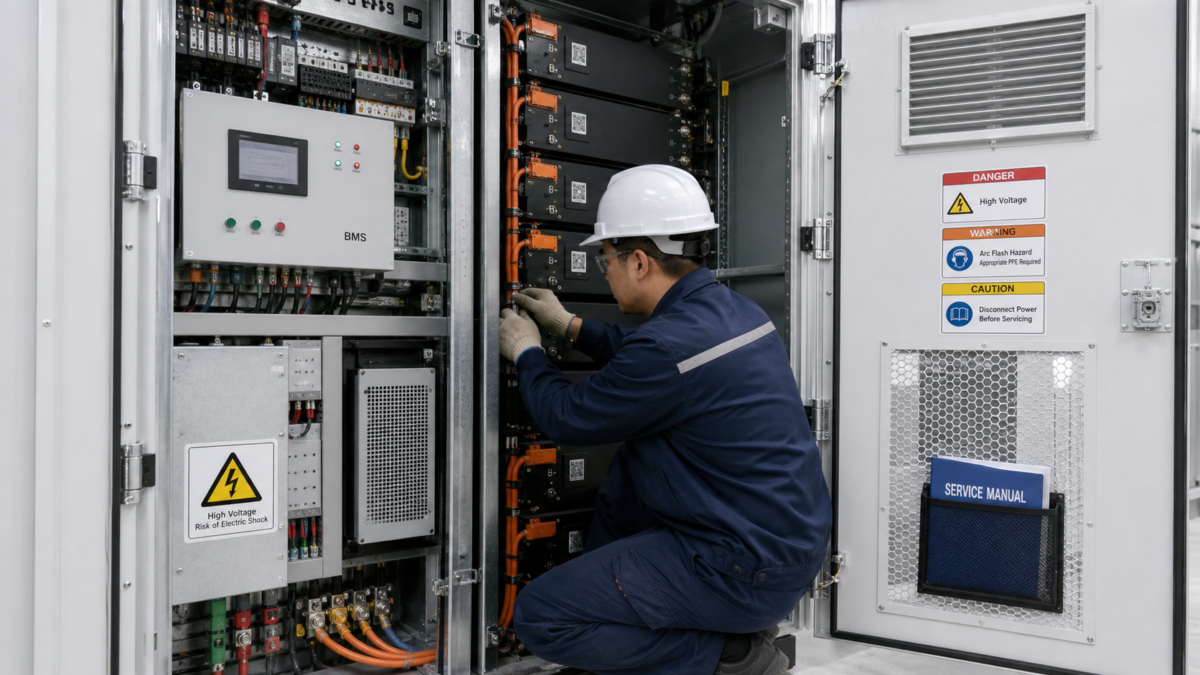
Sizing a BESS isn't just about matching a kilowatt-hour number to a load profile. It’s a balancing act. You can design a system to cycle very aggressively—charging and discharging at high rates to capture every bit of revenue. This maximizes day-one performance. However, it also accelerates battery degradation, meaning your usable capacity will shrink faster than expected. This increased cycling also generates more heat, which puts more strain on the auxiliary systems and introduces safety risks if not managed properly. On the other hand, you have serviceability. A system packed into the smallest possible footprint might save on shipping costs, but if a technician can't easily access components for routine maintenance or repairs, your operational downtime and costs will go up. I always use an assumption register to document these trade-offs. It clearly states the expected degradation rate, the depth of discharge limits, and the service plan. This ensures the buyer understands that the initial CAPEX is just one part of a much larger equation involving OPEX, safety, and long-term value.
What to Confirm for BESS Sizing with Interval Data at Design Review and Handover?
The design is approved and the system is installed. But how do you verify that the promised performance matches reality and that you have the tools to manage it?
At design review, confirm the assumption register, cash-flow model, and interval data sources. At handover, demand an independent formula review, a clear statement of degradation guarantees, and a list of conditions under which the original recommendation would change. This ensures transparency and protects your investment.
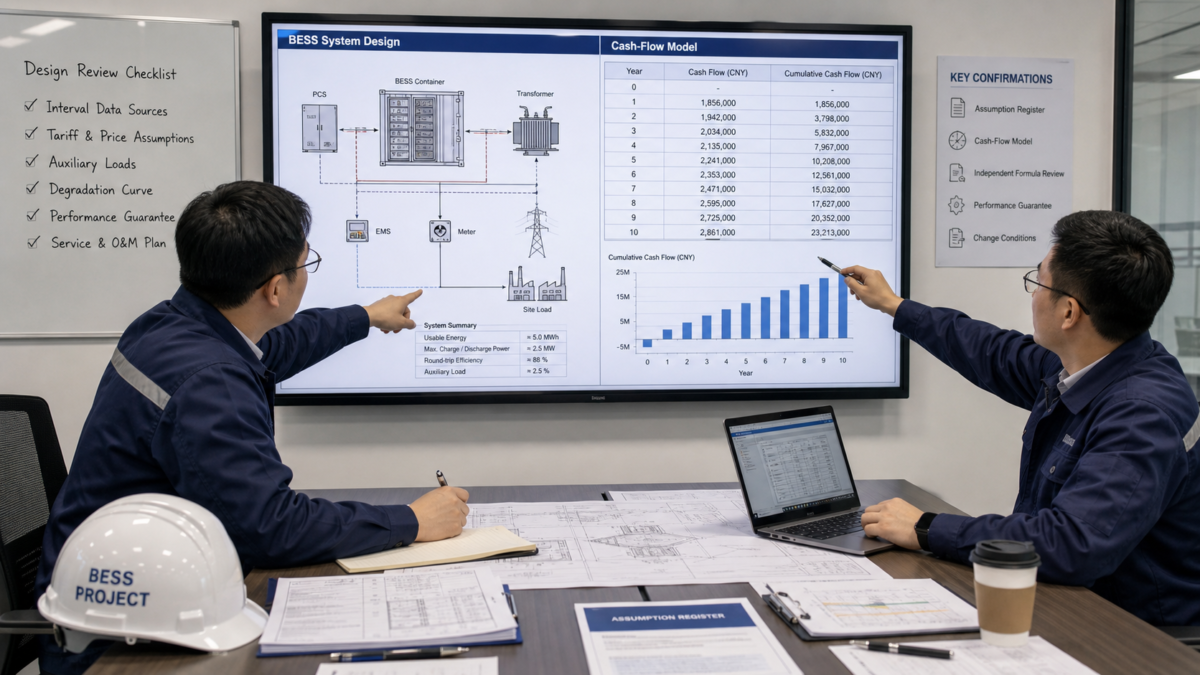
The project isn't over when the design is complete. The review and handover stages are your last chance to ensure you're getting what you paid for. I always push for a few key deliverables. At the design review, I want to see the complete assumption register. This document should list every key variable—from the assumed utility tariff escalation rate to the auxiliary load percentage and the battery degradation curve. I also want to see the auditable cash-flow model so I can check the formulas myself. Then, at project handover, I recommend a few more steps. First, an independent formula review from a third party to validate the financial projections. Second, a crystal-clear performance guarantee that outlines what happens if the system doesn’t meet its energy or power targets. Finally, and most importantly, I ask for a document stating the conditions under which the original sizing recommendation would change. What if the facility adds a new production line? What if the utility changes its rate structure? This keeps the process honest and provides the buyer with a practical guide for the future.
Conclusion
My approach is simple: define the outcome, find what breaks it, and test with real data. This focus on the downside makes your BESS investment practical, credible, and useful.

Leave a Reply