

How Should Buyers Respond to The Radical Plan to Build World's Biggest Green Electrolyser…?
You see a huge announcement for a new green hydrogen project. It’s hard to tell if it's a real opportunity or just hype. Here’s how you can find out.
Buyers should respond with careful and practical questions. Announced capacity is not the same as a bankable project. You must first clarify what the project needs to achieve for you, then check the core inputs against a realistic downside case, and demand dated engineering proof.
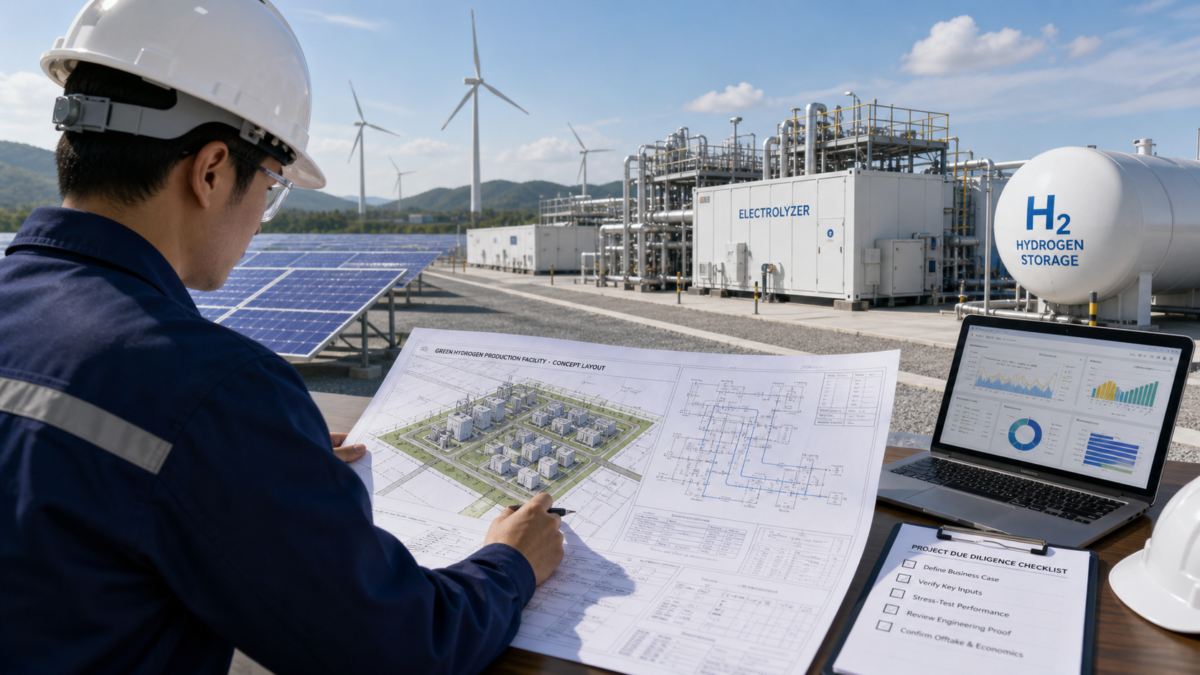
I’ve seen these giant project announcements many times. A company promises to build the world's biggest electrolyzer, powered by a massive new solar or wind farm. The numbers are impressive, and the vision is exciting. It’s easy to get swept up in the promise of carbon-free fuel and energy independence. But as a buyer or investor, my job is to look past the press release. My conclusion after reviewing dozens of these scenarios is that a big announcement doesn't guarantee a successful project. What really matters is whether the system can operate reliably and make financial sense in the real world. The first step is not to analyze their plan, but to define your own.
When Green Hydrogen Battery Buffer Becomes a Business Case?
You are told a green hydrogen buffer will solve your problems. But savings, resilience, and compliance are different goals that often get confused. First, you must decide which one is most important.
A green hydrogen battery buffer has a business case when it is designed to achieve a single, primary goal. Outcomes like cost savings, energy resilience, capacity relief, or compliance are not interchangeable. The business case is strongest when one clear objective drives every design decision.
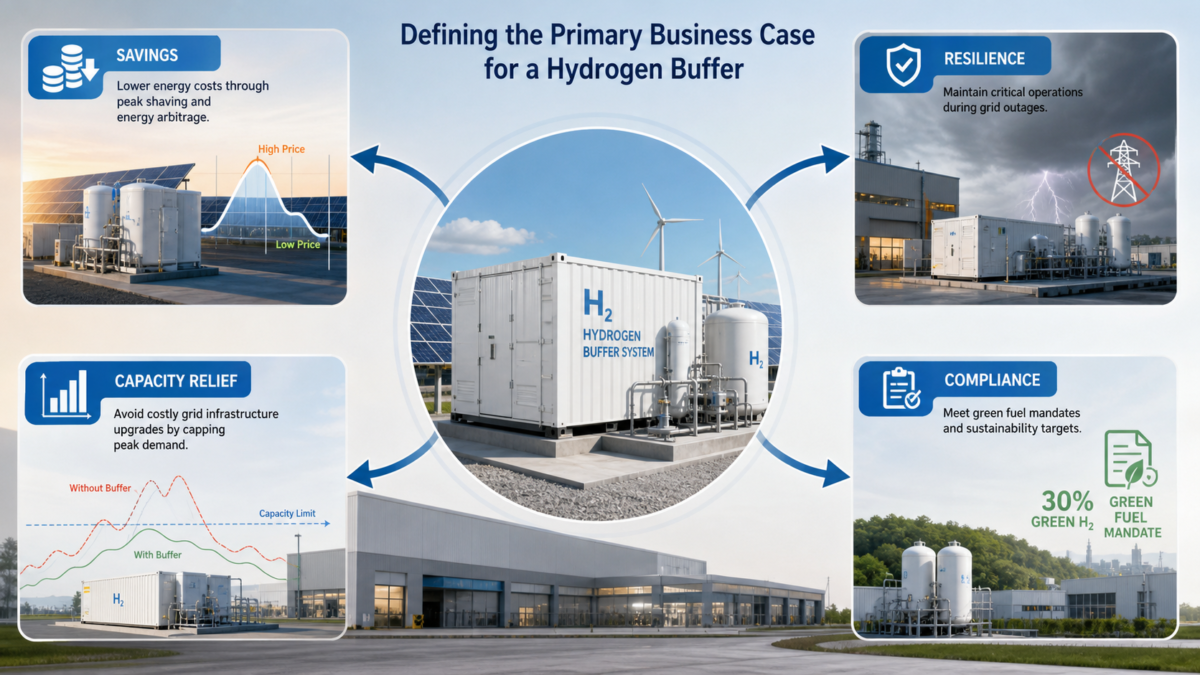
Before I even look at a proposal, I ask the buyer a simple question: "What is the number one thing you need this system to do?" The answer changes everything. I once worked with a client who wanted a system for "energy independence and cost savings." The problem is, these two goals can work against each other. A system designed for maximum cost savings will buy cheap grid power whenever renewables are unavailable. A system designed for resilience, or independence, must be able to operate without the grid, which often requires more storage and a higher capital cost. They are not the same thing. You have to pick one primary driver.
Prioritizing Your Primary Outcome
Your main goal determines the right system design. If you get this wrong, you build a system that is average at everything and excellent at nothing.
| Primary Goal | What It Really Means | How It Affects System Design |
|---|---|---|
| Cost Savings | Lowering your monthly electricity bill through peak shaving and energy arbitrage. | The system prioritizes charging with cheap renewable or off-peak grid power. It may not provide backup during a long outage. |
| Resilience | Keeping critical operations running during a grid outage. | The system needs enough hydrogen storage to cover your longest expected outage. This can increase cost significantly. |
| Capacity Relief | Avoiding expensive grid infrastructure upgrades by managing your peak demand. | The system is sized specifically to cap your peak load. Its main job is to turn on for a few hours a day. |
| Compliance | Meeting a mandate to use a certain percentage of green fuel. | The system’s main goal is to produce a specific volume of hydrogen, sometimes without a strong financial return. |
You can see how a system designed for resilience looks very different from one designed for cost savings. Trying to do both at once often leads to compromises that satisfy no one. Define your business case by picking one priority.
Which Green Hydrogen Battery Buffer Inputs Deserve the Most Scrutiny?
The project proposal looks fantastic, with perfect numbers. But hidden assumptions about key inputs can cause the entire plan to fail. You must focus your questions on four critical areas.
You should scrutinize four inputs above all others: the real-world availability and cost of grid power, the actual turndown capability of the electrolyzer, the reliable supply and cost of water, and the demands of the downstream synthesis load. These factors determine if a project is viable.
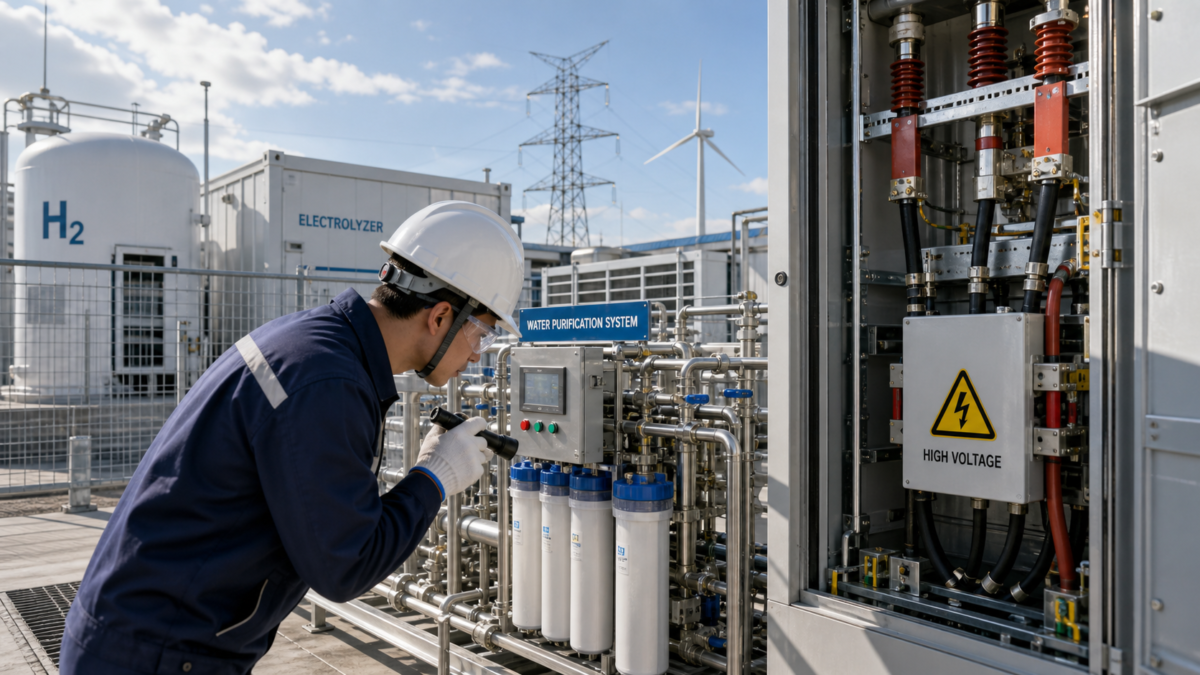
A project's success depends entirely on the quality of its inputs. I always dig into the details on the same four topics because this is where optimistic assumptions hide. A beautiful proposal can fall apart when it meets reality.
First, I check the grid supply. What happens when the wind isn't blowing or the sun isn't shining? The plan might assume it can buy cheap power from the grid, but that might not be true during peak hours. You need to see a real price forecast, not just an annual average.
Second is the electrolyzer turndown. The sales brochure says the electrolyzer can run anywhere from 10% to 100% of its capacity. But I ask for data on how efficiency and equipment lifetime are affected by constantly ramping up and down. This operational reality is often missing from the main proposal.
Third, I look at the water source. Green hydrogen production needs a lot of very pure water. Is the water source guaranteed year-round, even during a drought? What is the true cost of pumping and purifying it? I’ve seen projects where water costs were completely underestimated.
Finally, what is the hydrogen being used for? If it feeds a green ammonia plant, that plant likely needs a very stable, 24/7 supply of hydrogen. This directly contradicts the intermittent nature of renewable energy. The buffer storage must be large enough to smooth this out, which adds significant cost. When we at Moletong model an integrated wind, PV, electrolyzer, and storage system, we have to treat it as a concept that needs this level of deep, site-specific engineering to become a real project.
How to Stress-Test Green Hydrogen Battery Buffer Performance?
The seller shows you a simulation where everything works perfectly. But this best-case scenario ignores the real-world problems that can destroy a project's financial returns. You must demand a downside case.
Stress-test the system by moving beyond the best-case simulation. You must model realistic downside scenarios, such as lower-than-expected renewable output, grid outages, higher input costs, and unplanned maintenance. Compare this stress-test result with the original promise to see the real risk.
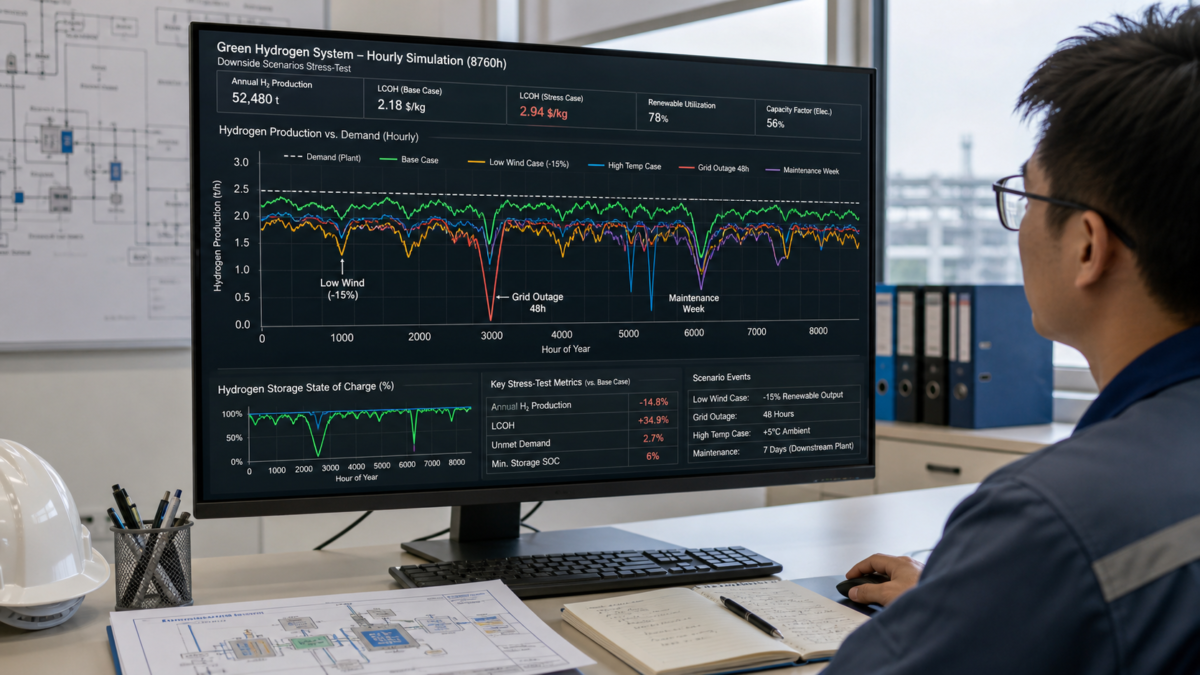
The first simulation I get from a developer always looks amazing. It shows a perfect sunny and windy week, with the system making money hand over fist. My response is always the same: "Thank you. Now show me the worst week of the year." We have to stress-test the performance claims. A "downside case" is not about being negative; it's about being realistic. A project has to survive bad conditions, not just thrive in perfect ones.
I insist on seeing an hourly simulation that runs for at least one full year, using actual historical weather data for the site, not just an average. This is the only way to see the real impact of seasonal changes. Then, we add the problems. What happens to the project's finances if renewable generation is 15% lower than predicted? What if the grid is down for 48 hours? What if the downstream ammonia plant has to shut down for a week of unplanned maintenance?
This is where a detailed mass-and-energy balance becomes critical. It forces the model to account for every kilowatt-hour of electricity, every cubic meter of water, and every kilogram of hydrogen. By running these tough scenarios, you can see the project's true weak points. I once reviewed a project that looked profitable based on its annual numbers, but the hourly simulation showed it would lose a huge amount of money every winter. The stress test saved the buyer from a very bad investment.
A Buyer-Focused Green Hydrogen Battery Buffer Verification Plan?
You are ready to decide but are buried in marketing claims. You feel overwhelmed by complex technical documents and promises. Use this simple verification plan to cut through the noise and get clear answers.
A smart buyer's verification plan demands five specific documents: a complete mass-and-energy balance, a full-year hourly simulation, a clear interface map, transparent offtake assumptions, and any existing pilot-plant data. These items shift the conversation from a sales pitch to a provable engineering plan.
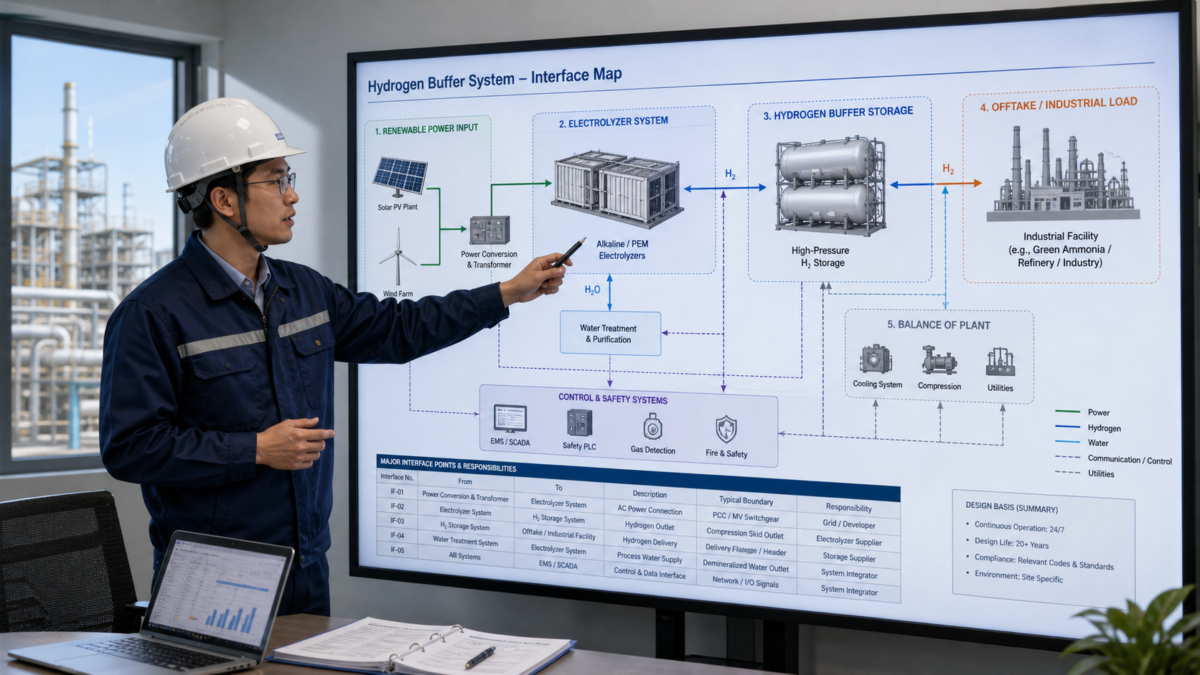
After all the discussions, it’s time to verify the claims. I don’t rely on promises or summaries. I ask for the engineering documents that prove the system works. If a seller is serious, they will have this information. If they hesitate or make excuses, it is a huge red flag. My verification plan is a simple checklist of five essential items.
First, the mass-and-energy balance. This is a basic engineering document that shows all the inputs and outputs. It proves they have thought through the fundamental physics of the system.
Second, the hourly simulation. As I mentioned, it must cover a full 8,760 hours and include downside cases. This shows how the system performs in the real world.
Third, an interface map. This simple diagram shows all the major equipment and defines who is responsible for the connection points between them. It prevents problems where the electrolyzer supplier blames the solar farm developer, and both blame the grid operator.
Fourth, the offtake assumptions. Who is buying the hydrogen? Is there a signed contract with a price and volume commitment? An "expected market price" is not the same as a committed offtake agreement.
Finally, I ask for pilot data. Has this exact combination of equipment ever been operated together, even at a small scale? Real-world data from a pilot plant is far more valuable than any simulation. This simple, five-point plan will tell you everything you need to know about whether a project is real.
Conclusion
Announced capacity is not the same as a bankable, operable project. Buyers must define their own goal, scrutinize the inputs, stress-test the model, and demand engineering proof before making a commitment.
Leave a Reply