
Why Does Zero Export Device (Zed) Matter in Real Projects?
Your solar plant is built to save money, but the utility forbids exporting power. Now your investment is capped, and potential savings are lost. This is where a Zero Export Device helps.
A Zero Export Device (ZED) matters because it prevents solar power from flowing back to the grid, which is often a strict utility requirement for interconnection approval. It ensures your plant can operate safely and legally, directly impacting the project's financial viability and approval timeline.
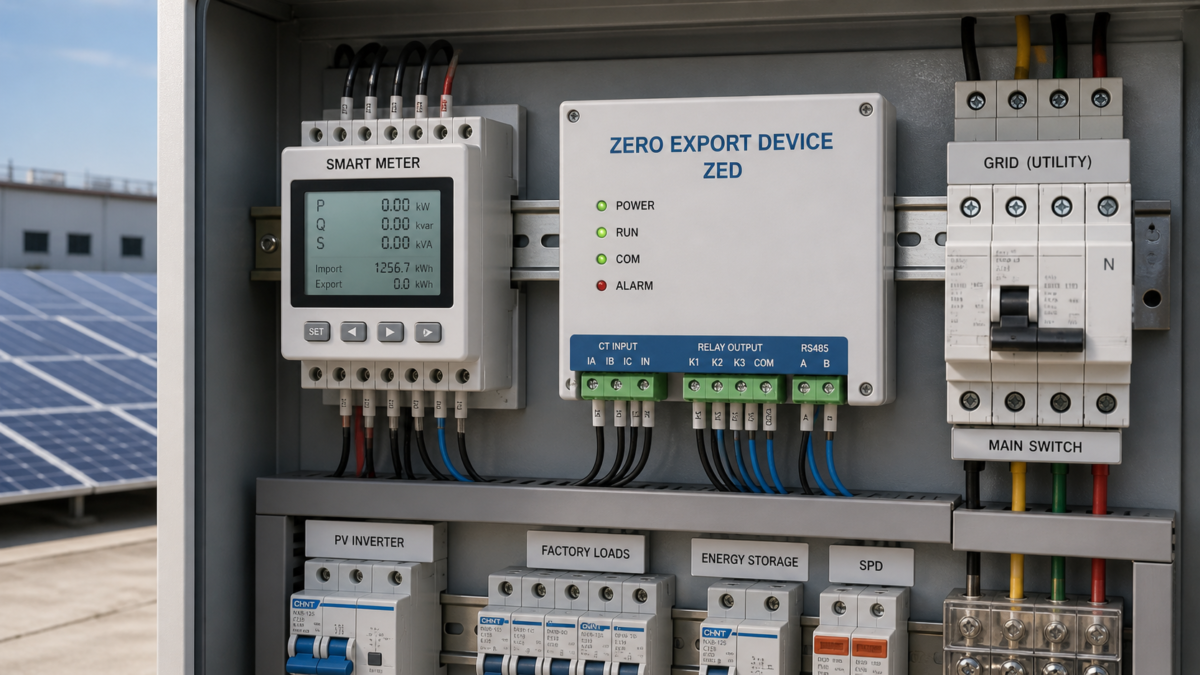
I have seen too many solar projects get delayed or fail at the final hurdle of grid connection. The issue is rarely the ZED hardware itself. The real challenge is understanding the complete system around it—the utility's rules, the site's unique energy needs, and the project's financial goals. My approach is simple: define the buyer's goal, find the constraint that can break it, and test the design with real site data. Let's break down how this works in practice.
Start with the Solar Plant Zero Export Control Customer Problem, Not the Product?
Engineers often jump straight to selecting a ZED product. This leads to designs that don't meet utility rules or the customer's actual energy needs, causing expensive rework and delays.
Start by focusing on the customer's core problem: "How can I maximize my solar self-consumption without violating grid rules?" This shifts the focus from a specific device to the desired outcome, ensuring the final design actually solves the business case and meets all interconnection requirements.
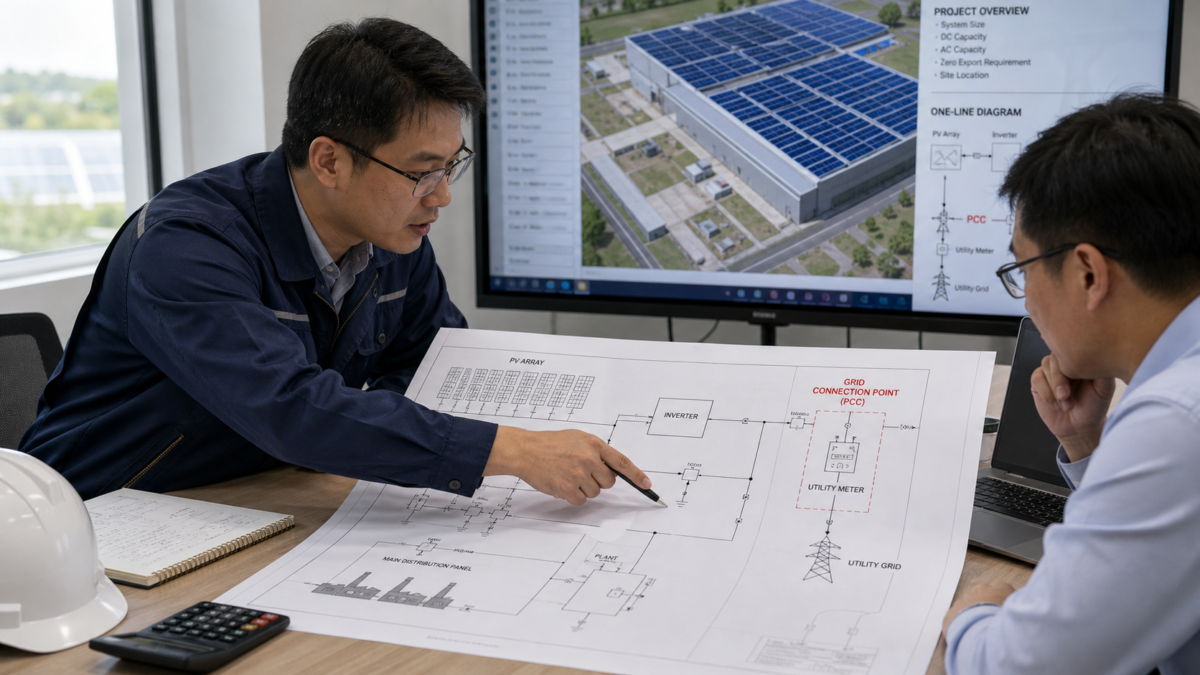
My first step is never to look at a product catalog. I sit down with the customer and ask questions. I remember a project with a client from one of Zhongwei’s published EPC cases. They initially told me they wanted the biggest PV system their roof could hold. But after talking, their real goal was to slash the high electricity bills they got from running heavy machinery during peak afternoon hours. Exporting power was never the goal; offsetting a specific, expensive load was. This insight changed our entire approach from "maximum size" to "maximum impact." An oversized system under a zero-export rule would have been a waste of capital. We defined the required outcome first.
This "problem-first" thinking prevents so many common mistakes. It forces you to build a design around a clear goal, not just a piece of hardware. Here is how I think about it:
| Aspect | Product-First Approach | Problem-First Approach |
|---|---|---|
| Starting Point | “Which ZED should we use?” | “What is the financial goal of this PV system?” |
| Key Question | “Does this device have the right features?” | “What is the minimum performance needed to meet grid rules and our ROI?” |
| Potential Risk | The system is compliant but not profitable. | Requires more upfront analysis and data gathering. |
| Outcome | A technically functional system that may not meet business needs. | An optimized system that is both compliant and economically sound. |
How Utility Process Shapes the Solar Plant Zero Export Control Design?
You can design a perfect zero-export system on paper. But if you don't account for the local utility's unique and often slow approval process, your project will get stuck.
The utility's interconnection process dictates the design. It defines required response times, failure modes, and testing procedures for the zero-export system. Ignoring these specific rules is the fastest way to get your project rejected, regardless of how good your hardware is.
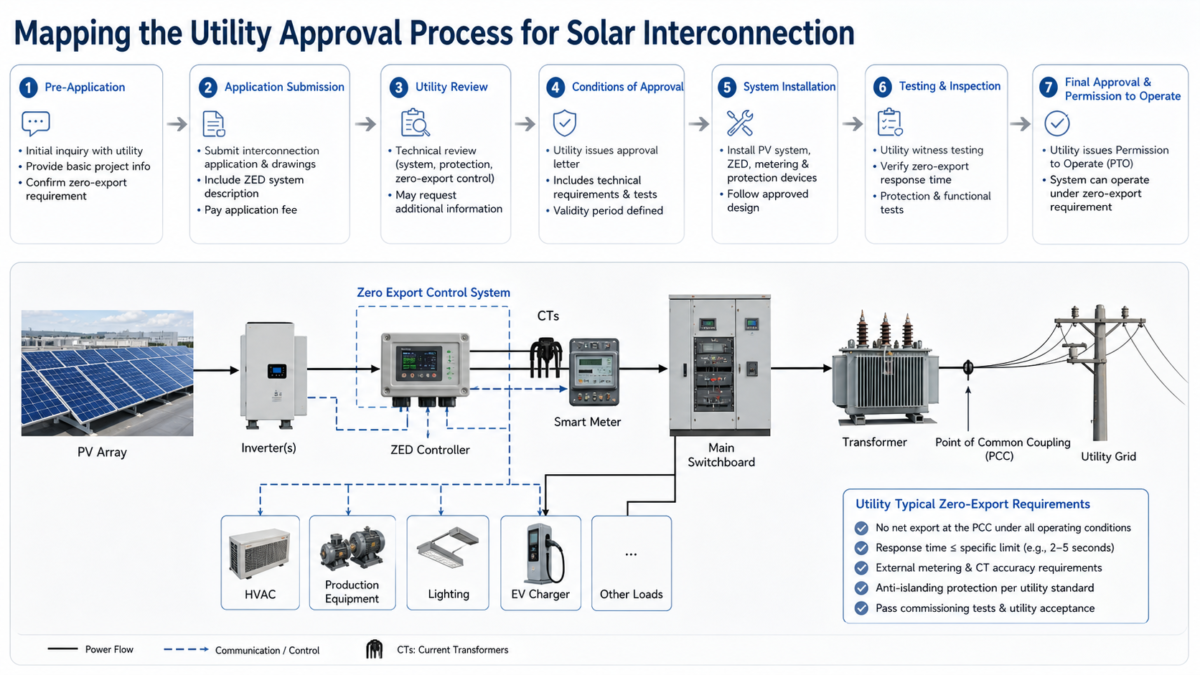
Every utility is different, and their rules are the law for your project. I learned this the hard way years ago. We had a system ready for commissioning, but the utility inspector failed it on the spot. Why? Our design used a software-based export control integrated into the inverter. Their rules, buried on page 47 of a technical manual, required a separate, hard-wired external protection relay. Our system was safe and fast, but it didn't match their process. We had to spend a week redesigning the control panel and getting new equipment.
Now, the first thing my team does is get a copy of the utility's latest interconnection standards. We create what I call an "Interconnection Register." It's a simple checklist that translates their technical jargon into concrete design requirements. Does it specify a response time in milliseconds? We note it. Does it require a specific brand of relay? We write it down. Does it outline a multi-page commissioning test procedure? We add it to our project plan. This register becomes our guide. It ensures that our design, from the choice of Moletong electrical switchgear to the control logic, is built to pass their inspection from day one.
When Load Profile Changes the Economics?
Your zero-export system works perfectly from a technical standpoint. But the factory's energy use is so inconsistent that your large solar plant is constantly being throttled back, destroying your return on investment.
A site's load profile—its minute-by-minute energy consumption—is critical. If your solar generation often exceeds your consumption, a zero-export system will simply waste that power. This can make a large solar array economically unviable, changing the entire project's financial basis.
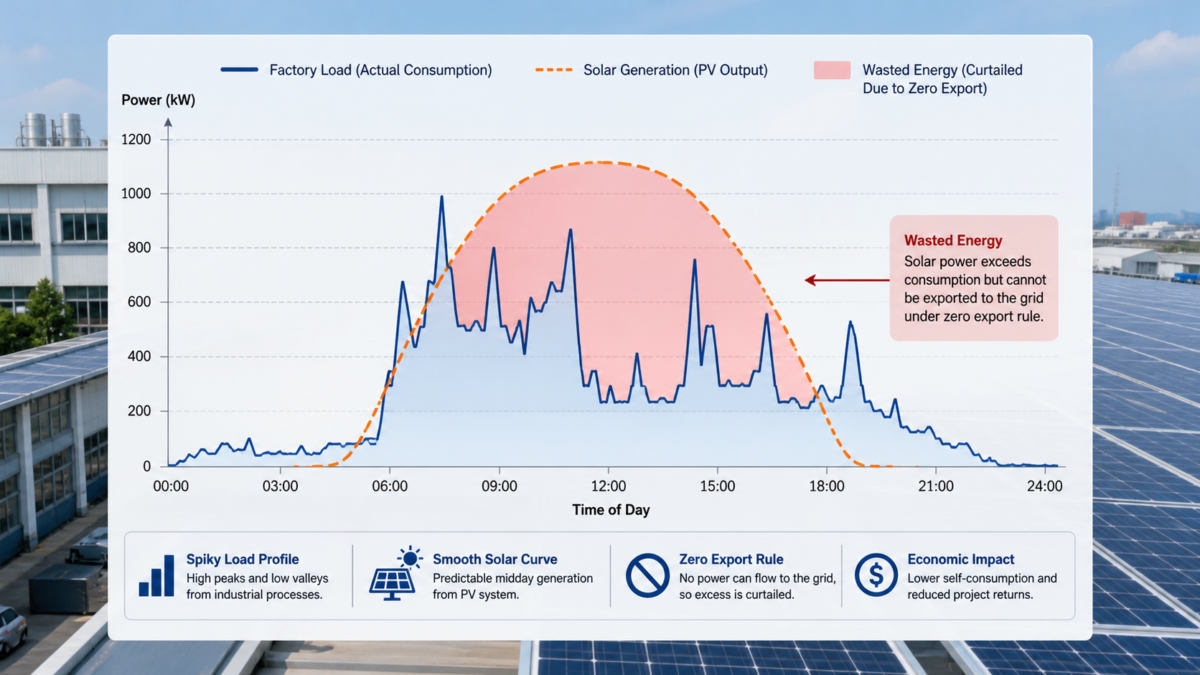
An optimized PV design is incomplete until you close the grid and acceptance constraints. But the most overlooked constraint is the customer's own electricity usage pattern. I once worked with a manufacturing client whose load data showed huge spikes when they started up their main production line, but long periods of low usage in between. A standard PV system sized for their peak load would have been curtailed for more than 40% of its operating hours under a zero-export rule. The initial ROI calculation was completely wrong.
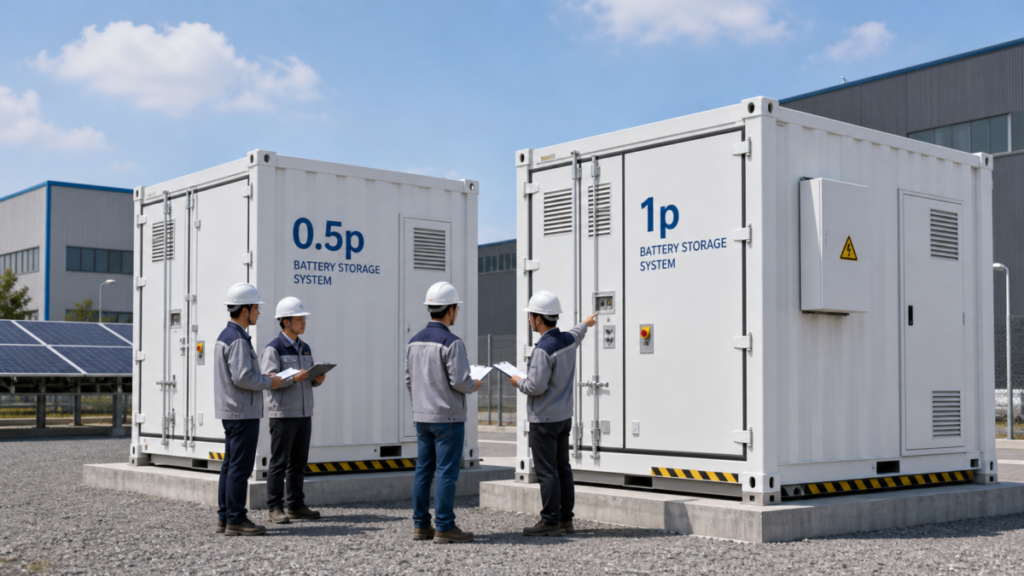
By analyzing their 15-minute interval data, we discovered the real pattern. We proposed two changes. First, we reduced the size of the PV array to more closely match their average daytime load, not their peak. This immediately improved the self-consumption rate. Second, we added a small Moletong commercial energy storage cabinet. The system was programmed to use excess solar energy to charge the battery. This stored energy was then used to help meet those big demand spikes, reducing their peak demand charges. The load profile didn't just change the economics; it forced a better, more integrated solution. Without that baseline data, the project would have been a financial disappointment.
Turning Zero Export Device (Zed) Matter in Real Projects into Clear Specifications?
You understand the customer's problem, the utility's rules, and the site's load profile. How do you turn all this knowledge into a document that an EPC can actually build and commission?
Turn your analysis into a clear technical specification. This document should define the exact required outcome, response times, failure modes, and testing procedures. It becomes the contract between you, your installer, and the utility, preventing misunderstandings and ensuring everyone is accountable for the final result.
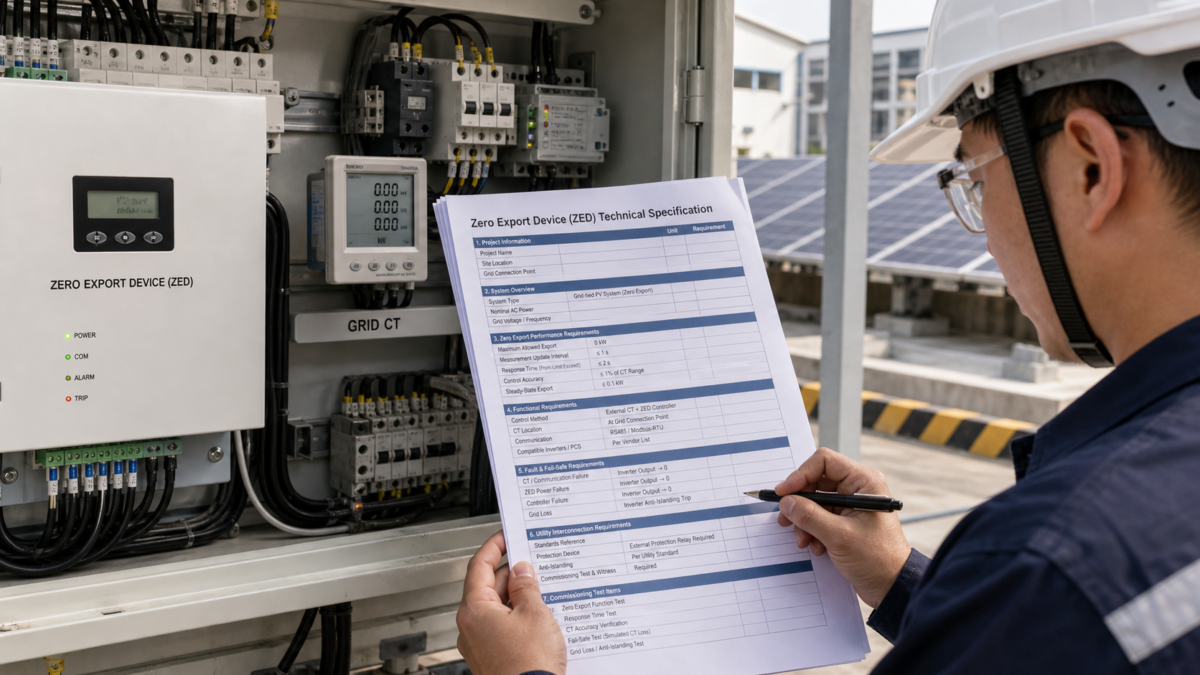
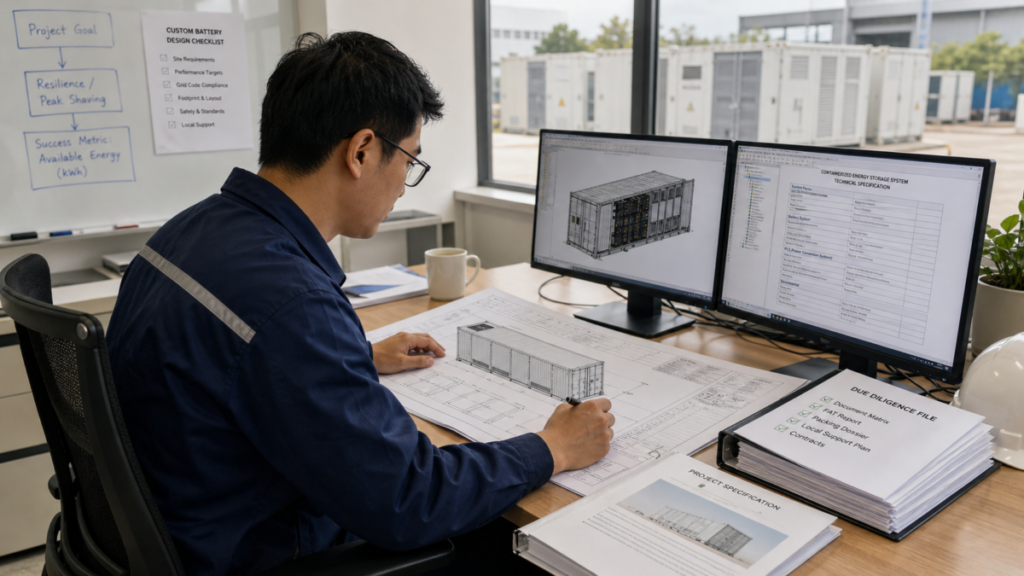
This is where everything comes together in a practical, useful way. A good specification is more than just a list of equipment. It’s a complete package that guides the project from design to final handover. I insist on creating a binder that includes several key documents before we even ask for a quote. This keeps the solar plant zero export control plan practical and credible.
First is the survey pack, which includes roof/land surveys and as-built diagrams of the existing electrical system. Next are the simulation inputs, containing the load profile data and local weather files used to model the system's performance. Then comes the interconnection register, our checklist of every rule the utility requires us to follow. Most importantly, we include test sheets. These are step-by-step procedures for commissioning that prove the system works as designed, like simulating a grid failure to confirm the inverters shut down within the required time. Finally, we establish a performance baseline from our simulation, which defines success. This entire package becomes the specification, ensuring the final system delivers on its promise. It also defines the conditions under which I would change the recommendation, keeping the process transparent.
Conclusion
A successful zero-export project isn't about the device. It’s about a practical process: define the outcome, understand the constraints, and test your design against real-world data.
Leave a Reply