

Liquid Cooled Cpu Overheating: What Buyers Need to Know?
Worried your equipment might overheat and fail? You have a big investment on the line, and failure is not an option. The wrong cooling choice could lead to disaster.
Liquid cooling for Battery Energy Storage Systems (BESS) is not about CPUs. It is about preventing catastrophic failure. The key is understanding that the cooling system is just one part of a much larger safety plan that includes site design, emergency response, and verified component data.
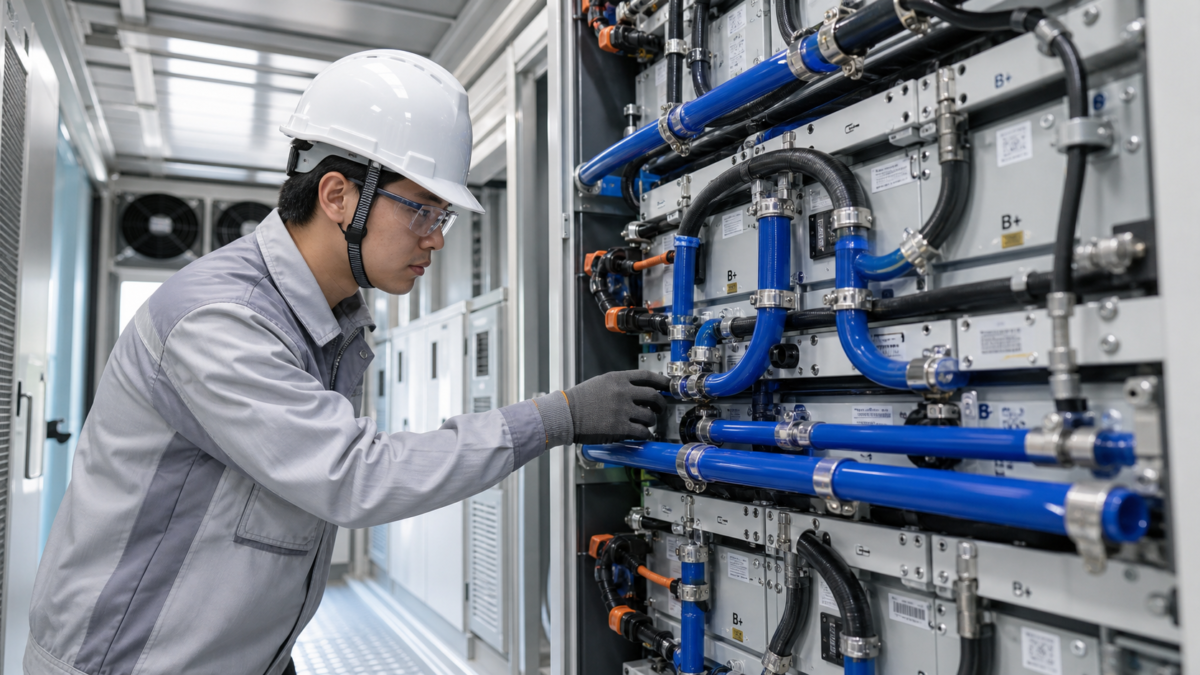
I spend my days looking at large-scale energy systems. People often compare BESS liquid cooling to the systems in high-end gaming computers. It's a useful starting point, but the comparison ends quickly. When a gaming PC overheats, you might lose your game. When a multi-megawatt battery system has a thermal event, the stakes are much higher. You can't just buy a flashy liquid cooling system and assume you're safe. I've seen too many projects where a great piece of technology was put in a bad situation. To really understand the risk, you have to look beyond the hardware and see the whole picture. Let’s break down what that really means.
Why Is Evaluating Liquid Cooled BESS Safety Harder Than It Looks?
You see a system with advanced liquid cooling and assume it's completely safe. But what happens if a fire starts anyway? Relying only on the cooling system is a dangerous oversight.
True safety analysis goes beyond the suppression system. It includes proof of how a system behaves during a failure, clear emergency plans, and site-specific preparations. The cooling system is just the first layer of defense, not the only one.
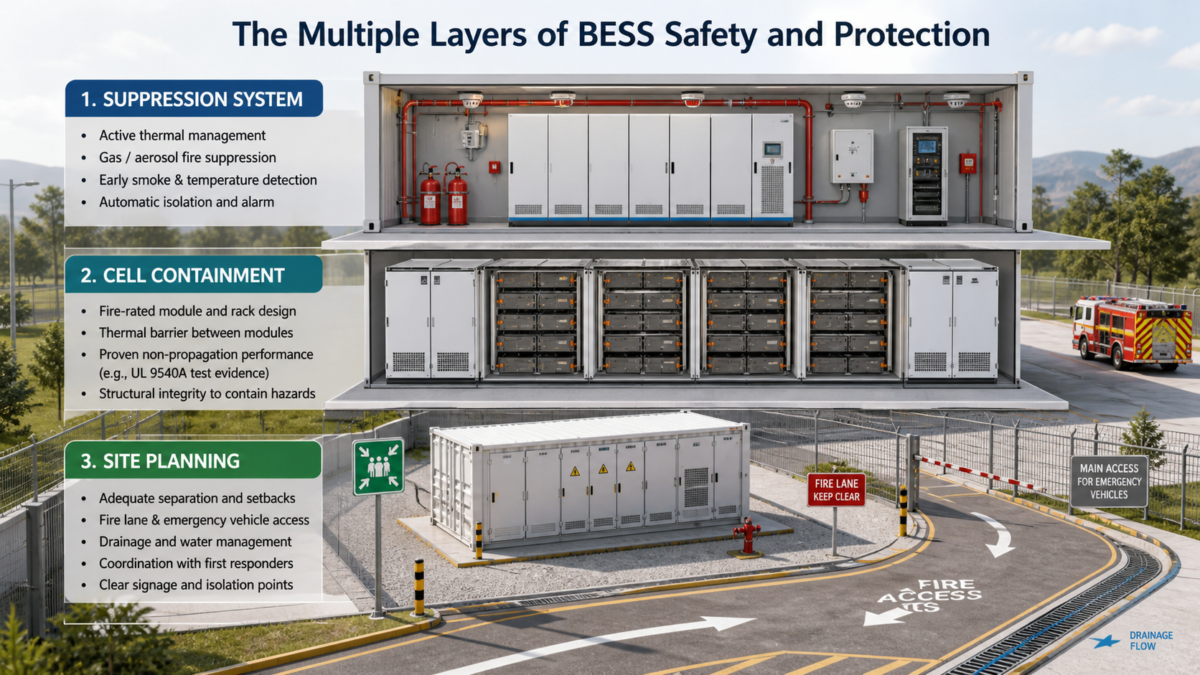
When I review a liquid-cooled BESS proposal, I see the cooling system as one piece of a puzzle. It’s an important piece, for sure. It’s designed to keep the cells at their optimal temperature and prevent thermal runaway from starting. But my job is to ask, "What if it fails?" That's where the deeper work begins. Suppression is only one layer. The next layer is containment and propagation. I need to see test evidence that shows what happens when one cell fails. Does the fire spread to the next cell? To the next module? How quickly? This evidence is far more important than the cooling system's marketing brochure. A single successful test in a lab doesn't automatically translate to safety at your specific location. I always insist on seeing the full test reports, not just the summary certificate.
Key Layers of BESS Safety
I've learned to separate the system's features from the site's reality. A great system in the wrong place is still a risk. Here’s how I break down the safety layers.
| Safety Layer | What I Look For | Why It Matters |
|---|---|---|
| Suppression | Active cooling and fire suppression system details. | This is the first line of defense to prevent an event. |
| Propagation Evidence | Third-party test reports (like UL 9540A). | This proves what happens if suppression fails. |
| Site Emergency Plan | Coordination with local first responders. | Ensures everyone knows what to do in a real emergency. |
What Site Data Is Needed to Evaluate a Liquid Cooled BESS?
You have a BESS proposal, but the evaluation feels abstract. How can you connect the system's specs to your actual property? Without the right site data, your analysis is just a guess.
You need a site plan showing BESS location, drainage paths for coolant or water, and clear access routes for emergency responders. You also need the cell's specific hazard data. This information turns a theoretical review into a practical safety assessment.
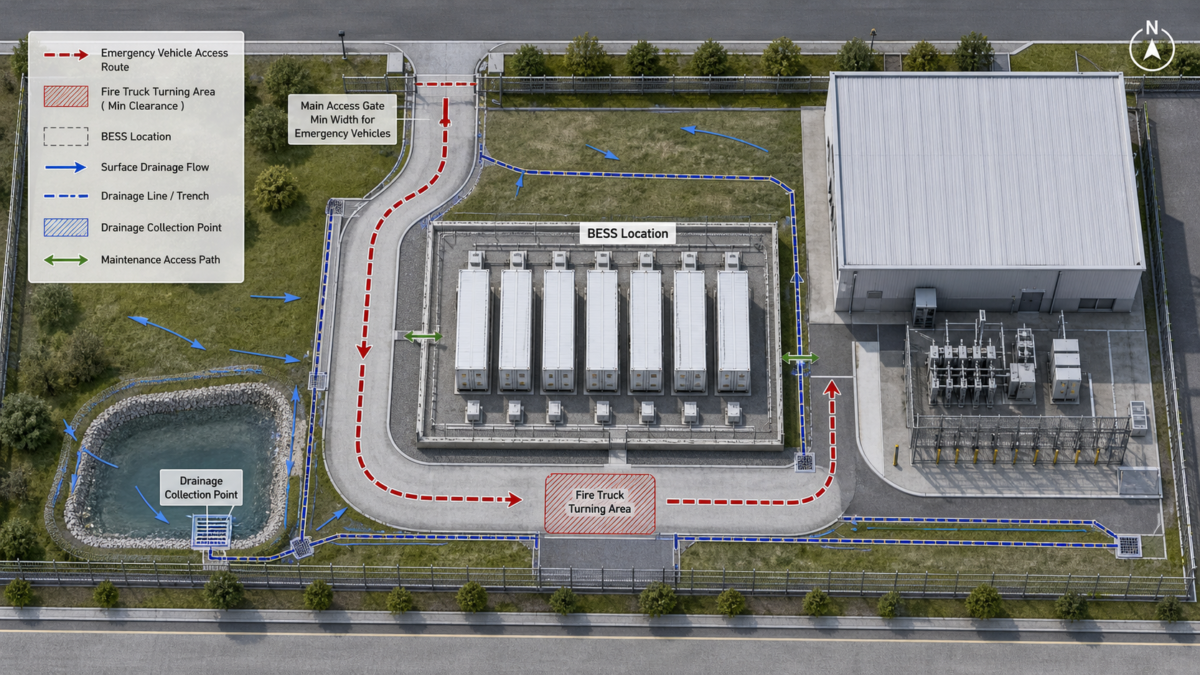
I once worked on a project where the BESS was perfectly designed, but the proposed location was a nightmare. It was tucked behind another building with only one narrow access road. If a fire truck needed to get there, it would have been a huge problem. We also realized the drainage sloped towards a sensitive wetland area. We had to change the location completely. This taught me a valuable lesson: the BESS itself is only half the story. The other half is where you put it. Before I even look at the battery specs, I ask for a detailed site plan. I want to see the layout, the access for maintenance and emergency crews, and what happens to any potential spills. This isn't just about ticking boxes; it's about a real-world walkthrough of a worst-case scenario. This data helps everyone, from the buyer to the local fire department, understand the actual, on-the-ground risk.
Which Liquid Cooled BESS Assumptions Distort the Result?
It is easy to see a slick demo or a single successful project and believe it applies everywhere. This thinking is a trap. Assuming one positive example guarantees universal success can lead to major oversights.
The most dangerous assumptions are that all sites are identical, that suppression systems are foolproof, and that test results perfectly predict real-world performance. These assumptions ignore site-specific risks and can create a false sense of security.
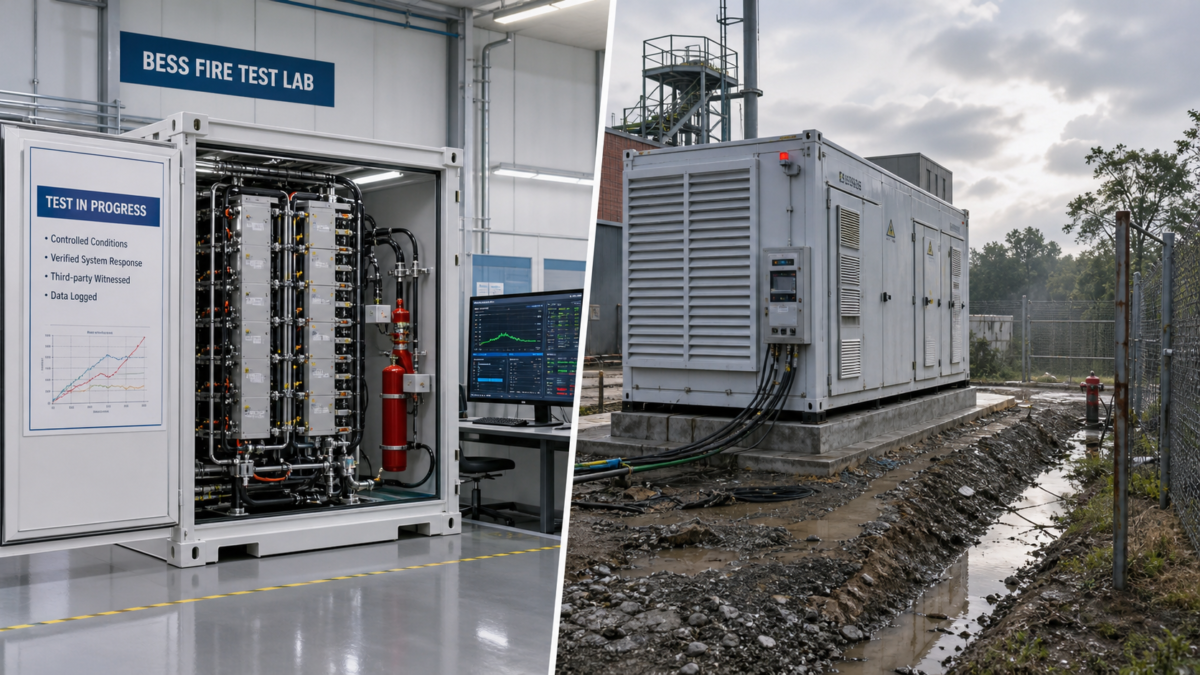
The single biggest mistake I see is what I call "best-case bias." A manufacturer shows a video of their system putting out a test fire in seconds. The buyer is impressed and thinks they are covered. But what the video doesn't show is the specific conditions of that test. Maybe the test was done outdoors with plenty of ventilation. Your site might be in a basement. Maybe the test fire was a specific type that the agent is good at suppressing. Your real-world event could be different. I always push back on this. I use a simple cause-and-effect matrix to show clients how a small, seemingly innocent assumption can lead to a disastrous outcome. For example, assuming the local fire department has experience with BESS fires without ever talking to them is a huge risk. We have to ground every decision in the specific, sometimes messy, reality of the project site.
Cause and Effect of Bad Assumptions
| Common Assumption (The Cause) | Potential Negative Outcome (The Effect) |
|---|---|
| “The suppression system will handle everything.” | A fire propagates faster than expected, overwhelming the system. |
| “This model worked great at another site.” | Your site’s unique layout or climate causes unexpected issues. |
| “The data sheet says it’s safe.” | The fine print in the full test report reveals critical limitations. |
| “First responders know what to do.” | Without a plan, responders may use wrong tactics, making things worse. |
What Is a Practical Liquid Cooled BESS Selection Checklist?
You are ready to choose a system but feel overwhelmed by technical details. How do you cut through the noise and focus on what truly matters for your project's success and safety?
First, define your primary goal: savings, resilience, or compliance. Then, check the evidence for suppression, drainage, access, and cell hazards. Finally, compare the proposed system against a realistic downside scenario, not just the marketing promises.
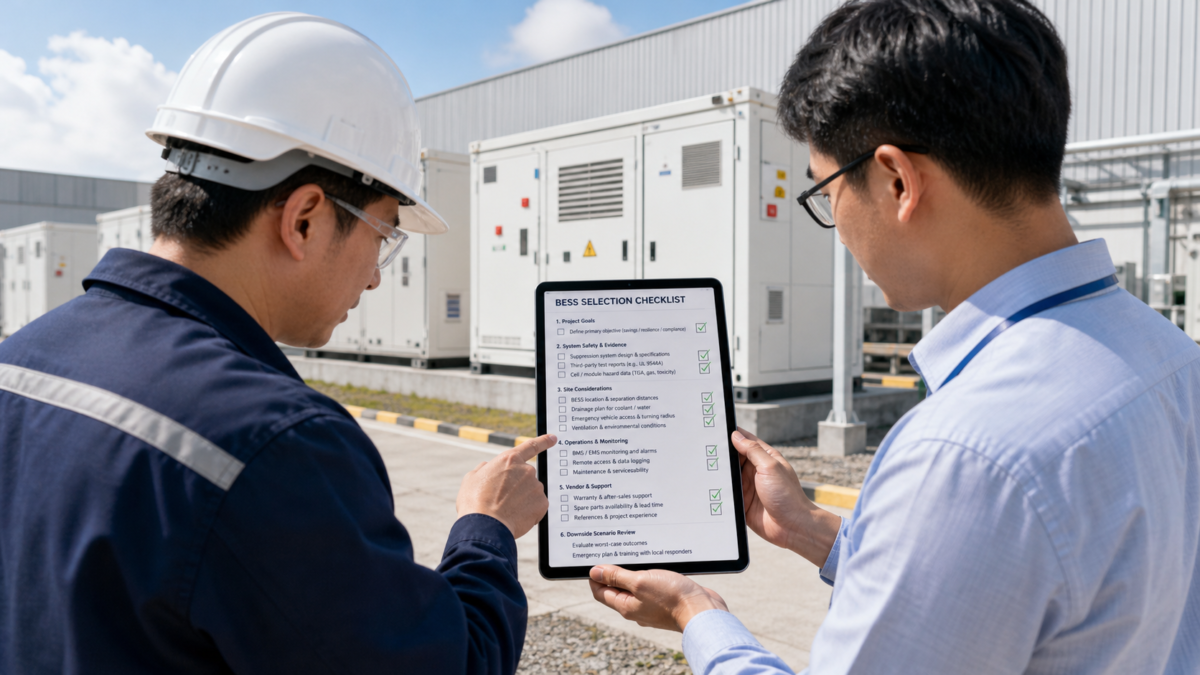
I've developed a simple process for my clients to follow. It's not about becoming a battery engineer overnight. It's about asking the right questions. The first question I always ask is, "What problem are you trying to solve?" A system designed for daily energy savings might not be the best one for critical backup power. They are not interchangeable goals. Once the goal is clear, we move to the physical reality. We walk through the site plan and the safety data. For a system from my company, Moletong, I would explain our cooling and fire-system features clearly. But I would also be very clear that our system's features are separate from local fire department approval. The Authority Having Jurisdiction (AHJ) makes the final call, and our job is to give them the clear, honest data they need to make that decision. A good decision comes from weighing the promises against the practical risks. This checklist helps us do exactly that, ensuring there are no surprises later.
Conclusion
Evaluating a liquid-cooled BESS requires looking beyond the hardware. You must clarify your goals, verify safety evidence, and plan for your specific site to make a truly informed decision.

Leave a Reply