

CAN Grid Scale Batteries Used for Black Start of the Grid?
The power goes out. Everything stops. Getting it back on is complex. Can grid-scale batteries provide the critical first step to restart the entire grid?
Yes, grid-scale batteries can be used for the black start of the grid. Their success depends on proper system design, controls, and a clear understanding of state-of-charge conflicts. A battery must have enough reserved energy and the right controls to form a stable microgrid first.
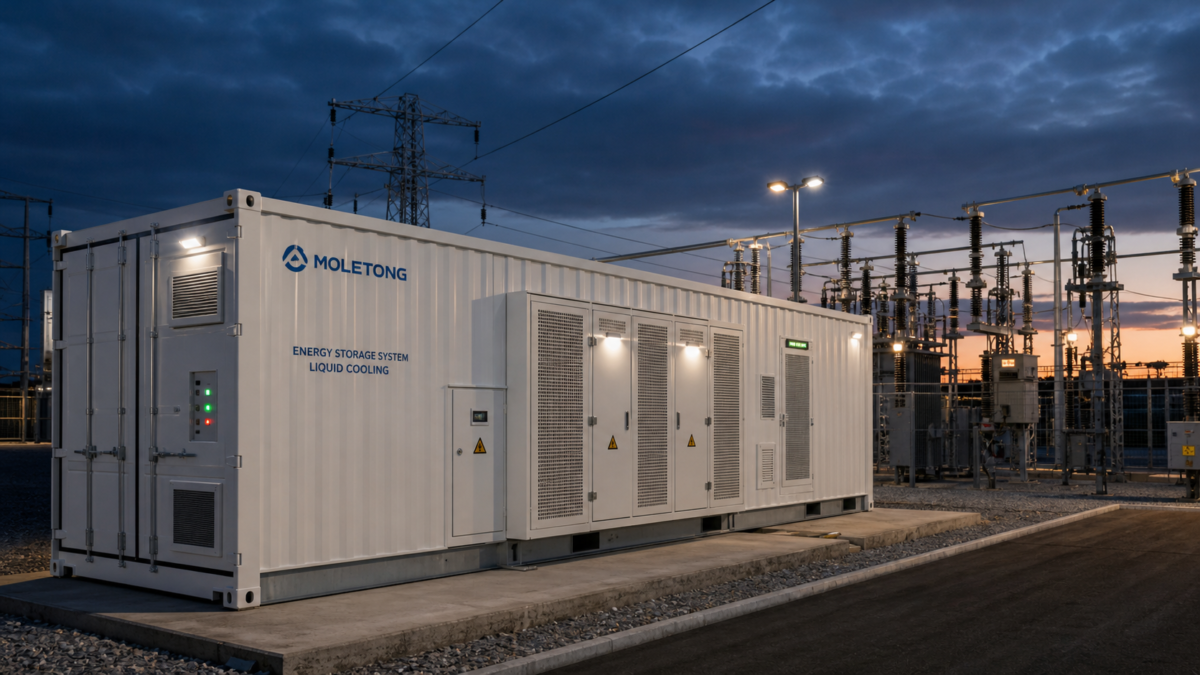
I’ve seen many projects focus only on the battery’s power and energy rating. They ask if it has a “black start feature.” That’s the wrong place to start. The real answer is more complex, but understanding it is key to a successful project. It’s not about the hardware; it’s about the strategy. Let's look at what really matters.
The Real Decision Behind Grid Scale Batteries Used for Black Start of The?
You think buying a BESS with a black start feature is simple. But if services conflict and priorities are unclear, it can fail when you need it most.
The real decision is defining a clear dispatch hierarchy. You must model how the battery’s State of Charge (SOC) is affected by its other jobs, like peak shaving, to ensure enough energy is always reserved for an emergency black start. It is a controls and planning decision.
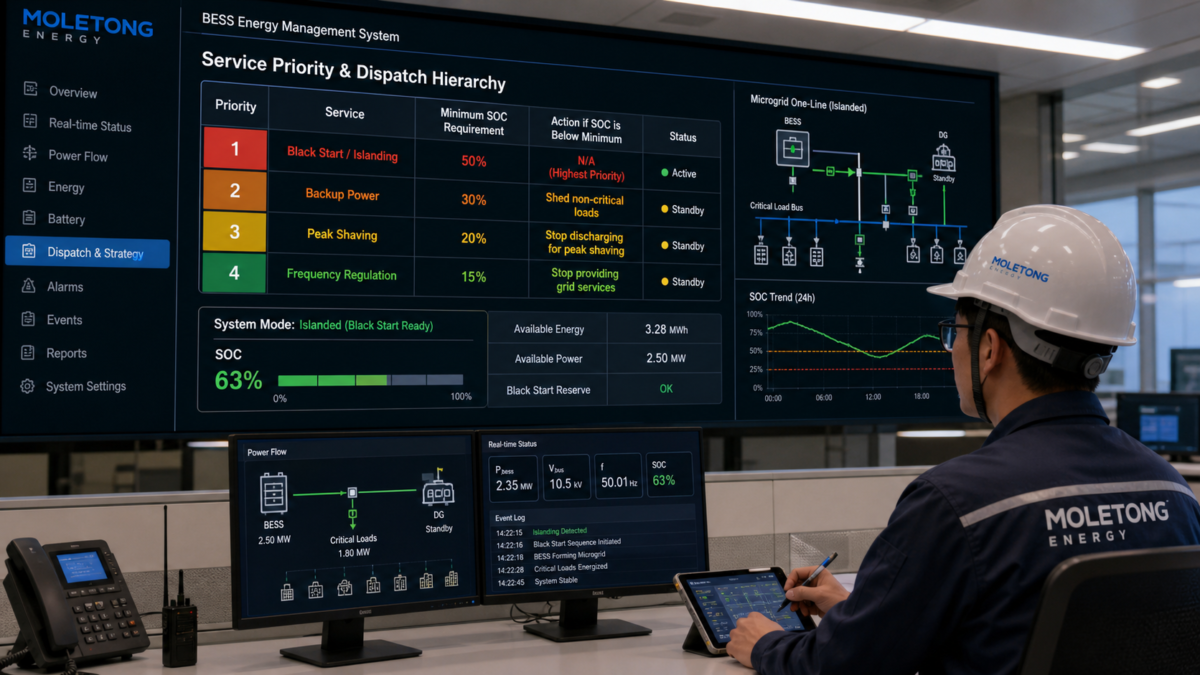
The practical lesson I take from every microgrid project is that multi-service value is only real when you model it. I would never begin a discussion with a product recommendation. Instead, I start with the controls hierarchy. The first question is, what is this battery’s most important job? If the answer is "black start," then all other services must be designed around that priority. For example, if the BESS is also used for daily peak shaving, what is the minimum SOC you will allow? If the battery is providing grid services like frequency regulation, does the EMS know to stop that service if the SOC drops below a critical threshold needed for a potential black start? I work with clients to build a simple service-priority table. It helps separate a genuine technical constraint from a poor assumption.
| Priority | Service | Minimum SOC Requirement | Action if SOC is Below Minimum |
|---|---|---|---|
| 1 | Black Start / Islanding | 50% | N/A (Highest Priority) |
| 2 | Backup Power | 30% | Shed non-critical loads |
| 3 | Peak Shaving | 20% | Stop discharging for peak shaving |
| 4 | Frequency Regulation | 15% | Stop providing grid services |
This approach makes it easier to design a system that works in the real world. A table like this turns a vague expectation into a clear set of rules for the Energy Management System (EMS) to follow.
How Diesel Constraints and Black Start Change the Answer?
Relying on diesel generators for black start seems safe. But fuel supply, maintenance, and emissions are real-world constraints that create points of failure. Batteries change this equation.
Diesel generators have limits like fuel storage, slow startup times, and high maintenance. A Battery Energy Storage System (BESS) provides instant, clean power. The best solution often integrates BESS to handle the initial loads and stabilize the microgrid before diesel generators are needed.
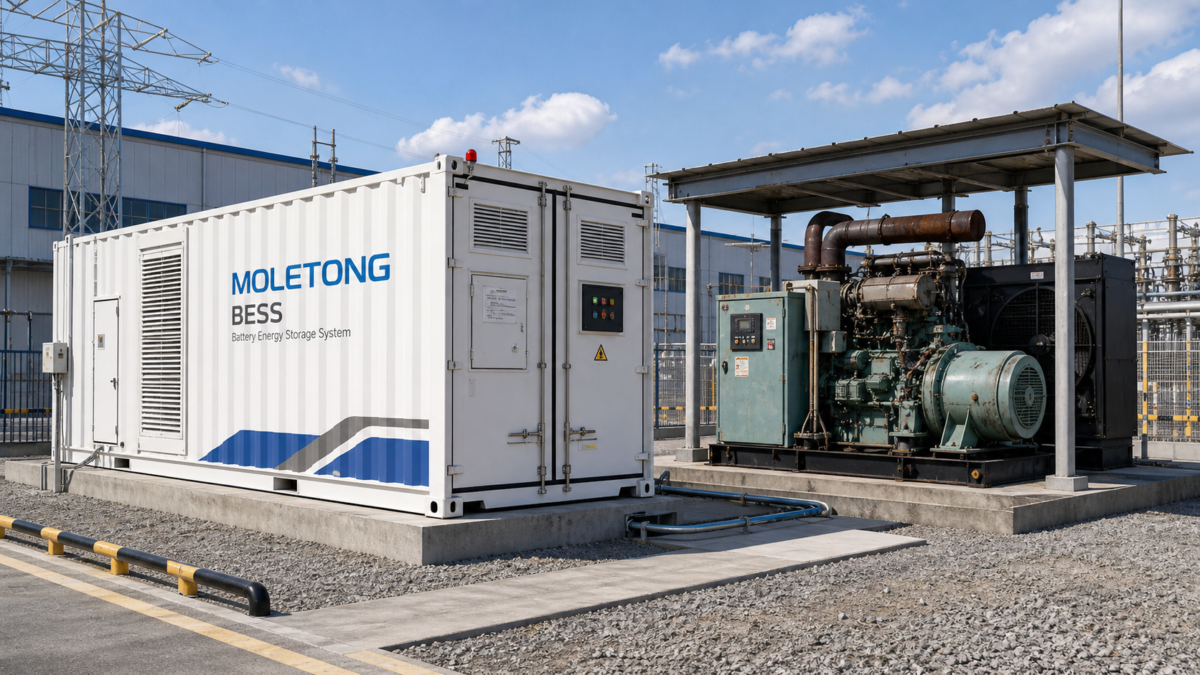
I remember a project where a client's backup plan relied entirely on diesel generators. During an extended outage, one of the generators failed to start because of a simple maintenance oversight. The whole black start plan failed. This is where a BESS changes everything. It doesn't just replace the diesel generator; it makes the entire system more resilient. The BESS can use its grid-forming inverter to create a stable islanded grid in milliseconds. It picks up the critical loads instantly. This provides a stable voltage and frequency for the diesel generator to sync to when it's ready. The BESS handles the difficult part, which is energizing a dead system and managing large inrush currents from transformers and motors. The diesel generator's job becomes much easier. It just has to start and sync to an already-operating grid. This approach also helps manage diesel constraints like fuel. The BESS can run the facility for a few hours, giving the team time to confirm fuel supply before starting the generators.
Where Service Definition Creates Cost or Performance Risk?
Stacking multiple services like peak shaving and grid support on a BESS seems profitable. But without clear rules, the battery might be empty when you need it for an outage.
Risk appears when the financial goal of one service, like selling power back to the grid, conflicts with the reliability goal of another, like black start. Without a clear and modeled service hierarchy, you risk the BESS being unavailable for its most critical function.
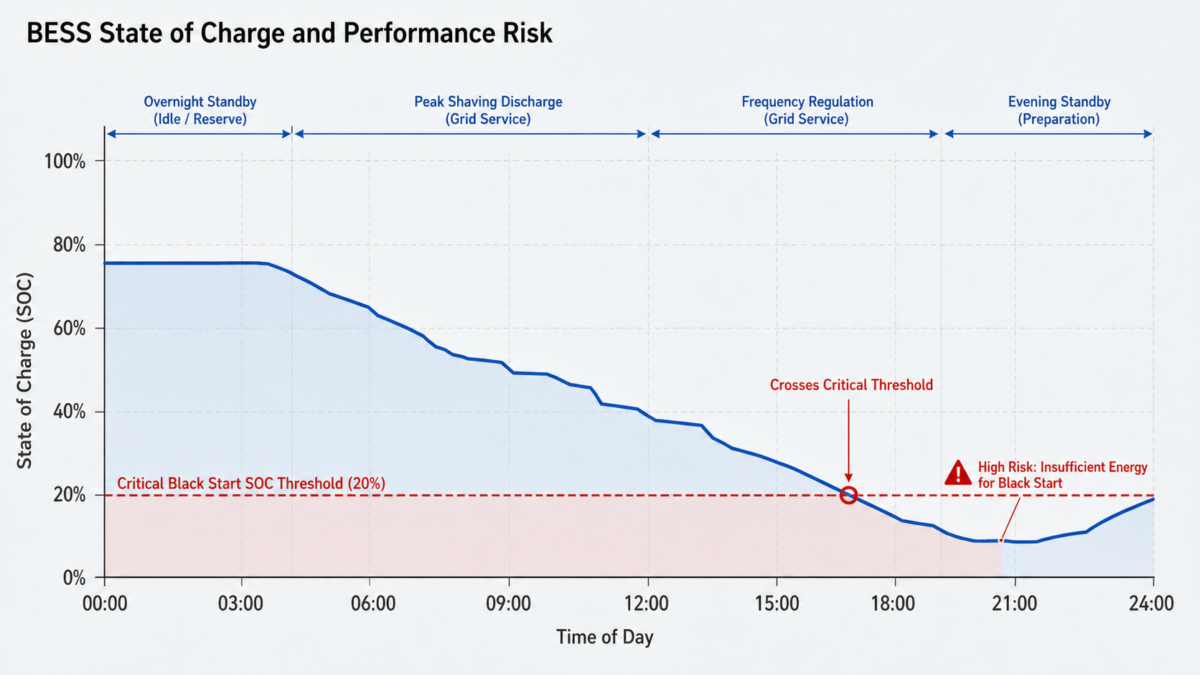
I always tell my clients that the value of a BESS comes from its flexibility, but that flexibility must be managed. The biggest risk I see is when a system is optimized for daily revenue at the expense of emergency performance. For instance, an EMS might be programmed to sell energy back to the grid during peak price hours. This is great for ROI. But what if a grid outage happens right after the battery has discharged to its minimum level? The black start capability you paid for is useless. This is why I insist on modeling these scenarios. We simulate a full day of market participation or peak shaving, then we trigger a simulated grid outage at the worst possible moment. We then check the dispatch trace from the EMS. Did it reserve enough energy? Can it still perform the black start sequence? This simple test often reveals a gap between expectations and reality. It forces a clear discussion about risk. How much potential revenue are you willing to sacrifice to guarantee a certain level of reliability? Answering that question is the key to managing performance risk.
What to Verify Before Procurement or Commissioning: Microgrid BESS Black Start?
You're ready to buy a BESS for your microgrid's black start. But spec sheets are just paper. How do you know the system will actually work under pressure?
Before you buy, demand a dynamic study that models the black start sequence with your specific loads. Before you sign off on commissioning, you must witness a full restoration test that proves the system can handle real-world conditions. This separates marketing claims from true capability.
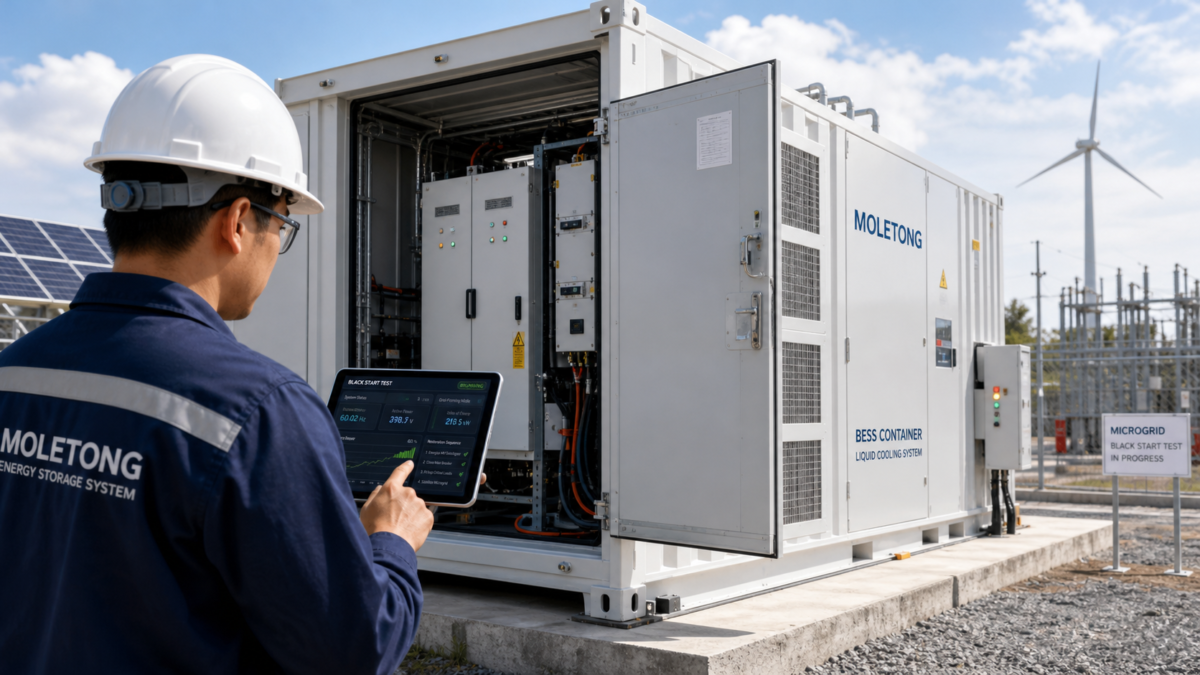
My approach is to separate genuine technical capability from a poor assumption. When I'm evaluating a system, I don't start with product brochures. I ask for specific documents that prove performance. For a Moletong-focused project, I would first map their containerized BESS, PCS, and EMS to the project's controls hierarchy we developed. Then, I would ask to see four key things. First, a summary of the dynamic study showing how the BESS will handle the inrush current from the largest motors and transformers. Second, a dispatch trace from a simulation showing the EMS logic during a black start. Third, a detailed plan for the factory and site acceptance tests, specifically for the restoration sequence. Finally, a live restoration test during commissioning. Watching the system successfully energize a dead bus, pick up loads in sequence, and stabilize the microgrid is the only true verification. This process gives you a clear decision path. It makes sure that the system you paid for is the system you actually get, without turning one company's public experience into a generic marketing claim for all situations.
Conclusion
BESS can black start the grid, but success requires more than a feature on a data sheet. It demands careful modeling of services, constraints, and controls to ensure reliability.

Leave a Reply