

Which Assumptions Matter Most When Evaluating Battery–Inverter RS485 Communication?
You picked a battery and inverter that should work together, but they refuse to talk. This simple communication failure can stop your entire project, costing you time and money.
The most important assumptions are not about matching chemistry or voltage. The key is to verify the specific CAN/RS485 protocol, the register map, and the exact firmware versions on both the battery and the inverter. These details determine if the devices can actually communicate and operate safely.
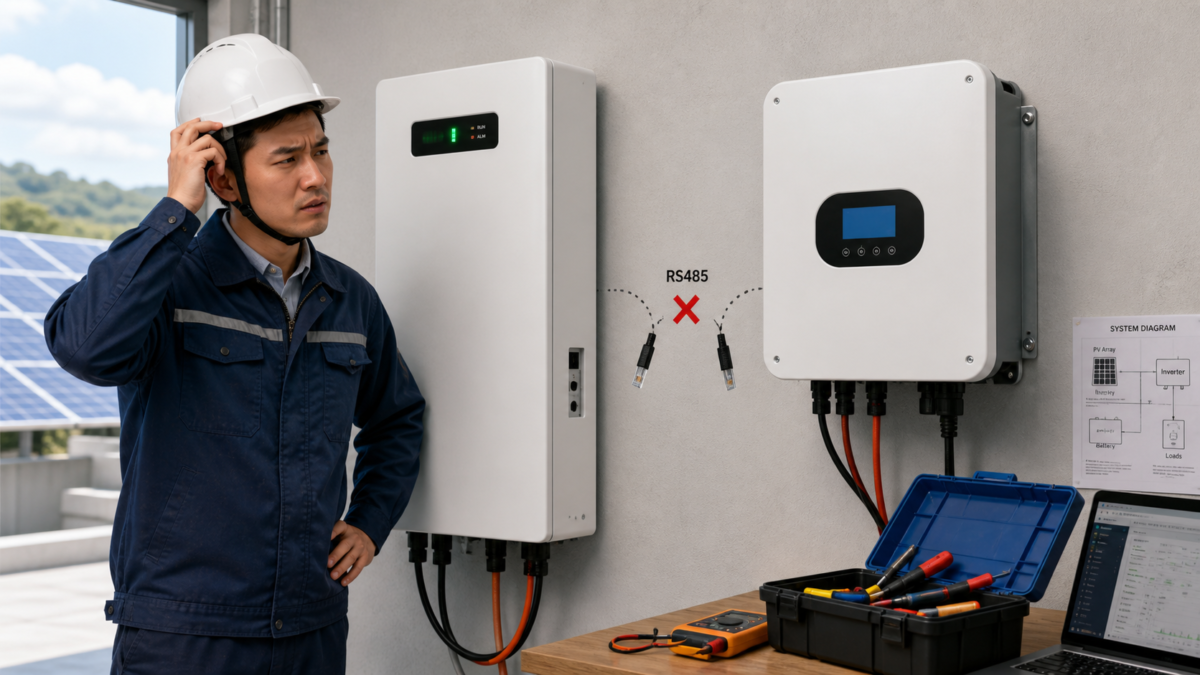
When I started in this industry, I made the same mistake. I assumed that if the voltage was right and the plug fit, the communication would just work. I learned the hard way that the physical connection is only the first, and easiest, step. The real work is in making sure the two devices are speaking the same digital language. This guide is built on those hard lessons. I want to show you how to move past simple assumptions and conduct a real engineering evaluation. This will help you select components that are truly compatible and avoid the frustration of a silent system.
From Battery–Inverter RS485 Communication to an Engineering Requirement?
You see "RS485 compatible" on a datasheet and think you are good to go. But this label can be misleading, as manufacturers use different protocols over that same wire.
You must treat communication as a specific engineering requirement. This means you need to confirm the exact protocol, like Modbus RTU, the data structure defined by the register map, and the physical cable pinout. A shared RS485 port does not guarantee compatibility.
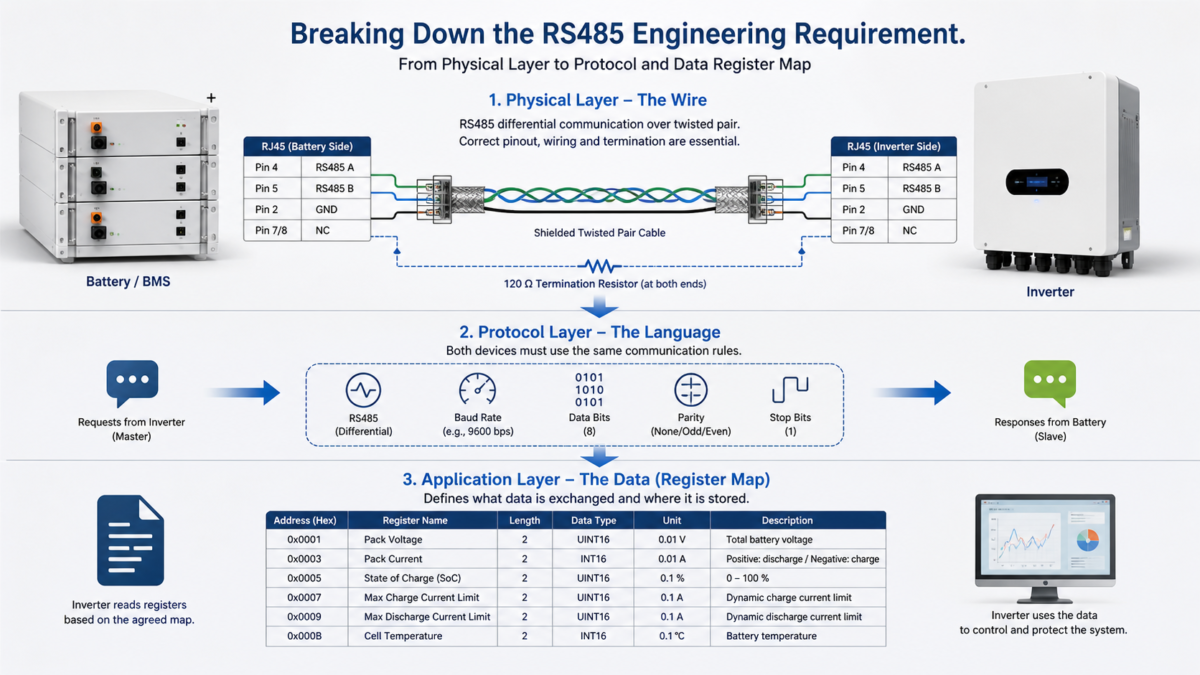
I always break down the communication challenge into three parts. Think of it like a conversation. You need a physical medium to talk (the wire), a shared language (the protocol), and a shared topic of conversation (the data map). If any one of these is missing, you just get silence.
The Physical Layer: Is the Cable Correct?
The first check is the simplest but is often overlooked. Does the RS485 port on the battery use the same pins for A, B, and Ground as the inverter? I have seen manufacturers use identical RJ45 connectors with completely different pinouts. Never assume the cable is standard. You must verify it with a pinout diagram from both manufacturers.
The Protocol and Application Layers
Even with the right cable, the devices need to speak the same language. This is where the protocol and register map come in. The protocol (like Modbus RTU or CAN) is the set of rules for talking. The register map is the dictionary—it tells the inverter which "address" holds the battery's voltage, current, or temperature data. If the inverter asks for voltage at address 100, but the battery stores it at address 200, the inverter gets meaningless data.
| Assumption | What to Verify | Impact if Wrong |
|---|---|---|
| They both have RS485 ports. | Cable pinout and termination resistors. | No electrical signal or corrupted data. |
| They both use Modbus. | The exact protocol, baud rate, and parity settings. | Devices cannot understand each other’s messages. |
| They can read the data. | The register map for key values like SoC and charge limits. | System operates with wrong data, causing safety risks. |
The Role of Charge Limits in the Final Design?
Your system is communicating, but is it performing safely? Without the right data, the inverter could damage the battery by pushing it too hard, shortening its life.
Charge limits are the most important data exchanged between the battery and inverter. The inverter must read and obey the dynamic charge and discharge limits sent by the Battery Management System (BMS). Misinterpreting this data can lead to battery damage and void your warranty.
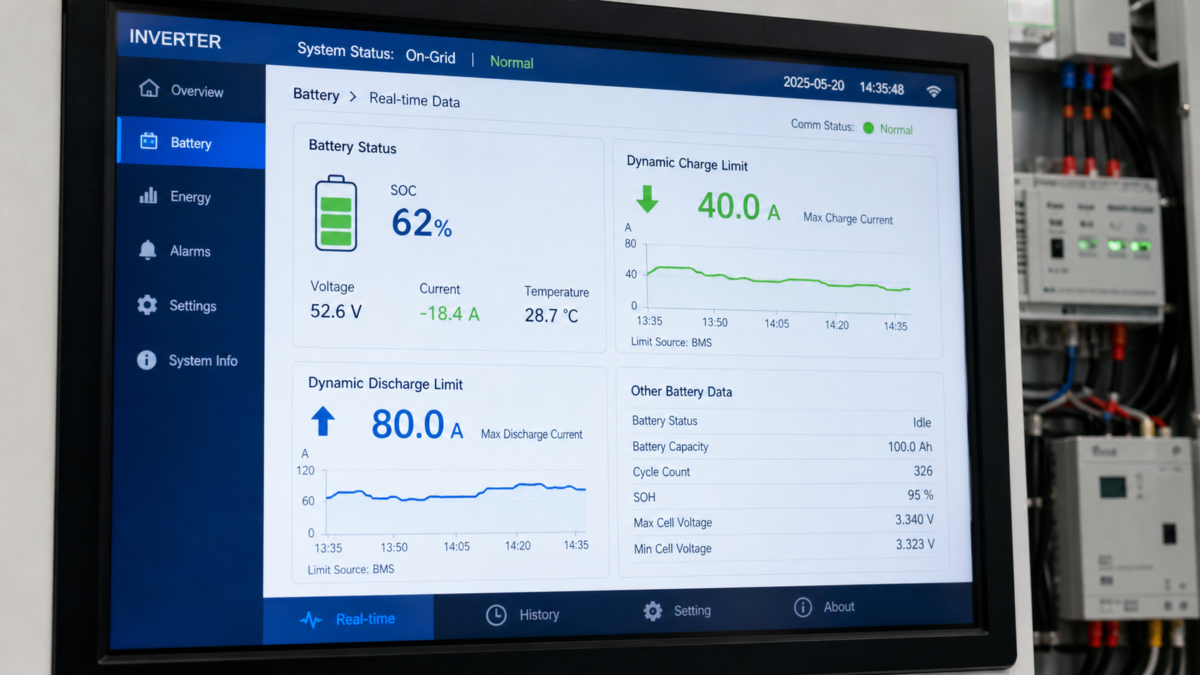
The BMS is the brain of the battery. It is constantly calculating the maximum safe current and voltage for charging and discharging. These limits are not static. They change based on the battery's temperature, state of charge (SoC), and overall health. For example, a cold battery cannot accept a high charging current without being damaged. The BMS knows this and will report a lower charge current limit to the inverter.
The inverter's job is to ask the BMS for these limits and then obey them without question. True compatibility means the inverter correctly reads these values and adjusts its behavior in real time. When I test a new battery and inverter pair, this is the main thing I look for. I don't just check for a connection. I create a test case to see how the inverter responds. I might use a variable load to force a high discharge rate and watch to see if the inverter throttles down when the BMS requests it. This is the only way to prove the system will operate safely in the real world, not just in a lab.
Why One Battery–Inverter RS485 Communication Outcome Does Not Prove the Rule?
You found a video online where someone got your exact battery and inverter models to work. You copy their setup, but yours fails. Why?
A single successful test is not universal proof because of hidden variables like firmware versions. Compatibility is not a permanent feature of a model; it is a specific state achieved between an exact battery, inverter, firmware, and cable at a single point in time.
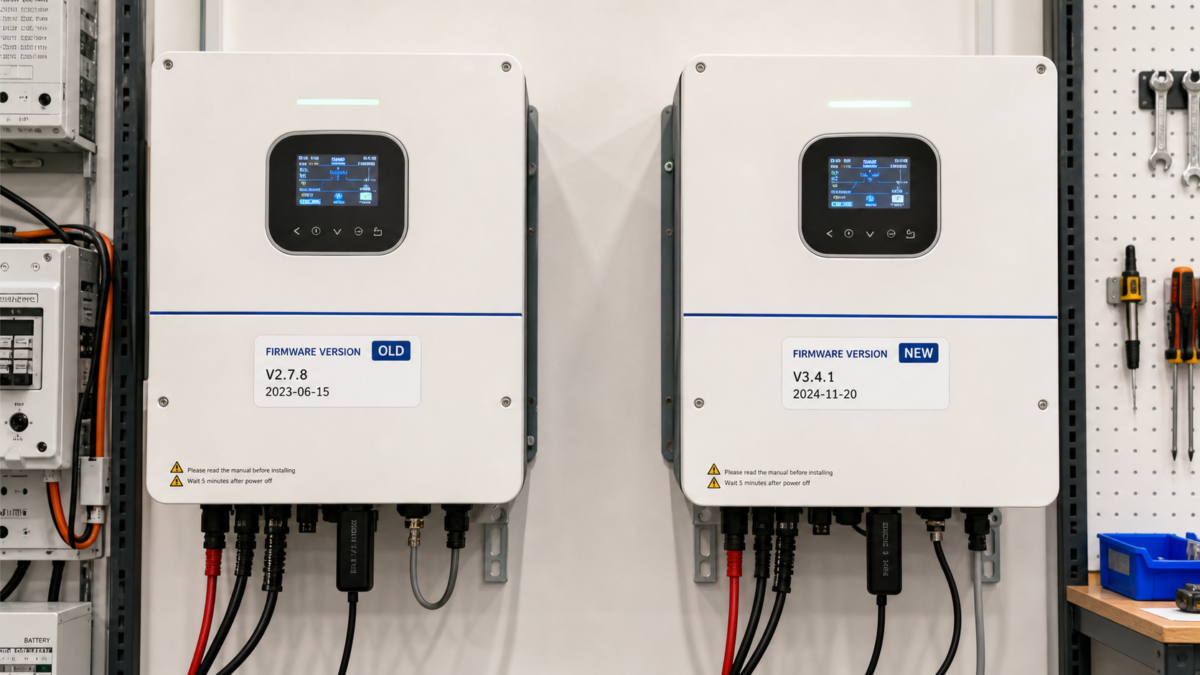
I remember a project where we used the same inverter and battery models from a previous successful installation. But this time, they would not communicate. We spent hours checking cables and settings. We finally discovered the inverter manufacturer had released a firmware update. This update "improved" the communication protocol but, in doing so, changed a register address for reading the battery's SoC. The hardware was identical, but that one small, undocumented software change broke the entire system.
This is why you cannot trust a single data point. Manufacturers are constantly updating their products. They might fix a bug, add a feature, or change a component supplier. Any of these changes can affect communication. When you evaluate compatibility, you have to be specific. It is not enough to say "Brand X battery works with Brand Y inverter." You must say "Brand X battery model ABC with firmware 1.2 works with Brand Y inverter model XYZ with firmware 3.4, using this specific cable pinout." Anything less specific is just a guess.
How to Document the Battery–Inverter RS485 Communication Decision?
Your system is working perfectly today. But what happens in a year when you need to replace a component or troubleshoot a problem? You will not remember the details.
Document your final setup with a versioned compatibility matrix. Your record should include exact model and firmware numbers, a clear photo of the communication cable and its pinout, and a commissioning log that proves the inverter is correctly reading the battery's live data.
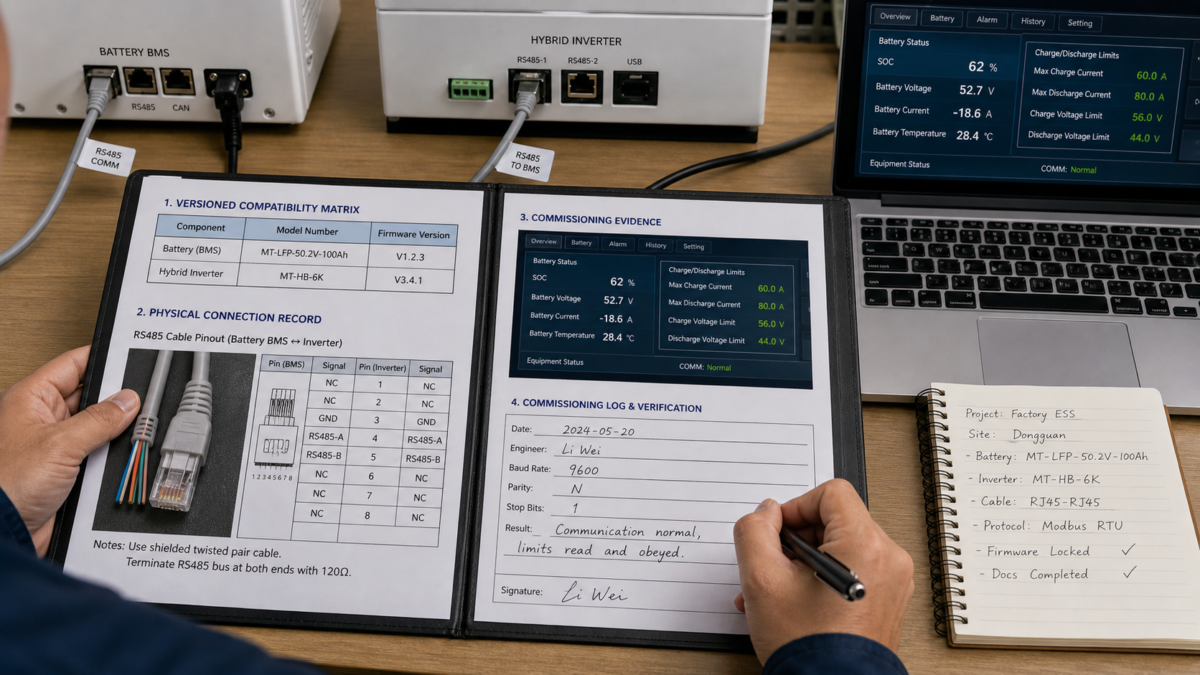
Good documentation is your best tool for future success. It turns a one-time success into a repeatable process. When I commission a system, I create a simple "Compatibility Report" for the client. It is not complicated, but it contains all the critical information in one place. This saves a huge amount of time if they ever need service or want to expand the system.
Here is what I include in my report:
- Versioned Compatibility Matrix: A simple table with rows for the battery and inverter. The columns are "Component," "Model Number," and "Firmware Version." This locks in the exact software state.
- Physical Connection Record: I take a clear photo of the connectors and include a simple diagram of the pinout (e.g., Pin 4 to Pin 4, Pin 5 to Pin 5).
- Commissioning Evidence: I take a screenshot from the inverter's monitoring software. It must show the battery's live data, like SoC, voltage, temperature, and especially the charge/discharge limits. This is the proof that the communication is not just connected, but also correct.
- Dated Statement: I finish with a simple, dated statement, like "As of [Date], this combination is verified to be compatible." At Moletong, we use this same process to create our official compatibility lists.
Conclusion
To ensure compatibility, check protocols and register maps, not just voltage. Test conservatively, document everything with version numbers, and never assume a previous result still applies to your project.
My Role
About me
Brand Name: Moletong
Slogan: Carbon Neutrality, Tracking the Future
Website: www.moletong.com
Company Overview
Established in 2011 and headquartered in Dongguan, Guangdong, we are an integrated new-energy equipment enterprise specializing in energy storage systems, complete electrical equipment, photovoltaic solutions, charging infrastructure, and hydrogen-energy solution integration.
We integrate R&D, manufacturing, sales, system configuration, and technical service to support utility-scale, commercial and industrial, and residential energy applications. Our solutions are designed around practical customer needs such as peak shaving and valley filling, electricity-cost optimization, transformer-capacity support, emergency backup, renewable-energy integration, intelligent energy management, and photovoltaic-storage-charging coordination.
Our Core Business
1. Energy Storage Systems & Equipment
We develop lithium iron phosphate energy-storage products for utility-scale, commercial and industrial, residential, and integrated charging applications. Our documented portfolio includes liquid-cooled containerized energy-storage systems, commercial and industrial storage cabinets, residential battery systems, storage-and-charging systems, BMS, PCS, and EMS functions.
2. Complete Electrical Equipment
We provide complete high- and low-voltage electrical products, including gas-insulated ring-main units, high-voltage switchgear, low-voltage withdrawable and fixed switchgear, power-distribution cabinets, meter boxes, box-type substations, charging-station substations, and busbar-trunking systems.
3. Photovoltaic & Integrated Energy Solutions
We provide photovoltaic supporting equipment and system solutions, including 35 kV step-up substation equipment, photovoltaic combiner cabinets, adjustable mounting structures, photovoltaic-storage integration, and equipment support for grid connection, power transmission, and microgrid applications.
4. Charging & Hydrogen-Energy Solution Integration
We provide AC and DC charging solutions, storage-and-charging systems, and photovoltaic-storage-charging integration for industrial parks, commercial parking facilities, transport hubs, and locations with limited grid or transformer capacity. We also develop hydrogen-energy integration concepts involving renewable hydrogen production, hydrogen storage, refueling, and hydrogen-electric coupling. Specific hydrogen products, certifications, production capacity, and completed projects must be confirmed separately.
Product Applications & Technology Focus
Primary Service Industries:
Our principal customer sectors include Industrial and Commercial Energy Users, Renewable-Energy Developers, Power and Electrical Engineering, EV Charging Infrastructure, Commercial and Public Facilities, and Residential Energy Storage.
Product Categories We Serve:
- Utility-Scale Containerized Energy-Storage Systems
- Commercial and Industrial Energy-Storage Cabinets
- Residential Energy-Storage Batteries and Inverters
- Integrated Storage-and-Charging Systems
- High- and Low-Voltage Switchgear
- Box-Type Substations and Charging-Station Substations
- Busbar-Trunking and Power-Distribution Products
- Photovoltaic Step-Up and Combiner Equipment
Technology Expertise:
Our documented technical focus includes:
Lithium Iron Phosphate Cells, BMS, PCS, EMS, Liquid Cooling, Natural Cooling, Modular System Integration, Remote Monitoring, Load Tracking, Anti-Reverse-Flow Control, Transformer-Capacity Protection, and Intelligent Operation and Maintenance.
Production Capacity & Equipment
Energy Storage Production & R&D Platform
Our supplied corporate materials identify one production base in Dongguan and a Dongguan engineering R&D center. We support product development, equipment manufacturing, system configuration, and technical service for residential, commercial and industrial, and large-scale energy-storage applications.
- Product Platform Highlights: 5,015 kWh liquid-cooled containerized storage systems, 627 kWh and 261 kWh commercial and industrial storage cabinets, 16 kWh residential battery systems, and 261 kWh and 627 kWh integrated storage-and-charging systems.
Electrical Equipment Platform
We provide product design and manufacturing support for complete electrical assemblies used in industrial facilities, commercial buildings, substations, photovoltaic projects, charging stations, and public infrastructure.
- Equipment Highlights: High-Voltage Ring-Main Units, High-Voltage Metal-Clad Switchgear, Low-Voltage Withdrawable Switchgear, AC Low-Voltage Switchgear, Distribution Cabinets, Box-Type Substations, Prefabricated Charging-Station Substations, and Busbar-Trunking Systems.
Energy Storage & Electrical System Capabilities
General Capabilities:
- Application and electricity-use requirement analysis
- Energy-storage system selection and capacity configuration
- Equipment design and manufacturing
- BMS, PCS, and EMS system integration
- Peak shaving, valley filling, and time-of-use energy scheduling
- Load tracking and anti-reverse-flow control
- Transformer-capacity protection and demand management
- Photovoltaic-storage and storage-charging integration
- Remote installation, commissioning, and trial-operation support
- Operator training, warranty service, and technical after-sales support as contracted
Our Core Specialties:
- ✔️ Liquid-Cooled Large-Capacity energy-storage systems
- ✔️ Commercial & Industrial peak-valley and backup-power solutions
- ✔️ Integrated Photovoltaic-Storage-Charging applications
- ✔️ Complete Electrical Distribution equipment and system coordination
Quality Control & Certifications
We apply quality, environmental, and occupational health and safety management requirements to the design, manufacture, and sales of our documented product scope.
Quality Management Scope:
The supplied qualification materials show ISO management-system certificates and patent certificates held by Moletong. The product manuals separately define model-specific electrical parameters, monitoring functions, protection requirements, cooling methods, fire-protection configurations, operating environments, and technical-service conditions.
Testing & Protection Focus:
- Cell voltage, current, temperature, and operating-status monitoring
- Overcharge, over-discharge, overtemperature, and abnormal-condition protection
- Liquid-cooling or natural-cooling verification according to product model
- Fire-protection configuration according to product type
- Enclosure protection, corrosion resistance, and operating-environment requirements
- BMS, PCS, EMS, and communication-function verification where applicable
Certifications & Compliance:
- ISO 9001 Quality Management System
- ISO 14001 Environmental Management System
- ISO 45001 Occupational Health and Safety Management System
- Invention Patent and Utility Model Patent Certificates
- Selected product models list IEC 62619, UN 38.3, RoHS, EN 61000 series requirements, GB/T 36276, CCC, and relevant IEC/GB electrical standards
Certification scope varies by product model, configuration, destination market, and certificate validity period. Model-specific certificates must be confirmed before any formal compliance claim.
Target Markets & Partnership Models
Who We Serve:
- Industrial Facility Owners: Plant managers, energy managers, facility managers, and procurement teams at factories or industrial parks seeking peak-valley electricity-cost optimization, demand management, transformer-capacity support, or emergency backup power
- Renewable-Energy Developers: Project developers, engineering managers, and procurement teams for photovoltaic or wind projects requiring energy storage, step-up equipment, electrical distribution, or renewable-energy integration
- EPC & Electrical Contractors: Project managers, technical managers, and equipment-purchasing teams at qualified engineering companies requiring packaged energy-storage or electrical equipment with technical coordination
- Charging-Station Developers & Operators: Investment, construction, and operations teams working on sites with limited grid access, insufficient transformer capacity, high peak demand, or photovoltaic-storage-charging requirements
- Energy Service Companies & System Integrators: Solution designers and project-development teams building commercial and industrial energy-management, microgrid, or distributed-energy projects
- Residential Storage Distributors & Installers: Importers, distributors, wholesalers, and qualified installers requiring lithium iron phosphate batteries, off-grid or hybrid inverters, and residential storage configurations
- Commercial & Public-Facility Owners: Property, engineering, and facility-management teams for commercial buildings, schools, hospitals, hotels, parking facilities, and transport locations requiring reliable power distribution, charging, or backup-energy solutions
Target Geographies:
Our home market is China, supported by regional sales coverage for South, East, Central, and Southwest China. The supplied 2026 catalogue also identifies an overseas office in Indonesia, supporting practical market development in Southeast Asia. Other overseas markets are served only after confirming model-specific certification, grid requirements, shipping conditions, and local installation standards.
Types of Cooperation:
- Equipment Supply: Standard or configured energy-storage and electrical products
- System Configuration: Product selection and capacity configuration based on the customer's application
- System Integration: BMS, PCS, EMS, photovoltaic, charging, and electrical-system coordination
- Project Technical Cooperation: Technical coordination with renewable-energy developers, EPC contractors, and qualified local engineering companies
- Integrated Energy Solutions: Photovoltaic-storage, storage-charging, and photovoltaic-storage-charging applications
- Technical Service: Training, remote installation and commissioning support, warranty, and after-sales service as agreed in the commercial contract
Our Core Competitive Advantages
⭐ Integrated New-Energy Product Portfolio
By combining energy-storage systems, complete electrical equipment, photovoltaic supporting products, charging applications, and intelligent energy-management functions, we can configure solutions around the customer's complete power-use scenario.
⭐ Coverage from Residential to Utility Scale
Our documented energy-storage range extends from 16 kWh residential systems to 261 kWh and 627 kWh commercial and industrial systems and a 5,015 kWh containerized system.
⭐ Application-Oriented System Design
Our solutions address identifiable operating needs, including peak-valley arbitrage, demand management, transformer-capacity constraints, backup power, renewable-energy consumption, and charging-station power support.
⭐ Integrated Control & Safety Architecture
Our storage products combine lithium iron phosphate cells with BMS, PCS, EMS, model-specific thermal management, multi-level protection, intelligent monitoring, and remote operation and maintenance functions.
⭐ Regional Sales & Technical Service Support
With a Dongguan headquarters and engineering center, regional sales coverage in China, and an overseas office identified in Indonesia, we support equipment selection, technical coordination, training, remote commissioning assistance, and contracted after-sales service.

Leave a Reply