

How Should Buyers Evaluate Commercial BESS Cabinet Liquid Cooling?
Choosing a commercial BESS cabinet feels overwhelming. You see lots of product catalogs, but they don't answer your real-world questions about site constraints or performance under stress.
To evaluate commercial BESS cabinet liquid cooling, you must start with your site's duty cycle and physical constraints. Create a decision model using PCS topology, cooling needs, footprint, and expansion plans to turn an attractive proposal into a deliverable design with clear specifications.
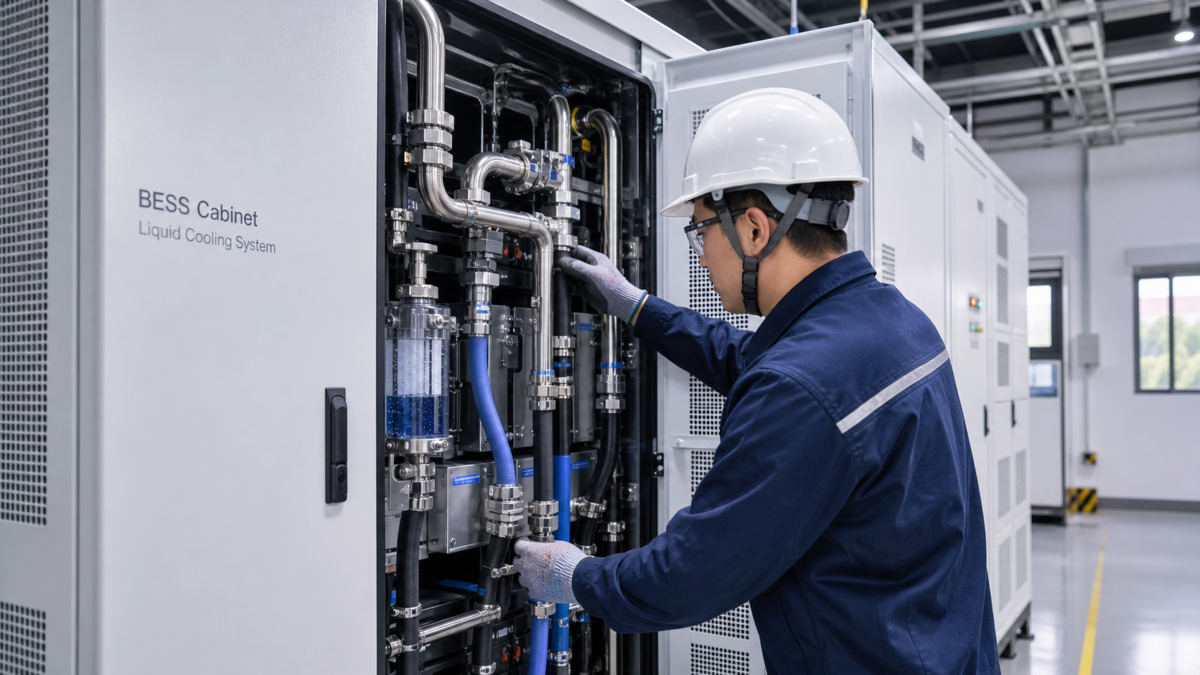
I've seen too many buyers get stuck comparing datasheets. They focus on the listed energy capacity (kWh) and price, but that’s only a small part of the story. The real value, and the real risk, is in how that cabinet performs under your specific operating conditions. If I'm advising a buyer, I always start with one question: what is the most inconvenient but realistic operating condition you will face? That's where a good design proves its worth. We need to move beyond product labels and build a decision framework that tests the supplier's proposal against your reality.
Start with the Commercial BESS Cabinet Liquid Cooling Customer Problem, Not the Product?
Your BESS project has unique challenges. Focusing only on a product's energy rating ignores your site's layout, power needs, and future plans, leading to costly installation surprises.
Define your problem first: specify your load profile, physical space limits, ambient temperature range, and expansion strategy. This forces suppliers to prove their product fits your needs, not just their catalog.
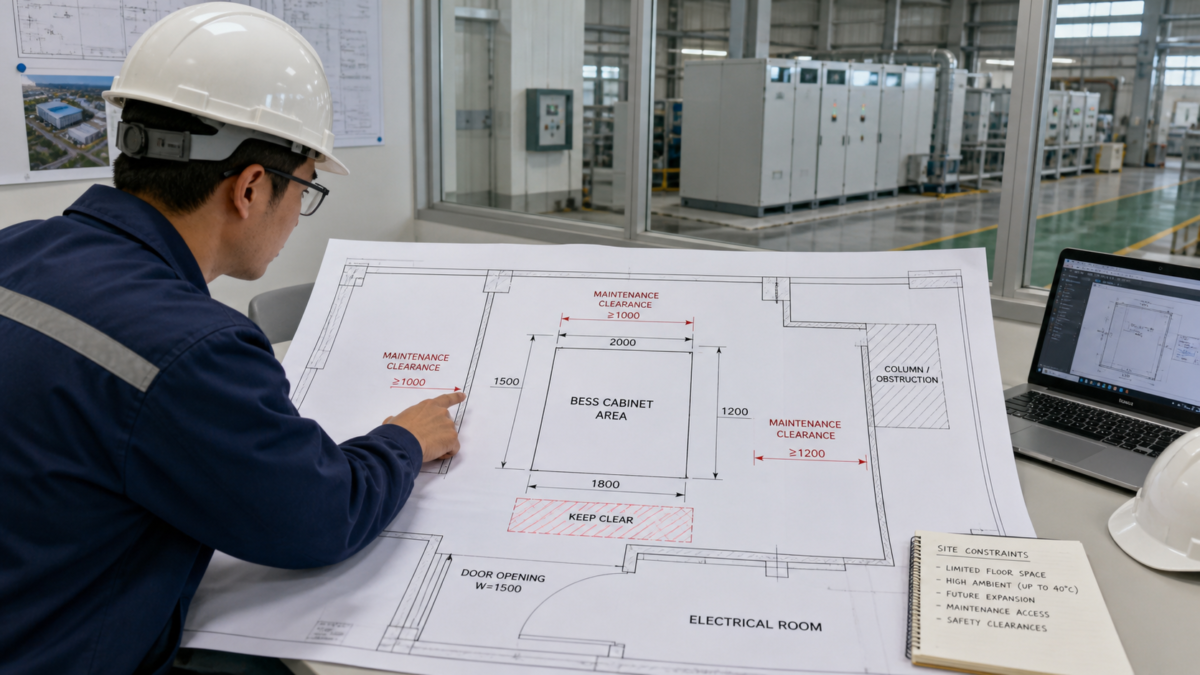
I always tell my clients to think about their site first. A catalog can't tell you if a cabinet will fit through your door, or if you have enough clearance for maintenance. It won't tell you if the cooling system can handle the hottest day of the year while your factory is running at full capacity. The practical issue is that cabinet selection must be driven by duty and site constraints, not just the energy number on the label. For example, our Moletong 261 kWh and 627 kWh cabinets serve very different site problems, even though both use liquid cooling. One prioritizes a compact footprint, while the other maximizes energy density for larger, open areas. Your job is to define the problem so clearly that the choice becomes obvious.
From Catalog to Constraints
Instead of starting with a product, I create a simple table that maps your problems to required features. This shifts the conversation from "what do you have?" to "can you solve this?".
| Customer Problem | Required Specification | Why It Matters |
|---|---|---|
| Limited indoor floor space | Maximum footprint (L x W x H) | Avoids civil works or relocation costs. |
| High peak loads in summer | Ambient derating table | Ensures you get the power you paid for when you need it most. |
| Planned facility expansion | Modular design and layout plan | Prevents a “forklift upgrade” by planning for future growth. |
| Strict maintenance access rules | Interface schedule and clearance needs | Guarantees serviceability and safety for your team. |
How PCS Topology Shapes the Commercial BESS Cabinet Liquid Cooling Design?
Your Power Conversion System (PCS) choice seems separate from the battery, but it directly impacts the BESS layout. A central PCS creates a different heat load than multiple string inverters.
PCS topology dictates the BESS cabinet's physical arrangement and thermal load. A central PCS often centralizes the heat load, while string inverters distribute it, directly influencing the liquid cooling system's design, piping, and efficiency.
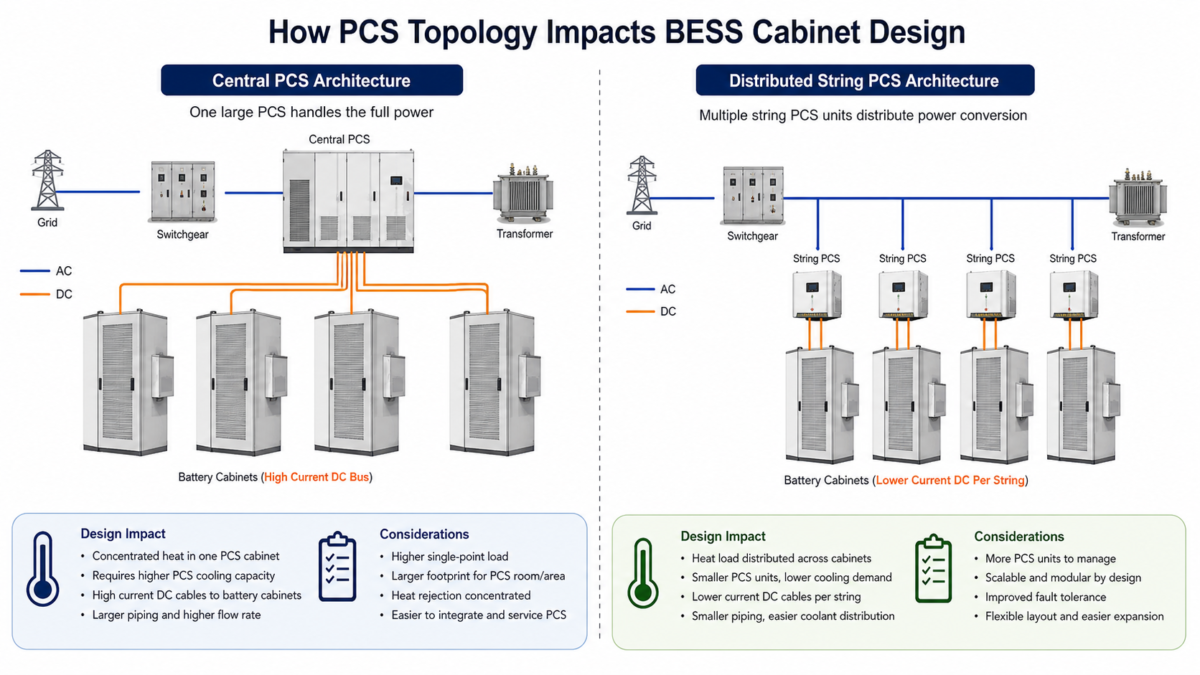
I remember a project where the client selected their PCS before even thinking about the battery cabinet. They chose a large, central PCS because it was cheaper upfront. The problem was that it required one massive battery array to be located right next to it. This created a huge, concentrated heat source that put a lot of strain on the liquid cooling system design. We had to use larger pipes and a more powerful pump than expected. If they had considered a string PCS topology, we could have used smaller, modular battery cabinets. This would have distributed the heat load and made the cooling design much simpler and more resilient. The lesson is simple: the PCS and BESS are not separate decisions. They are two parts of the same system, and they must be designed together to manage thermal loads effectively.
When Enclosure Changes the Economics?
You might think a bigger BESS cabinet is always cheaper per kWh. But the enclosure's footprint can radically change the total project cost when you factor in space, installation, and expansion.
A smaller, more expensive cabinet per kWh can save significant money on site preparation, rent, or civil works. The enclosure's dimensions and scalability directly impact the project's lifetime economics, not just the initial hardware cost.
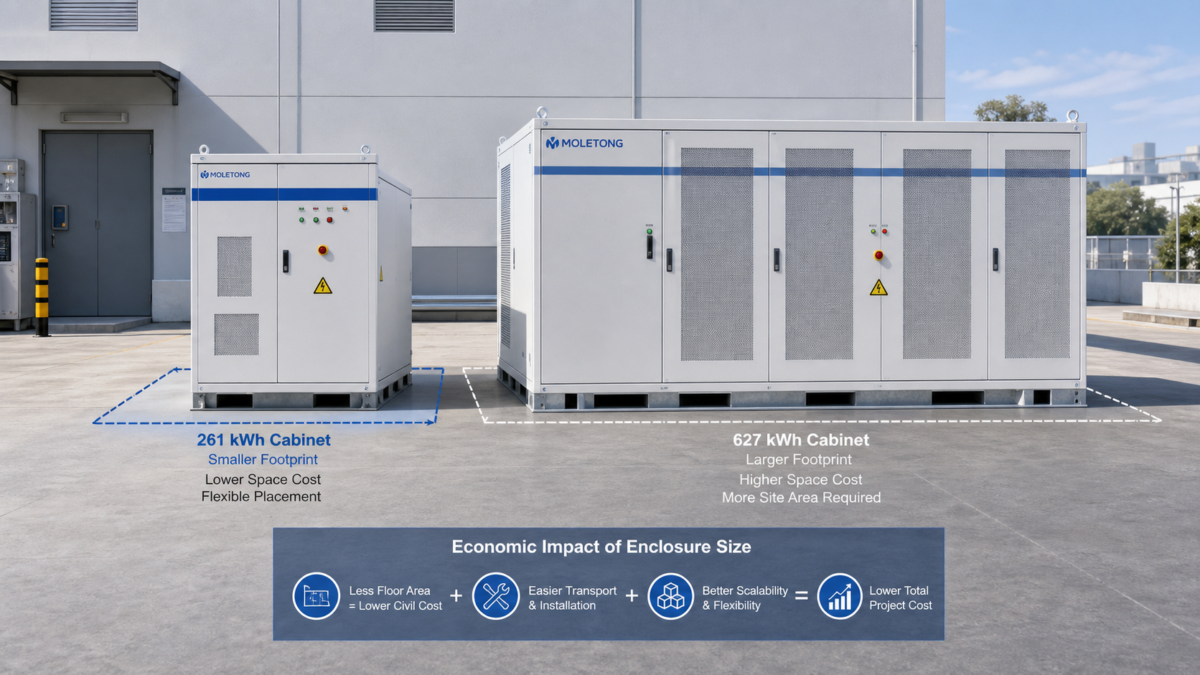
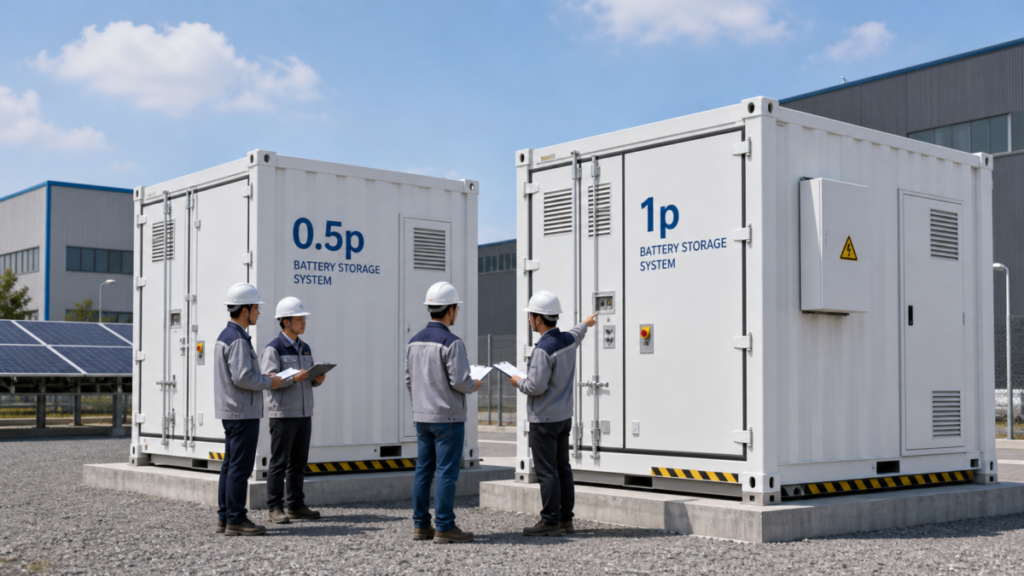
Let’s compare our Moletong 261 kWh and 627 kWh liquid-cooled cabinets. On paper, the 627 kWh unit often has a lower cost per kilowatt-hour. It seems like the obvious choice for a budget-conscious buyer. But what if your only available space is a small electrical room with a standard-sized door? The larger cabinet won't fit. The cost to knock down a wall and rebuild it could easily wipe out any per-kWh savings. In that case, using two smaller 261 kWh cabinets might be the most economical solution. This is what I mean by looking at the total cost of ownership. You have to consider the cost of the space the cabinet occupies and the cost of getting it there. Always ask for a dimensioned layout to see how the equipment will physically fit into your site, both now and for future expansions.
Turning Buyers Evaluate Commercial BESS Cabinet Liquid Cooling into Clear Specifications?
Vague requirements lead to disappointing results. You need to translate your evaluation into a concrete list of technical documents and questions that leave no room for misunderstanding.
Demand a compliance matrix, dimensioned layout, interface schedule, and an ambient derating table from your supplier. These documents turn your operational needs into contractual obligations and ensure the proposed system is truly deliverable.
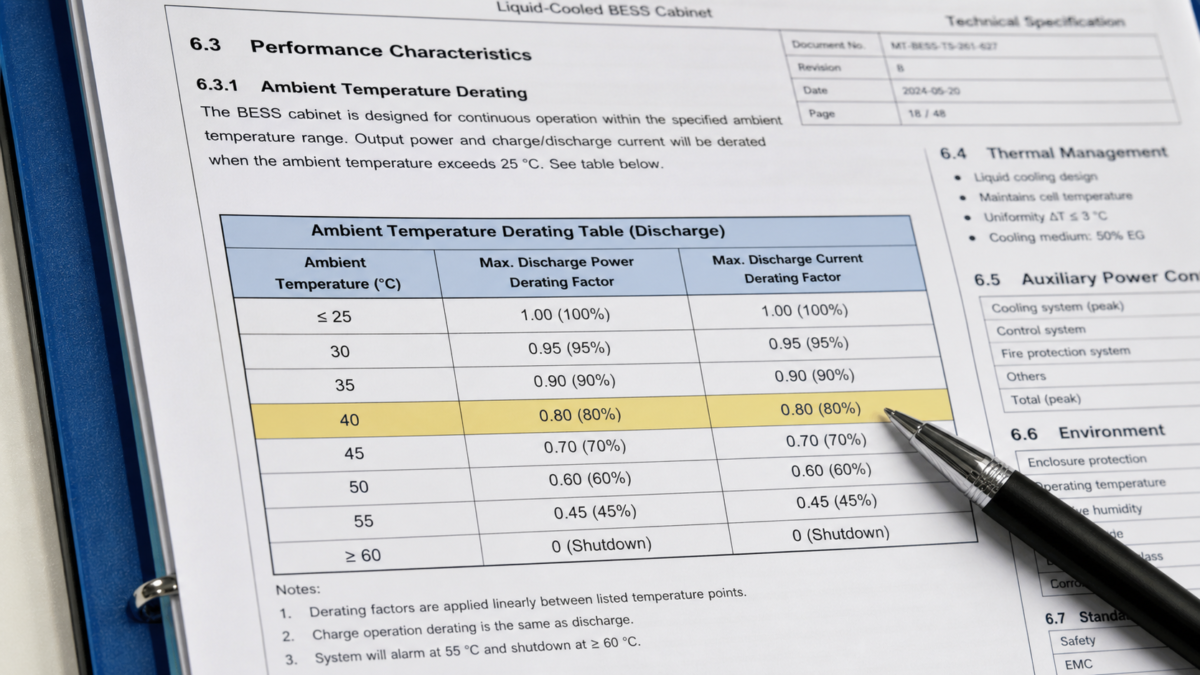
After we’ve defined the problem, the PCS topology, and the enclosure constraints, it's time to get specific. This is where you hold the supplier accountable. I don't move forward on a project until I have four key documents. First, a compliance matrix showing how their proposal meets every one of my requirements. Second, a dimensioned layout showing the cabinets in my facility. Third, an interface schedule detailing every electrical and cooling connection point. And fourth, a clear ambient derating table that tells me exactly how much power I lose as the temperature rises. This is the most important part. I always test the most inconvenient operating condition—for example, maximum discharge at 40°C. If the supplier can prove their system works then, I know I have a robust design.
The Five Questions to Ask Before Approval
Before you sign anything, ask your supplier these exact questions. Their answers will tell you everything you need to know.
| Question | Why You Must Ask It |
|---|---|
| 1. Can you provide a derating table for my site’s maximum ambient temperature? | This confirms the usable energy and power in your worst-case scenario. |
| 2. Can you provide a dimensioned layout showing maintenance clearances? | This proves the system physically fits and is serviceable. |
| 3. What is the parasitic load of the liquid cooling system at peak operation? | This uncovers the hidden energy cost of keeping the system cool. |
| 4. How does your system architecture support future expansion by X kWh? | This tests if their solution is truly scalable or a one-time fix. |
| 5. Can you provide an interface schedule for all electrical and cooling connections? | This ensures your installation team knows exactly what to do. |
Conclusion
Evaluate BESS liquid cooling by starting with your site's problems, not a catalog. Use a decision model and demand clear, revision-controlled data to ensure the solution works for you.

Leave a Reply