

How Viable Are Batteries Without Solar?
High demand charges on your electricity bill are a constant headache. You hear a battery can help, but installing solar isn't an option. So, what do you do?
A battery without solar is viable for peak shaving if it consistently and reliably cuts your highest demand charges. Its success depends more on a smart dispatch strategy and understanding your tariff than on its catalogue capacity. One missed peak can erase months of savings.
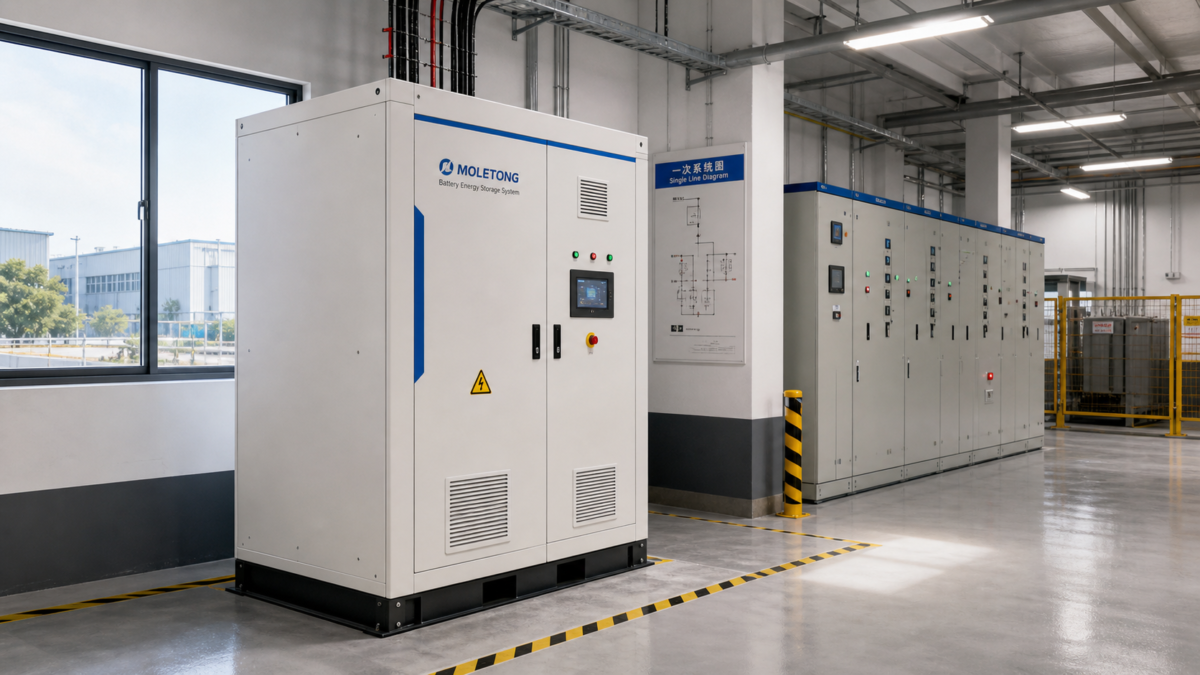
When I get asked this question, my starting point is never a product brochure or a headline payback figure. Those numbers are often calculated under perfect conditions. In my experience, the real world is never perfect. The financial success of a standalone battery hinges on its ability to perform under pressure, especially when your facility's load is unpredictable. I would look past the advertised savings and ask tougher questions about risk. The key is to understand how the system behaves when things go wrong, because that’s what truly determines its long-term value. Let's break down how I would evaluate the real viability of a peak-shaving battery.
Defining Success for Peak Shaving Battery Without Solar?
Every battery proposal promises impressive savings and a quick payback. But when one missed peak can cost you thousands, how can you trust these promises? This is a problem I see often.
Success is not the average monthly savings; it is the absolute prevention of the single billing peak that sets your demand charge. A truly successful system is one that you can trust to catch the highest peak of the month, every single month, especially under punishing tariff ratchets.
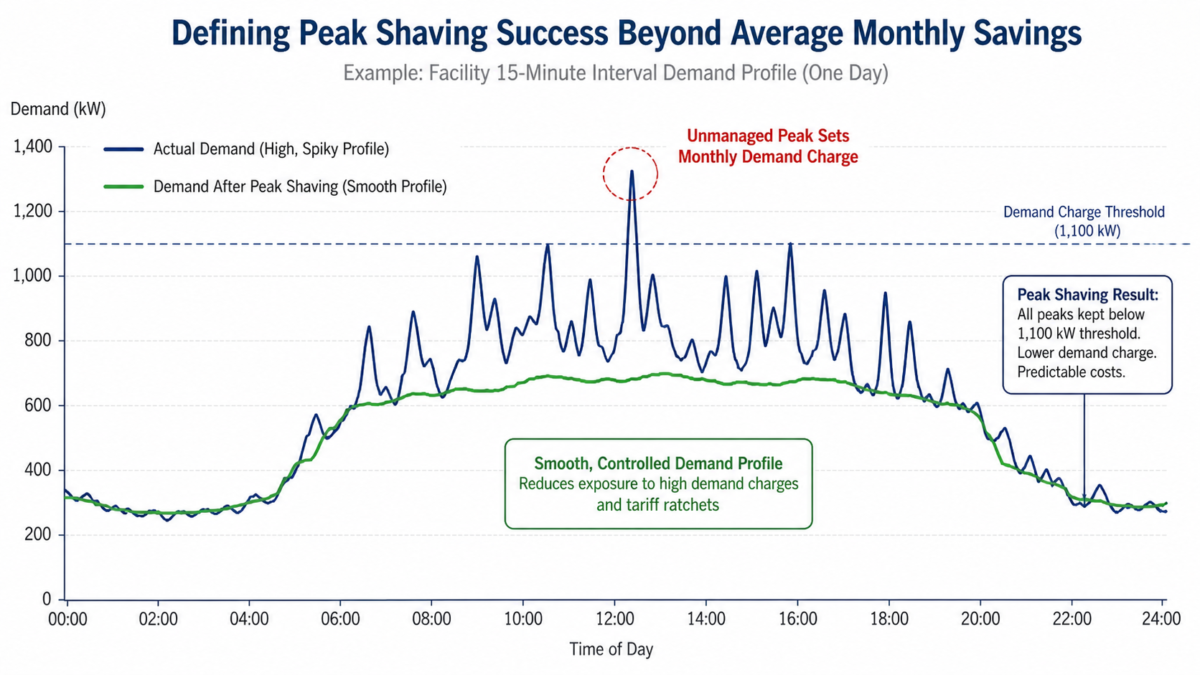
I view success through the lens of risk mitigation. A peak shaving battery is a bit like an insurance policy against high demand charges. The real measure of its success is how it performs on the one or two days a month when it really matters. A system that successfully shaves 20 minor peaks but misses the single event that sets your bill for the next 12 months has failed. This is why I focus on consistency and reliability over flashy, best-case-scenario payback numbers. One of my clients learned this the hard way after a system they installed missed a peak in the first month, wiping out the projected savings for the entire quarter.
Beyond Simple Payback
The conversation must move from "What's the payback?" to "What's the probability of missing a peak?". A single failure can be more significant than dozens of small successes.
| Metric | The Headline View (What Salespeople Show) | My View (The Real-World Test) |
|---|---|---|
| Payback Period | Calculated assuming 100% peak shaving success every month. | Recalculated after simulating one or two missed peaks per year. |
| Successful Dispatches | A high count, like “95% success rate,” is presented as proof. | Irrelevant if the 5% failure includes the month’s highest peak. |
| Missed Peaks | Treated as a rare exception or not mentioned at all. | This is the most important metric. I analyze the financial impact of the single worst failure. |
What Evidence Is Needed to Evaluate Peak Shaving Battery Without Solar?
Proposals are filled with technical specs and marketing claims. It's easy to get lost in the jargon and lose sight of what really matters. How do you find the truth?
To properly evaluate a proposal, you need more than promises. I would demand a transparent simulation using at least 12 months of your facility’s 15-minute interval data. This evidence must include a dispatch trace, a bill reconciliation, and an exception log detailing failure points.

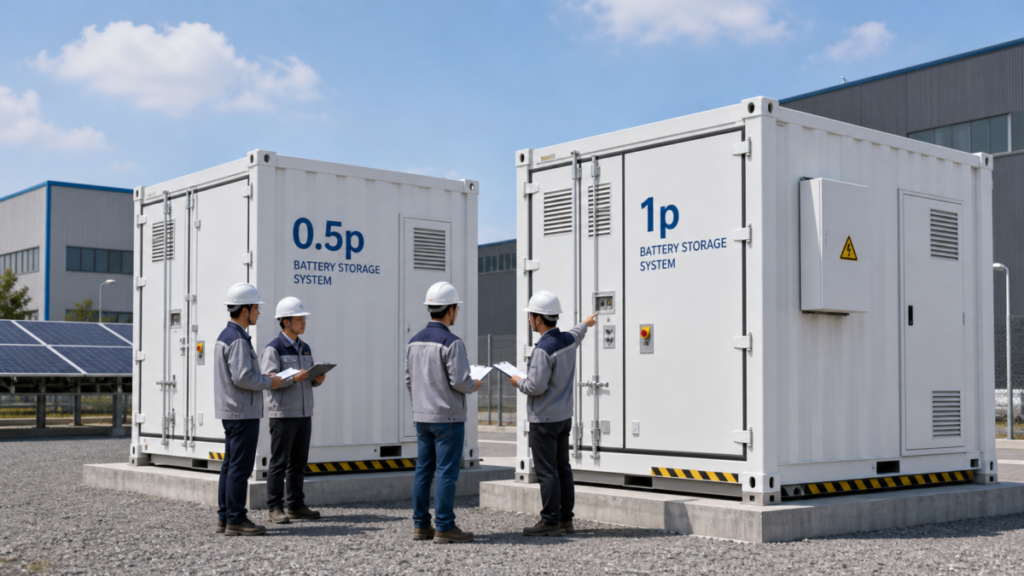
I simply do not evaluate a battery proposal without a transparent simulation. A brochure tells me what a battery can do, but a simulation using my own data tells me what it will do. If I were considering a Moletong 261 kWh or 627 kWh system, for example, I would insist on this process. I'd provide my own redacted interval data and ask for the full simulation output. This includes the dispatch trace, which shows me precisely when the battery charged and discharged. I also need to see a utility bill reconciliation—a before-and-after comparison. Most importantly, I want the exception log. This tells me where the simulation failed. It shows the assumptions the system operates on and the boundary conditions where its logic breaks down. This is the only way to see the real risk, not just the potential reward.
The Trade-Off Between Tariff Ratchet and Coincident Loads?
Your utility tariff contains complex rules that can turn a small mistake into a big cost. A single, unexpected power spike can set your demand charge for the entire year.
The trade-off is between preparing for a predictable tariff structure and an unpredictable load. A tariff ratchet penalizes your highest peak for months, while coincident loads create that peak unexpectedly. A battery must be sized and controlled to handle both, which is a constant challenge.
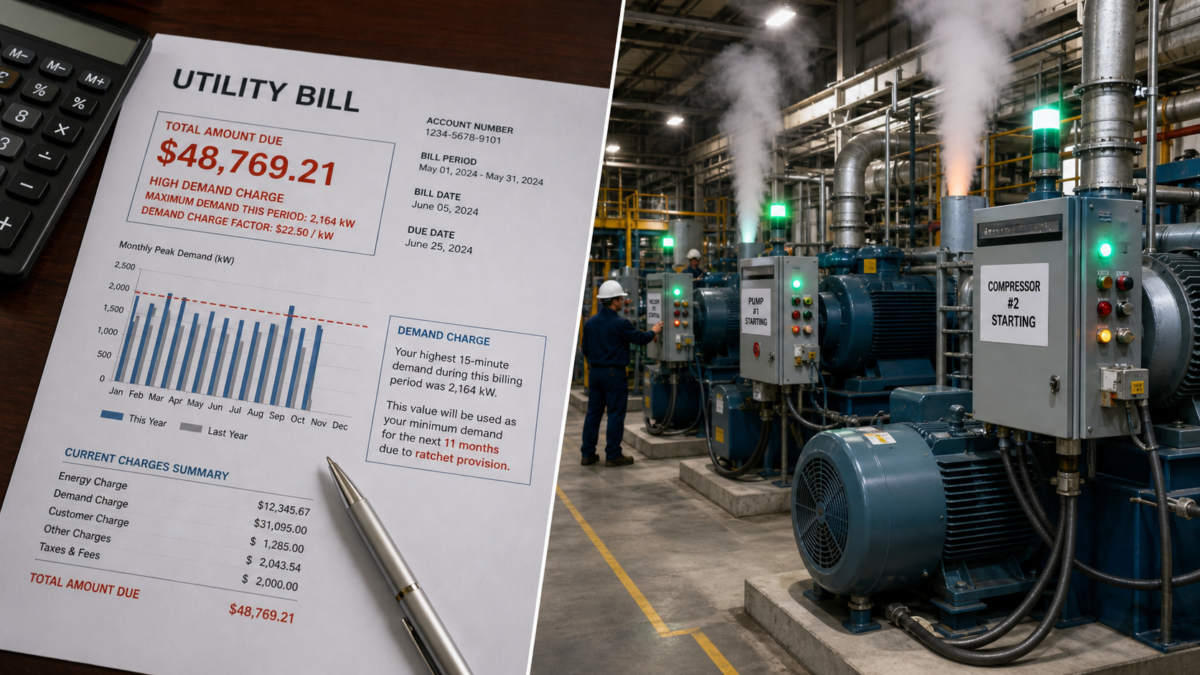
I think of the tariff ratchet as a high-water mark for your electricity bill. If your power demand hits a new record high for just 15 minutes, that new high can set the minimum demand charge you pay for the next 11 months. It’s a brutal penalty. On the other hand, coincident loads are the source of those record peaks. It’s that moment when a welder, a compressor, and the HVAC system all happen to start at the same time. This is often an unpredictable event. So the trade-off is clear: do you size the battery for the everyday, predictable peaks, or for the rare, catastrophic coincident peak? An undersized battery will miss the big one, triggering the ratchet. An oversized battery may be too expensive to provide a good return. This is where a good forecast and control strategy becomes more important than the hardware itself.
How to Compare Peak Shaving Battery Without Solar Proposals on Equal Terms?
You have three proposals on your desk, each with a different battery, a different price, and a different payback period. It feels like comparing apples to oranges. How do you find the best one?
To compare proposals fairly, you must control the variables. Provide every vendor with the exact same 12-month, 15-minute interval dataset and your specific utility tariff. Then, require each to submit a full simulation with a dispatch trace and bill reconciliation. This standardizes the test.

I once reviewed two proposals for an industrial client. One promised a 4-year payback, the other a 6-year payback. The hardware was nearly identical. The difference was entirely in the assumptions. The first vendor assumed a perfect prediction of the monthly peak, while the second used a more realistic model that accounted for forecast errors. To get to the truth, I gave both vendors the same 24 months of our interval data and a clear set of rules. Forcing them to compete on the same playing field is the only way to make an informed decision. I would not proceed without running this process.
The Equal-Terms Checklist
- Standardized Input: Give every bidder the same 12 to 24 months of 15-minute interval data from your utility meter. No exceptions.
- Standardized Tariff: Provide the exact utility rate schedule, including all demand charges, ratchets, and time-of-use windows.
- Transparent Simulation: Demand to see the full output—dispatch trace, bill reconciliation, and the all-important exception log.
- Stress Testing: Ask a simple question: "Show me what happens in your simulation if my facility's load unexpectedly increases by 15% for one hour." The answer will tell you everything you need to know about their control strategy.
Conclusion
A battery without solar is viable only when you can prove its performance with a transparent simulation using your own data. Focus on its reliability in preventing the single worst peak.

Leave a Reply