

Air Cooled or Aio Liquid?
Choosing your BESS cooling system feels complex. A bad decision can hurt performance and cost you money. I will help you make the right choice for your project.
The best choice is not air or liquid cooling. The best choice is the system that meets your specific site duty, footprint, and expansion needs. Start by defining your project's real requirements, not by picking a technology from a catalog.
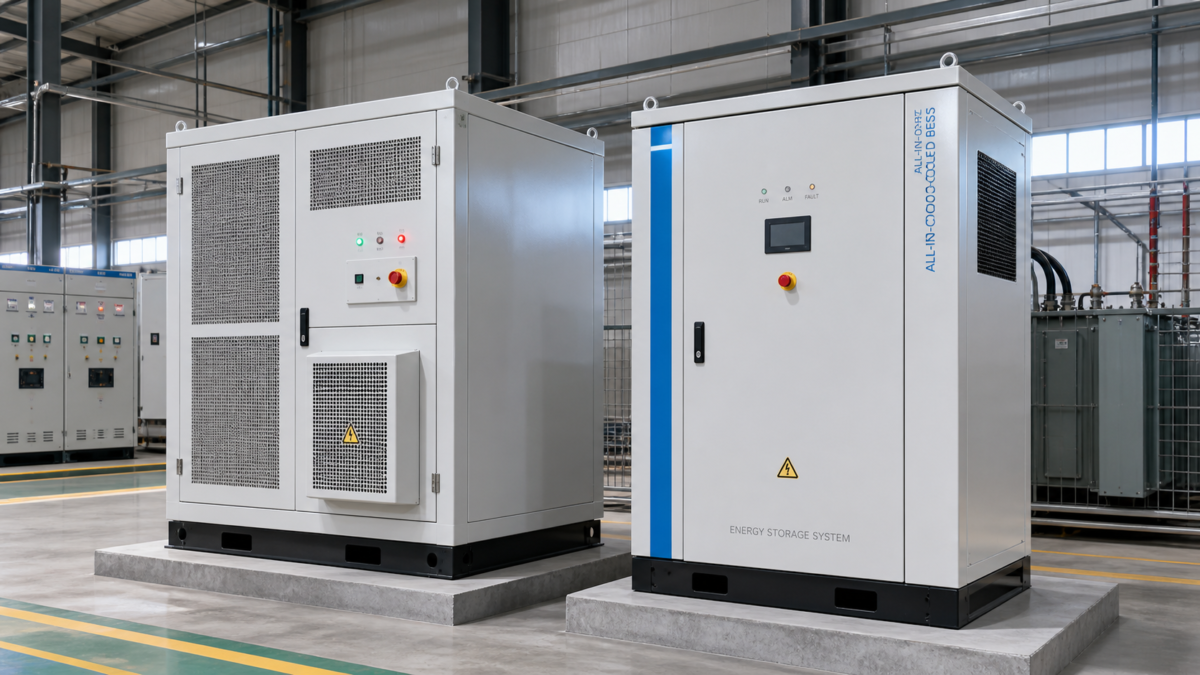
This sounds simple, but I see people get this wrong all the time. They focus on the technology first and the application second. This is backward. Let's break down how I approach this problem. This method ensures the BESS you buy is the BESS you actually need. My goal is to give you a clear path to make your own decision, based on facts and your specific situation. This way, you can separate a real technical need from a bad assumption or an unrealistic hope.
Defining Success for Air Cooled vs Liquid Cooled BESS?
You want the best BESS for your project. But the word 'best' can be misleading. It often leads to poor choices and big problems down the road.
Success is a BESS that reliably meets your specific operational needs for the life of the project. Define what success means with a clear compliance matrix before you even look at a product. List your required kW/kWh, footprint limits, and ambient conditions.
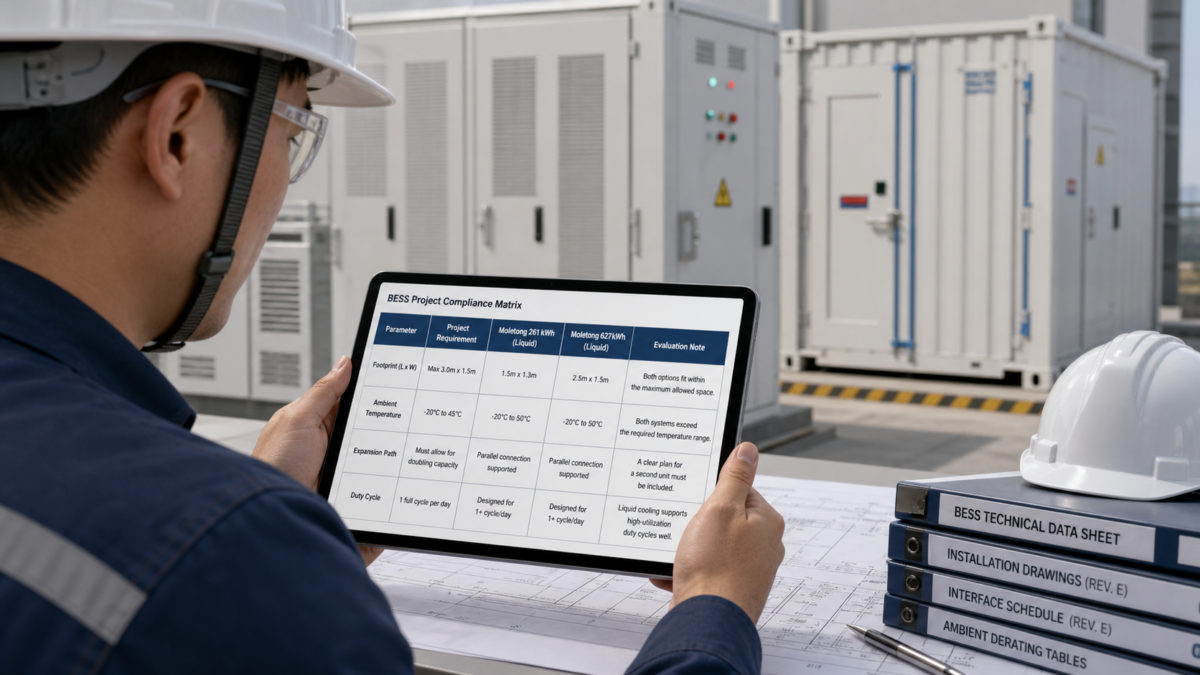
When I start a new project, I don't begin with a product recommendation. I begin by asking questions about the site and the job the BESS needs to do. This helps me understand the real constraints. It makes it easier to separate a true technical requirement from a poor assumption. I build a compliance matrix to capture these details. This becomes our definition of success.
Creating a Project Compliance Matrix
This matrix is our guide. It forces us to think about the most important factors first. For example, I would compare our Moletong 261 kWh and 627 kWh liquid-cooled cabinets against these real-world needs, not just their catalog specs.
| Parameter | Project Requirement | Moletong 261 kWh (Liquid) | Moletong 627 kWh (Liquid) | Evaluation Note |
|---|---|---|---|---|
| Footprint (L x W) | Max 3.0m x 1.5m | 1.5m x 1.3m | 2.5m x 1.5m | Both options fit within the maximum allowed space. |
| Ambient Temperature | -20°C to 45°C | -20°C to 50°C | -20°C to 50°C | Both systems exceed the required temperature range. |
| Expansion Path | Must allow for doubling capacity | Parallel connection supported | Parallel connection supported | A clear plan for a second unit must be included. |
| Duty Cycle | 1 full cycle per day | Designed for 1+ cycle/day | Designed for 1+ cycle/day | Liquid cooling supports high-utilization duty cycles well. |
This simple exercise changes the conversation. We are no longer talking about abstract benefits. We are matching real products to defined, measurable goals. This is the foundation for a successful project.
What Evidence Is Needed to Evaluate Air Cooled vs Liquid Cooled BESS?
Sales brochures make big promises. But these claims often lack the hard data you need to make a safe choice. This makes a true comparison feel risky.
You must demand revision-controlled technical documents. This includes dimensioned layouts for installation planning, an interface schedule for all connections, and an ambient derating table. This evidence changes the discussion from marketing to engineering facts.
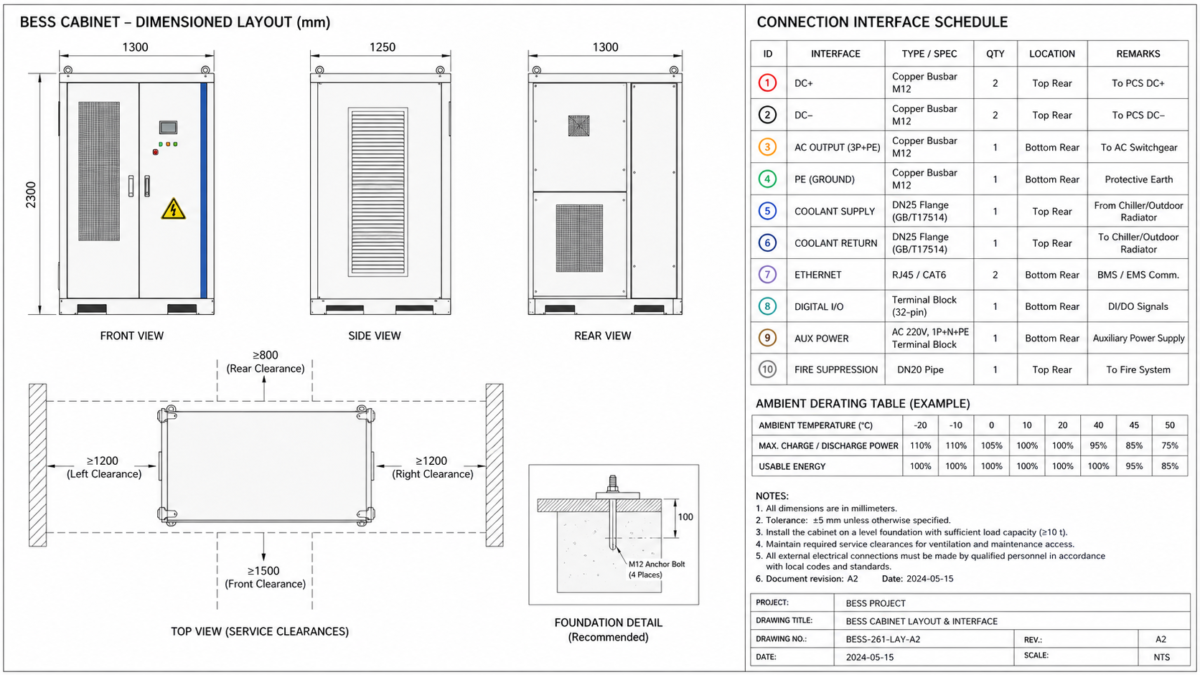
I never make a recommendation based on a marketing sheet alone. I need to see the official engineering documents. When I compare two systems, like the Moletong 261 kWh and 627 kWh liquid-cooled cabinets, I pull the revision-controlled datasheets. These documents contain the facts. First, I look at the dimensioned layout. It shows me the exact footprint, height, and required service clearances. This tells me if the unit will physically fit and if technicians can access it for maintenance. Next, I review the interface schedule. This map shows where every single power cable, communication line, and coolant pipe connects. It is impossible to plan a smooth installation without it. Most importantly, I study the ambient derating table. This table is critical. It shows how the system’s power and energy output decrease as the outside temperature rises. An air-cooled system might lose performance much faster in high heat than a liquid-cooled one. This single piece of evidence can be the deciding factor. Without these documents, you are making a business decision based on a guess.
The Trade-Off Between Enclosure and Noise?
You need a BESS with a small footprint. But compact air-cooled systems often need powerful fans. This can create a serious noise problem that you did not expect.
The trade-off is simple. Air-cooled systems generate noise from fans moving large volumes of air. Liquid-cooled systems are often quieter and more compact because heat is moved to a remote radiator. This separates the energy storage cabinet from the main noise source.
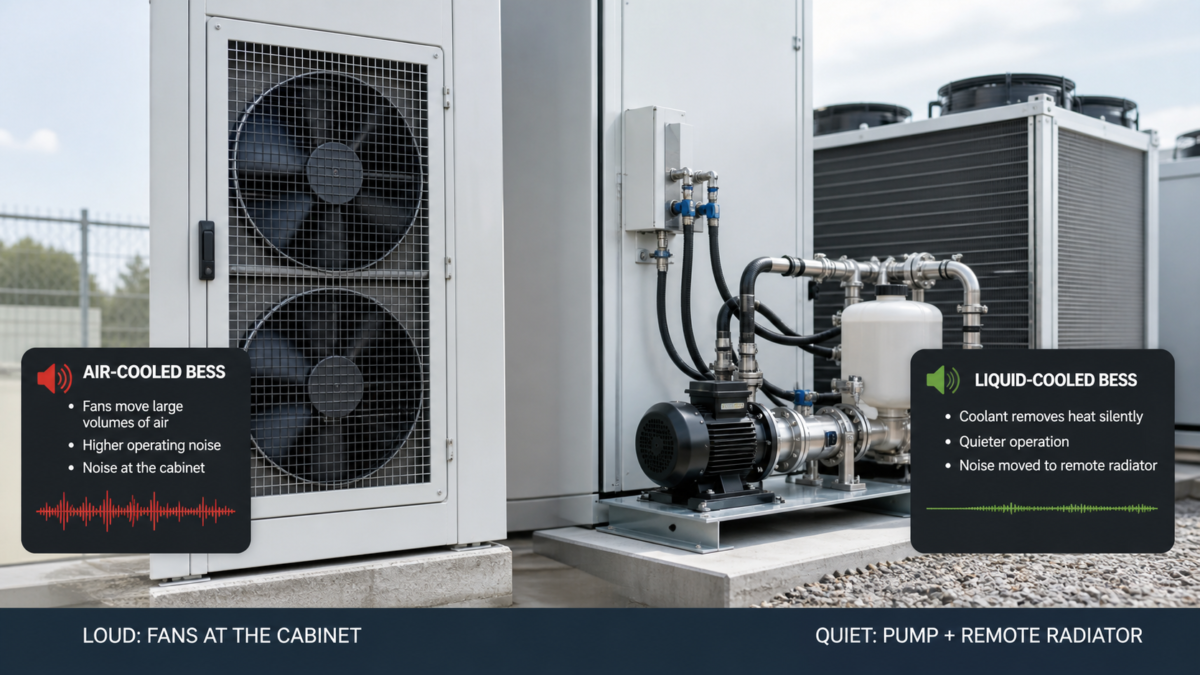
I worked on a project where the customer needed to install a BESS right beside their main office. They initially focused on the lowest upfront cost, which pointed them toward an air-cooled cabinet. I had to stop and explain the trade-off with noise. An air-cooled BESS is like a giant server. It has large, powerful fans that are constantly running to push air over the battery cells to keep them cool. Moving that much air makes a lot of noise. A liquid-cooled system, like our Moletong products, works differently. It circulates a coolant through the battery packs to collect heat silently. This heat is then pumped to a heat exchanger, or radiator, which can be located farther away. This means the battery cabinet itself can be sealed and very quiet. The choice depends entirely on the site. If you have a lot of space far away from people, a louder air-cooled system might be acceptable. But if the BESS is near a workplace or a residential area, a quieter liquid-cooled system is often the only realistic solution.
How to Compare Air Cooled vs Liquid Cooled BESS Proposals on Equal Terms?
You receive two proposals, one air-cooled and one liquid-cooled. They have different prices and specifications. It feels like you are trying to compare apples and oranges.
To compare them equally, you must evaluate them against your specific site constraints and duty cycle. Use your compliance matrix and the technical evidence to score each proposal on usable energy (after derating), total lifetime cost, and actual installed footprint.
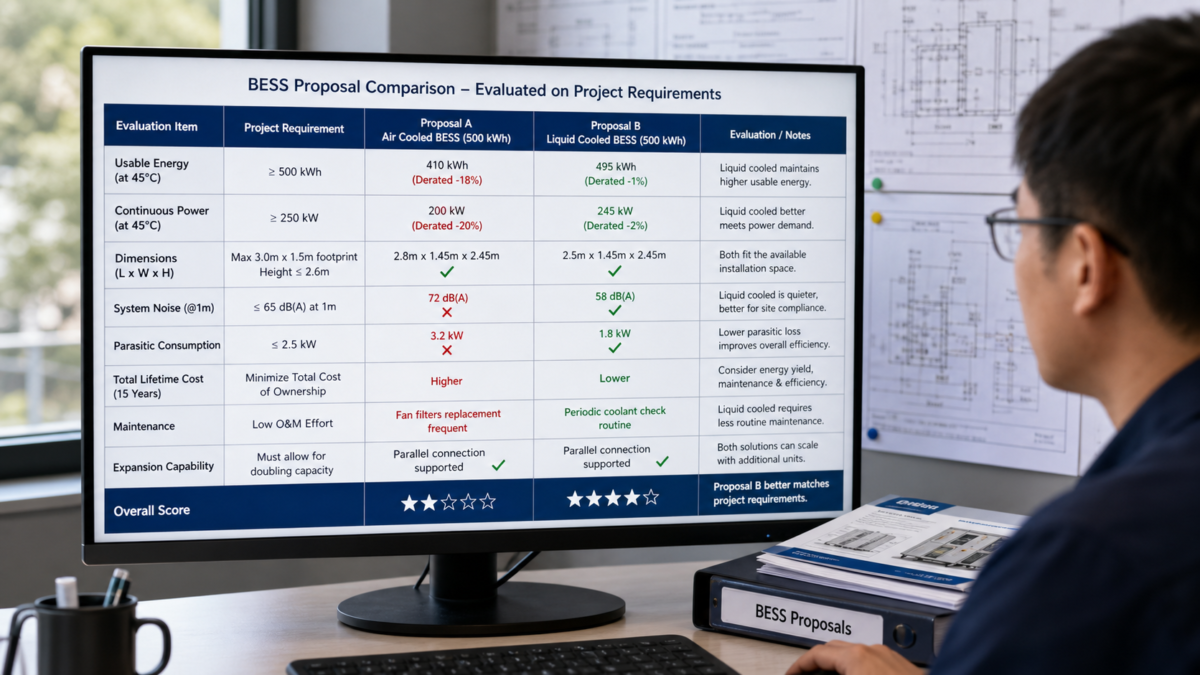
This is the final step where all the planning pays off. You take the proposals from different suppliers and measure them against the success criteria you already defined. Don't just look at the upfront price or the nameplate kWh capacity. I use a scorecard based on my compliance matrix. First, how does each system’s physical size fit in the designated space? I check the dimensioned layouts. Second, how much energy will each system actually deliver on the hottest summer day? I check the ambient derating tables. A system that looks cheaper might deliver 20% less energy when you need it most. Third, what are the long-term operational costs? I consider maintenance needs, like cleaning air filters versus checking coolant levels. I also look at the system's own energy consumption, known as parasitic load. Liquid cooling is often more efficient, using less energy to run itself. By comparing each proposal against your specific, pre-defined requirements, you can see the truth. You are no longer comparing technologies. You are comparing which solution actually solves your problem. The best choice becomes clear.
Conclusion
The practical lesson is to choose a cabinet based on duty and site constraints, not just catalog energy. This approach makes your decision path clear and fact-based.
Leave a Reply