

What Can Go Wrong with Rack Mounted Home Battery?
Choosing a home battery feels risky. You see one number, like kilowatt-hours, and think it tells the whole story. But it can lead you down the wrong path.
The biggest risks with any home battery come from its form factor and coupling architecture. These two things change everything about installation, service, and future expansion. How you mount it and connect it determines your real-world cost, performance, and risk.

When I first started looking at rack-mounted batteries, I thought they were just a different shape. But I soon learned that the shape itself creates a unique set of problems and opportunities. A rack system isn't better or worse than a wall-mounted one; it's just different. The key is understanding how that difference applies to your specific home and your specific needs. This article is my attempt to show you the exact questions to ask. I want to move you from guessing to making a clear, measurable decision based on facts, not just marketing numbers. Let’s walk through the logic together.
Reframing Rack Mounted Home Battery as a Measurable Decision?
Making a battery choice feels like a gamble. You worry that a wrong decision will cost you thousands in installation mistakes or leave you with a system that can't grow.
You can avoid guesswork by comparing models on measurable data. Form factor changes usable energy, physical limits, and expansion options. These variables directly affect cost and performance. A rack system is not a universal solution; it is a specific tool with measurable trade-offs.
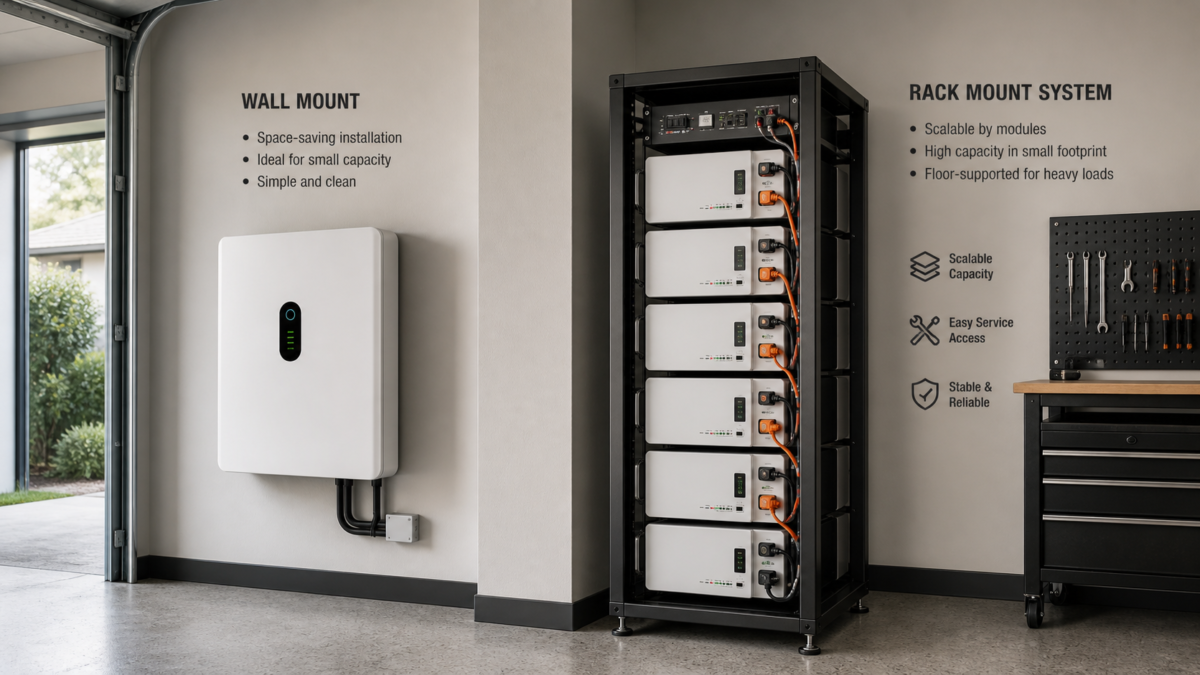
To make this real, let's look at how different battery shapes from a brand like Moletong compare. I'm not saying one is always better. My point is that the numbers tell a story about where each product fits best. I once worked on a project where the client wanted a huge amount of storage, but their wall couldn't support the weight of multiple wall-mounted units. A rack system, which puts the load on the floor, was the only practical answer. The decision wasn't based on feelings; it was based on the simple physics of wall-load limits.
How Form Factor Changes the Numbers
A simple table can make the differences very clear. Look at the weight, dimensions, and how you can expand each system. This is not about which is "best," but which is right for a specific space and future plan.
| Moletong Model Type | Mounting | Typical Usable Energy | Weight per Module (kg) | Expansion Method |
|---|---|---|---|---|
| Wall-Mounted Series | Wall | 5 – 10 kWh | ~50 kg | Parallel units on wall |
| Rack-Mounted Series | Floor (in rack) | 5 kWh per module | ~50 kg | Stack modules in rack |
| Stackable Series | Floor | 5 kWh per module | ~52 kg | Stack modules directly |
| Integrated High-Voltage | Floor | 16 kWh+ | ~160 kg+ | Limited or none |
You can see immediately that a rack system allows for dense, vertical expansion on the floor, while a wall system spreads the weight out horizontally on a wall. This single difference can make or break a project depending on your home's construction.
The Data Needed to Evaluate Rack Mounted Home Battery Without Guesswork?
You know you need data, but which numbers matter? Focusing on the wrong details can lead to buying a system that doesn't fit or can't be serviced properly.
To evaluate a rack battery correctly, you need four key data points. These are usable energy per module, floor load limits, the required expansion sequence, and your site's electrical voltage. These numbers define your real-world cost, performance, and risk profile.
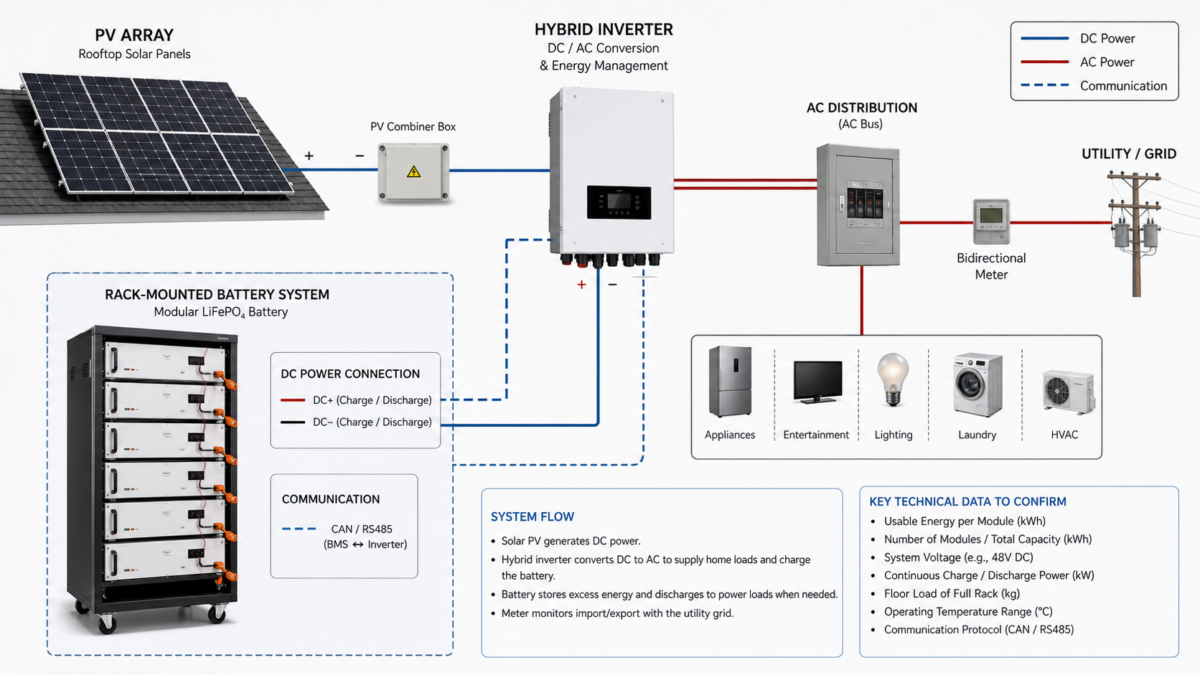
Let's break down why each piece of data is so critical. Usable energy is obvious; it's the power you can actually use. But floor load limits are just as important. A standard server rack full of batteries can weigh over 500 kg. Can your floor support that weight in a small footprint? I’ve seen installations stopped dead because an engineer did the math and found the floor wasn't strong enough. The expansion sequence is also key. Some systems require you to add modules in a specific order or use specific cabling for each new battery. If you don't plan for this, your "expandable" system becomes impossible to expand. Finally, site voltage determines compatibility. A 48V low-voltage rack system needs a compatible low-voltage hybrid inverter. A high-voltage system needs a different inverter entirely. Mixing them up is an expensive mistake.
How Enclosure Exposure Changes the Risk Profile?
Where you install the battery seems like a simple choice. But putting a rack system in the wrong spot can create serious safety hazards or cause it to fail early.
The enclosure's location and exposure directly impact risk. An open rack in a high-traffic garage is a target for physical damage. A system crammed into a closet without ventilation will overheat. Proper placement requires planning for maintenance clearance, airflow, and protection.
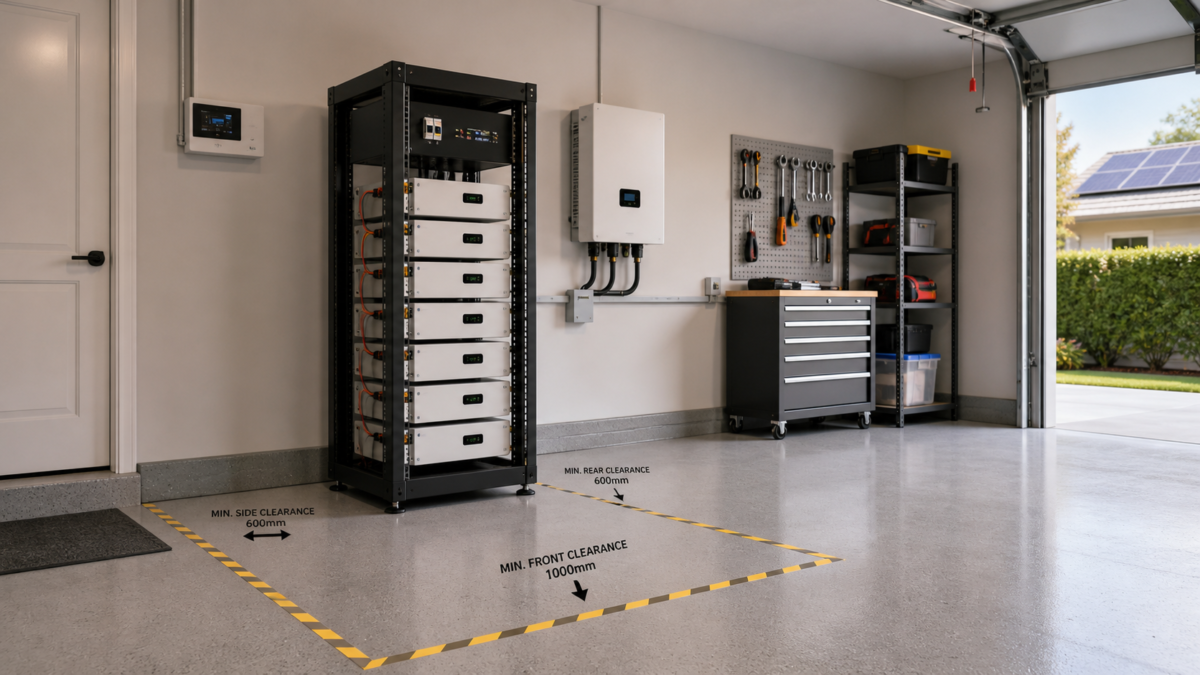
I always insist on seeing a dimensioned layout before approving a rack-mounted system. The manufacturer specifies minimum clearance on all sides for a reason: service and airflow. A technician needs to be able to access the front and sometimes the back of the modules. More importantly, the batteries generate heat. Without proper airflow, that heat builds up, which reduces the battery's lifespan and can even trigger a safety shutdown. I remember one client who wanted to hide their battery rack inside a custom cabinet. It looked great, but we had to add active ventilation fans to the cabinet design to prevent overheating. The risk isn't just about the battery itself; it's about the environment you put it in. Exposure to dust, moisture, or extreme temperatures will also change how the system performs and how long it lasts. An indoor, climate-controlled space is very different from a dusty, non-insulated garage.
Final Checks Before Approving Rack Mounted Home Battery?
You think you've covered everything. But one missed detail in the final check can derail the entire project, causing delays and unexpected costs when the equipment arrives on-site.
Before you approve the purchase, perform three final checks. First, confirm the battery's communication protocol is compatible with your chosen inverter. Second, verify the physical dimensions of the full rack against the installation space. Finally, review the expansion plan one last time.
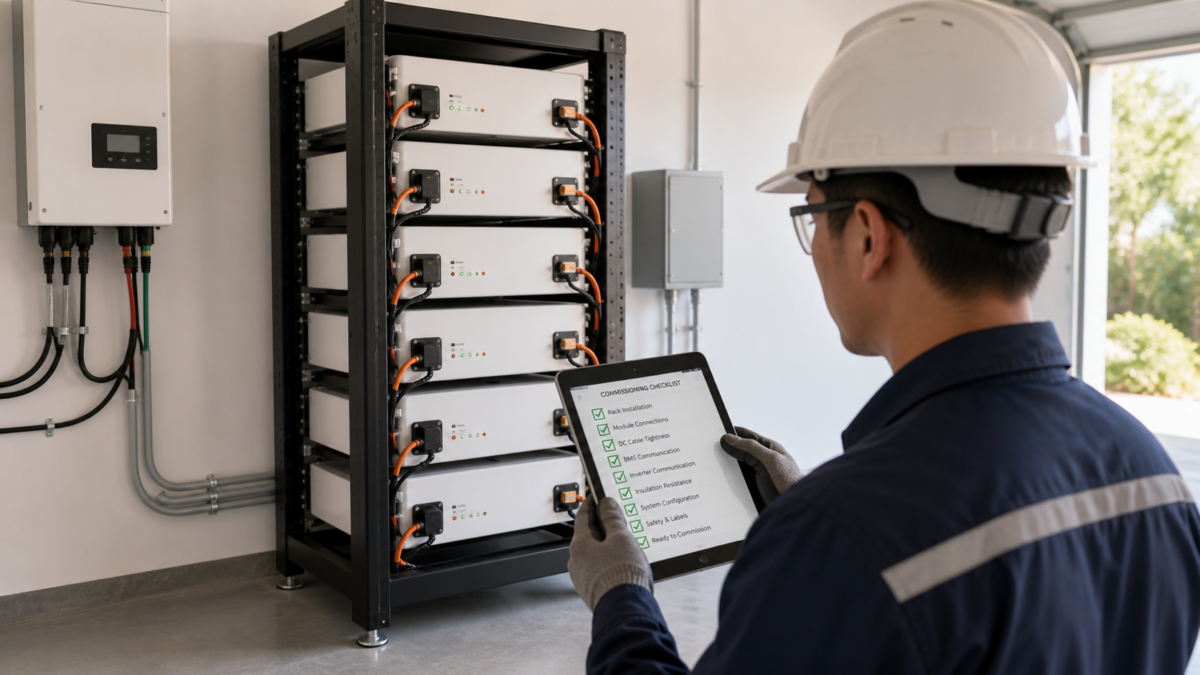
These checks have saved my projects more times than I can count. The communication compatibility check is number one. Just because a battery and inverter are both "48V" does not mean they can talk to each other. The Battery Management System (BMS) needs to communicate with the inverter to manage charging and discharging. If they can't, the system won't work. I use a simple compatibility list from the manufacturers to confirm this. Second, I get out a tape measure. I check the height, width, and depth of the planned rack against the actual space, remembering to include the required maintenance clearances. I also measure the path to get it there—doorways, hallways, and stairs. A rack that can't get to its final destination is useless. Lastly, I walk through the expansion plan. If the client wants to add three more modules next year, where do the cables go? Is there enough space? Thinking about this now prevents a huge headache later.
Conclusion
Choosing a rack-mounted battery is not about one number. Success depends on understanding how its form factor changes installation, service, and expansion risks for your specific home and project goals.


Leave a Reply