

BESS Water Fire Suppression: What Buyers Need to Know?
Worried about battery fire safety? You've heard water suppression is the answer, but the reality is far more complex. The wrong approach can create a false sense of security.
The most important thing to know is that water fire suppression is only one layer of a complete safety strategy. True protection begins with early detection, ventilation, proper drainage, and site-level emergency planning. Suppression alone is not a complete solution for BESS safety.
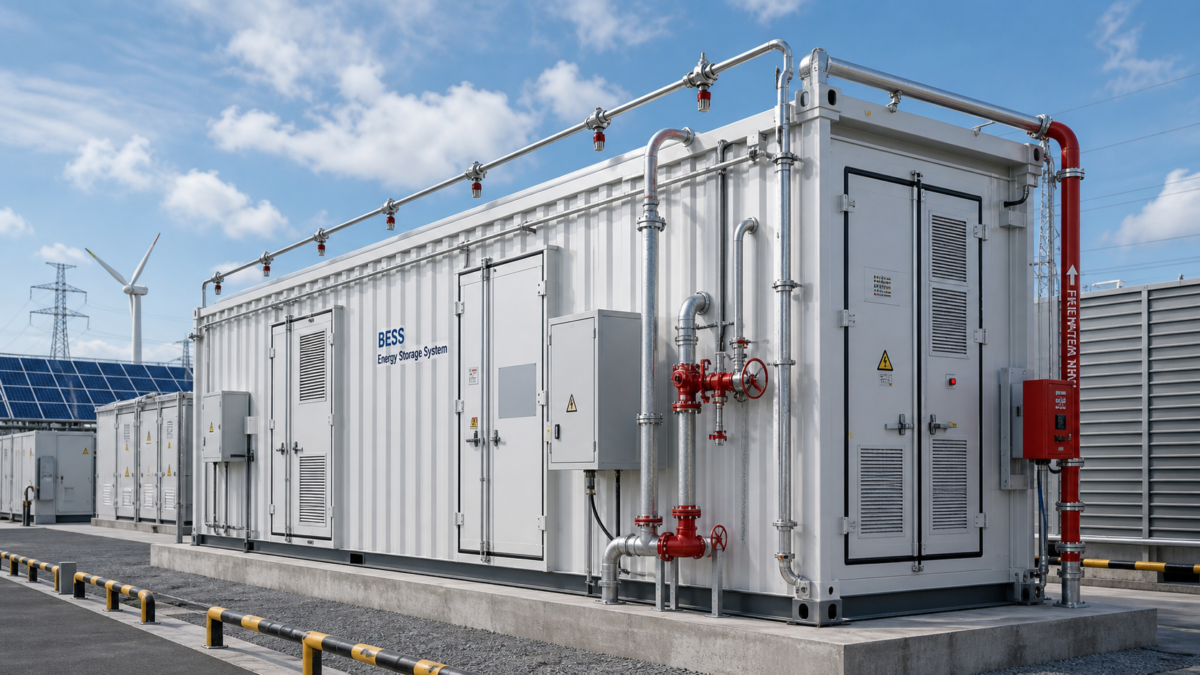
I’ve seen too many buyers focus on the suppression hardware itself, as if just having it installed checks the safety box. But in my experience, that’s starting at the end of the story. The real lesson is that a fire suppression system is only as good as the strategy it supports. Without understanding the full sequence of a thermal event—from the very first molecule of off-gas to the final cooling spray—you're buying a product, not a solution. We need to shift the conversation from "what product should I buy?" to "what outcome do I need to achieve?" Let's break down what that really means.
What Buyers Often Misunderstand About BESS Water Fire Suppression?
You think specifying a water-based system makes your BESS site safe. But what if the system activates too late, or handles the fire but not the explosive gas?
Buyers often misunderstand that a water system’s effectiveness depends on early detection, proper ventilation to manage explosive gases, and a plan for water drainage. Suppression alone doesn't prevent thermal runaway propagation or guarantee safety without these supporting elements.
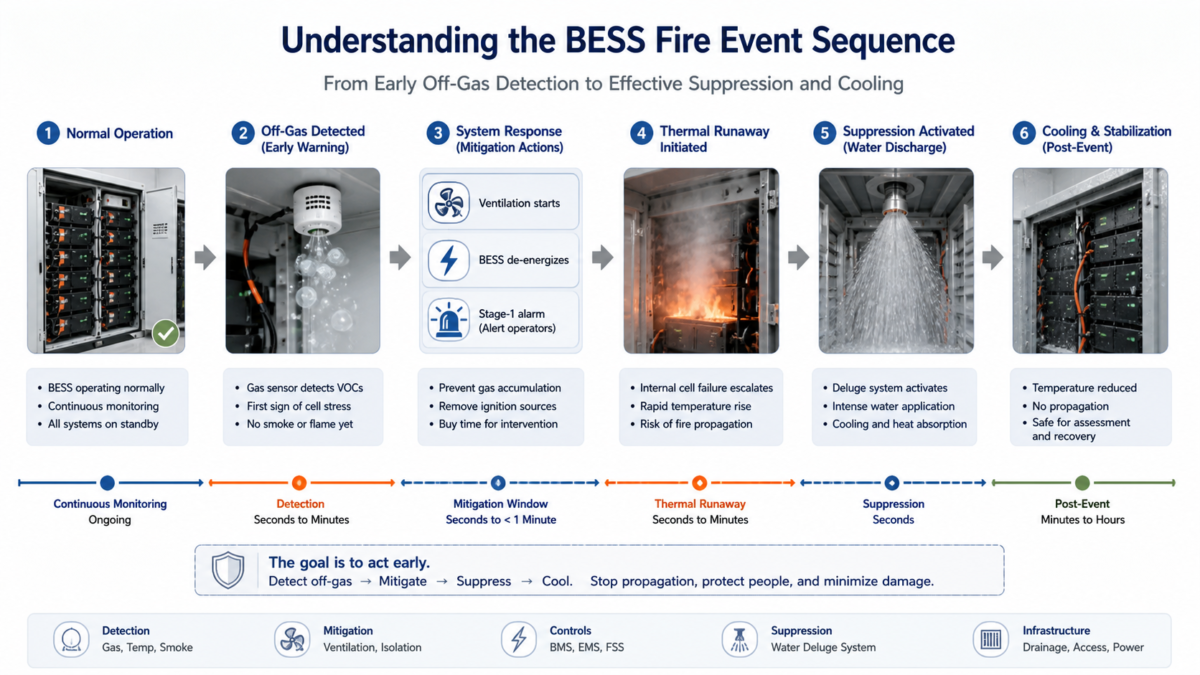
The biggest misunderstanding I see is treating suppression as a single action that "puts out the fire." In a lithium-ion battery event, that’s not the primary goal. The real goals are to cool the surrounding cells to stop thermal propagation and to manage the hazardous, flammable gases released long before any flames appear. I always separate a system's features from the outcomes they are supposed to deliver. A product's cooling and fire-system features are one thing; getting local AHJ (Authority Having Jurisdiction) acceptance is another. I use a simple table to help buyers connect their assumptions to the actual requirements needed for a safe outcome.
Feature vs. Outcome
A water deluge system isn't there to extinguish a burning cell, which is nearly impossible. It's there to absorb heat and keep the neighboring cells from reaching their own thermal runaway temperature.
Gas is the First Problem
The first sign of trouble is off-gassing, not smoke or fire. If your system only detects heat, it’s already dangerously late.
| System Feature | Common Misunderstanding (The Assumed Outcome) | The Actual Requirement (The Needed Outcome) |
|---|---|---|
| Water Sprinklers | It will extinguish the battery fire completely. | It must cool adjacent modules to prevent fire propagation. |
| Gas Detection | It triggers a fire alarm for responders. | It must trigger ventilation and de-energization *before* a fire starts. |
| AHJ Approval | The system is certified and guaranteed to be safe. | The system meets a minimum local code, but operational safety is still your responsibility. |
Sizing Around Detection and Suppression?
You're trying to size your water system. Is it just about gallons per minute, or is there a more critical factor? Getting this wrong can mean your system fails when needed.
Sizing isn't just about water volume. It's about timing. The system must be sized to activate based on reliable early detection of off-gassing, not just heat or smoke. The goal is to cool cells before thermal runaway propagates, which requires a fast, integrated response.
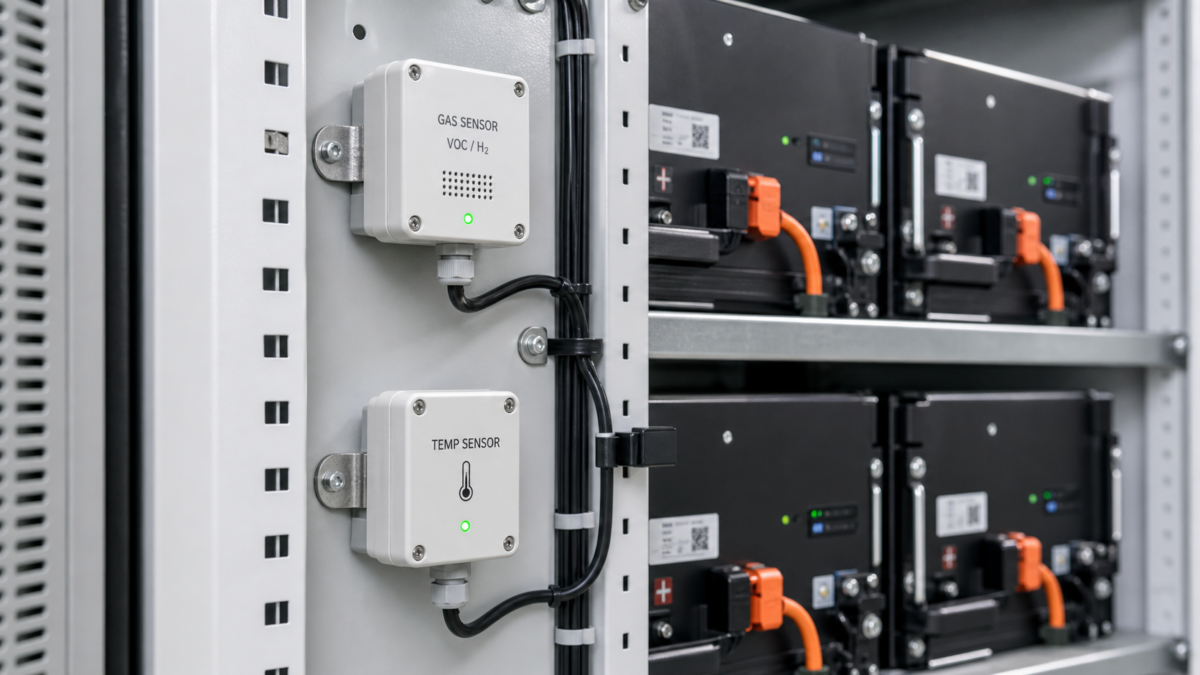
When a potential buyer asks me for a product recommendation, I never start there. I always begin with the fundamentals: detection, ventilation, drainage, and access. Sizing the water flow is a consequence of these things, not the starting point. I once worked on a project where the client was fixated on achieving a certain flow rate specified in a generic code. But their detection system was based on heat sensors that would only trigger well after thermal runaway had begun. We shifted the entire conversation. We focused on installing off-gas sensors at the module level. This allowed us to create a cause-and-effect matrix. For example, if sensor X detects volatile organic compounds (VOCs), the system automatically triggers ventilation fan Y and sends a stage-one alarm. This approach makes it easier to separate a genuine technical constraint from a poor assumption. The right "size" is the one that responds at the right time.
The Failure Mode Hidden in Spacing?
Your BESS containers are spaced according to the plans. But what if that spacing prevents firefighters from doing their job? This detail is a critical, hidden failure point.
The hidden failure mode in spacing is two-fold: inadequate clearance for firefighter access and drainage, and spacing that allows a fire to propagate between adjacent units. Proper spacing is a critical, yet often overlooked, part of the overall suppression and emergency response strategy.
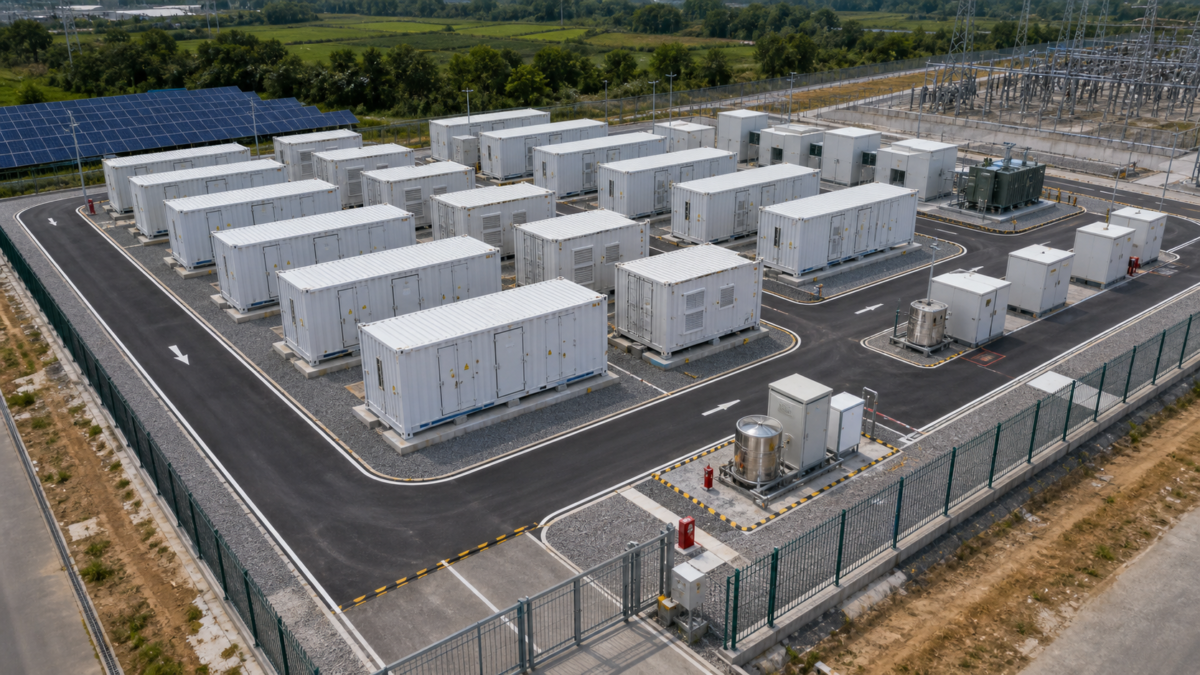
I always insist on a responder walkthrough. On paper, a three-meter gap between containers might meet a code, but can a fire truck actually maneuver in that space? Can firefighters deploy hoses and equipment effectively? I’ve seen site plans that looked perfect until you stood on the actual ground and realized it was unworkable. Spacing is also about containment. If one unit goes into thermal runaway, is there enough distance to prevent radiant heat from igniting the next one? This is where a test-report crosswalk is essential. You need to connect the results from a UL9540A test, which measures propagation, to your actual site plan. And what about drainage? When you dump thousands of gallons of water on a container, where does it go? If it pools, it can create electrical hazards and environmental contamination. Spacing must account for water management, not just physical access. This brings everything back to the idea that suppression is part of a larger site emergency plan, not a standalone feature.
Key BESS Water Fire Suppression Questions Before Signing the Contract?
You're ready to sign the contract for a new BESS. You feel good about the suppression system. But asking a few tough questions now can prevent a disaster later.
Before signing, ask: What specific event triggers the system? Show me the test reports that validate this trigger and the system's response. What is the emergency response plan, and has it been reviewed with local first responders? These questions separate assumptions from evidence.
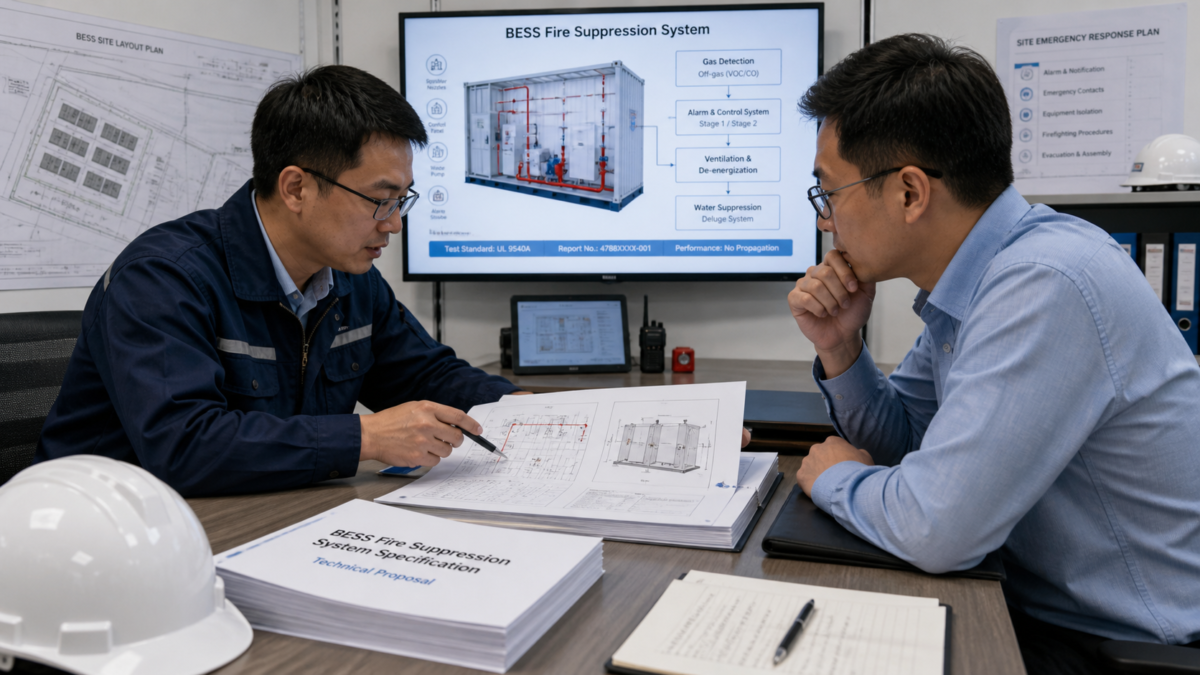
This is where you need to be very direct. Don't let a sales pitch replace technical evidence. I give my clients a simple checklist of questions to ask before they sign anything. First, "Show me the cause-and-effect matrix." This document should clearly state what sensor input triggers what system output, with specific timings. Second, "Provide a test-report crosswalk." This connects every safety claim in the marketing material to a specific section of a third-party test report, like UL9540A. Third, "Let's review the site plan and responder walkthrough notes." This proves that the physical layout has been evaluated for real-world emergency access. Finally, "What new information could change your recommendation?" This is a powerful question. It forces the supplier to explain the limits of their comparison and state what future testing or code changes might impact the system's effectiveness. This approach gives you a clear decision path and protects you from turning one company's public experience into a baseless marketing claim for your project.
Conclusion
Effective BESS fire safety isn't just about suppression. It's a complete system of detection, planning, and validated performance. Ask the right questions to ensure you get true protection.

Leave a Reply