

How Should Battery Degradation Cost Model Be Specified for Real Operating Conditions: Battery Degradation Levels?
A battery degradation model looks perfect in a spreadsheet. But when real-world conditions hit, the financial case can fall apart. So how do you make a model you can trust?
A proper battery degradation cost model defines the buyer's required outcome, identifies constraints that can defeat it, and tests the design with real site data. This approach focuses on a transparent downside case, making it more useful than a precise-looking base-case payback.
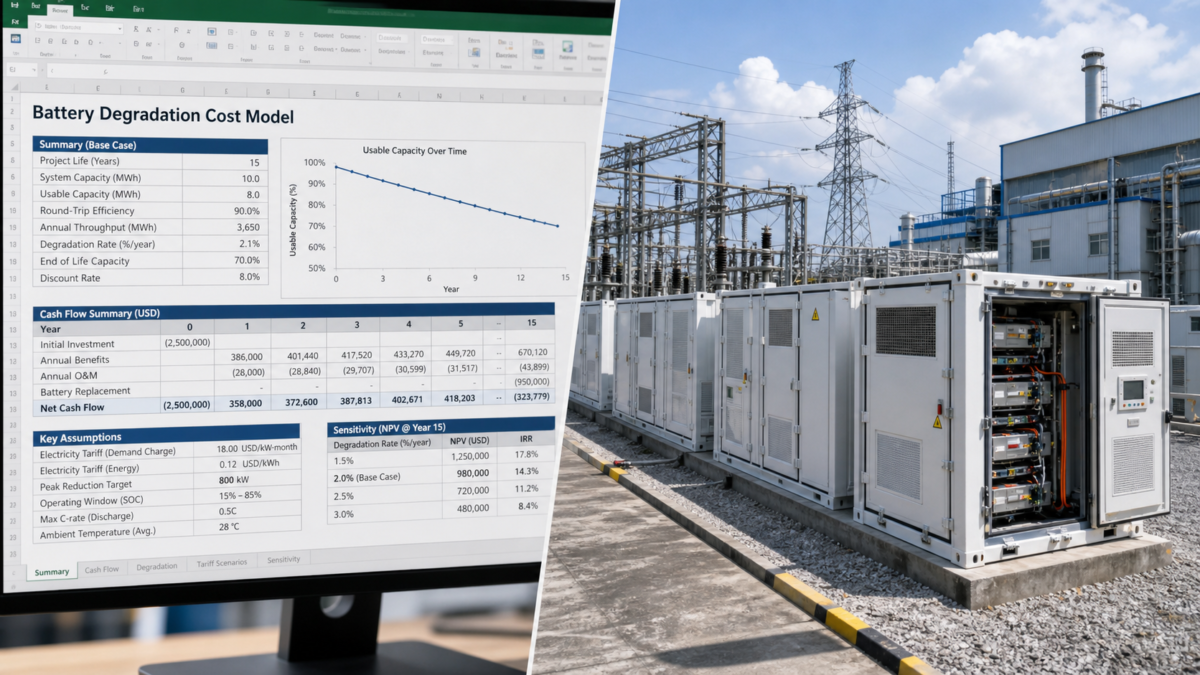
I’ve seen too many energy storage projects sold on beautiful, clean numbers that have no connection to the messy reality of a customer's site. A model is only as good as its inputs, and if those inputs are based on perfect lab conditions, the model is a fantasy. The real goal is not to create a perfectly precise prediction, which is impossible. The goal is to build a credible, practical tool that helps a technical buyer understand the risks and make a good decision. My approach is simple and grounded in experience. Let's break down how to build a model that stands up to reality.
The Operational Reality Behind Battery Degradation Cost Model?
Models often use ideal lab data for battery life. But your site isn't a lab, and unexpected costs can appear when reality doesn't match the model's promises.
The operational reality is that variables like ambient temperature, actual depth of discharge, C-rate, and unexpected load spikes impact battery life more than idealized curves. A practical model must account for these real-world factors, not just generic calendar and cycle life estimates.

My first step is always to define the buyer's required outcome. What does success look like for them? Is it a specific reduction in electricity bills? Is it a guaranteed amount of backup power? Once I know the goal, I can identify the real-world constraints that could prevent it. I learned this the hard way on an early project where we based our model on the manufacturer's cycle life spec sheet. The site, however, was in a hot climate with unpredictable peak loads. The battery worked much harder than the spec sheet assumed, and degradation happened faster than we modeled. We had to have a tough conversation with the client about augmentation much sooner than planned. That’s why I now insist on an interval-data audit from the actual site. I want to see the real load profile, not an assumed one.
Ideal vs. Real-World Model Inputs
| Parameter | Idealized Model Assumption | Real-World Variable |
|---|---|---|
| Temperature | Constant 25°C (77°F) | Daily and seasonal fluctuations |
| C-Rate | Consistent, moderate charge/discharge | Sudden spikes to meet peak demand |
| Load Profile | Predictable and smooth | Erratic, with unexpected machinery startups |
| State of Charge (SOC) | Operates within a wide, optimal window | Forced into deep discharge by grid events |
This table shows why a simple model fails. A useful model needs to be tested with the messy data from the "Real-World Variable" column.
Why Tariff Changes the Design?
You design a battery system for peak shaving based on today's rates. Then, the utility suddenly changes its tariff structure, and your project's economics are instantly at risk.
Tariff changes the design because it directly controls the economic value of every charge and discharge cycle. A shift in peak hours, an increase in demand charges, or new time-of-use rates can completely change the optimal dispatch strategy and required battery capacity.
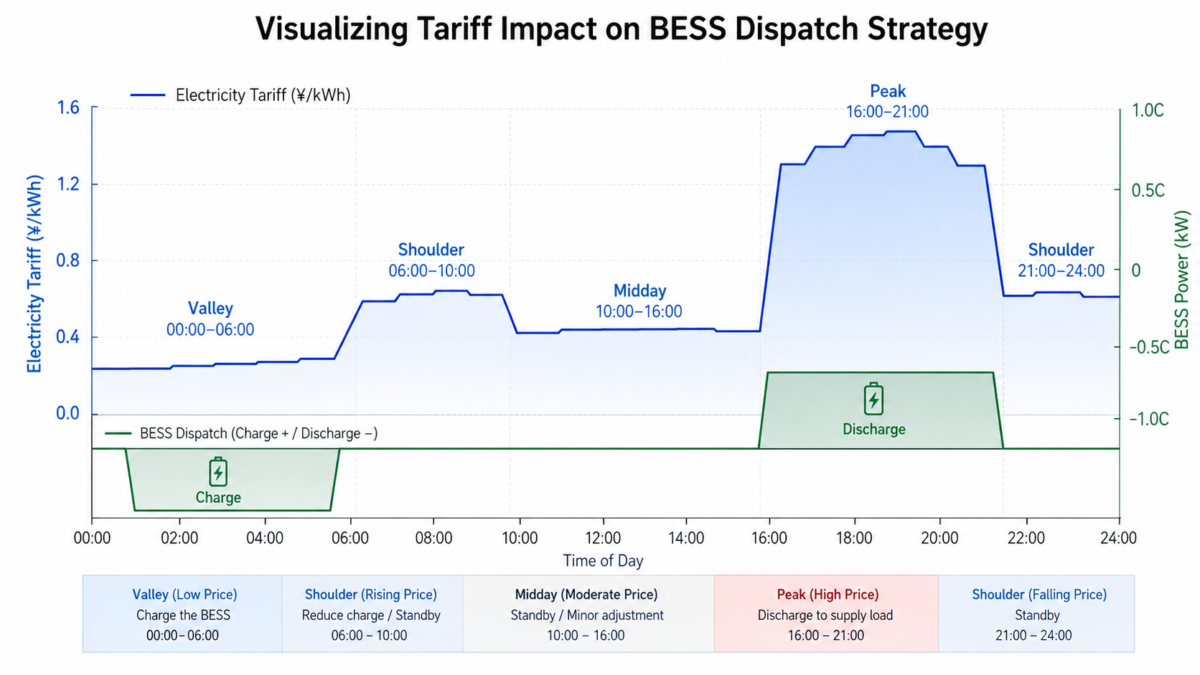
I treat the electricity tariff as one of the most significant variables in any battery project. It's not a fixed number; it’s a dynamic risk. On one project, our client was focused on peak shaving between 4 PM and 9 PM. The payback was solid. Six months after commissioning, the utility shifted the peak period to 5 PM to 10 PM and increased demand charges. The original dispatch algorithm was no longer optimal. Luckily, we had anticipated this. In my model, I never use a single tariff. I test the design against several potential tariff scenarios, including a "worst-case" scenario where the financial benefit is lowest. This stress test reveals the project's financial resilience. It also forces a conversation about other variables like load growth and auxiliary power consumption. For example, if the site's load is expected to grow, it might push them into a higher demand charge bracket, which could make the battery more valuable under a new tariff, not less. A good model doesn't just give an answer; it explores the possibilities.
Balancing Performance, Safety, and Serviceability in Battery Degradation Cost Model?
Pushing a battery for maximum daily profit sounds great. But this accelerates degradation, can compromise safety, and leads to expensive, early replacements that destroy the business case.
Balancing these factors means the cost model must include operational constraints. This involves setting conservative limits on state of charge (SOC), C-rates, and operating temperatures, even if it slightly reduces the base-case payback, to ensure long-term safety and predictable service life.
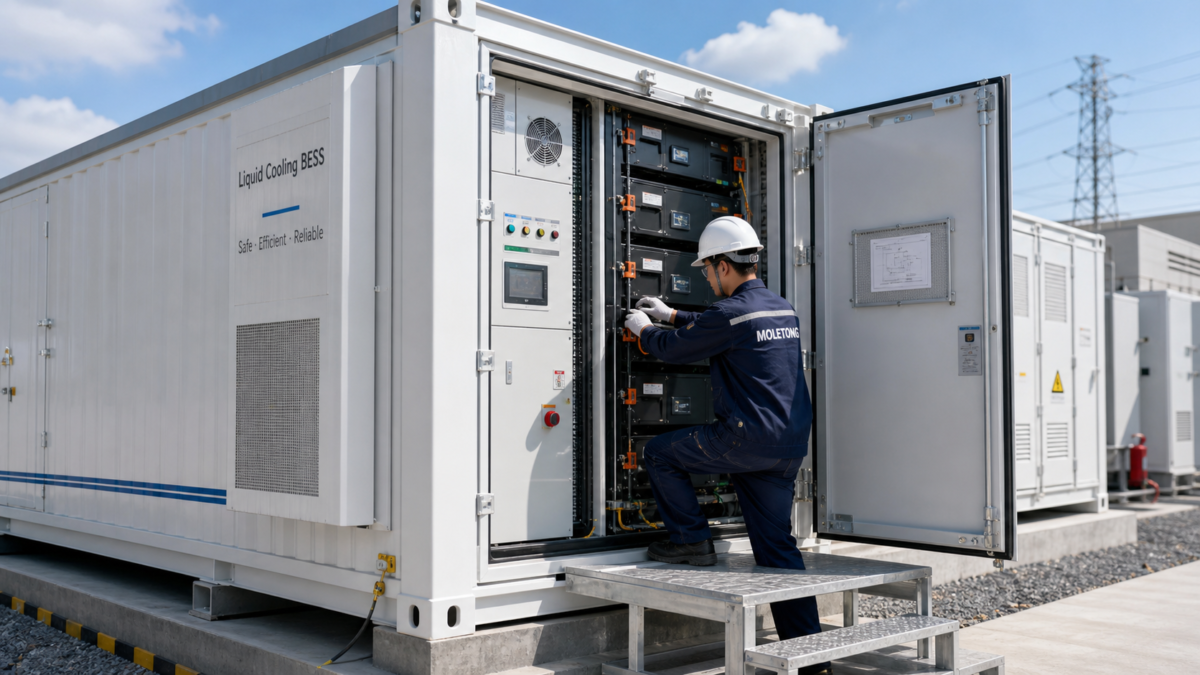
I always think of a battery's warranty as a set of rules, not just a guarantee. The manufacturer specifies operating limits for a reason. Exceeding them voids the warranty and introduces risk. Therefore, my financial model has to respect these engineering limits. For example, I might model a system operating between 15% and 85% SOC instead of 5% and 95%. This reduces the usable energy per cycle but significantly extends the battery's life, leading to a lower total cost of ownership. I also build in the cost of thermal management. A system like Moletong’s liquid-cooled containers uses some energy to keep the cells at an optimal temperature, which is an operating cost. But it’s a cost that protects the much larger asset. The model must also consider augmentation. No battery lasts forever. We need to plan when to add new battery capacity to maintain the required performance. A model that ignores this future cost is incomplete and misleading. It's about finding the sweet spot where performance delivers value without sacrificing safety or creating a future serviceability nightmare.
What to Confirm for Battery Degradation Cost Model at Design Review and Handover?
A project looks fantastic during the sales pitch. But when it's time to sign, you realize the financial model is a black box built on hidden, optimistic assumptions.
At design review and handover, confirm the model's key deliverables: an assumption register, the source of the interval data, a transparent cash-flow model, and proof of an independent formula review. Also, ask for the specific conditions under which the recommendation would change.

When I hand over a model to a technical buyer, I treat it like an engineering deliverable. It’s not just a PDF with a pretty graph. It's a package of documents that provides total transparency. My goal is to give the buyer the confidence to defend their decision. The first thing I provide is an Assumption Register. This document lists every single input, from the electricity tariff and expected load growth to the round-trip efficiency and assumed degradation rate, and it states where the data came from. Next, I include the Interval-Data Audit, showing the raw site data we used and how we cleaned it. The Cash-Flow Model itself is not locked; I provide a transparent spreadsheet so they can see exactly how the costs and benefits are calculated year by year. I also recommend an Independent Formula Review, where a third party checks the spreadsheet's logic for errors. Finally, and most importantly, I define the conditions under which I would change my recommendation. This shows the buyer the boundaries of the analysis and the key variables to watch over the project's life.
Conclusion
A practical degradation model focuses on a transparent downside case and real-world variables. This makes it credible, useful, and a solid foundation for a successful energy storage project.

Leave a Reply