

How Should Indonesia Solar Battery PLN Be Specified for Real Operating Conditions?
Judging an Indonesia solar battery project from the wrong number is a common mistake. It leads to poor investments and missed expectations. I will show you how to avoid this.
My one rule is this: no-upfront storage transfers capital cost, but it does not automatically transfer performance, regulatory, or counterparty risk. To specify a system correctly, you must analyze your baseline, Measurement & Verification (M&V), service response, and PLN bills to balance cost, performance, and risk.

A simple savings figure on a proposal looks attractive, but it doesn't tell the whole story. The real value of a solar battery system comes from a design that is deeply tied to your specific operational reality. A number is just an outcome; the process of getting there is what defines success. I have seen too many projects fail because the initial specification was based on a simple assumption rather than a detailed analysis. Let's break down how to move from a marketing number to a solid engineering plan that delivers real, predictable results on your PLN bill.
From Indonesia Solar Battery PLN to an Engineering Requirement?
That big savings number on a proposal looks great. But it hides complex risks and technical details. We need to turn that financial goal into a solid engineering requirement.
To do this, you must translate the desired PLN savings into specific technical metrics. This includes battery capacity (kWh), power (kW), response time, and expected cycle life. This ensures the system can actually deliver the financial outcome under real-world grid conditions.
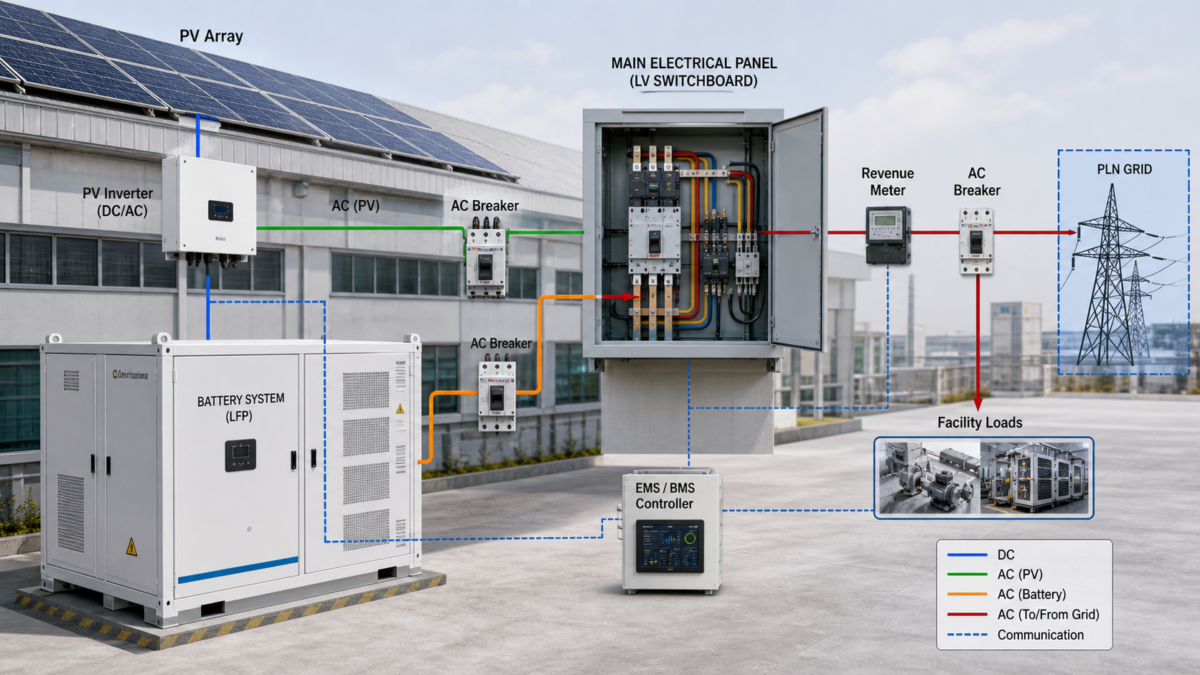
When a salesperson promises a 20% reduction in your PLN bill, my first question is always, "How?" That percentage needs to be broken down into real-world performance indicators. For instance, if the savings come from reducing peak demand charges, the battery must have enough power (kW) to discharge instantly when a peak is detected. If the savings come from shifting energy usage from peak to off-peak hours (peak shaving), then the system needs sufficient energy capacity (kWh) to cover your load for the entire peak period. I always insist on mapping financial goals directly to technical specifications in a clear way. This moves the conversation from a vague promise to a testable engineering commitment.
From Financial Goal to Technical Spec
A clear table can help connect the money to the machine. It forces everyone to agree on what the system must do to achieve the savings.
| Financial Goal | Key Operating Variable | Core Technical Specification | Hidden Risk Factor |
|---|---|---|---|
| Reduce Peak Demand Charges | Maximum Power (kW) Draw | Battery Discharge Power (kW) & Response Time (ms) | Slow system response misses the peak event. |
| Optimize Time-of-Use Tariff | Energy (kWh) Used in Peak Hours | Usable Battery Capacity (kWh) | Battery is too small to cover the full peak period. |
| Improve Power Quality | Voltage Fluctuations | Inverter (PCS) Power Quality Functions | Inverter isn’t configured for local grid issues. |
The Role of Baseline in the Final Design?
Everyone wants to save on their electricity bill. But without knowing your starting point, "savings" is a meaningless word. You must first define your energy baseline correctly.
The baseline is your detailed energy consumption pattern before installing a solar battery. An accurate baseline, based on at least 12 months of PLN bills and high-resolution load data, is critical. It determines the correct battery size and operating strategy for maximum savings.
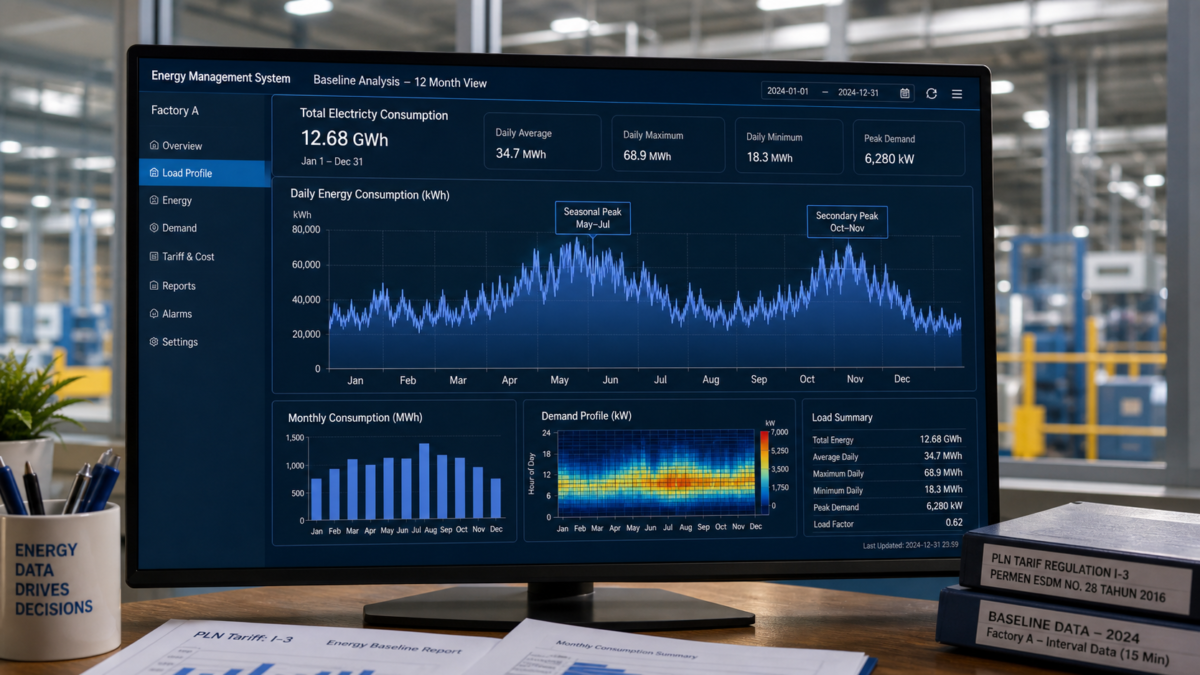
I often see proposals based on just one or two recent PLN bills. This is a huge red flag. Your energy use changes with production cycles, seasons, and even changes in equipment. A factory's power profile in a busy month might be completely different from a slow month. Without a full year of data, you are just guessing. I remember a project where the client’s peak usage happened during a three-month period when they ran a specific high-power machine. A system sized on their "average" month would have been massively undersized and failed to deliver the promised savings. That is why for any Moletong project, we insist on gathering at least 12 months of interval data. This allows us to size the system precisely, avoiding wasted capital on an oversized battery or missed savings from an undersized one. The baseline is not just a number; it is the foundation of the entire project.
Why One Indonesia Solar Battery PLN Outcome Does Not Prove the Rule?
A friend’s factory saved a lot with a solar battery. It is easy to assume you will get the same result, but your situation is almost certainly different.
One successful outcome is not a universal guarantee. Your results depend entirely on your local PLN tariff, grid stability, unique load profile, and the specific equipment and service contract. Each project's context is unique and must be evaluated independently.
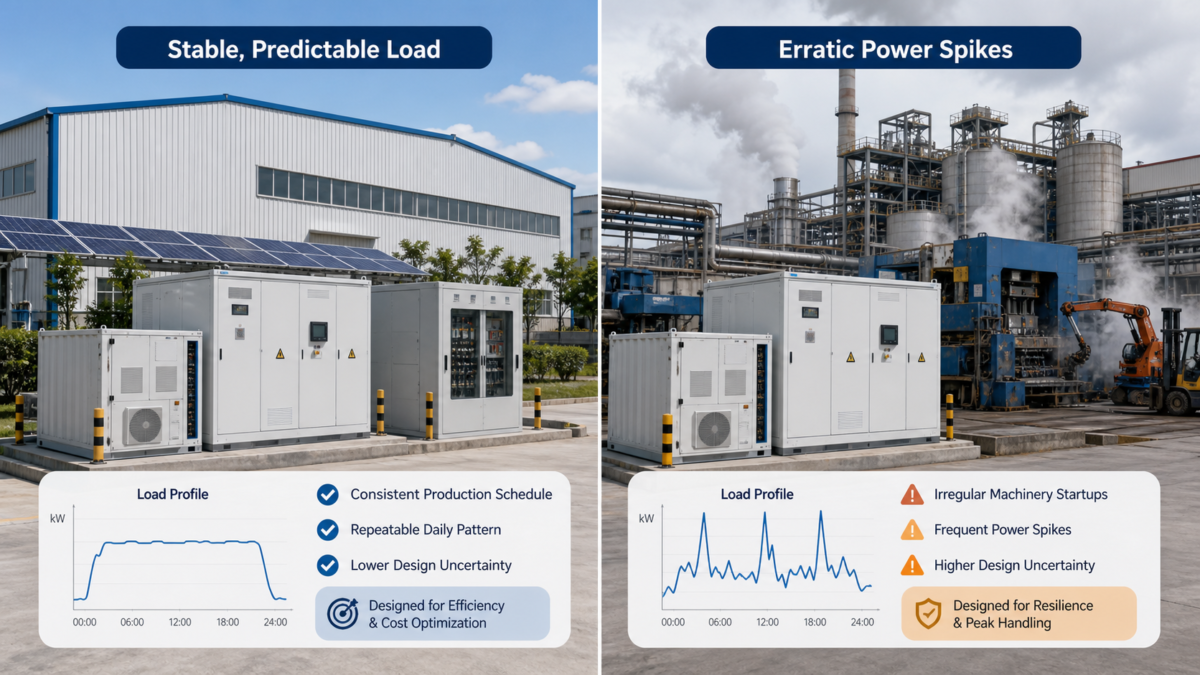
I always use specific project examples to illustrate what is possible, but I am very careful to explain the context. For instance, we worked with a manufacturing plant in Cikarang that achieved a 28% reduction in its monthly PLN bill using one of our Moletong liquid-cooled containerized systems. This result sounds amazing, and it was. But it was only possible because of a very specific set of circumstances. The plant was on a PLN I-3 tariff with high peak demand charges, it ran a predictable two-shift production schedule, and our service contract guaranteed a four-hour on-site response time. A nearby textile factory with a more volatile 24/7 operation and a different B-3 tariff would need a completely different system configuration and would see a different financial outcome. A single data point, without the full story, is just a number. It does not prove a universal rule.
How to Document the Indonesia Solar Battery PLN Decision?
You have analyzed the data and made a decision. But if the agreement is not documented clearly, misunderstandings and disputes are almost guaranteed to happen later.
You must document the decision with clear, transparent, and mutually agreed-upon papers. This includes a bilingual responsibility matrix, the specific PLN tariff source used for calculations, a monthly M&V plan, and a clear termination schedule. This protects everyone involved.
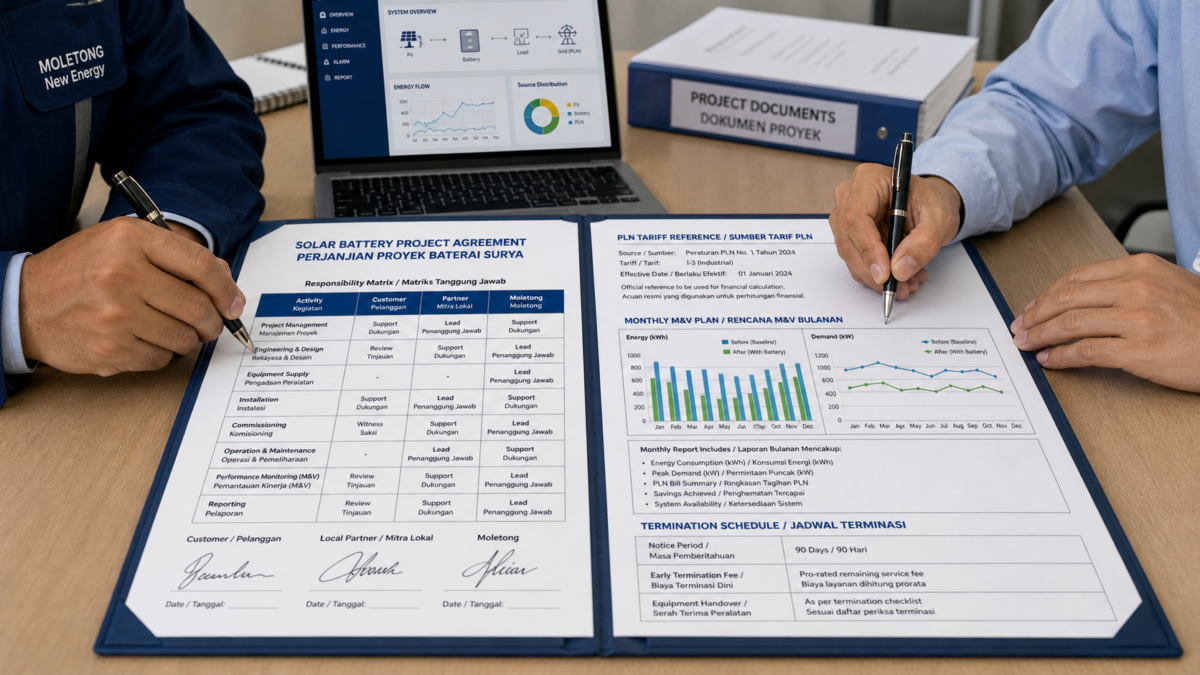
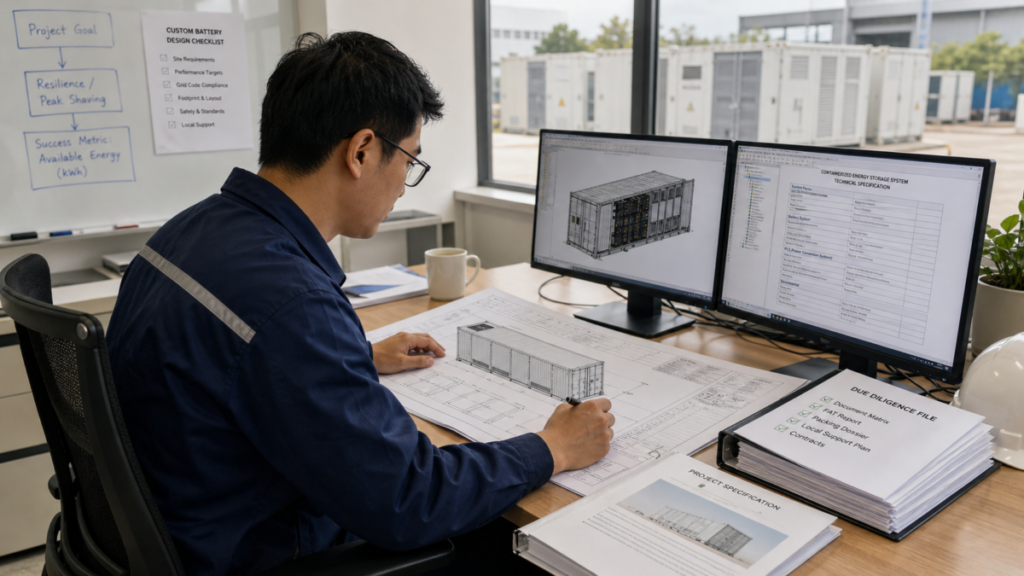
After all the technical and financial analysis, the final step is to put everything in writing. This is not just about the legal contract; it is about creating a shared understanding of how the project will work. For every project I manage, I insist on four key documents. First, a bilingual responsibility matrix, in both English and Bahasa Indonesia, that clearly states who does what—our team, the local partner, and the customer's team. Second, we include a copy or direct link to the exact PLN tariff regulation we used for the financial model, so there is no confusion if tariffs change. Third, we provide a sample monthly M&V report that shows exactly how savings will be calculated and proven. Finally, we include a clear termination schedule that outlines the process and costs if the agreement needs to end early. This level of transparency builds trust and ensures the project runs smoothly from start to finish.
Conclusion
Specifying a solar battery system correctly means looking beyond one number. It requires a deep analysis of your baseline, risks, and performance goals, and documenting everything with absolute clarity.
Leave a Reply