

Oversized Home Battery: What Buyers Need to Know?
Considering an oversized home battery? The wrong choice is a costly mistake. Let’s make sure you invest wisely by starting with the right questions, not the product sheet.
To know if an oversized home battery is right, buyers must separate its value into three parts: self-consumption, tariff arbitrage, and outage insurance. Start by analyzing 12 months of your energy bills, interval load data, and power outage history to define your actual needs.

I've seen too many people focus on the battery's size before understanding their own home's energy rhythm. It's a classic case of putting the cart before the horse. They get excited about a specific product or a big capacity number without first doing the homework on what they actually need. This approach often leads to disappointment when the savings don't match the sales pitch.
Let's break down how to think about this the right way. We won't start with a product recommendation. Instead, we'll start with your unique situation. This method makes it much easier to separate a genuine technical need from a poor assumption or an unrealistic expectation. It gives you, the buyer, a clear path to a smart decision.
Defining Success for an Oversized Home Battery?
Is a bigger battery always better? This common assumption leads to overspending. True success is about matching the battery's job to your specific goals, not just its capacity.
Success for an oversized home battery isn't just about size; it's about purpose. You must define if your primary goal is maximizing solar self-consumption, exploiting time-of-use tariffs for savings, or ensuring long-duration backup power during outages. Each goal requires a different approach.
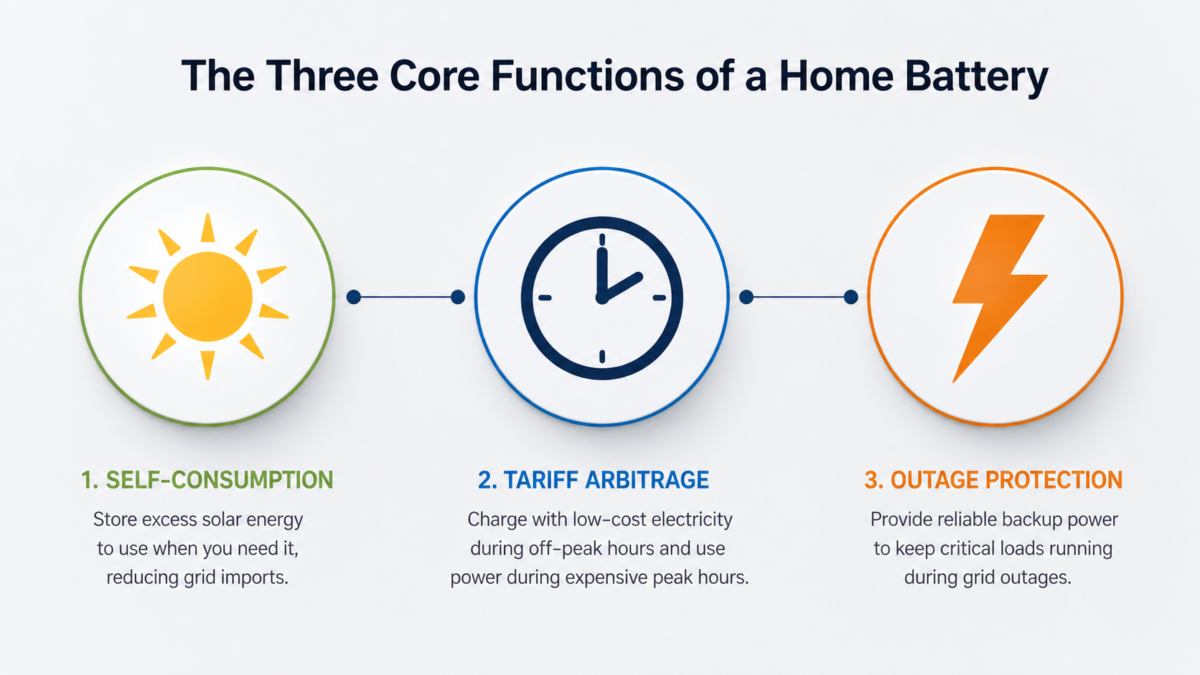
The first conversation I have with any potential buyer is never about our Moletong batteries. It’s about their definition of success. What outcome do they actually need? The practical lesson I've learned is that battery economics must be separated into three distinct jobs. You can’t evaluate a system properly until you know which job is the most important for you.
The Three Pillars of Battery Value
Your battery can do three things for you. Most people need a blend of all three, but the priority is what matters for sizing. An oversized battery might be excellent for one goal but a complete waste of money for another.
| Pillar of Value | What It Means | How You Measure Success |
|---|---|---|
| Self-Consumption | Storing your excess solar power to use in the evening instead of buying from the grid. | Reducing your imported electricity to near zero on sunny days. |
| Tariff Arbitrage | Charging the battery with cheap off-peak grid power to use during expensive peak hours. | The dollar amount saved by shifting energy use from high-cost to low-cost periods. |
| Outage Insurance | Providing backup power to your home when the grid goes down. | The number of hours or days your critical loads can run without grid power. |
Before you look at a single proposal, rank these three pillars. Is your number one priority surviving a multi-day blackout? Or is it shaving every last cent off your monthly bill? Your answer fundamentally changes what kind of battery system, and what size, makes sense.
What Evidence Is Needed to Evaluate an Oversized Home Battery?
Sales pitches are full of promises. How do you cut through the noise? Without the right data, you're just guessing. Let's get the facts you need.
To properly evaluate an oversized battery, you need hard evidence. This includes 12 months of electricity bills, your home's interval load data (often from your utility), a log of local power outages, and a clear understanding of your desired usable reserve capacity for emergencies.
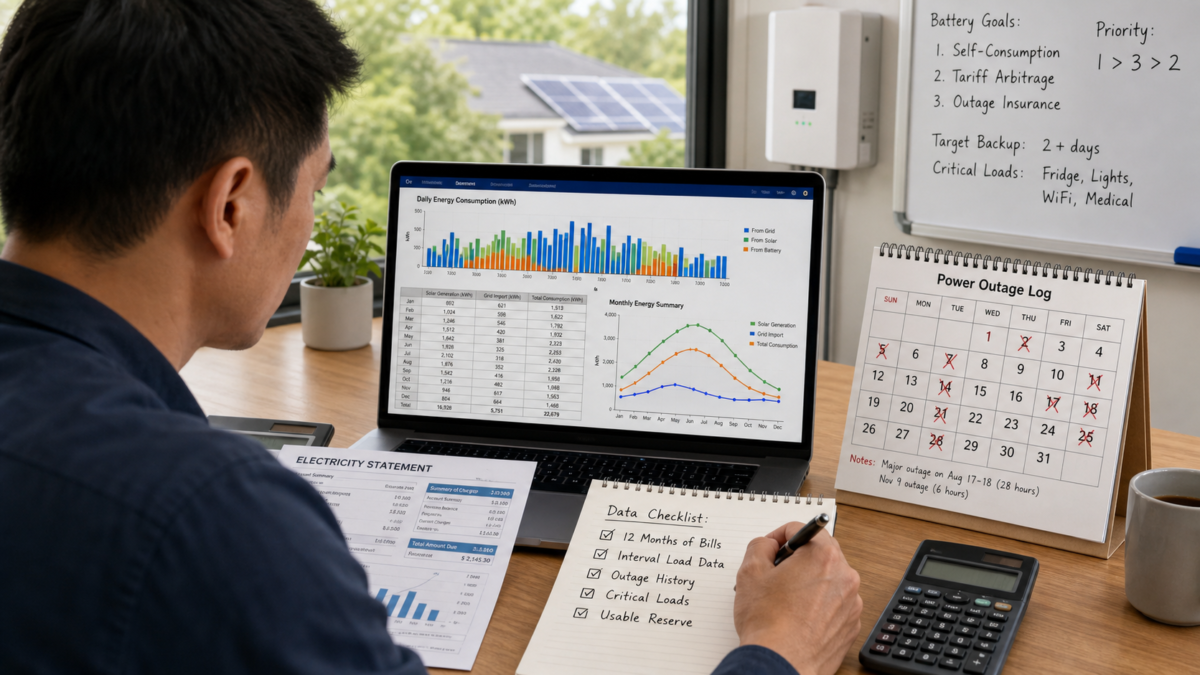
I will not begin a technical discussion with a product recommendation. I always begin with the evidence. A proposal built on assumptions is just a marketing document. A proposal built on your actual data is a real engineering plan. This is the only way to make a decision you won't regret.
First, I need 12 months of your electricity bills. Not one or two, but a full year. This is non-negotiable because it shows seasonal patterns. Your energy use in July is completely different from your use in January. Without a full year, any calculation of solar self-consumption is a wild guess.
Second, I ask for your interval load data. Many utilities can provide this. It shows how much electricity your home uses every 15, 30, or 60 minutes. This is critical. It tells me exactly when you use power. A bill just gives a monthly total, but interval data shows the evening peak we need to cover with stored solar energy.
Third, I ask about your outage history. How many times did the power go out last year? How long did each outage last? This tells us how to value the "insurance" part of the battery. If you have frequent, long outages, a larger battery with more reserved capacity makes sense. If you never lose power, you shouldn't overpay for a massive backup system you'll never use.
The Trade-Off Between 12 Months of Bills and Export Credit?
High export credits sound great. But are they a better deal than storing your own solar energy? This choice directly impacts your battery's payback period and your daily savings.
The trade-off is simple: storing solar energy to use later (analyzed from 12 months of bills) avoids buying expensive grid power. Exporting it for credit gives you a smaller, immediate cash benefit. An oversized battery often makes sense only when evening grid prices are very high.
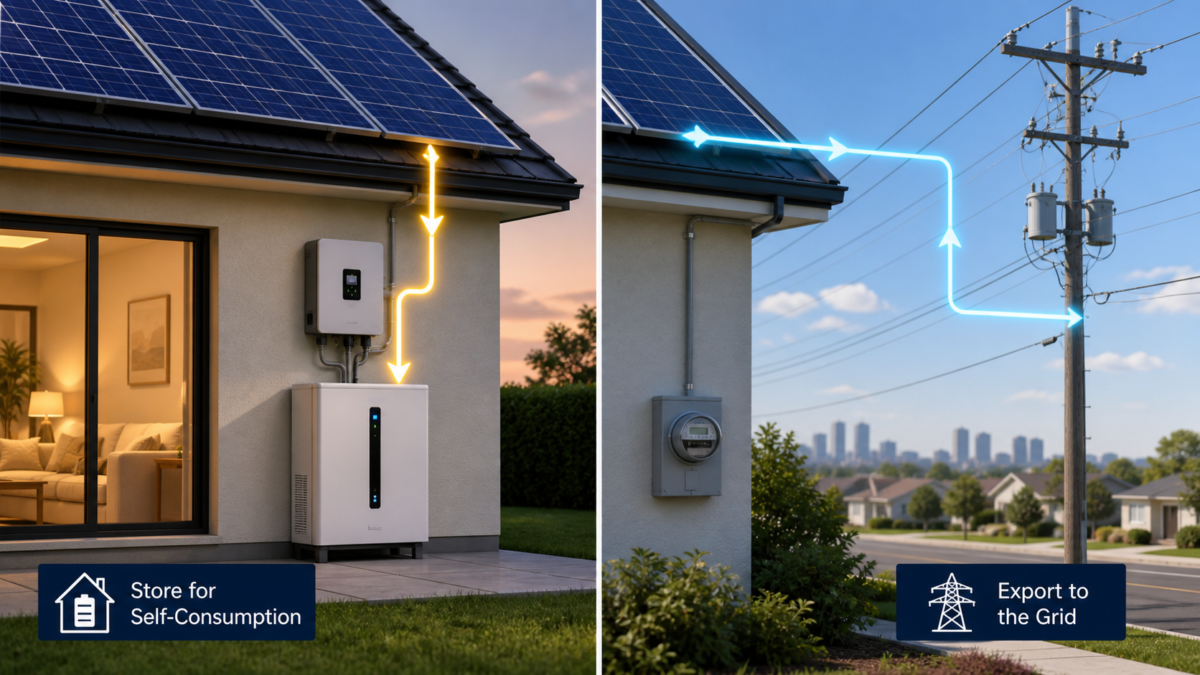
I once worked with a family who was obsessed with the export tariff their utility offered. They wanted to send as much solar power back to the grid as possible. On the surface, it seemed logical. They would get a credit for every kilowatt-hour they exported.
However, once we pulled their 12 months of bills and their interval data, the picture changed completely. The credit they received for exporting power was only 5 cents per kWh. But the price they paid for electricity from the grid after the sun went down was 25 cents per kWh. By exporting all their excess solar, they were effectively selling low and buying high every single day.
We ran the numbers. Storing that solar energy in a battery for evening use would save them 25 cents for every kWh. That's a 20-cent net gain compared to exporting it. This is where analyzing a full year of bills becomes so important. It allows you to see the real financial trade-off. An oversized battery allows you to store more of that cheap solar energy, but it only makes sense if the cost of storing it is less than the savings you get from avoiding expensive grid power.
How to Compare Oversized Home Battery Proposals on Equal Terms?
Every installer's proposal looks different. They use different numbers and highlight different benefits. It feels impossible to compare them fairly. Let's fix that.
To compare proposals equally, ignore the marketing claims and focus on the data. Demand that each proposal uses your 12 months of bills and interval data. Ask for a dispatch trace showing how the battery would have operated, and insist on a named engineer's review.
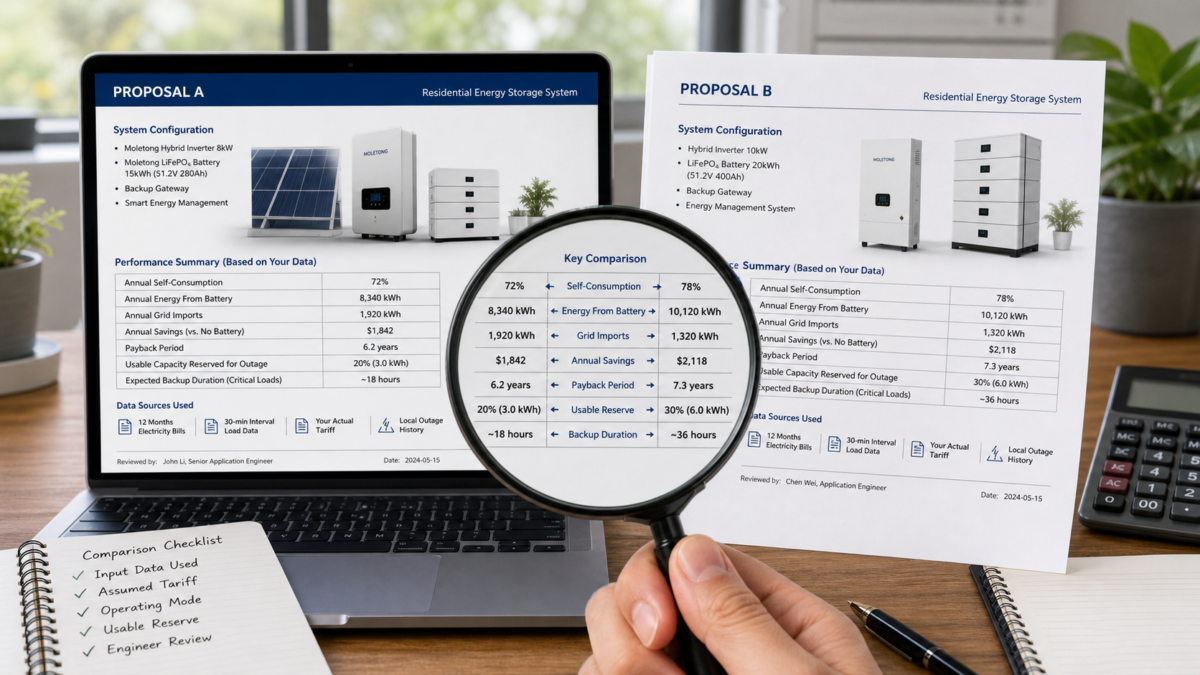
When you get multiple proposals, you need a way to normalize them. You have to force them into an apples-to-apples comparison. This is how you separate a genuine technical analysis from a sales pitch. When I prepare a plan for a customer using Moletong equipment, I always show my work. I would provide an anonymized bill, a screenshot of the tariff I used, and a dispatch trace showing exactly how our system would charge and discharge based on their real-world data.
You should demand this level of detail from everyone. Use a simple checklist to compare the core assumptions behind each proposal.
The Equal Terms Checklist
| Comparison Point | What to Ask | Why It Matters |
|---|---|---|
| Input Data Used | Did they use my actual 12 months of bills and interval data? | If not, their savings projections are based on generic assumptions, not your reality. |
| Assumed Tariff | Does the proposal use my exact electricity tariff, including all fees and time-of-use rates? | Incorrect tariff assumptions can dramatically inflate predicted savings. |
| Operating Mode | Is the system modeled for self-consumption, backup, or tariff arbitrage? | This must match the primary goal you defined for your system’s success. |
| Usable Reserve | How much of the battery’s capacity is reserved for outages, and is this adjustable? | This directly affects how much capacity is available for daily savings. |
| Engineer Review | Was this proposal reviewed and signed off by a named engineer? | This ensures accountability and separates a real engineering plan from a sales estimate. |
This approach gives you a clear decision path. It removes the marketing fluff and lets you evaluate each oversized battery proposal on its technical and financial merit based on your actual needs.
Conclusion
An oversized battery can be a powerful asset or a costly mistake. Start with your data, define your goals, and demand clear evidence to make the right choice.
Leave a Reply