

What Can Easee Charger Suspendedevse Problem Teach Us About OCPP Charger BESS EMS?
Your new EV charging station project is failing, and you don't know why. The numbers on the spec sheet looked great, but the real-world performance is falling short.
The Easee problem teaches us that battery buffering is valuable only when session demand and control priorities justify it. Simply matching nameplate data to a perceived grid constraint ignores the real-world variables of session concurrency, tariffs, and battery duty cycles that ultimately determine project success or failure.
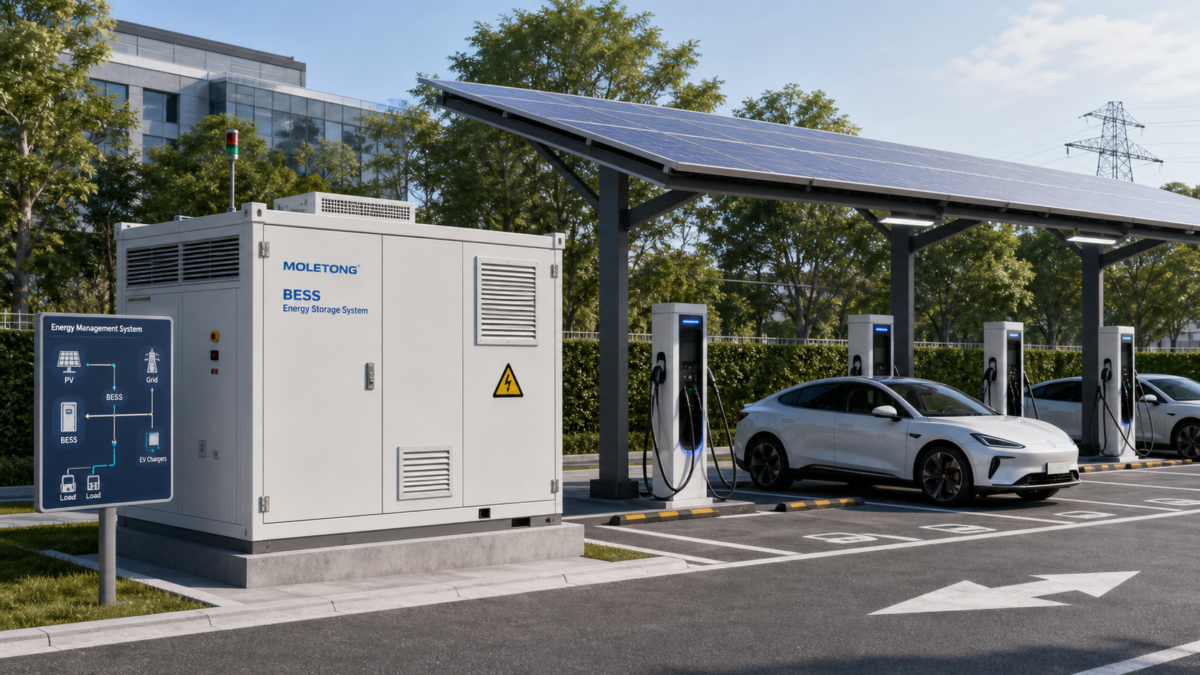
What I find most striking is how easily an OCPP charger BESS EMS project can be judged by the wrong numbers. A recent problem with the Easee charger highlighted a critical lesson for the entire industry: a single component's capability means very little without understanding the system's operational reality. I decided to frame this whole article around that lesson. My goal is to work through the key variables—charging sessions, user concurrency, electricity tariffs, and battery duty—to show how each one changes the cost, performance, or risk of your project.
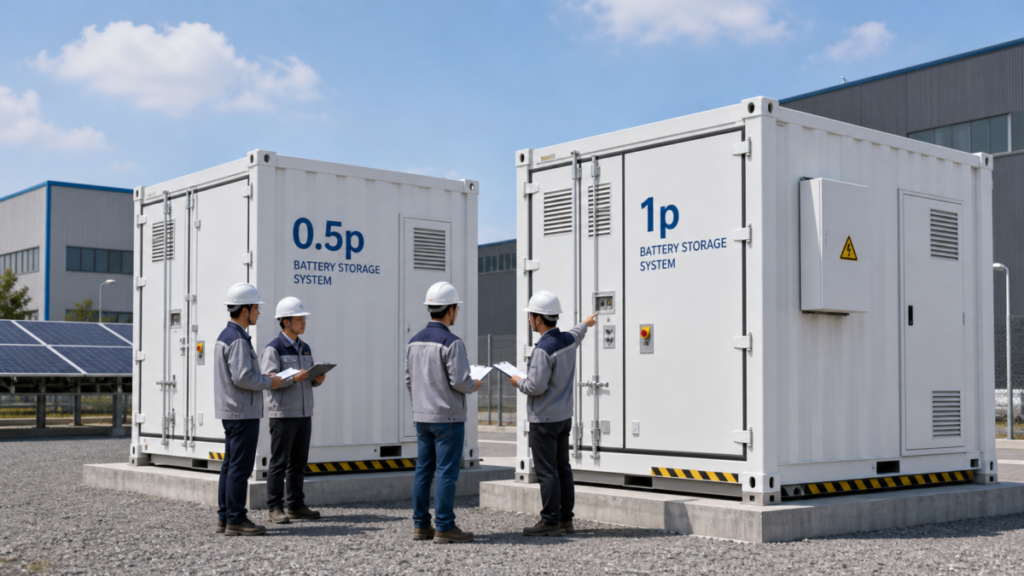
I will use Moletong’s 261 kWh/60 kW and 627 kWh/120 kW storage-charging configurations as specific, documented examples. But I won't present these as a one-size-fits-all solution. Instead, I’ll use a session dataset, a transformer trace, a control sequence, and an OCPP/EMS test to show you my reasoning. This way, you can see exactly when my conclusions do—or do not—apply to your own project.
What OCPP Charger BESS EMS Reveals About the Real Constraint?
You think your site's main limit is the grid connection. So you install a battery to fix it, but you still run into power trips and unhappy drivers.
*The real constraint is often not the grid connection itself, but the concurrency—how many EVs charge at the same time. A BESS and EMS reveal this by tracking the load, showing that peak demand is driven by simultaneous sessions, not just the number of installed chargers.*
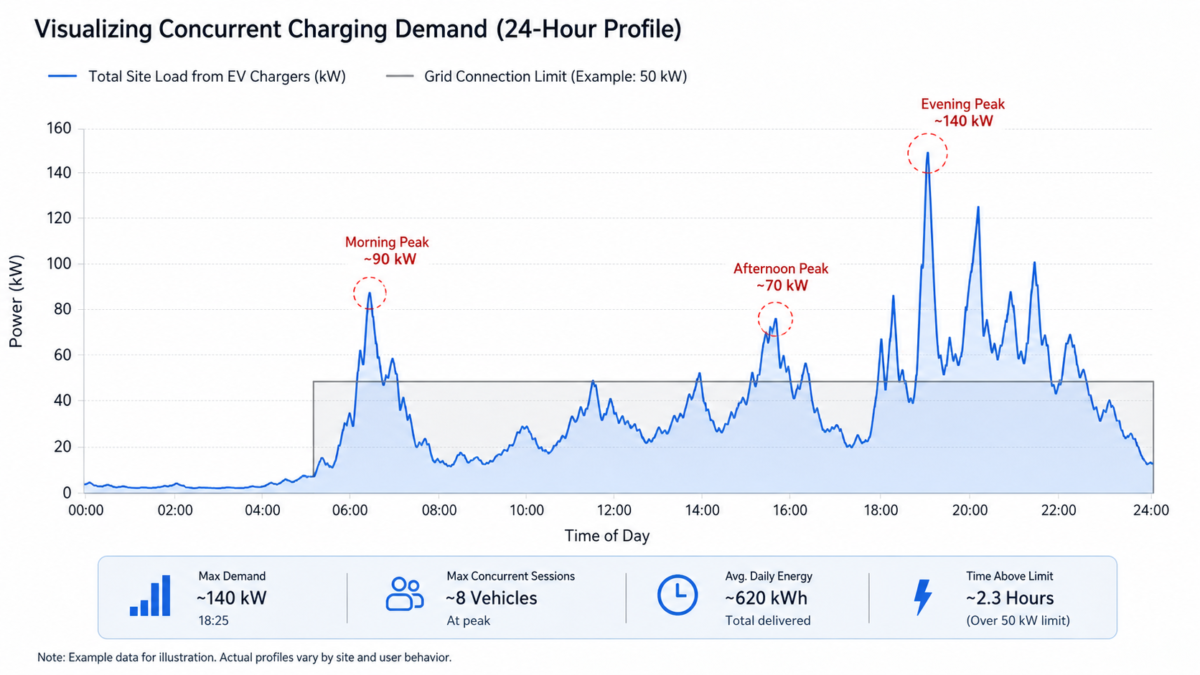
The biggest mistake I see is focusing only on the utility transformer's capacity. People say, "I have a 100 kW connection, so I can't install more than four 22 kW chargers." They see a BESS as a simple way to add more chargers. But the real problem is usually session concurrency. It’s not about how many chargers you have; it’s about how many are being used at full power at the exact same time. An OCPP charger and BESS system, managed by a smart Energy Management System (EMS), makes this transparent. The system logs every session, showing you that your peak demand might come from six cars charging for 20 minutes, not ten cars charging for two hours.
Concurrency Impact on a 60 kW BESS
Let's use a Moletong 261 kWh/60 kW system as an example. Its maximum continuous output is 60 kW. Now, imagine you have ten 22 kW AC chargers. The total nameplate demand is 220 kW. The BESS can't support that. The real question is, what is your likely peak?
| Concurrent Sessions | Total Charger Demand | Grid Contribution (Example) | Required BESS Output | Is it Sustainable? |
|---|---|---|---|---|
| 2 Cars @ 22 kW | 44 kW | 44 kW | 0 kW | Yes, within grid limit. |
| 4 Cars @ 22 kW | 88 kW | 50 kW | 38 kW | Yes, within BESS limit (60 kW). |
| 6 Cars @ 22 kW | 132 kW | 50 kW | 82 kW | No, exceeds BESS 60 kW limit. |
As the table shows, the system fails when the sixth car plugs in. The real constraint wasn't the 220 kW total potential, but the 132 kW peak from just six drivers. A good EMS would prevent this by load-balancing the chargers, but you must first understand that concurrency is the number you need to design for.
Which Measurements Matter More Than Nameplate Data for OCPP Charger BESS EMS?
You chose a BESS based on its kilowatt and kilowatt-hour ratings. Yet, it fails to manage your demand charges, and the ROI calculation you made looks like a fantasy.
Actual usage metrics like energy per session, session duration, and the battery’s charge-discharge duty cycle are far more critical than nameplate data. These measurements define the real workload and determine if the BESS can perform its financial task, like peak shaving, effectively.
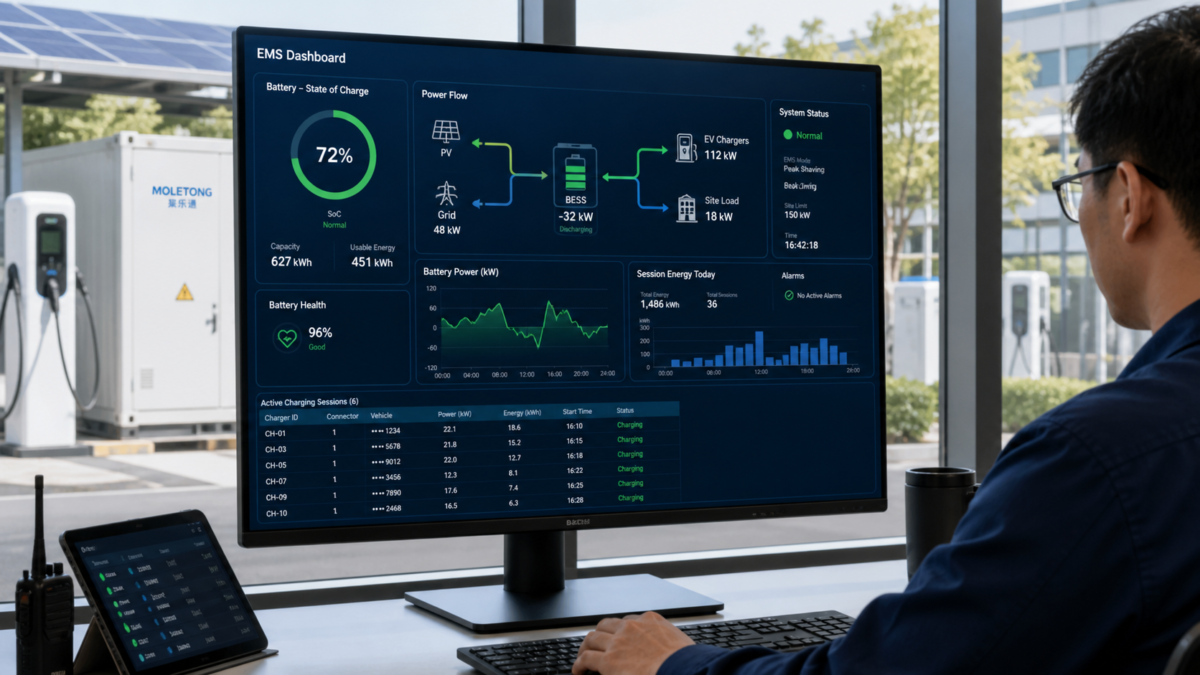
When I talk with clients, I always try to shift the conversation away from the BESS nameplate. A sticker that says "627 kWh / 120 kW" is a starting point, not the whole story. What truly matters is how the system will be used day-to-day. The first thing I ask for is a session dataset from a similar site. Are you serving commuters who need a quick 15 kWh top-up, or are these fleet vehicles that need 80 kWh over several hours? These two scenarios place completely different demands on the BESS.
A series of short, high-power sessions requires the battery to respond quickly and frequently, which impacts its duty cycle and lifespan. A long, sustained charging session requires deep energy capacity. For example, a Moletong 627 kWh BESS can deliver 120 kW continuously for about 5 hours. But if your tariff has a 15-minute demand window, what matters more is its ability to instantly react and hold that 120 kW output for that short period, not its total kWh capacity. This is why I focus on measurements like the battery's state of charge (SoC) before and after peak hours and the total energy throughput per day. These numbers tell me if the battery is sized correctly for the job it's actually doing, not the job we imagine it's doing.
How PV Profile Can Undermine the Expected Result?
You installed a large solar PV array to charge your BESS for free. But when evening peak demand hits, the battery is already low, and you're still paying the utility.
A PV profile can undermine your BESS performance if the solar generation peak does not align with your charging demand peak. If most cars charge in the evening, your BESS may have no solar energy to store, forcing it to buy expensive grid power later.
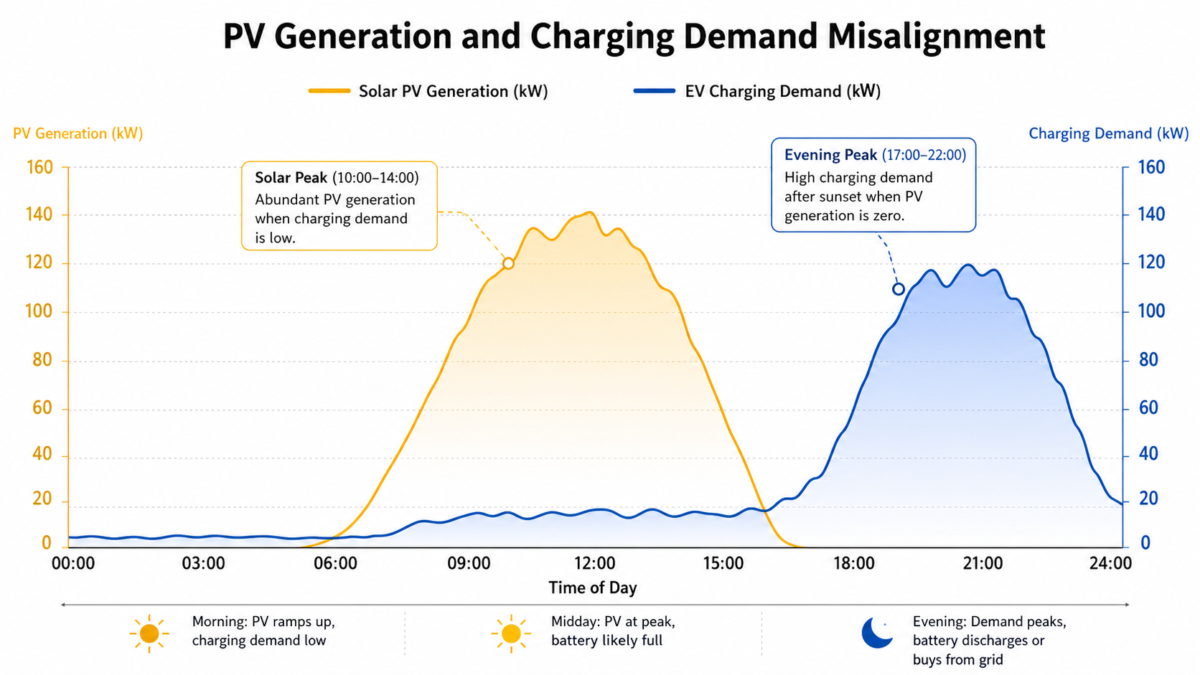
The synergy between solar, storage, and EV charging seems perfect on paper. The sun shines during the day, charging the battery. Drivers come home from work in the evening and charge their cars using the stored solar energy. This is the dream. But reality is often more complicated. I once worked on a project at an office park where this exact logic failed. The solar panels produced a huge amount of energy between 10 AM and 2 PM. The problem was, most employees charged their cars when they arrived at 8 AM or right before they left at 5 PM.
The BESS was full by noon, so a lot of the solar energy was either curtailed or exported for a low price. Then, during the 5 PM rush, the battery would deplete quickly, and by 7 PM, the site was pulling expensive power from the grid to serve the last few drivers. The PV profile and the charging demand profile were completely misaligned. A smart EMS can help, but it needs the right priorities. Should it prioritize storing cheap solar energy? Or should it keep some capacity in reserve, charging from the grid during mid-peak hours, to ensure it can shave the evening demand peak? Without analyzing both the PV generation curve and the charger utilization data, you are just guessing.
Which Acceptance Tests Should Buyers Request for OCPP Charger BESS EMS?
The installation is complete, and the contractor hands you the keys. The system turns on, but how can you be sure it will perform when a dozen cars plug in tomorrow?
Buyers must request dynamic, scenario-based acceptance tests. This includes a simulated peak-shaving test using a real load profile, an OCPP command response test to check communication, and a full charge-discharge cycle to verify usable capacity under real-world conditions.

A simple power-on test is not an acceptance test. It tells you nothing about how the system will behave under stress. When I oversee a commissioning, I insist on a series of tests that prove the system's logic, not just its hardware. First, we run a Transformer Trace Simulation. We take a 24-hour data log of the site's electricity meter and feed it into the EMS. We then watch to see if the BESS discharges at the right moments to keep the site's total demand below the pre-set limit. If it fails this test, it will never save you money on demand charges.
Second is the OCPP/EMS Control Sequence Test. We connect to the charging station management system (CSMS) and send commands, like SetChargingProfile, to a group of chargers to limit their power. We verify that the BESS and EMS see this change and adjust the battery's output accordingly. This confirms the entire communication chain works. Finally, we perform a Utilization Sensitivity Test. We simulate low traffic (two cars) and then a high-traffic rush hour (ten cars). We need to see that the system remains stable and correctly prioritizes loads without tripping breakers. These tests prove the system is ready for the real world.
Conclusion
The real value of an OCPP charger BESS EMS comes from smart controls and real-world data, not just the hardware specifications on a datasheet.

Leave a Reply