

What Should Buyers Verify About Port Logistics Battery Storage?
Port logistics battery storage promises big savings, but how do you know the numbers are real? Miscalculations can lead to huge losses. I will show you what to check.
Buyers must verify that self-consumption, capacity relief, and resilience are treated as separate value streams. Do not double-count these benefits. Each requires a different operating strategy and has a specific impact on cost, performance, and risk for your port facility.
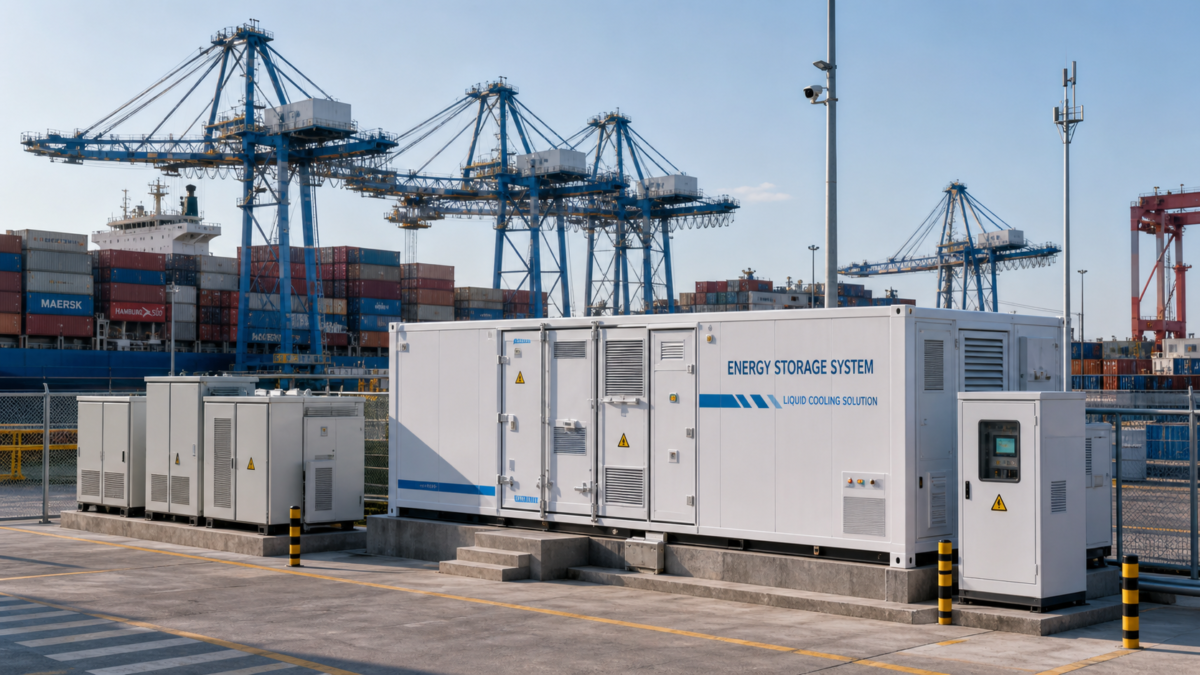
What stands out to me most is how easily a port logistics battery storage project can be judged from the wrong number. One simple metric, like a payback period, can hide a dozen bad assumptions. I’ve seen proposals that look great on paper but would fail in the real world because they misunderstand the site’s fundamental needs. The entire conversation needs to shift from a simple quote to a detailed engineering inquiry.
So, I frame the whole discussion around one question: What should you, the buyer, actually verify? My answer follows one simple rule: self-consumption, capacity relief, and resilience are different value streams and must not be double-counted. Let’s work through the key variables to see how they change the cost, performance, and risk of a project. This way, you can see the reasoning and apply it to your own situation.
From Port Logistics Battery Storage to an Engineering Requirement?
A simple battery storage quote seems easy to understand. But it ignores your site's reality. This oversight can make the system useless or even dangerous when it is installed.
Turn a storage proposal into an engineering requirement by defining specific constraints. This means listing your grid connection limits, equipment ratings, and physical space restrictions. This process ensures the proposed system is technically feasible and safe for your specific port environment before you buy.
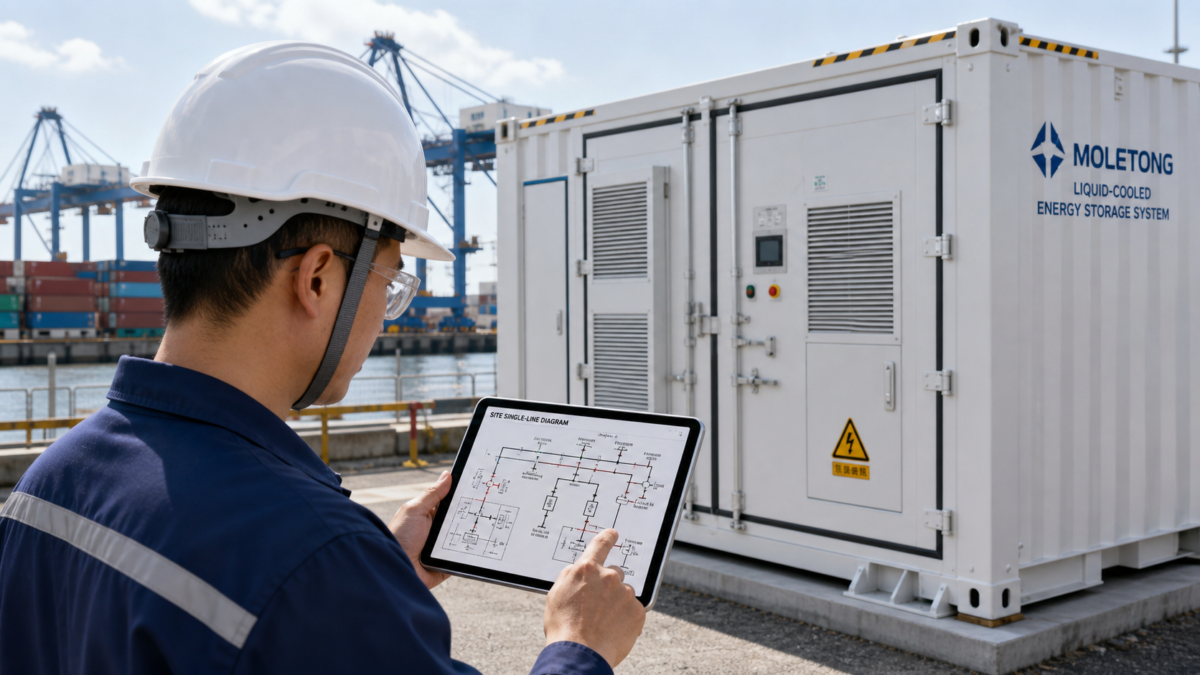
I always start with a constraint register. It’s a formal way of saying, "Let's write down all the things that could go wrong or limit our design." This isn't about being negative; it's about being realistic. A battery system is not a standalone box. It is an integrated piece of electrical equipment that must work safely with everything else at your port. The Moletong storage, EMS, and electrical equipment are designed to work as an integrated option, but that option is always subject to site-specific engineering. We have to know the rules of the game before we can play.
Key Site Constraints to Verify
A constraint register helps everyone agree on the project's boundaries. It moves the conversation from "how much does it cost?" to "what can we realistically achieve here?"
| Constraint Type | What to Verify | Why It Matters |
|---|---|---|
| Electrical | Grid export limit, transformer capacity, fault current levels | Prevents grid penalties, avoids overloading existing equipment, and ensures safety. |
| Physical | Footprint availability, foundation requirements, noise limits | Ensures the equipment will physically fit and meet local regulations. |
| Operational | Critical loads for backup, operating hours, maintenance access | Defines the battery’s real job and ensures it can be serviced safely. |
The Role of PV Profile in the Final Design?
You have a PV system on your warehouse roof. Adding a battery seems like the next logical step. But if your PV profile does not match the battery's ideal charging cycle, you will waste your investment.
The PV profile directly impacts battery sizing and scheduling. An intermittent or poorly matched solar generation curve can leave the battery undercharged for peak shaving or resilience events. You must model PV output against your load profile to size the battery correctly.
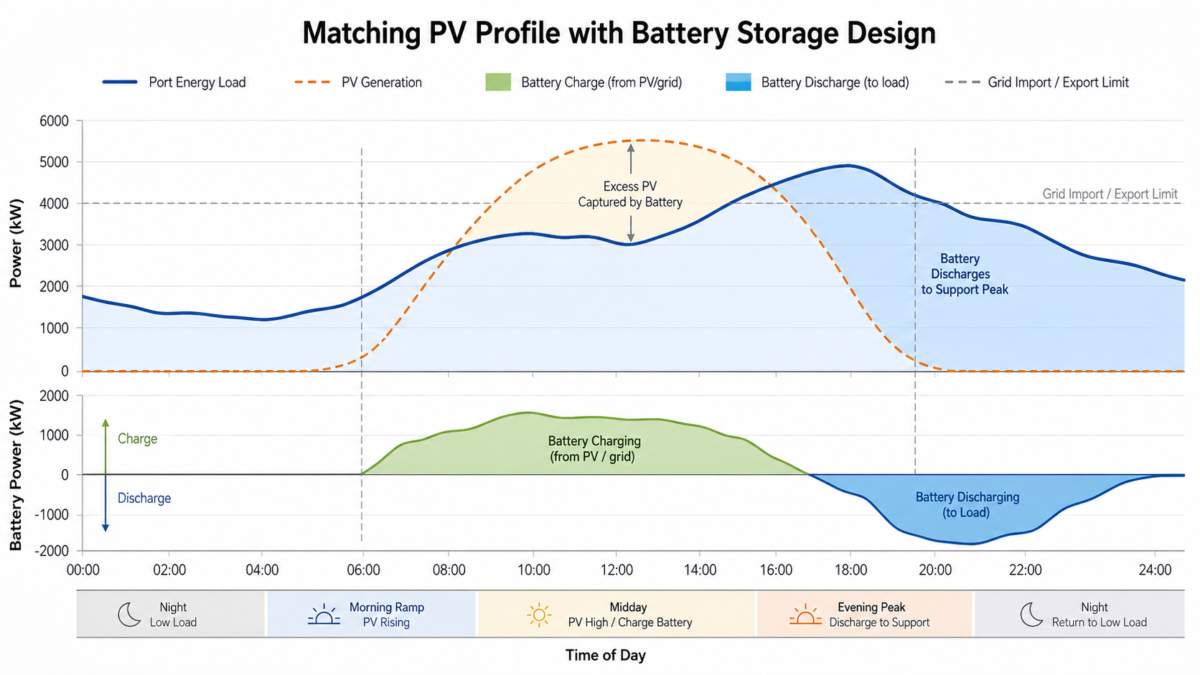
The interaction between your solar PV system and a battery is more complex than it looks. It is not just about storing "excess" solar. For example, if your port has a strict zero-export limit, any solar power you generate but cannot use immediately is lost. A battery can capture this "clipped" energy, which is a clear value for self-consumption. However, this is a separate benefit from using the battery to reduce peak demand charges.
Let's say your peak electricity demand occurs at 6 PM, but your solar production drops off after 4 PM. In this case, the solar energy does not directly help with the most expensive part of your electricity bill. The battery needs to be charged earlier in the day—either from solar or cheap grid power—to be ready to discharge during that evening peak. We have to simulate this interaction. We look at a full year of solar data and load data to make sure the battery has the right capacity and the Energy Management System (EMS) has the right strategy to maximize savings without compromising other goals.
Why One Port Logistics Battery Storage Outcome Does Not Prove the Rule?
You saw a case study with amazing savings at another port. You want the same result. But every port is different. Copying another's solution without doing your own analysis is a recipe for failure.
One successful outcome is not a universal guarantee because every port has a unique load profile, grid connection, and operational risk. A solution optimized for one site's peak shaving needs may be completely wrong for another site that prioritizes resilience for critical refrigeration loads.
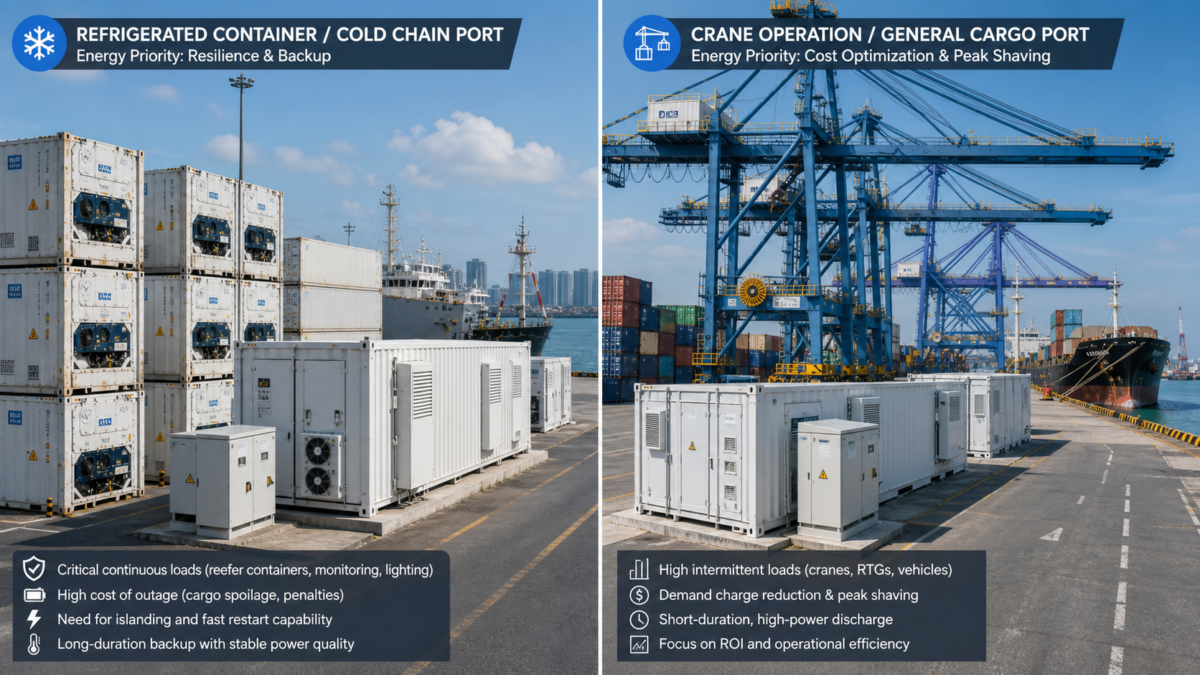
I always keep our Moletong project examples model-specific. I would never present a single result as a universal customer outcome. For instance, a recent project I worked on had a primary goal of resilience. The customer was running hundreds of refrigerated containers, and the financial consequence of a power outage was massive due to potential spoilage. Their primary value stream was not daily peak shaving; it was insurance against a catastrophic grid failure.
For that project, we had to define the islanding boundary very carefully. This means deciding exactly which circuits and loads the battery would support during an outage. We also analyzed the restart-load record. This is the huge surge in power demand when all the refrigeration compressors try to start at once after an outage. The battery's power converter (PCS) had to be sized to handle this surge, which is a much higher requirement than for simple peak shaving. This is why a solution from a port that only operates cranes would be completely inadequate for a port with a cold chain to protect. Each case requires its own engineering.
How to Document the Port Logistics Battery Storage Decision?
You have finally done the analysis. How do you present it clearly so that everyone on your team understands and agrees? A confusing proposal gets rejected, even if the engineering is sound. You need a clear, transparent record.
Document the decision using four key engineering artifacts: a site single-line diagram, a constraint register, an operating-mode simulation, and a restart-load record. These tools provide transparent, verifiable reasoning for the final system design, protecting both the buyer and the supplier.
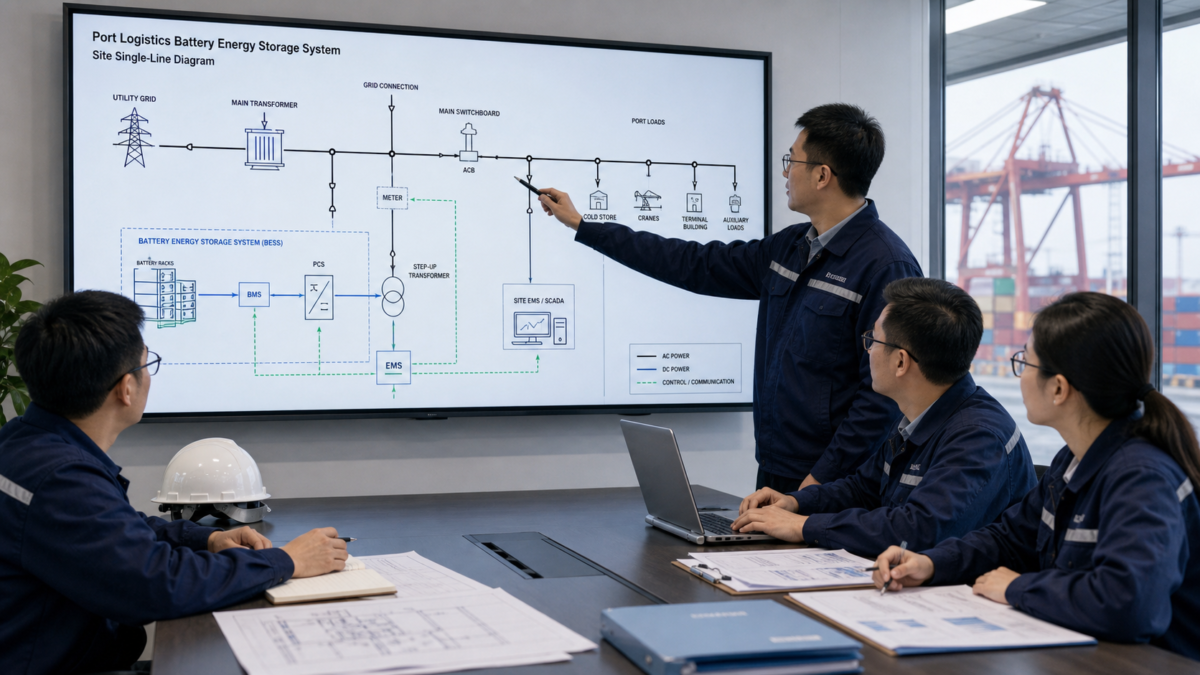
This is about showing your work. When I deliver a final proposal, it is backed by documents that anyone's engineering team can review and understand. This transparency builds confidence and helps everyone identify when the same conclusion does—or does not—apply to their own project.
First, the site single-line diagram shows exactly how the battery system connects to your existing electrical infrastructure. It identifies the point of connection, breakers, and metering. Second, the constraint register we discussed earlier is a formal list of all the technical and physical limits we agreed on. Third, the operating-mode simulation is a report showing how the battery will perform over a typical day or year for each value stream, like peak shaving or self-consumption. Finally, for resilience applications, the restart-load record documents the power needed to bring critical systems back online and proves the battery is sized to handle it. These documents together tell the complete story and justify the final design.
Conclusion
Verify the numbers by separating value streams. Use engineering documents, not just sales quotes, to ensure your port logistics battery storage project succeeds on your terms.
Leave a Reply