

What Can Go Wrong with NFPA 855 BESS Requirements?
You have a certificate for your Battery Energy Storage System (BESS), so you think compliance is guaranteed. But what happens when that certificate doesn't match your specific project?
The existence of a certificate is less important than its applicability to your exact system, site conditions, and local fire code. A mismatch can cause project delays, unexpected costs, and even force you to remove the equipment after it’s been installed.
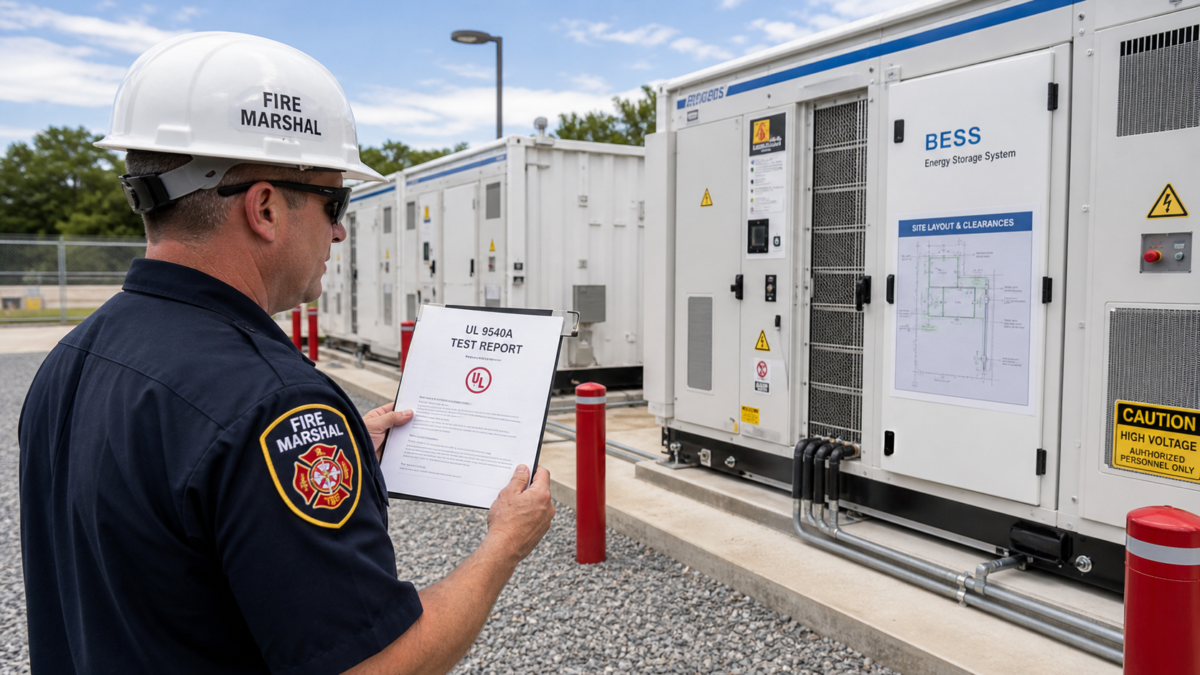
I've seen it happen more than once. A team spends a fortune on a BESS, installs it, and then the local fire marshal shows up and points out that the UL 9540A test report they have doesn't apply to their installation's spacing or configuration. Suddenly, their "compliant" system is a major problem. It’s a frustrating and expensive situation that can be avoided. The key is to understand that NFPA 855 compliance is not a simple checkbox; it's a detailed review process. Let's walk through what can go wrong and how you can get it right from the start.
Why Is NFPA 855 BESS Requirements Harder Than It Looks?
You installed a certified BESS, thinking the hard part was over. Now the local inspector is asking for more tests and documentation. What went wrong?
NFPA 855 is challenging because a certificate for one component doesn't guarantee system-level approval. The specific edition of the standard, local AHJ interpretations, and your unique site integration create project-specific hurdles that a generic certificate cannot solve on its own.
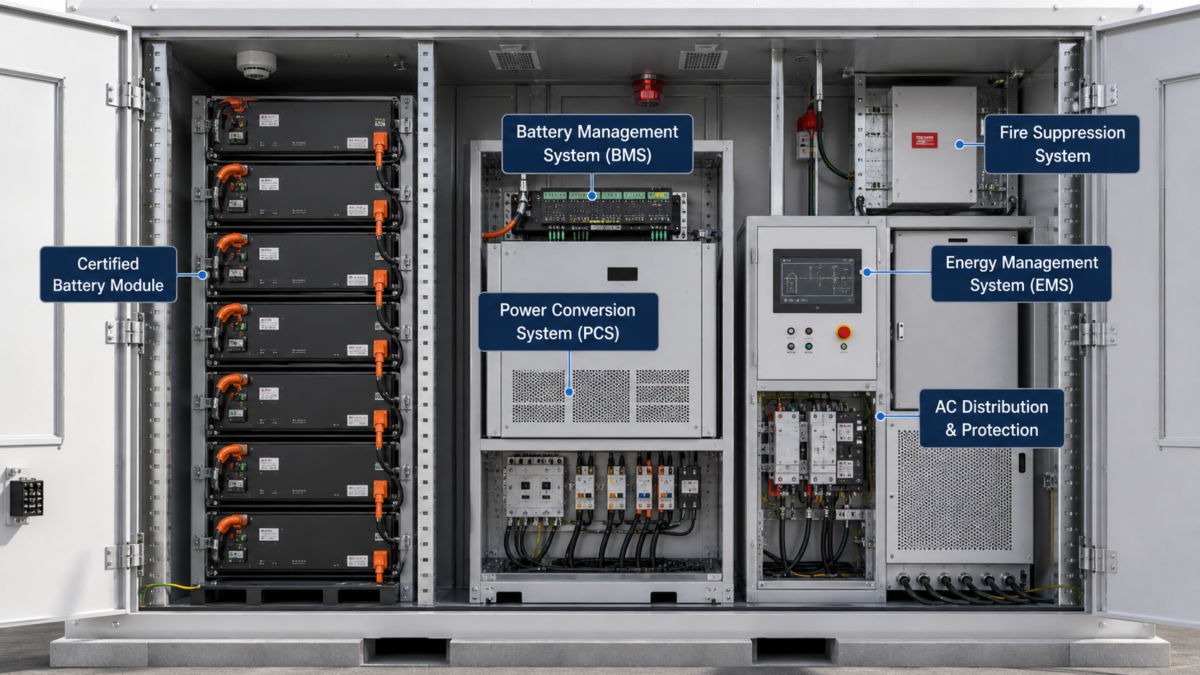
The main issue I see is what I call the "applicability gap." A manufacturer gets a certificate based on a test performed in a lab under perfect conditions. But your site is not a lab. You have different spacing, different ventilation, and you're in a jurisdiction that might interpret the rules differently. I always advise my clients to think of a certificate as a starting point, not the finish line. When we work with Moletong equipment, for example, we populate a model-level evidence matrix that lists out all the tests and certifications for that specific model. This helps, but the final legal compliance still comes down to the current project review.
The Certificate vs. The Real World
The most convincing way to bridge this gap is to create a crosswalk that compares the certificate's claims to the real-world questions your project will face. This forces you to think like an inspector.
| Certificate Claim | An AHJ’s Real-World Question | Potential Downside if Unanswered |
|---|---|---|
| “UL 9540A Test Report Exists” | “Was the test on this exact configuration, spacing, and model number?” | You may need a costly, site-specific fire and hazard mitigation analysis. |
| “System is NFPA 855 Compliant” | “Which edition of the standard? Our city has adopted a newer one with different rules.” | The entire system might be considered non-compliant, requiring replacement. |
| “Includes Internal Fire Suppression” | “Does it meet our local requirements for agent, duration, and notification?” | You might have to add a separate, expensive external suppression system. |
The Site Data Needed to Evaluate NFPA 855 BESS Requirements?
You're ready to buy a BESS, but the supplier is asking for site data you don't have. This can stop your project before it even starts.
You need your electrical service capacity, physical site plans showing setbacks and fire access, local fire code amendments, and the specific Authority Having Jurisdiction's (AHJ) interpretation. Without this data, you cannot confirm if a certified BESS is actually compliant for your location.
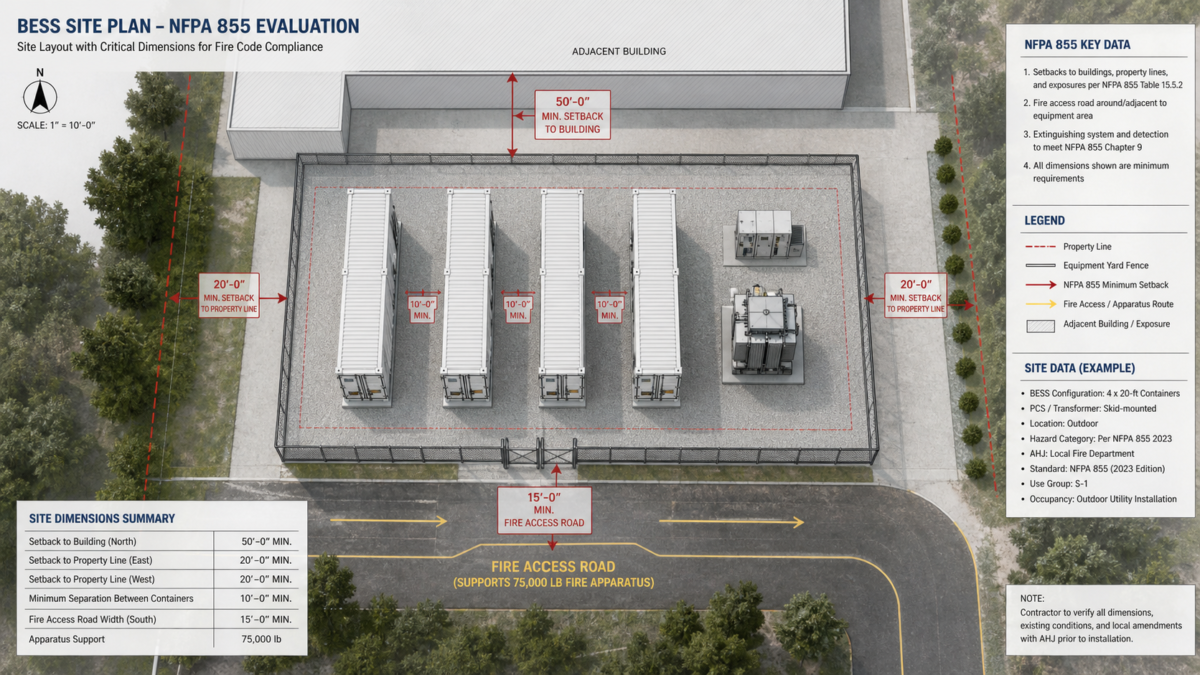
Before I even look at BESS data sheets, I gather the site data. It's the only way to know what we're really working with. I remember a project where the client bought a large containerized BESS, only to find out their property line was ten feet closer than they thought. The system no longer met the NFPA 855 setback requirements from the building. We had to go back to the drawing board, which cost them time and money. That's why I always start with a site data checklist. It includes the service capacity from the utility, detailed architectural drawings, and, most importantly, the name and contact information for the local fire marshal or building inspector. Getting these details upfront makes the entire process smoother and prevents expensive surprises down the road.
Which NFPA 855 BESS Requirements Assumptions Distort the Result?
You saw a case study where a BESS saved a company 30% and assumed you'd get the same. Now, your costs are higher and savings are lower.
The most dangerous assumption is that one positive example is a universal promise. Believing the AHJ will be lenient, the standard won't change, or that lab performance matches your real-world duty cycle will distort your financial and compliance results.
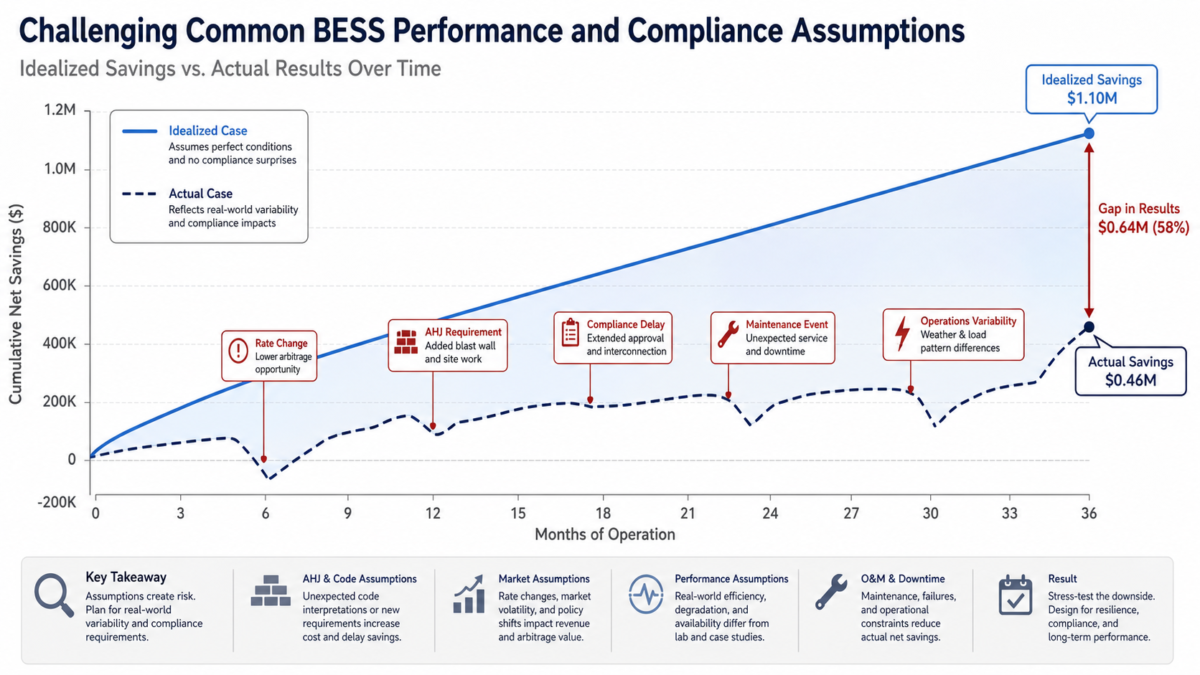
I always tell people to be wary of universal promises. A BESS that works perfectly for a warehouse in Texas might face completely different challenges at a data center in California. The most convincing analysis compares the expected outcome with a realistic downside case. For example, what happens if the utility rates change? What if your AHJ requires a concrete blast wall that wasn't in the original budget? These are the questions that reveal the true project risk. I often create a "deviation register" for my projects. It's a simple document that tracks where our project differs from the manufacturer's case study or the test lab's conditions. This helps us identify potential problems early on and explain to the client which site conditions make our recommendation stronger or weaker. Never let a single data point become your entire strategy.
A Practical NFPA 855 BESS Requirements Selection Checklist?
You need to select a BESS, but you're worried about missing a critical compliance detail that could derail the project. A good checklist can prevent that.
A practical checklist goes beyond the certificate. You must verify the standard edition with your AHJ, cross-reference the test report with your exact system configuration, review the warranty for compliance-related clauses, and document all deliverables in a contract evidence schedule.
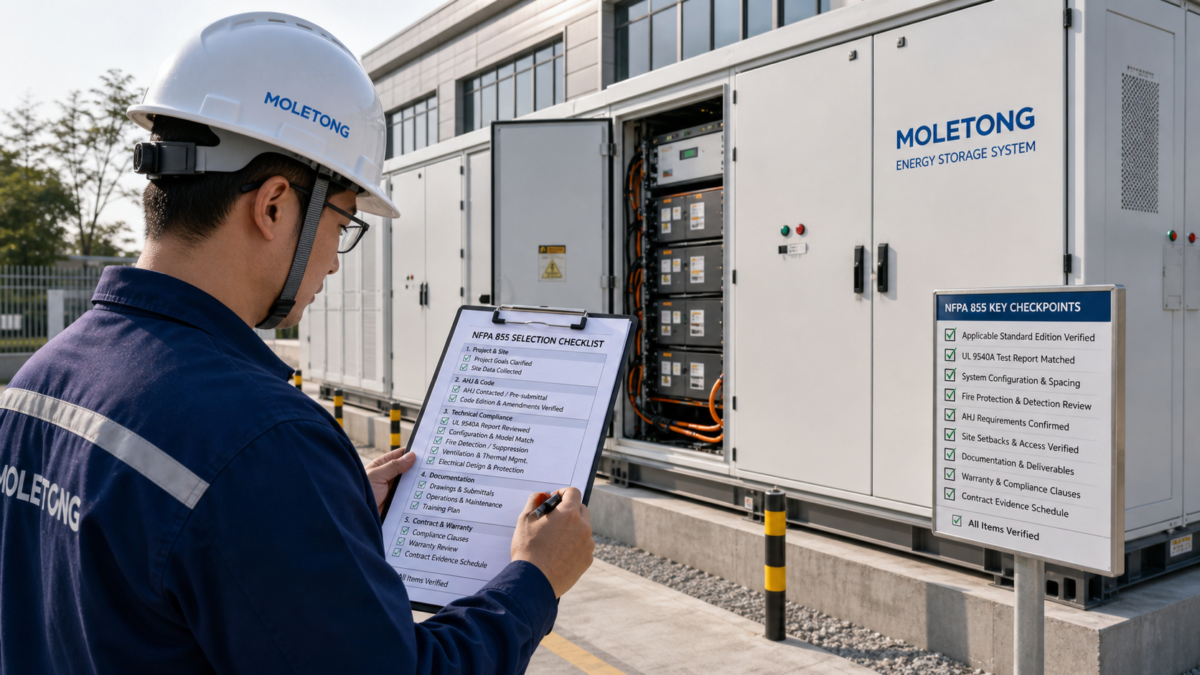
After years of navigating these projects, I've developed a simple but effective checklist. It’s not just about technical specs; it’s about process and documentation. First, I clarify what the buyer actually wants to achieve. Are they looking for savings, resilience, or simple compliance? These are not interchangeable goals. Next, I check the paperwork, but I go deep. I don't just ask for a certificate; I ask for the full UL 9540A test report and I match the model numbers and configurations exactly. My next step is to call the local AHJ and have a pre-submittal meeting. This step alone has saved my clients from countless headaches. Finally, I make sure everything is written down in the contract. We create a "contract evidence schedule" that lists every single compliance document the seller must provide before we make the final payment. This protects the buyer and ensures there are no surprises.
Conclusion
A certificate's existence is less important than its applicability. Always clarify the project's goal, check the site data and AHJ's rules, and compare the plan with a realistic downside case.


Leave a Reply